Summer is a time not only for relaxation but also for consolidating knowledge in real-world production. Industrial and introductory internships are crucial in the training of qualified engineers, as this is where theory turns into practical skills. Students from BNTU's Faculty of Mining and Environmental Engineering complete their internships at specialized companies whose activities are inextricably linked to environmental research and protection.
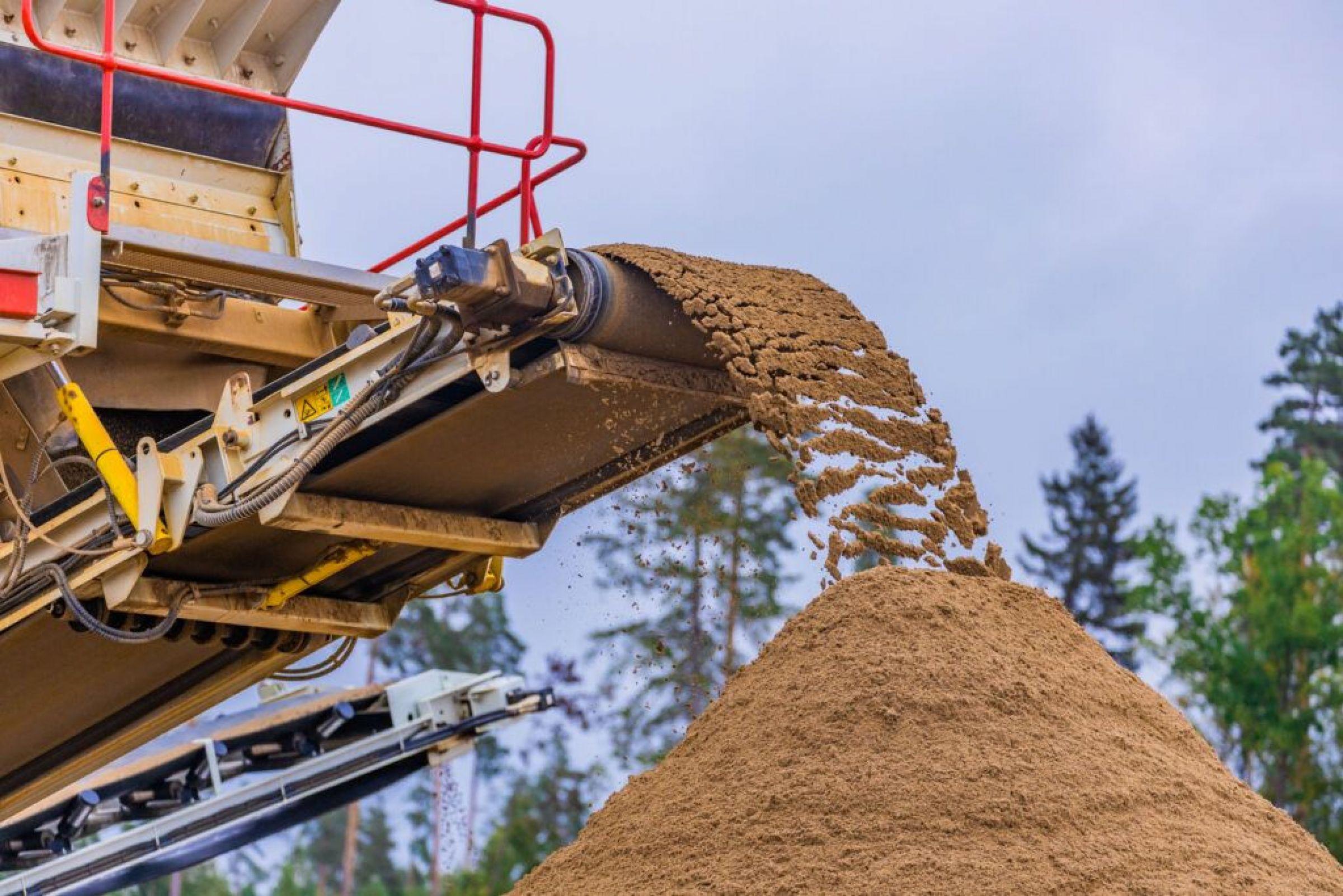
For example, Andrey Kurlyanchik, a third-year student at the Faculty of Geology and Environmental Engineering, decided to immerse himself in large-scale production processes. His internship location was the Yachenskoye Quarry branch of the Scientific and Practical Center for Geology. He explained his choice simply:
"It's a leading organization in the field of natural resource extraction and protection." I believe I'll be able to gain such colossal experience at this company.
Finding himself at a real-world site where tons of sand and gravel are mined daily, Andrey quickly transitioned from theory to practice. The university's facilities were a great help when it came to real engineering problems.
"My job in this process is to adjust the speed, direction, and volume extracted per day. But since I'm still a student, I observe and assist my supervisor in this difficult task," Andrey shared.
However, according to the student, what most impressed him was not so much the volume of extraction as the philosophy of respect for nature and the openness of his senior colleagues:
"When you extract something from the earth, you must give something in return: the exhausted part of the quarry is filled with black soil and reforested. Furthermore, there is now a beautiful lake there, which is even home to fish." The internship proved truly helpful in understanding my future profession, and the most interesting part was interacting with employees who have been working at the quarry for years and know it inside and out.
While ecology closely coexists with heavy industry at the quarry, precision and rigorous calculations come to the fore in Belhydromet laboratories. It was here, at the Republican Center for Hydrometeorology, Radioactive Pollution Control, and Environmental Monitoring, that first-year FGDIE student Karolina Sheverneva went on an introductory course.
"This is a key government agency that deals with comprehensive environmental monitoring—radiation, hydrogeology, and environmental conditions. I wanted to see a real environmental monitoring system, not just theory," she said of her choice.
There's no room for approximate figures here, and the workday is scheduled literally down to the minute. The student admitted that the knowledge she gained at BNTU was immediately put to use:
"The day begins with a briefing at 9:00 AM, followed by practical training in labs or on-site. We study dosimeters, measure dose rates and radon, collect soil samples, fill out logs, and calculate errors. I had already encountered many of these topics in my university classes."
Furthermore, beyond the dry calculations and strict instructions, the first-year student was able to discern the global mission of her specialty:
"Here we measure radiation, soil and air pollution—data used to assess human impact on nature and protect water and land resources. What impressed me most was the scale and rigor: we go out with real instruments, work with samples, and everything is strictly documented. Ecology turned out to be not an abstract science, but a well-defined system on which safety depends."
A modern BNTU engineer is not only a competent technical specialist but also an environmentally conscious person. The experience the students gained this summer will serve as an excellent foundation for their professional development and will help develop Belarusian industry in harmony with nature.
