
The Faculty of Information Technologies and Robotics at BNTU is one of the most dynamically developing faculties at the university. Today, the Faculty of Information Technologies and Robotics is developing joint master’s programs with China, laboratories with Russian universities, and students are mastering the most modern fields. The faculty is headed by Yulia Mazanik, Candidate of Economic Sciences and Associate Professor. Her career path is an example of how management experience, strategic thinking, and a willingness to embrace change enable successful leadership of a technical faculty.
Before joining BNTU, Yulia Mazanik spent 14 years working in customs authorities. Her journey at the university began in 2023, when she was invited to take up the position of head of the Department of Customs Affairs at the Faculty of Management Technologies and Humanitarianization.
— I am a graduate of this department, and it was a great responsibility for me to head the department where the teachers who had previously taught me worked. During my time as head of the department, it was important for me to impart practical knowledge and skills to students that would help them gain a deeper understanding of the provisions of customs legislation and become highly qualified specialists in the field of customs affairs.
Yulia Mazanik admitted that she was surprised by the offer to head a faculty that was completely unrelated to her previous experience, but after thinking it over, she decided to give it a try. According to her, everything unknown causes anxiety, but it is precisely such solutions that open up new opportunities and prospects.
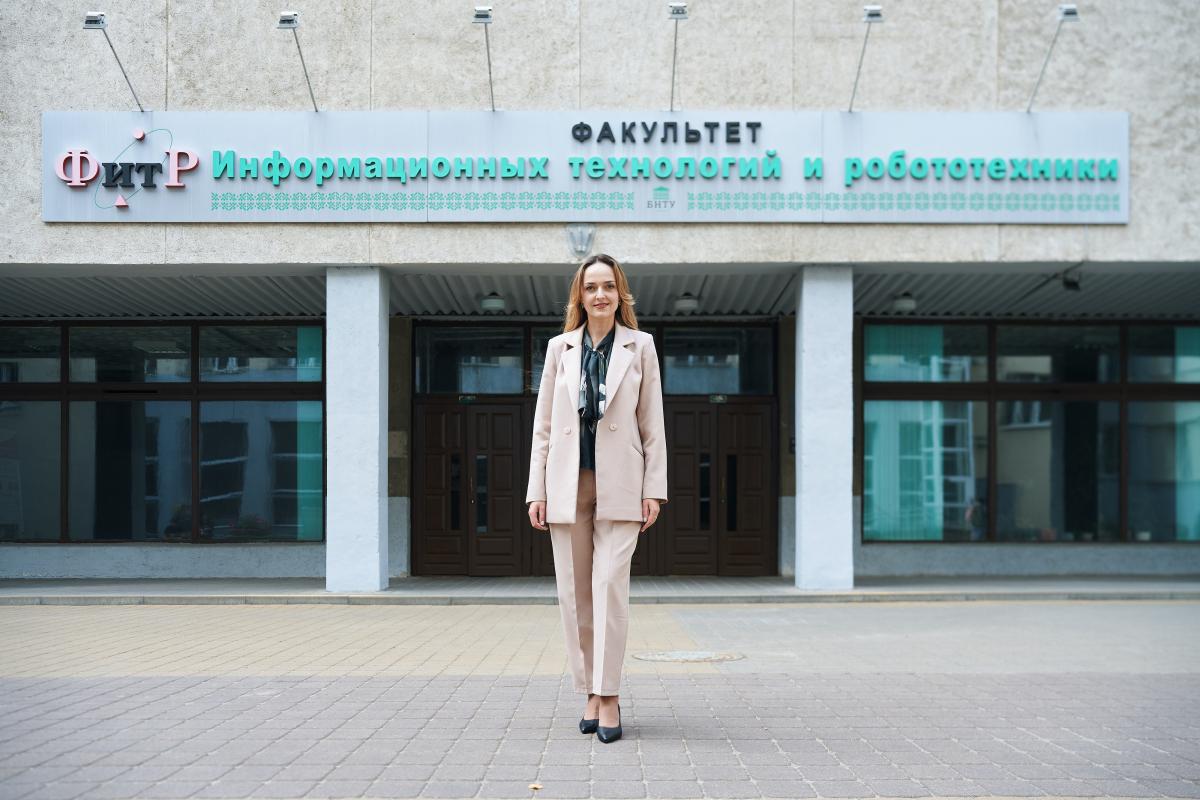
Since March 2016, Yulia Mikhailovna has been the dean of the Faculty of Information Technology and Robotics. During this time, a large number of changes have taken place at the faculty.
— Among the key events during my tenure as dean, it is worth noting the signing in June 2026 of an agreement with Peter the Great St. Petersburg Polytechnic University to establish a joint research laboratory “Information Technologies in Engineering Tasks and Education” based on our faculty, to conduct fundamental and applied research. Also, as part of the newly established China‑Belarus Institute of Outstanding Engineers, starting in September of this year, the first intake of students into the joint master’s program in the field of “automation” will be carried out on the basis of our faculty. The curricula for this master’s program were signed by the heads of Belarusian National Technical University and Nanjing University at a solemn ceremony in July 2026 in Nanjing. Undoubtedly, achieving these goals was preceded by serious work on the part of the university’s administration, as well as my colleagues. I “picked up” these initiatives when I joined the faculty. Therefore, I believe that successfully solving major tasks is always teamwork.
— Today, artificial intelligence is becoming a basic engineering tool, just like a programming language. How do you see FITR's role in training specialists ready for this digital transformation?
— FITR BNTU should become one of the key centers for training specialists who are able not only to use artificial intelligence technologies, but also to understand the principles of their operation and the possibilities of practical application. It is important that modern digital tools and AI technologies are seamlessly integrated into the educational process, complementing fundamental engineering training. It is necessary to pay attention to the development of students' algorithmic thinking, the ability to analyze large amounts of information, solve non-standard tasks and create their own technological solutions.
At the same time, Yulia Mazanik is convinced that the most promising path for Belarus is the comprehensive development of programming, robotics, automation, and systems analysis.
— In my view, the most promising path for our country is the comprehensive development of all these areas, since it is their integration that makes it possible to create competitive technological solutions. Robotics and automation are becoming especially important today, as they can increase labor productivity, modernize industry, and ensure the technological independence of enterprises. At the same time, programming and systems analysis remain the foundation for their effective development, as they provide the intellectual component of modern engineering systems. The task of our faculty is to train specialists who can combine knowledge from different fields and turn it into real innovative developments.
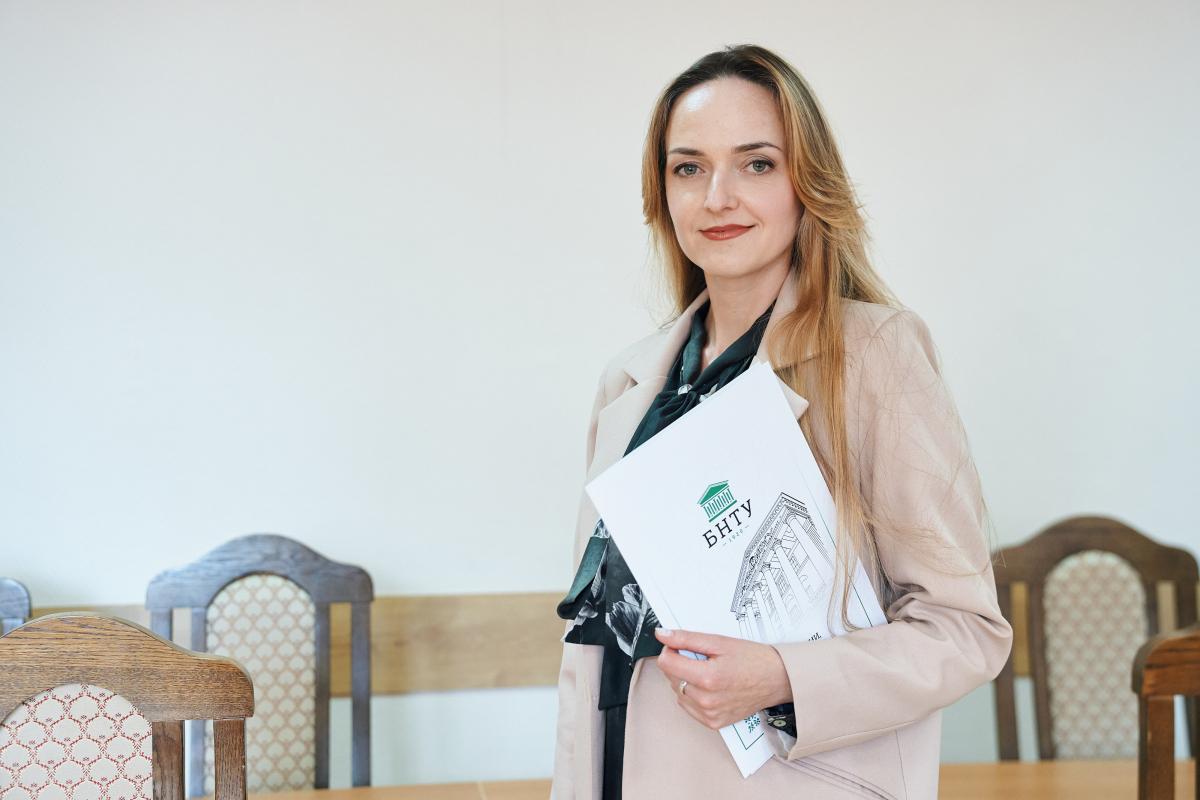
The dean of the Faculty of Information Technologies and Management considers participation in international forums to be an important tool for tracking global trends and implementing best practices. One such platform was the III International Forum “AI — the Future Today” in St. Petersburg, which, according to her, made it possible to study the successful integration of artificial intelligence into education and industry and to outline specific steps for organizing similarly successful work at the university.
— Participation in international forums allows the faculty to be at the center of modern scientific and technological trends. This is an opportunity to exchange experience, establish professional contacts, and find new partners for joint research and educational projects. In addition, such platforms help our teachers and students present their own developments and increase the international visibility of BNTU. Participation in the III International Forum “AI – the Future Today” made it possible not only to familiarize ourselves with the best global practices for implementing artificial intelligence in education and industry — where more than 85 percent of Russian companies already use AI in their operations — but also to develop specific mechanisms for integrating these practices into the educational process at BNTU.
Yulia Mazanik defined her mission as dean in three words: knowledge, team, future.
— Knowledge helps students become true professionals; the team creates an atmosphere in which one wants to develop; and the future is our graduates, their ideas, and professional achievements. It is important to me that the faculty not only provides a quality education but also helps young people believe in their abilities and find their place in the profession.
The Faculty of Information Technology and Radio Engineering traditionally has more male students, which is typical for technical and engineering fields. However, there are also quite a few girls at the faculty, and many of them successfully master programming, automation, and robotics. According to the dean, girls’ interest in IT and engineering specialties is noticeably growing: they are increasingly choosing these fields and showing good results, successfully competing alongside young men.
Yulia Mazanik also said that at the beginning of her professional journey, she encountered gender stereotypes, but she never perceived them as an obstacle.
— Of course, at the beginning of my professional journey, I encountered certain stereotypes, but I never viewed them as an obstacle. It takes time for colleagues to get to know me better and for trusting relationships to form, where competence, responsibility, and results are valued, regardless of whether you’re a man or a woman. I see my managerial and economic experience as an advantage. It helps me look at the development of the faculty from a different perspective — not just from a technical standpoint, but also from an organizational and strategic one.

According to the dean, girls often bring attention to detail, perseverance, and an unconventional approach to problem‑solving to IT. It is precisely the diversity of approaches and viewpoints, she emphasized, that makes a team stronger and helps find more interesting solutions.
Yulia Mikhailovna admitted that it’s not always possible to strike a balance between managing the faculty, doing research, and having a personal life, but the main thing is to be able to set priorities.
— I try to find time for each area. But, I admit, it doesn’t always work out.” From time to time, it’s necessary to devote more attention to a particular area. Work and science require a lot of time and energy, so I especially value the time I can spend with my loved ones or pay attention to simple things that help me recover: going for a run, visiting the pool, taking a walk in the park, and so on. For me, balance isn’t about trying to do everything at once, but about the ability to set priorities correctly and be fully engaged in what you’re doing.
— What would you advise a female applicant who dreams of becoming an IT specialist but is afraid she won’t be able to cope with the competition in the profession?
— Don’t believe in the stereotypes that these fields are exclusively for men. If you have an interest and a desire to learn and develop, all difficulties will certainly be overcome. Don’t compare yourself to others. You need to work on your knowledge and believe in your own abilities. If you choose a profession you like, competition becomes not an obstacle, but a stimulus to become better. Don’t be afraid to dream and try: perhaps today is the day your future professional story begins.
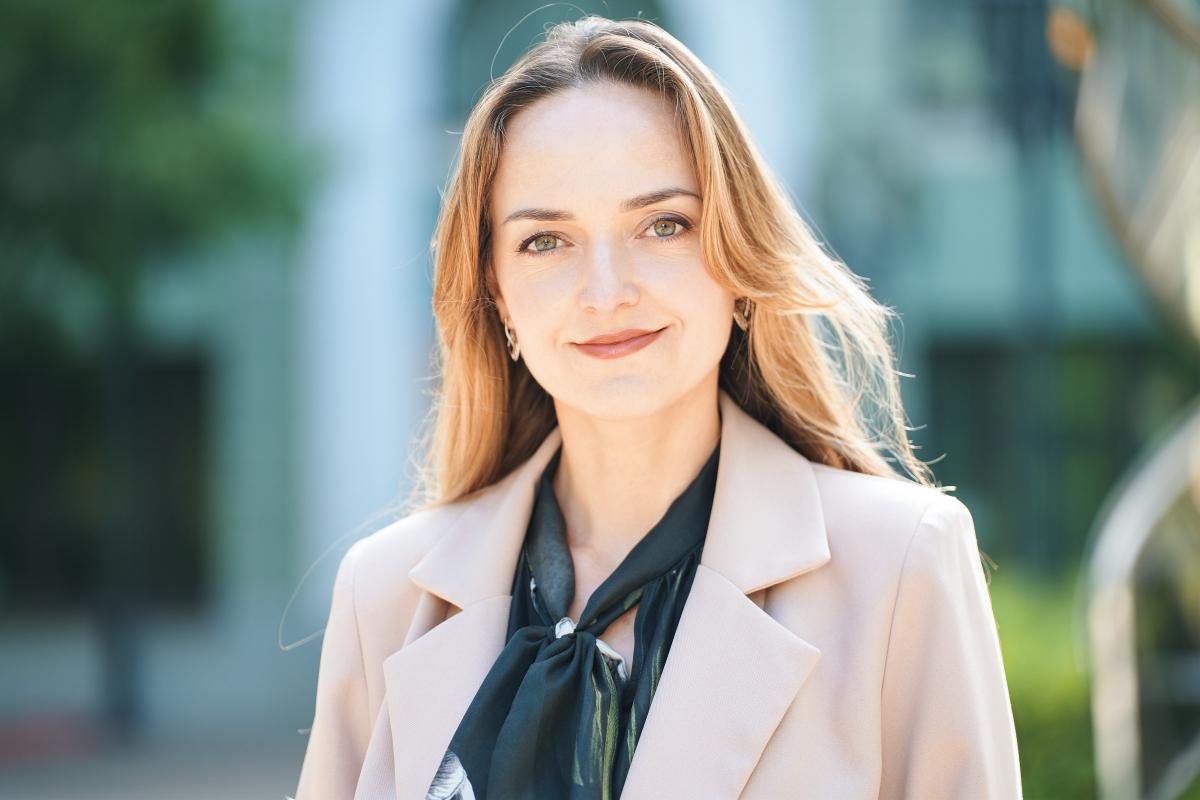
Yulia Mazanik is an example of how it’s possible to successfully manage a technical faculty, even if your journey began in a different field. Her experience shows that in modern IT education, not only technical competencies are important, but also strategic thinking, the ability to build international connections, and the capacity to see the bigger picture. For her, it’s important not to be afraid of change and to prove that a female leader is not an exception, but a natural result of professional growth.
