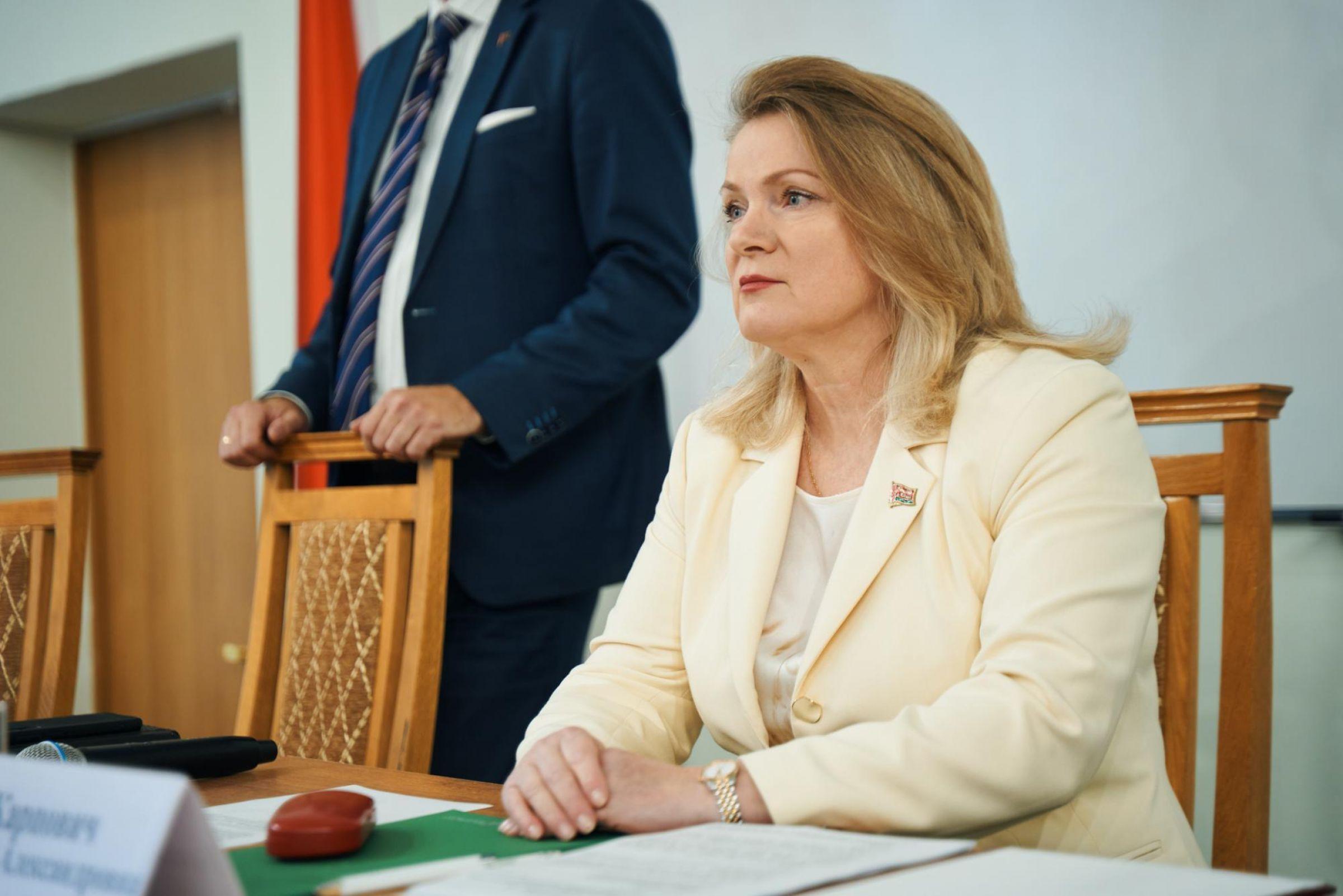
Today, September 10, the Belarusian National Technical University hosted a discussion forum titled "National Unity Day as a Factor of National Pride" as part of the "Unified Information Day" initiative. Natalia Karpovich, Deputy Chairperson of the Constitutional Court of the Republic of Belarus, addressed the university's students and staff.
Opening the discussion with historical context, Natalia Karpovich noted:
"The significance of the unification of Western Belarus and the BSSR can be better understood by looking at how the legal status of the individual changed."
The speaker recalled the partition of Belarus following the Peace of Riga, noting that effectively half of the Belarusian territory had been incorporated into Poland. In 1931, over 4.6 million people lived in these territories, the majority of whom were Belarusian. Western Belarus found itself on the periphery of Poland, serving primarily as a source of labor. The legal status of the population was dire, characterized by national oppression, landlessness, poverty, and a lack of rights. Schools and cultural institutions were shut down.
September 17, 1939, became a symbol of the national and social liberation of the Belarusian people; it went down in history as the day of the Belarusian people's reunification.
"The reunification of Western Belarus with the BSSR was an act of historical justice for the Belarusian people, who had been divided against their will. Had this not occurred, there would be no Victory Day, no Independence Day, and indeed, none of the very land we cultivate and cherish," the Deputy Chairperson of the Constitutional Court remarked.
The speaker also highlighted four key aspects of the event's significance: the unification and self-determination of Belarusians as a nation within a single Belarusian state were realized; the territory of Belarus regained its integrity and restored the meaning of a centuries-old historical tradition; the authority of the Belarusian people was established in the liberated lands to build a new life in the people's interest; and national unity became the foundation for state development and the progress of both society and the state. Natalia Karpovich specifically highlighted the significance of the Constitutional Court in the lives of the country's citizens. She explained that citizens may file a constitutional complaint if they believe their rights are being violated. The Court examines not a specific legal case, but rather the conformity of a law with the Constitution. Addressing the topic of values, the speaker noted that our civilization is built upon principles of solidarity, unity, respect for the individual, collectivism, and a readiness to help the vulnerable.
In conclusion, Natalia Karpovich emphasized:
"Preserving historical memory and patriotism is a crucial obligation and a traditional duty for the citizens of the Republic of Belarus."
She also urged young people to study history more deeply, safeguard the nation's sovereignty and independence, and take an active part in the life of the country.
The meeting helped foster an active civic stance among the students and promoted an understanding that historical memory serves as the foundation for state stability and the future of our people.
