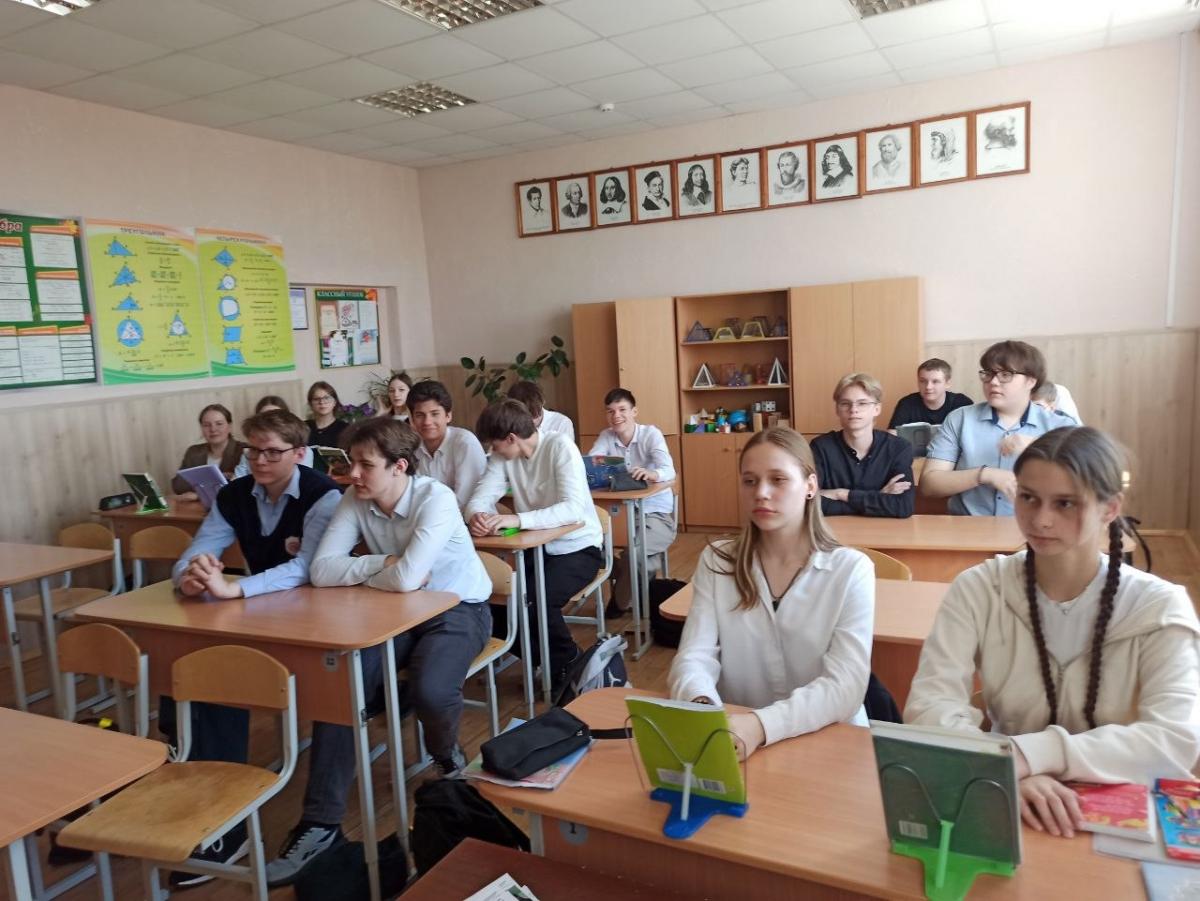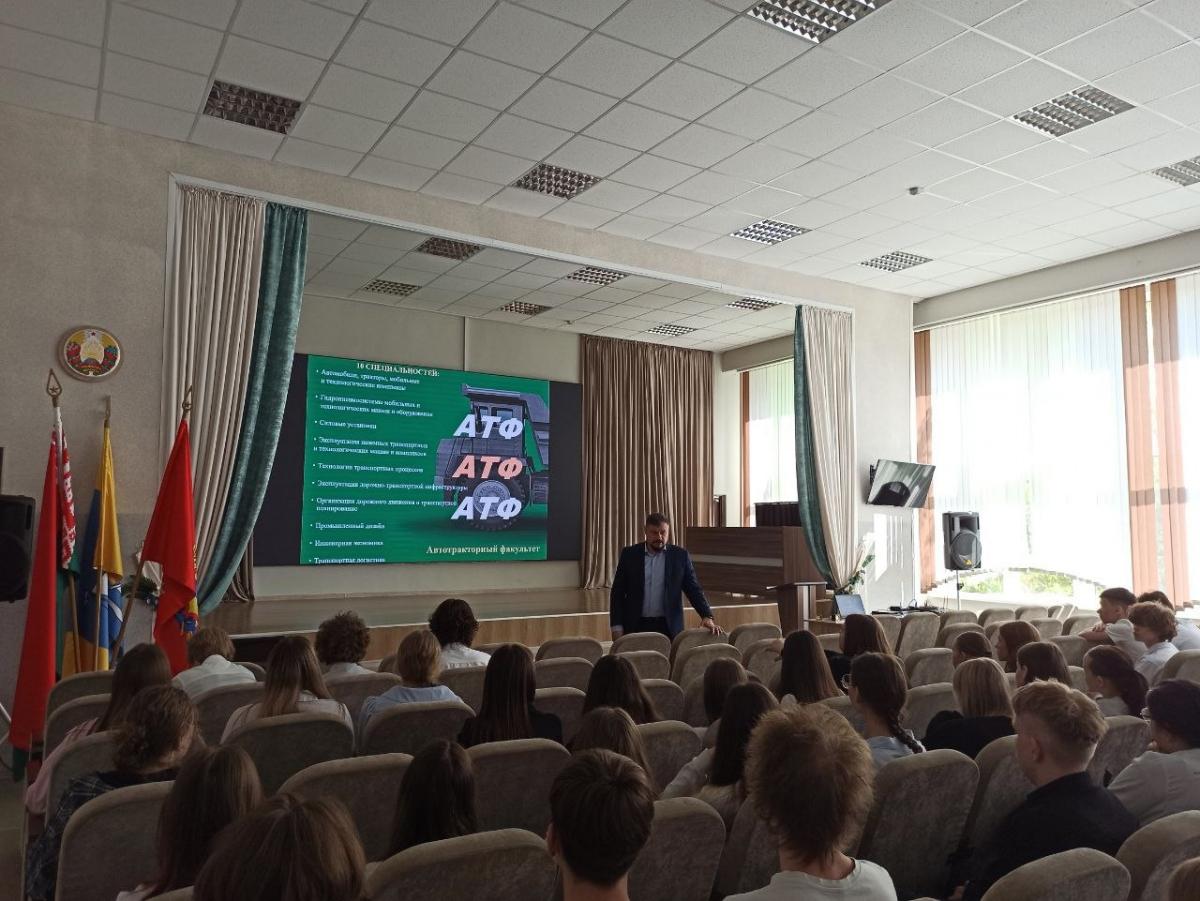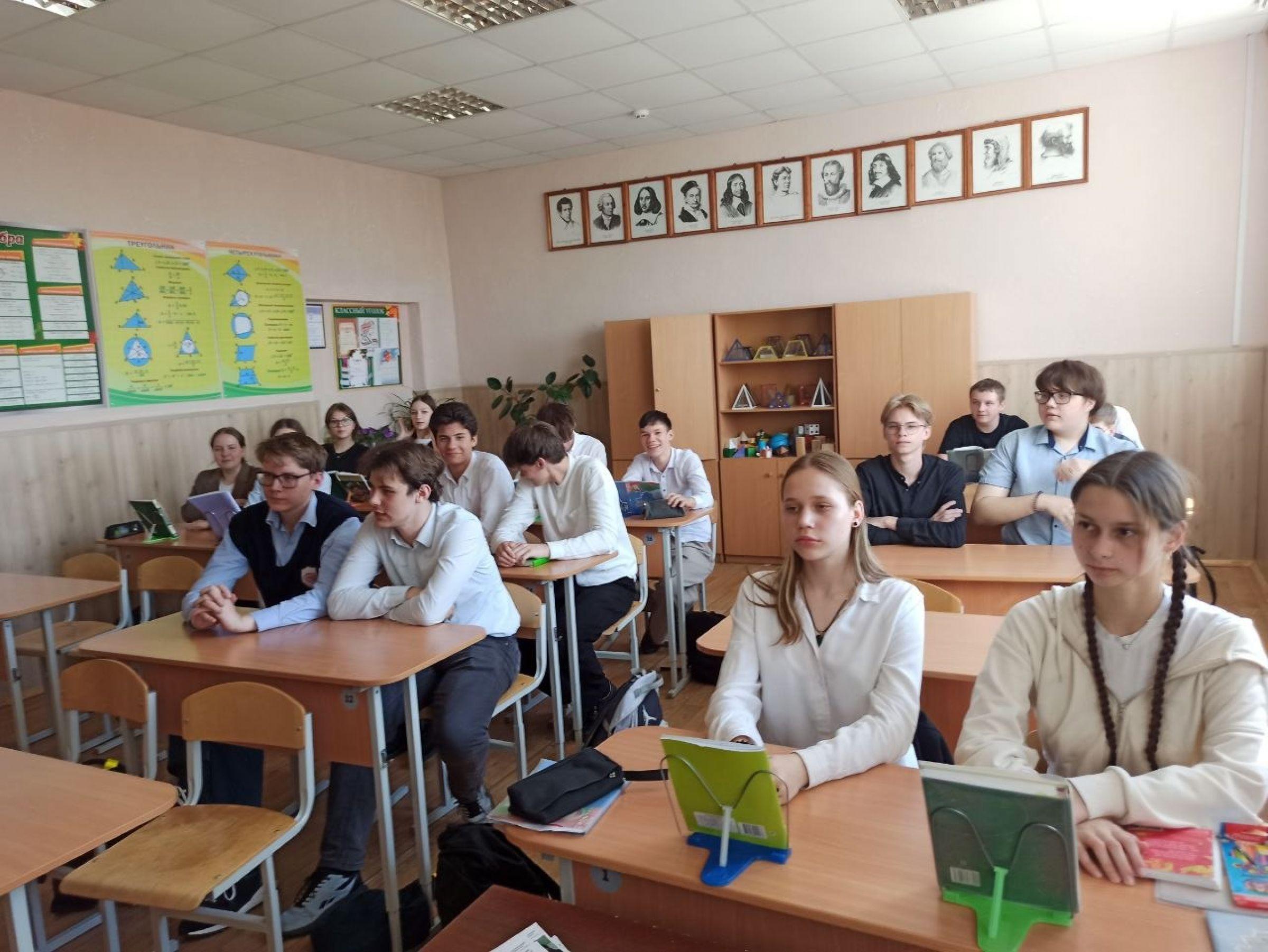
On Friday, May 15, 2026, career guidance events were held for 10th- and 11th-grade students at Stolbtsy Secondary School No. 3 and Stolbtsy Gymnasium No. 1. BNTU was represented by Sergey Korneev, Head of the Vacuum and Compressor Engineering Department of the Faculty of Engineering and Pedagogy. The students were given a brief introduction to BNTU's structure and core specialties.
The speaker also discussed the admission process for the Engineering and Pedagogical Faculty of the Belarusian National Technical University in 2026, as well as the various specializations within the Engineering and Pedagogical Activity program.
Particular attention was paid to the specialization "Equipment and Technologies for Vacuum, Compressor, and Low-Temperature Engineering" and the "Vacuum and Compressor Engineering" profile. Students were introduced to the use of compressor and vacuum equipment in industry, shown the most interesting examples, and learned about the skills and disciplines required of a modern engineer.
For reference: Compressor equipment is used to generate compressed air for transport applications (door drives and other mechanisms on buses and trolleybuses, as well as braking systems, including those on trucks). Compressed air is used to operate pneumatic tools such as jackhammers, impact wrenches, grinders, spray guns, etc. Compressed air is used for pneumatic transport and dosing of bulk and powdered materials (grain, flour, cement, etc.) in various industries. Compressed air is essential for driving powerful equipment such as hammers and presses, mining and drilling equipment, and for automating the movement of mechanisms and components in all industries. Compressed air is used in sandblasting, shot blasting, plasma and laser cutting, and other technological processes. In addition to air, compressor equipment is used to compress and move all types of gases in industry. Compressor equipment is essential for the operation of virtually all refrigeration systems and heat pumps. Vacuum equipment is essential for large-scale global projects, such as experimental nuclear fusion facilities, the Large Hadron Collider, space simulations, and others, as well as in various industries . Vacuum evaporation and concentration operations have long been used in manufacturing, both as primary and secondary processes. Vacuum crystallization apparatuses are used in the production of dyes and fertilizers. Freeze-drying is widely used when it is necessary to obtain products with a long shelf life and, at the same time, a fresh-food-like appearance. The chemical industry employs vacuum drying apparatus in the production of synthetic fibers, polyamides, aminoplasts, polyethylene, and organic solvents. Vacuum filters are used in the production of pulp, paper, and lubricating oils. Vacuum filters are very common in the mining industry for raw material enrichment. Vacuum furnaces and systems are widely used in metallurgy and mechanical engineering. Many modern instruments (electron and ion microscopes, mass spectrometers, etc.) utilize vacuum systems. Without vacuum systems, the production of modern microelectronics, optical products, OLED and LCD screens, and other high-tech products is impossible. The application of wear-resistant and other vacuum coatings to metal-cutting tools and equipment components to extend their service life has also become widespread.
The audience showed genuine interest, asking a number of relevant questions, and noted that they found the material presented highly informative and engaging. The information presented to the students is a way to motivate them to make an informed choice about their future career.