40 Years Since the Chernobyl Tragedy: From Pain and Loss to Recovery and Sustainable Development
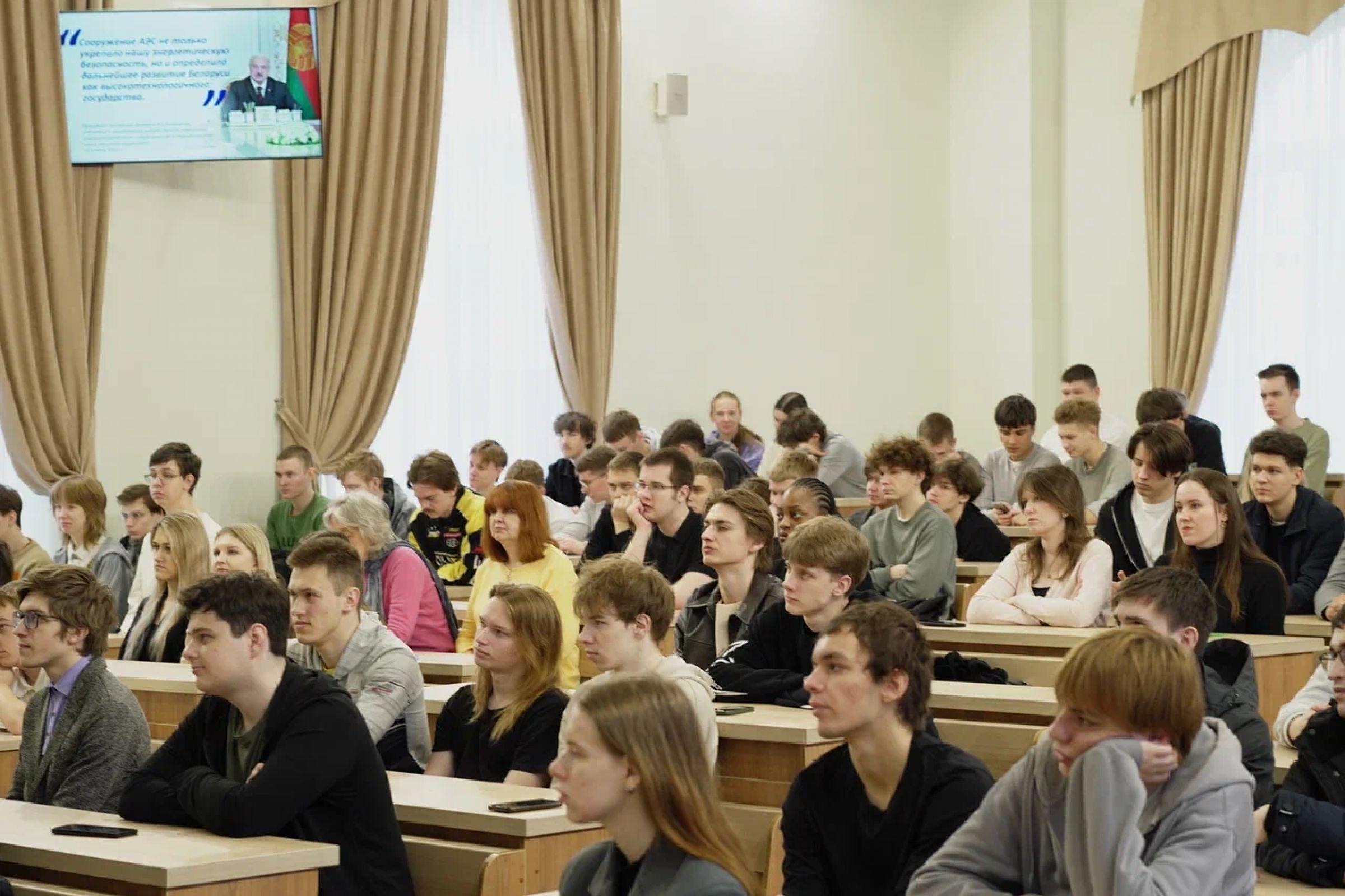
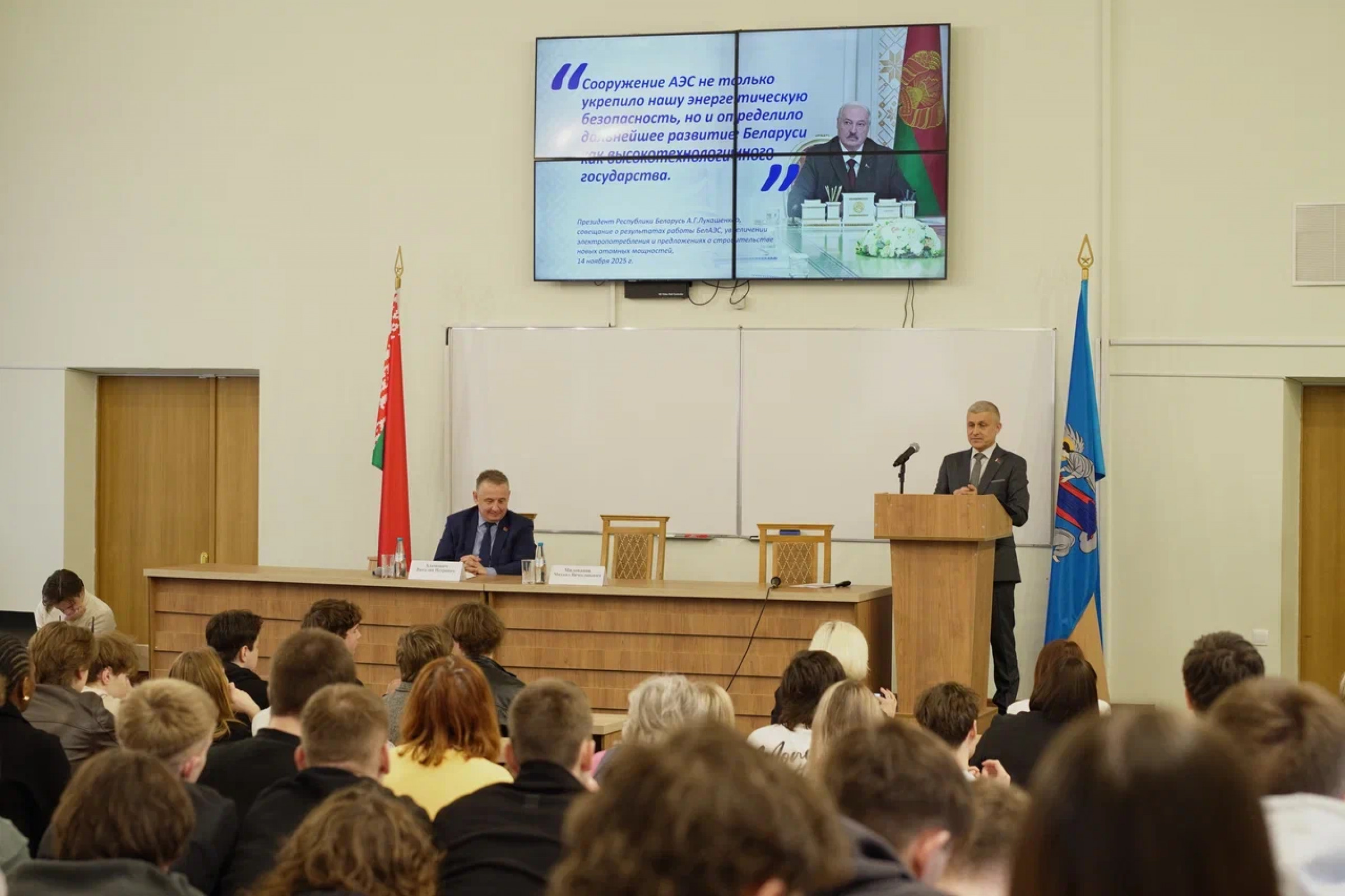
On April 16, 2026, BSTU hosted a discussion platform dedicated to the theme of the Unified Information Day, “Chernobyl: From Recovery to Sustainable Development.” The event, held to mark the 40th anniversary of the Chernobyl tragedy, brought together the university’s faculty members, staff, and students. The invited speaker was Mikhail Vyacheslavovich Milovanov, Deputy of the Minsk City Council of Deputies and Adviser to the Secretariat of the Supervisory Board of the Hi-Tech Park at the state institution “Secretariat of the Supervisory Board of the Hi-Tech Park”. Among the participants were staff members and students of the Faculty of Information Technologies and Robotics, who had the opportunity to gain a deeper understanding of the history of the disaster, its consequences, and the modern experience of the Republic of Belarus in overcoming the aftermath of the accident.
 April 26, 2026, marks 40 years since the accident at the Chernobyl Nuclear Power Plant—the largest man-made disaster of the 20th century. The explosion at Reactor Unit 4 on April 26, 1986, became a tragedy whose consequences affected millions of people and had a profound impact on the environment, the economy, and the social sphere.
The disaster was caused by a combination of design flaws in the RBMK-1000 reactor and operator errors made during a test. Belarus suffered the most severe consequences of the accident: around 70% of the radioactive fallout was deposited on its territory. A total of 3,678 settlements were contaminated, with more than 2 million people living in the affected areas.
 During the discussion platform, it was emphasized that the Chernobyl tragedy inflicted enormous damage on the country. The economic losses of the Republic of Belarus are estimated at 235 billion US dollars, equivalent to 32 annual national budgets at the time of the accident. In 1986 alone, more than 22,000 people were forced to leave their homes. Vast areas of agricultural land and forest were taken out of use. The consequences of the disaster required the creation of an entirely new system of radiation protection, medical monitoring, and social support for the affected population.
Particular attention was given to the path Belarus has traveled over the past decades—from emergency response and the immediate mitigation of the accident’s consequences to a consistent state policy aimed at the recovery and development of the affected regions. Since 1991, the country has had a legislative framework governing social protection for citizens affected by the disaster, as well as the legal status of radioactively contaminated territories. A system of five radiation control zones was introduced.
Participants in the event learned that an important role in overcoming the consequences of the accident was played by the establishment of specialized state and scientific institutions. The Ministry for Emergency Situations was created to coordinate the elimination and prevention of emergency situations. The Polesie State Radiation and Ecological Reserve was founded as a unique scientific site for studying natural processes under conditions of radioactive contamination. In Gomel, the Republican Research Center for Radiation Medicine and Human Ecology was opened.
 Over the years, six state programs aimed at mitigating the consequences of the Chernobyl disaster have been implemented, with total funding exceeding 20 billion US dollars. For relocated residents, 69,000 apartments and houses were built, along with 157 schools and 116 kindergartens. More than 2,000 kilometers of water supply networks were laid, and around 23,000 homes were connected to gas supply systems.
It was also emphasized during the meeting that today the Republic of Belarus is recognized as an expert in the field of radiation safety. Belarusian scientists, doctors, and specialists have accumulated unique experience that is in demand not only within the country, but abroad as well. This expertise proved especially valuable after the accident at Japan’s Fukushima Daiichi Nuclear Power Plant, when Belarus provided essential expert and practical assistance.
Faculty members and students also learned how, thanks to a scientific approach and a systematic state policy, 20,000 hectares of land have been returned to agricultural use, while modern technologies have been developed and introduced to produce food that meets the world’s strictest quality and safety standards.
 The Chernobyl tragedy became a grave historical lesson, teaching the country to approach the use of peaceful nuclear energy with the utmost responsibility. This experience was taken into account during the construction of the Belarusian Nuclear Power Plant, which was built in accordance with the most advanced Generation III+ safety standards. Its commissioning made it possible to reduce energy imports by approximately 40% and provide the country with affordable and environmentally clean electricity.
The discussion platform held at BSTU became an important opportunity for students and university staff to revisit the subject of the Chernobyl tragedy, reflect on its consequences, and see how far Belarus has come—from coping with the aftermath of the disaster to recovery, development, and the shaping of a sustainable future.
