
Republic of Belarus, 220013, Minsk, Independence Ave., 65, academic building 1, room 442
+375 17 293-95-29
poak.af@bntu.by
HISTORY OF THE DEPARTMENT
The department was organized in 1977 because of the opening the specialization "Architecture of industrial buildings and structures" at the Architecture Faculty. In the 1990s the department united two spheres of pedagogical and scientific-practical activity: industrial architecture and architectural structures, and received its modern name - "Architecture of industrial facilities and architectural structures." Today, the department’s disciplines are devoted to the whole variety of industrial and multifunctional, technologically complex objects of business activities, including manufacturing buildings, complexes, their groups and industrial areas.
The founders of the department were two outstanding specialists: Anikin V.I. – alumnus of the Leningrad Institute of Municipal Construction Engineers (USSR), Honored Architect (BSSR), Ph.D., Professor and Zverev F.P. – alumnus of the Moscow Architectural Institute, Professor.
V.I. Anikin became the first head of the department. In 1981 - 1997 the department was headed by A.E. Balyko, Ph.D, Associate Professor; since 1998, the Department has been headed by Doctor of Science, Professor E.B. Morozova.
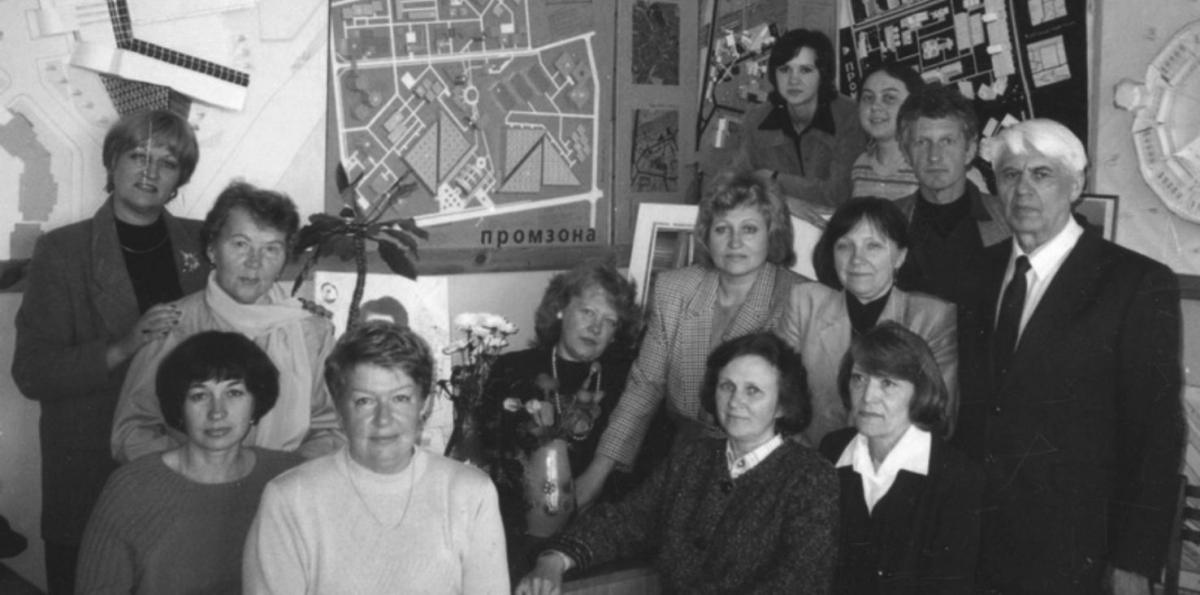
The collective of the department unites highly professional staff of architects and engineers working in scientific and practical fields of industrial architecture and construction. Besides the full-time teachers, leading specialists from design organizations of the republic are involved in the educational process.
ACTIVITIES
The department is an educational, methodological and scientific subdivision of BNTU, providing teaching of architectural disciplines at the Architecture Faculty and faculties of building profiles. For the architectural specializations, the department is a graduating one.
The department activities include: lectures, course and diploma design, conducting educational, technological and pre-diploma practices, career guidance work.
Training courses and disciplines:
DIPLOMA DESIGN
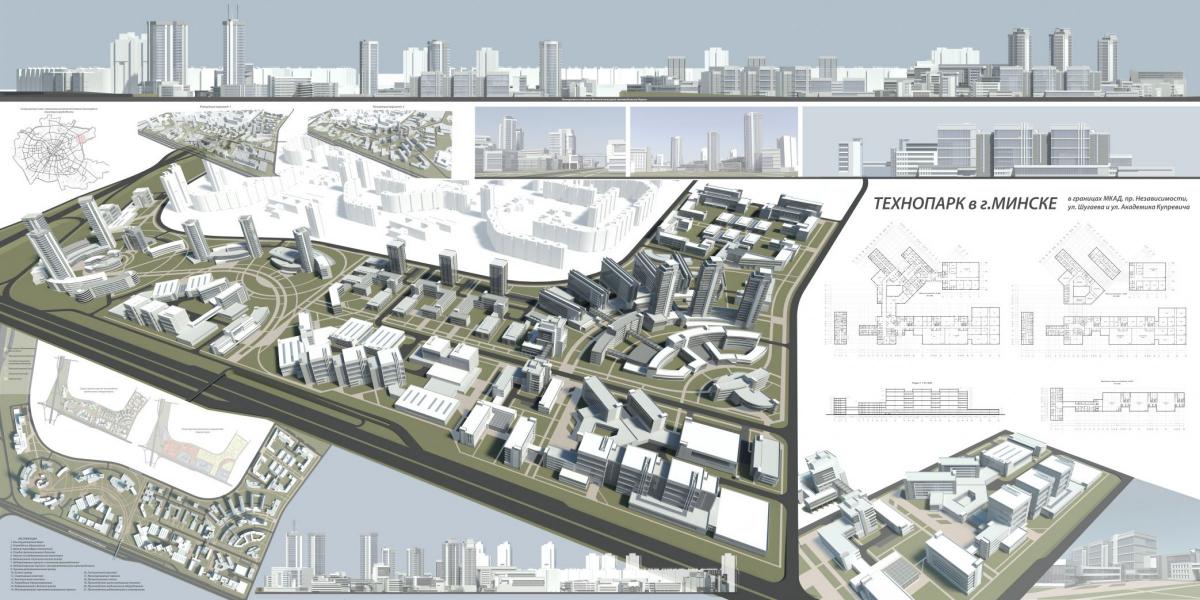
Every year about 35-40 students complete graduation projects. The topics of graduation projects are based on modern life and update constantly. Project themes reflect the complex world of manufacturing, different levels of its spatial organization – volumetric and territorial. The diploma themes include three groups.
The first group – topics solving extraordinary problems by non-traditional means using perspective technologies, materials and environmental requirements – "Man in an extreme environment", "Mobile plant", "Technopark", etc.
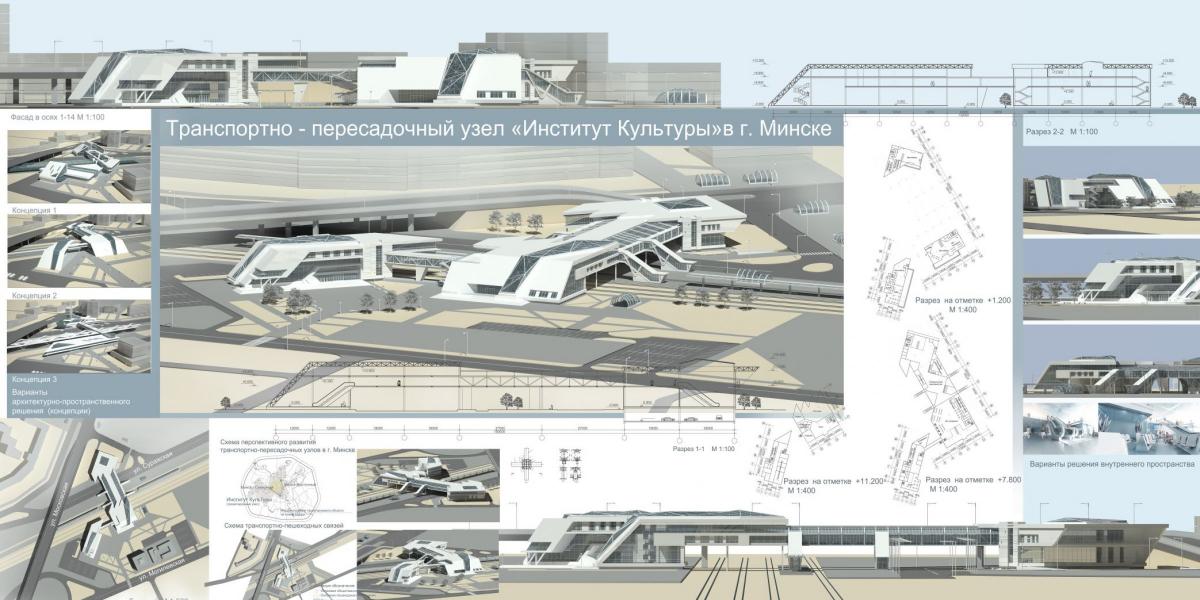
The second group – real topics, oriented on modern tasks, requirements, norms and technical capabilities: "Industrial hotel", "Intermodal terminal", "Industrial and commercial complex", "Multifunctional industrial and commercial complex in the railroad zone", “Teleport”, “Metro objects”, “Agricaltural park”, “City industrial zone”, “Industrial and business district”, “Landscape organization of an industrial territory”, etc.
The third group consists of topics on the rebuilding of production facilities – "Renovation of a part of the city with predominantly industrial development", "Rebuilding of an industrial enterprise", "Rehabilitation of the public infrastructure of an industrial zone", "Renovation of the pre-factory zone of a large industrial facility", "Adaptive reuse of a historically valuable industrial facility".
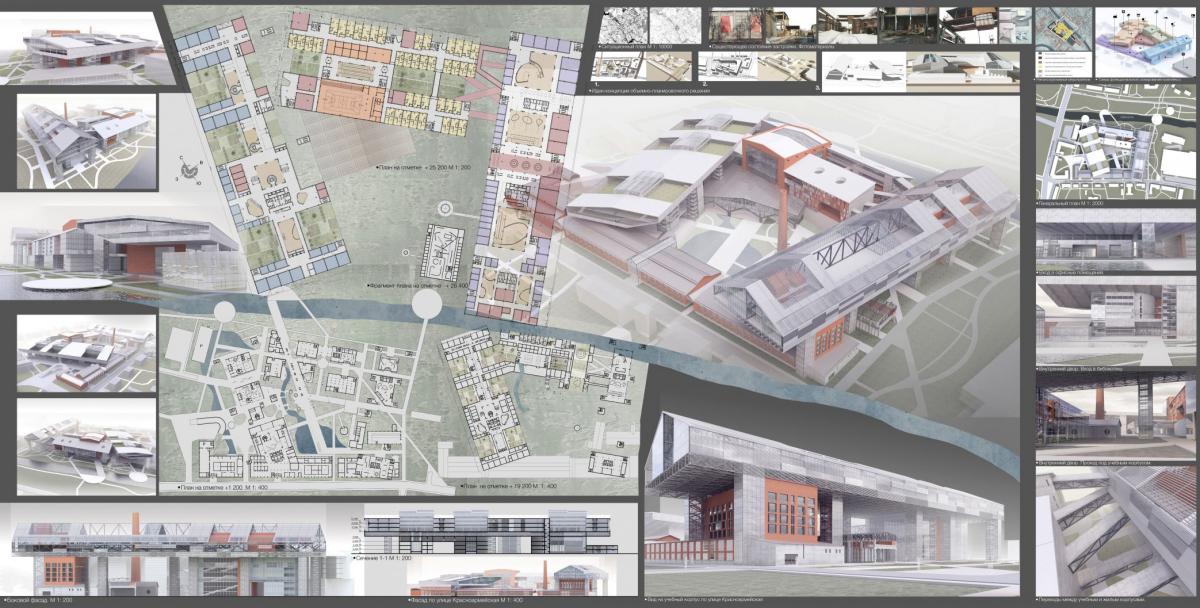
The best projects annually participate in international, regional and republic diploma projects exhibitions. Among the achievements of the department – more than 110 diplomas and honorary awards
METHODOLOGICAL, SCIENTIFIC AND RESEARCH WORK
Methodological work includes educational and methodological textbooks for lecture courses, practical and laboratory classes. Over the years, the department has published 130 units of educational literature.
The scientific activity of the department is carried out in the following directions: theory and history of industrial architecture, typological basics for the industrial facilities design, environmental approach and energy-saving technologies in the design of civil and industrial buildings.
The results of the scientific work of the department are used both in the real practice of designing and building production facilities, and in the educational process. The staff of the department published more than 1000 articles and 12 monographs.
The department has a magistracy (Master degree) and postgraduate studies (Ph.D. degree), where training is carried out according to individual programs.