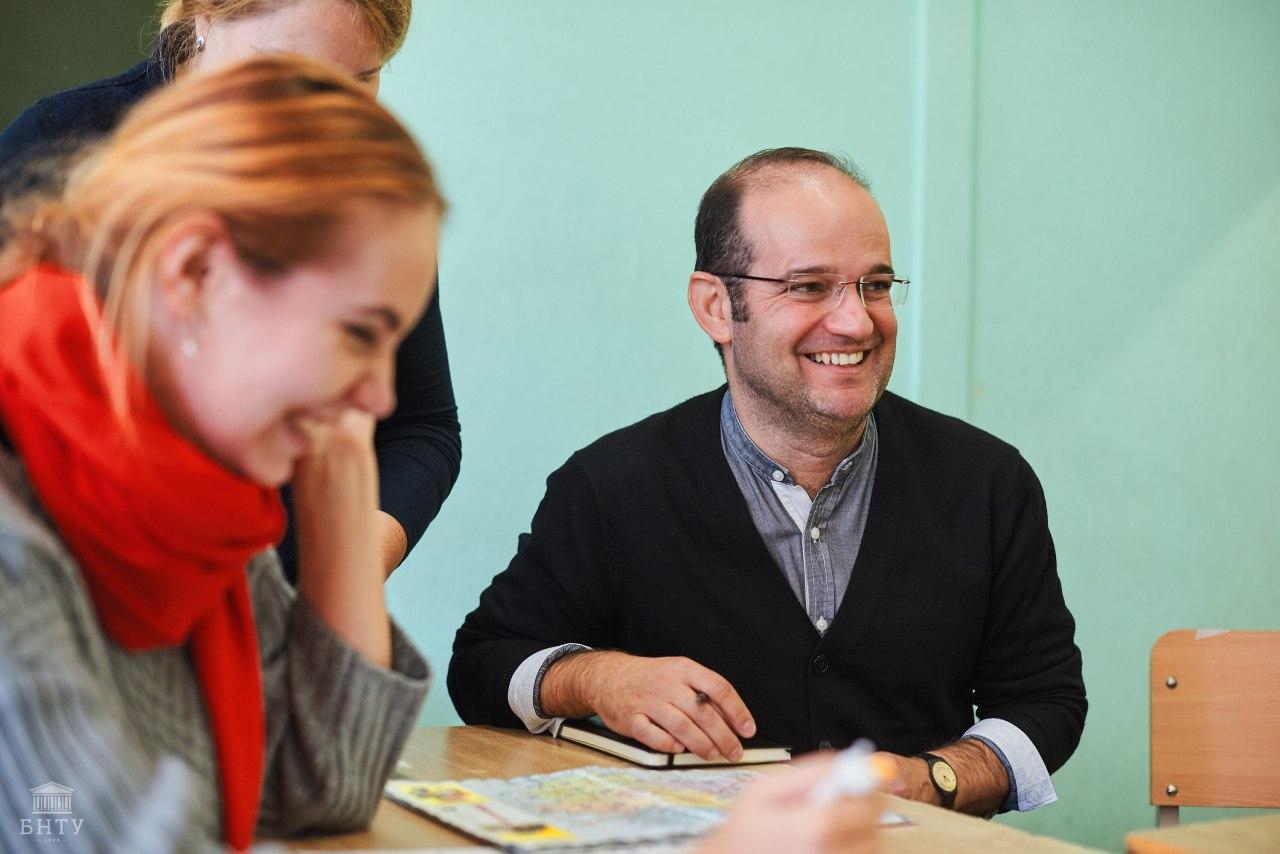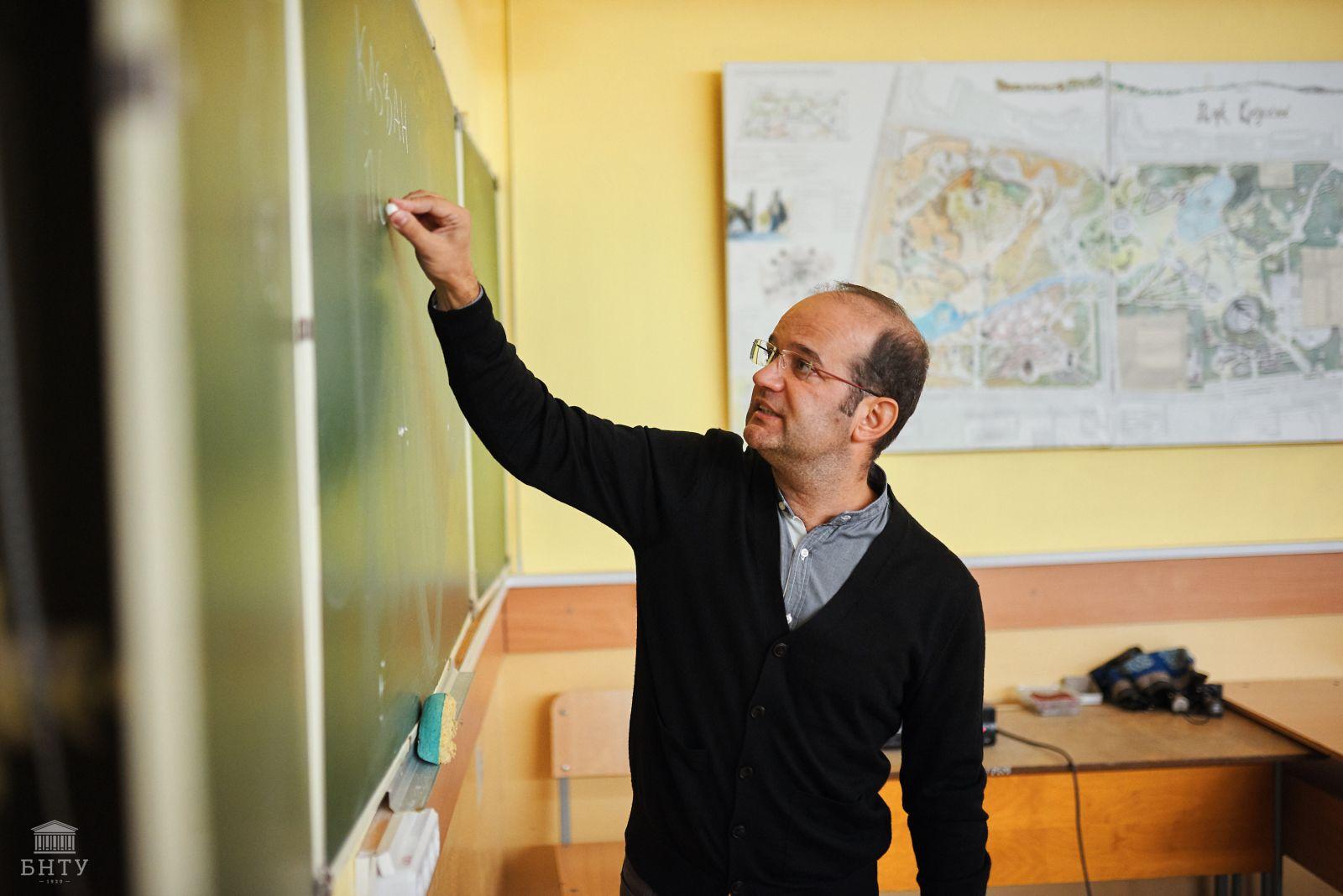
Jorge Correia, a professor from the University of Minho in Portugal, Braga, became one of the Architectural Faculty lecturers under the international programme of the European Union – ERASMUS+ from September 23 to 25.
Besides teaching, Jorge Correia is the researcher at Landscapes, Heritage and Territory Laboratory, which functions at the University of Minho (hereinafter referred to as UMinho). Jorge Correia has the experience of teaching at the universities in Brazil, Spain, Albania, Turkey, Greece, Palestine, and now he has arrived in the Republic of Belarus.
.jpg)
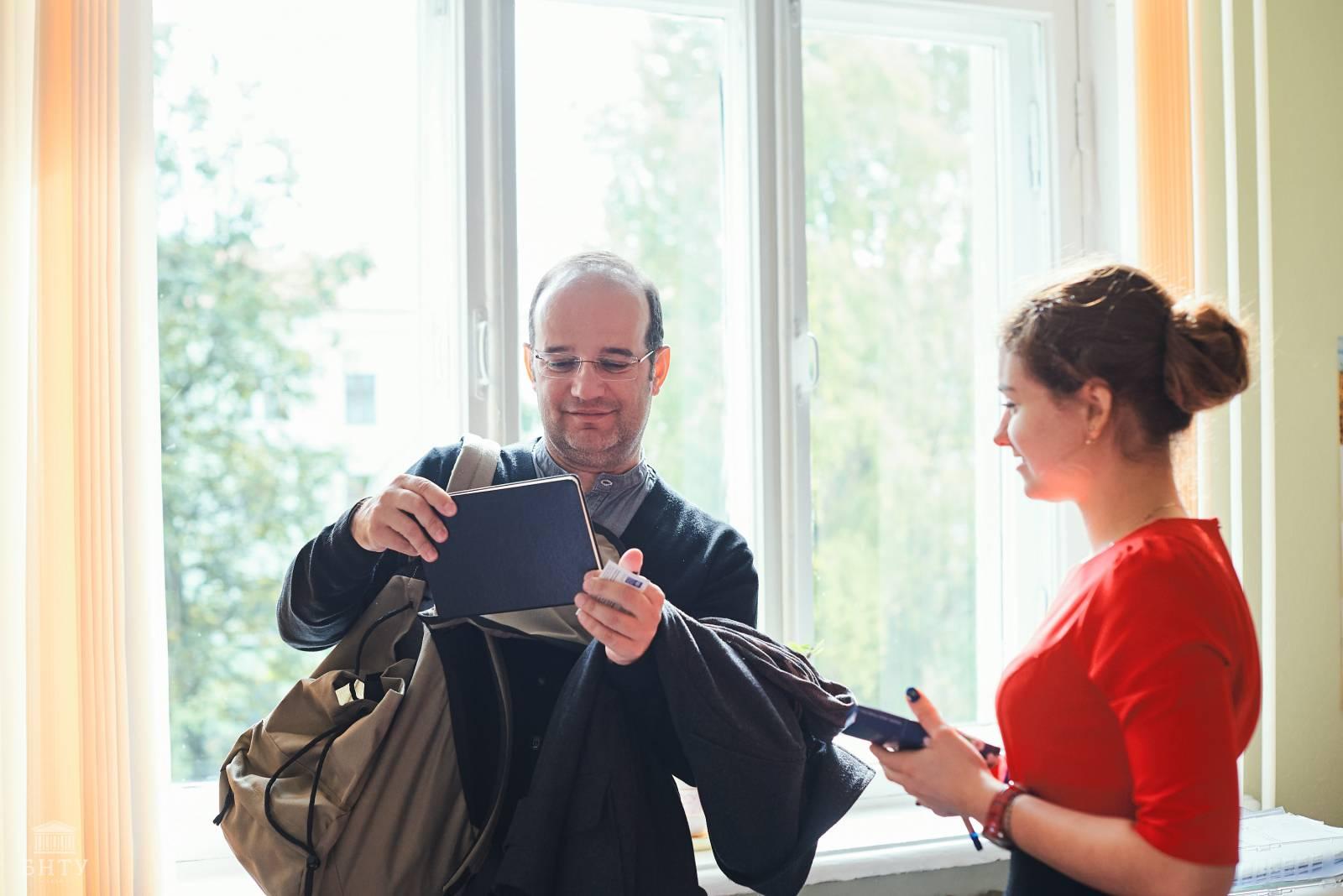
For half a year the correspondence with the professor by electronic mail was held by Irena R. Radzevich, a Senior Lecturer of the Theory and History of Architecture department. And she was the very person to meet Jorge on the first day of his arrival. Similarly, Vera A. Sysoeva, an Associate Professor of Urban Planning department, put her name forward to help the professor to adapt to a new environment.
“Working as a professor at a university in Portugal implies a few obligations, where teaching is the minor one. Essential part of our job is doing research. Based on the results of work, we can be given money for publishing our study and taking part in international conferences. Thus, I’m participating in EAHN (European Architectural History Network) and ISUF (International Seminar on Urban Form) conferences. Another obligation of a professor's job is the organization of various events for students and beyond. It is a way to earn money as well: participation and registration are usually chargeable. All of those things are the advantages to a teacher’s CV, which correspondingly influences your salary”.
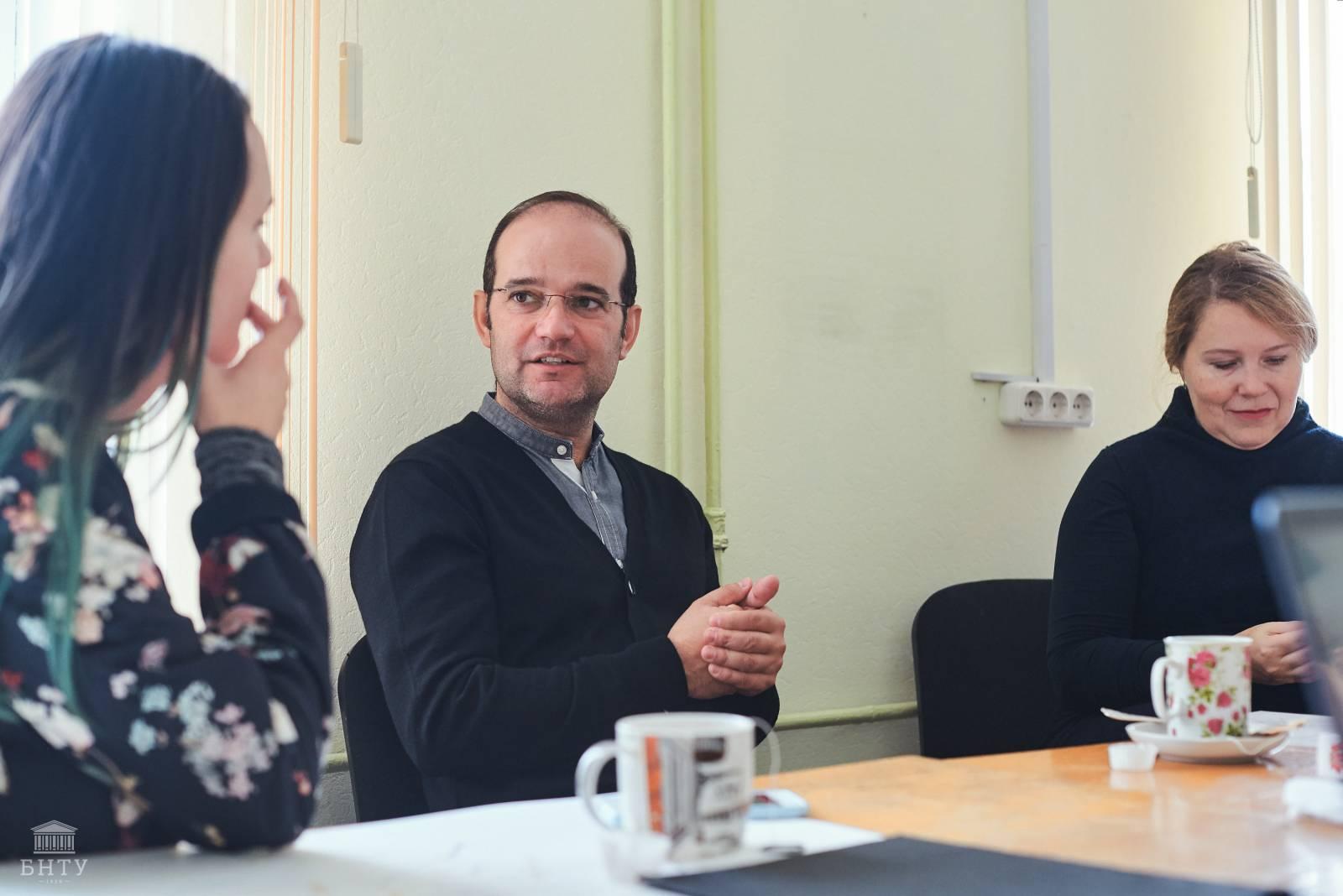
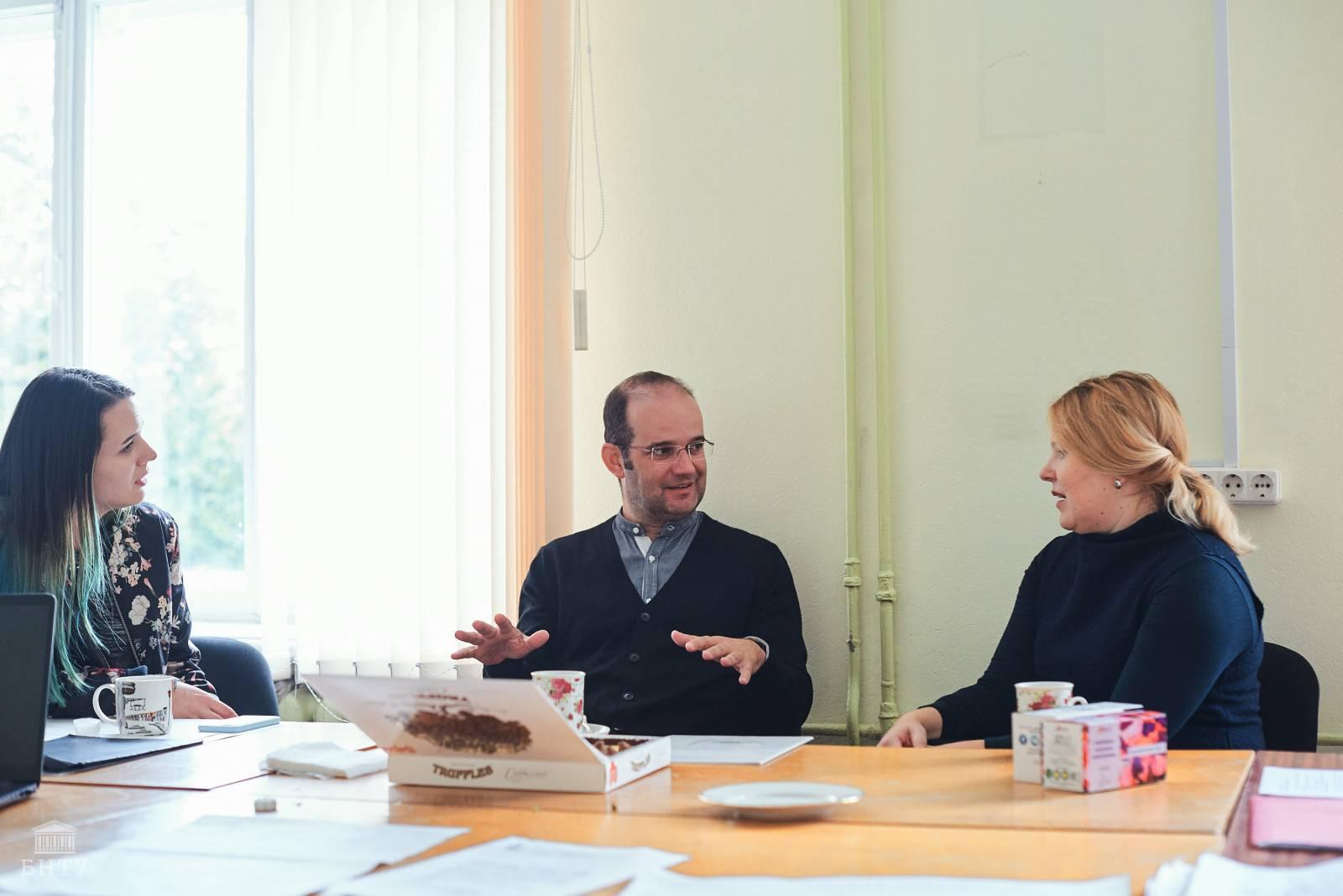
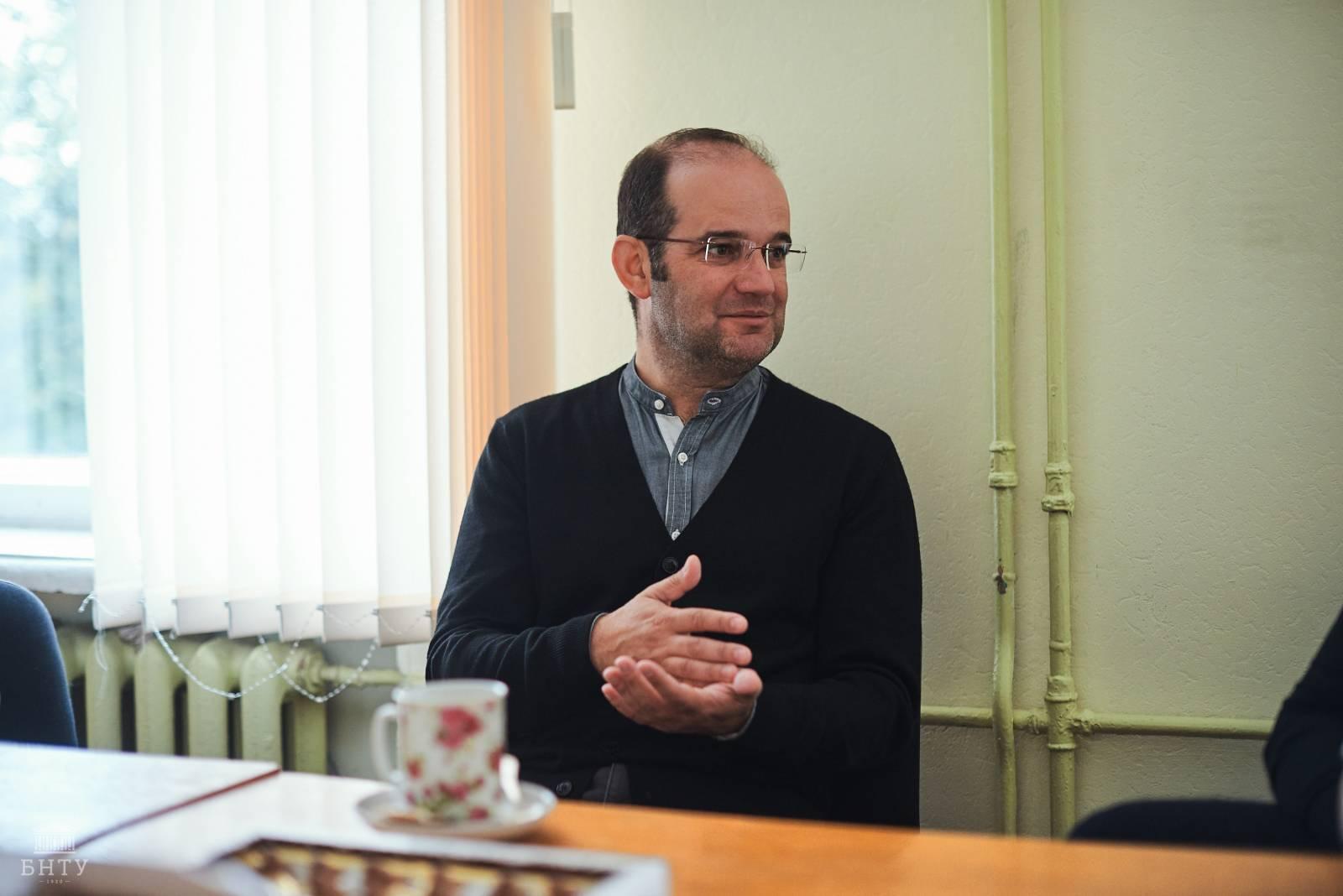
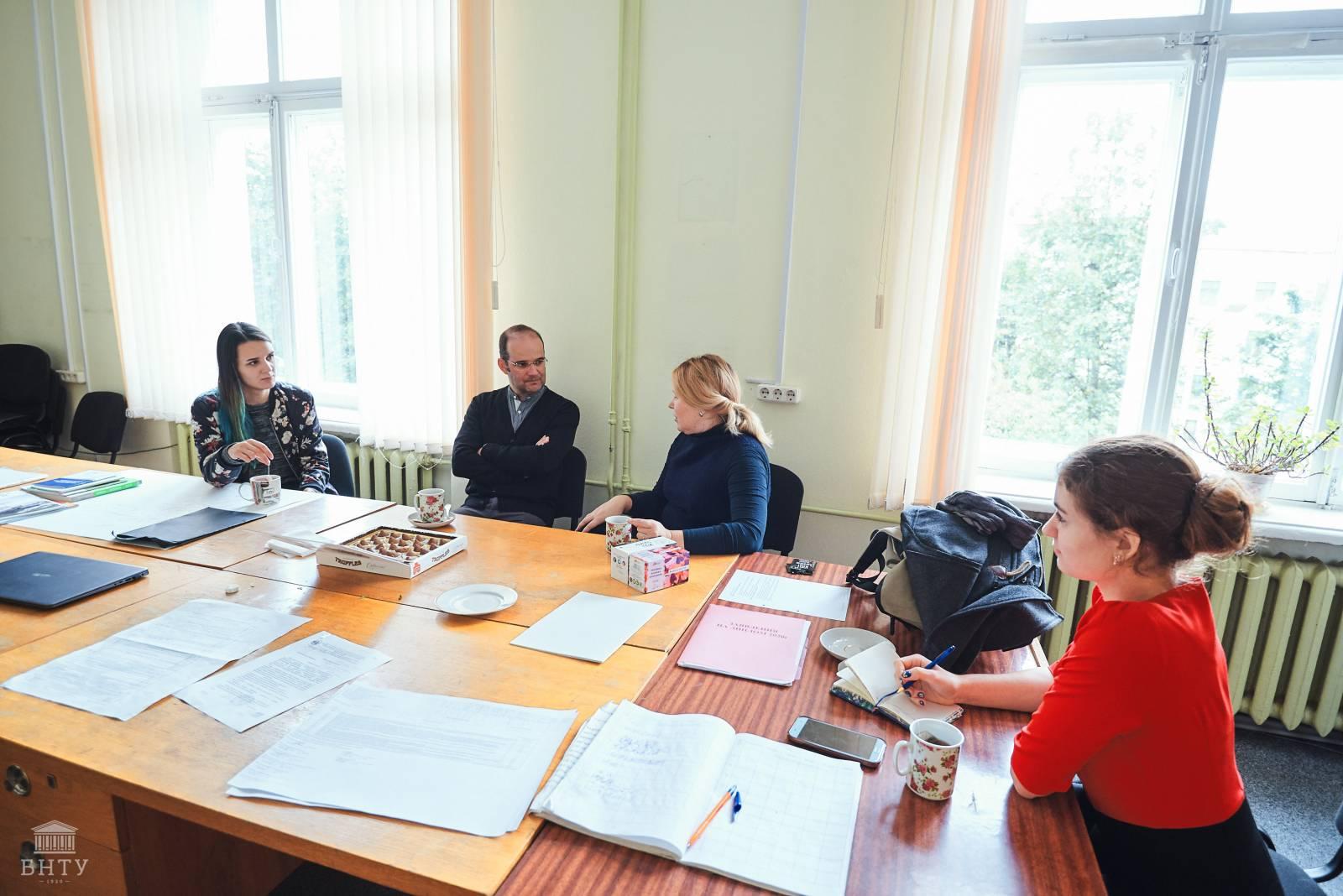

We wondered how the guest, living in subtropics, finds the climate of Belarusian autumn.
“It was September that I chose for my trip, and I hoped to find nice weather here (laughing). Now I’m in the warmest clothes that I have. In Portugal, we have such weather in winter, January-February. But I’m an architect, all architects fit in (laughing)”.
The topic of the seminar, where the students from 11101415 group of “Architecture” specialty were expecting a replacement professor, was morphology, or “compilation” of a new city in the given conditions. A task for the upcoming class is the development of little towns’ novel models. Why? To make these towns more favourable and convenient for living. The young architects had been working on their projects since the beginning of the year. This time a local system analysis should have been submitted to a new professor from Portugal.
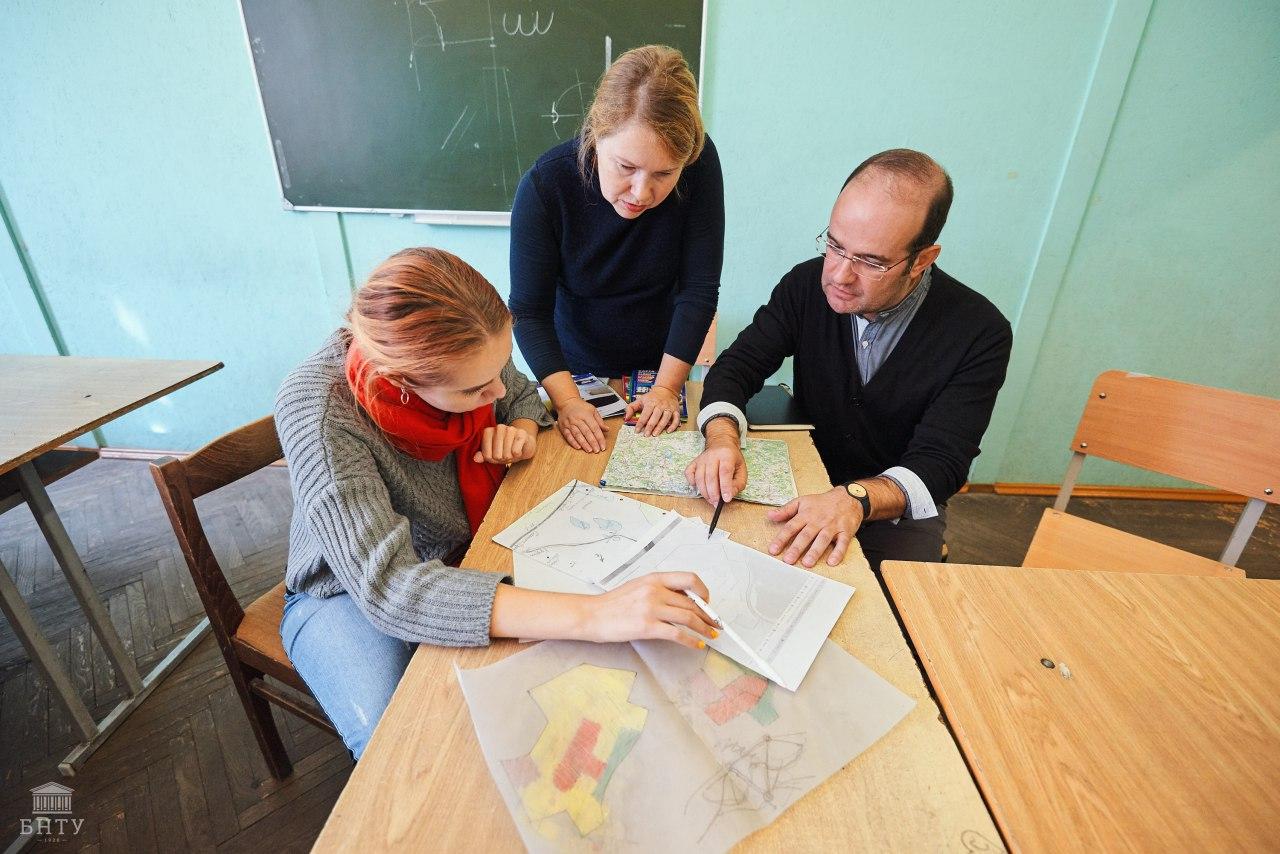
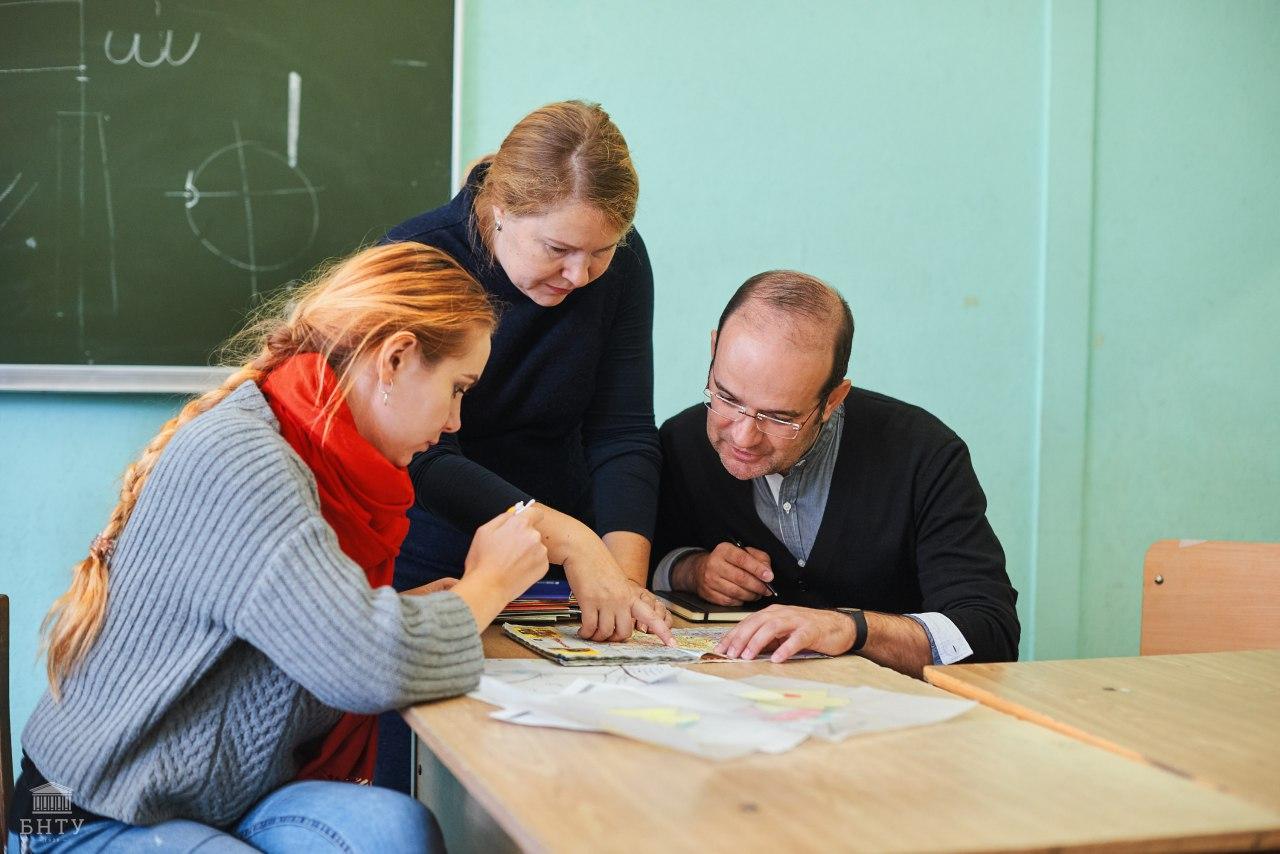
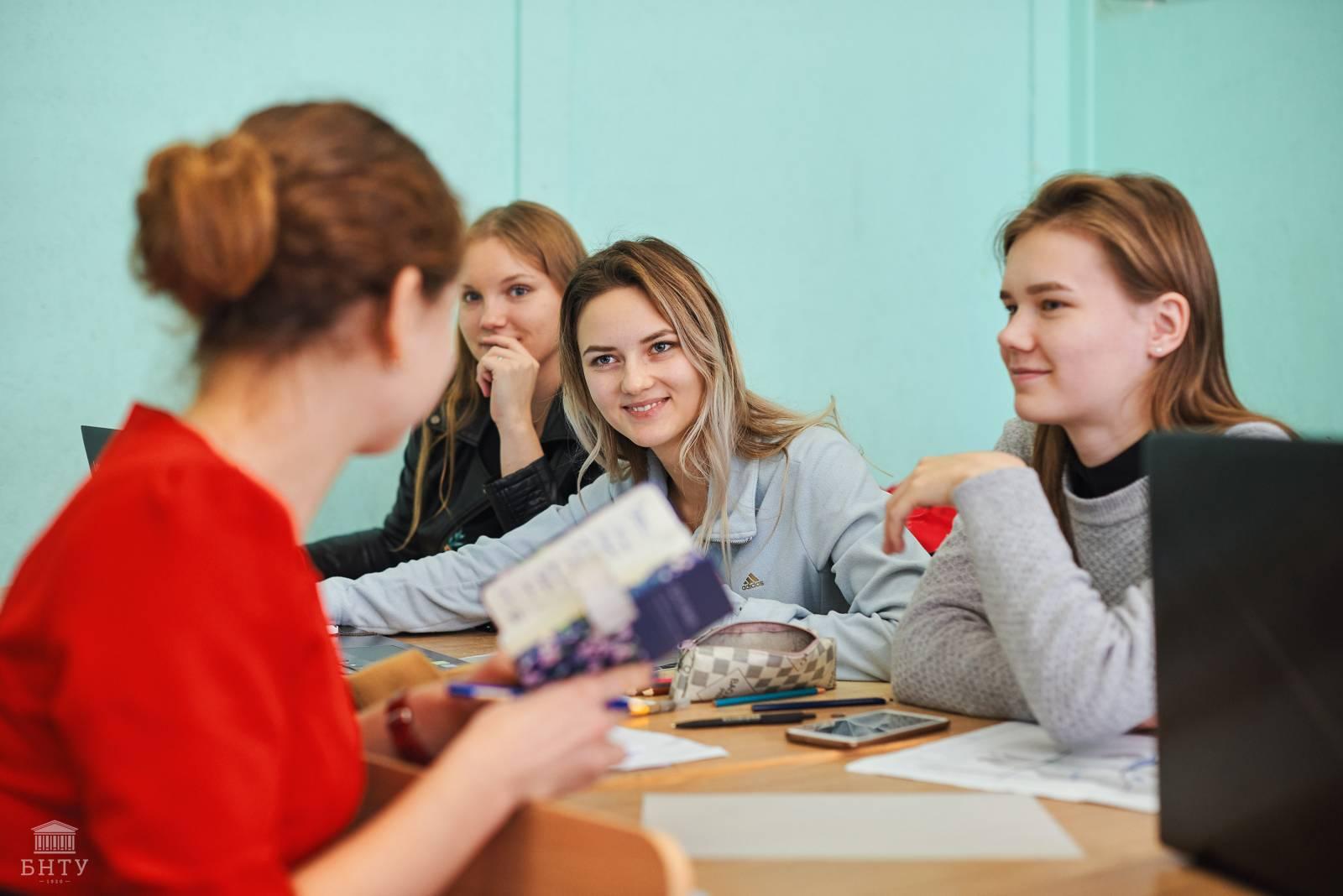
In the beginning, everybody was embarrassed and didn’t want to speak English, but the professor found favor with the students quickly. He asked questions and shared advice.
“You’d better speak English, I’m here not to examine your command of the language. Tell me about the undertaken analysis, how you have come to such a suggestion. And how have you selected this particular area for your town? Architects don’t do zoning, they consider the advantages of the location”.
Later on, the students said that the seminar had inspired them to put more effort into studying the language.
.jpg)
The seminar came to an end, but the acquaintance with the professor was continuing to last. A lecture on “Islamic urbanim - na introduction” lay ahead. As the professor said, he was inspired to study this subject by photographers of the 19th century. It was obvious: Portugal's urban planning system confronts Islamic towns in northern Africa, the former colonies of the greatest seafarers’ country.
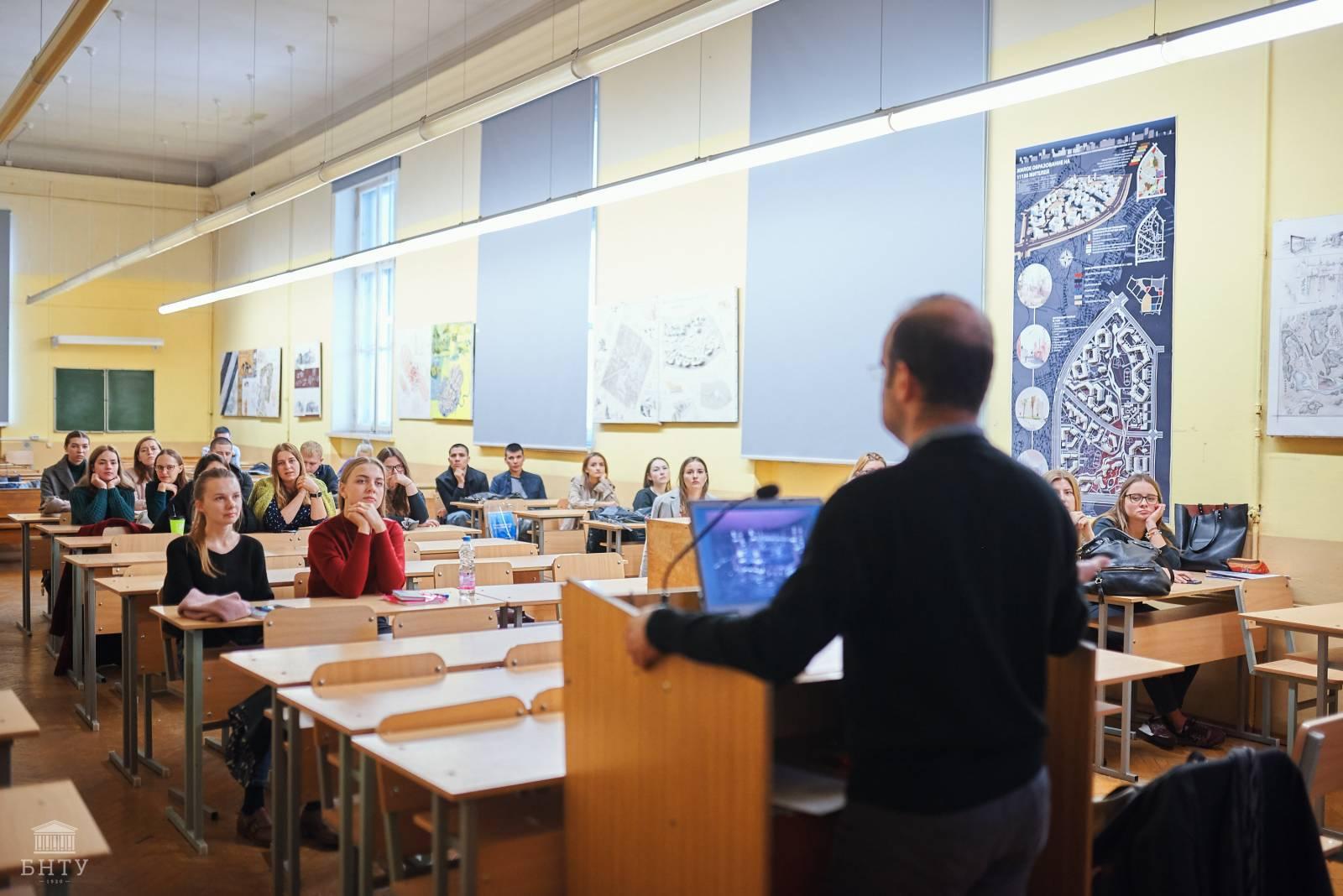
Though the lecture was in the English language only, most of the students understood the training material and even laughed at the professor’s jokes and asked questions. The other students, who are not as good at English, were given a full translation in Russian by Vera Alexandrovna.
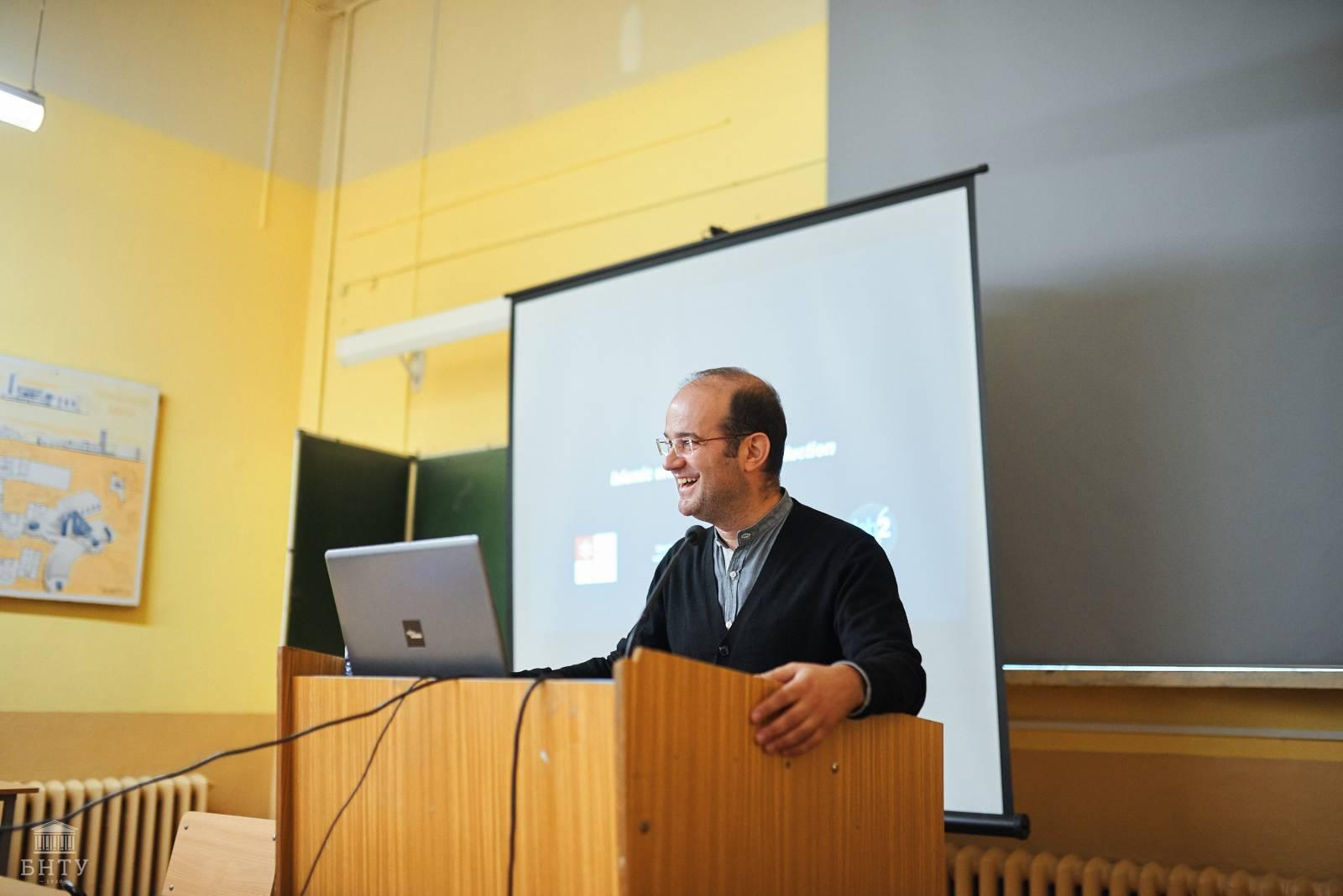
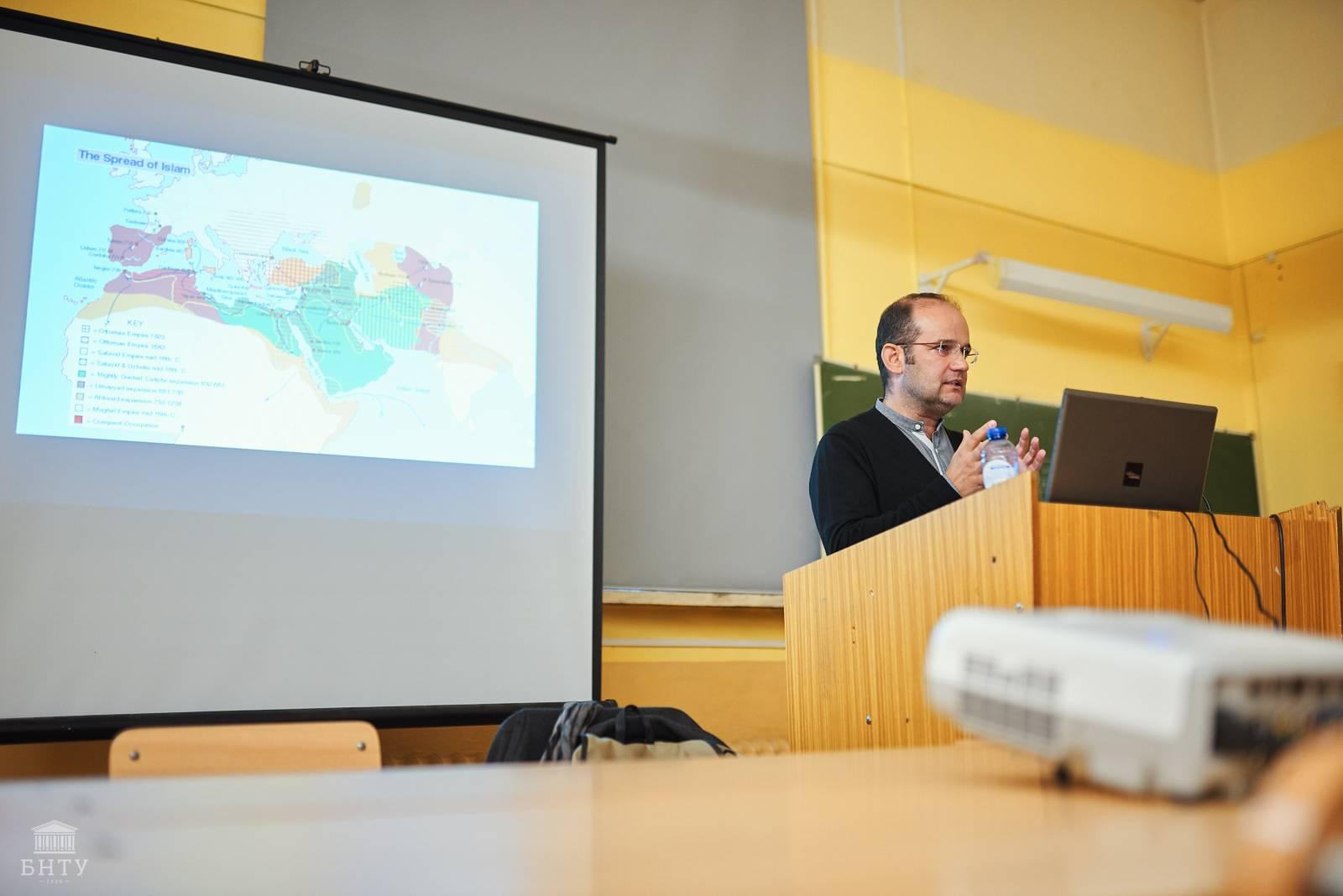
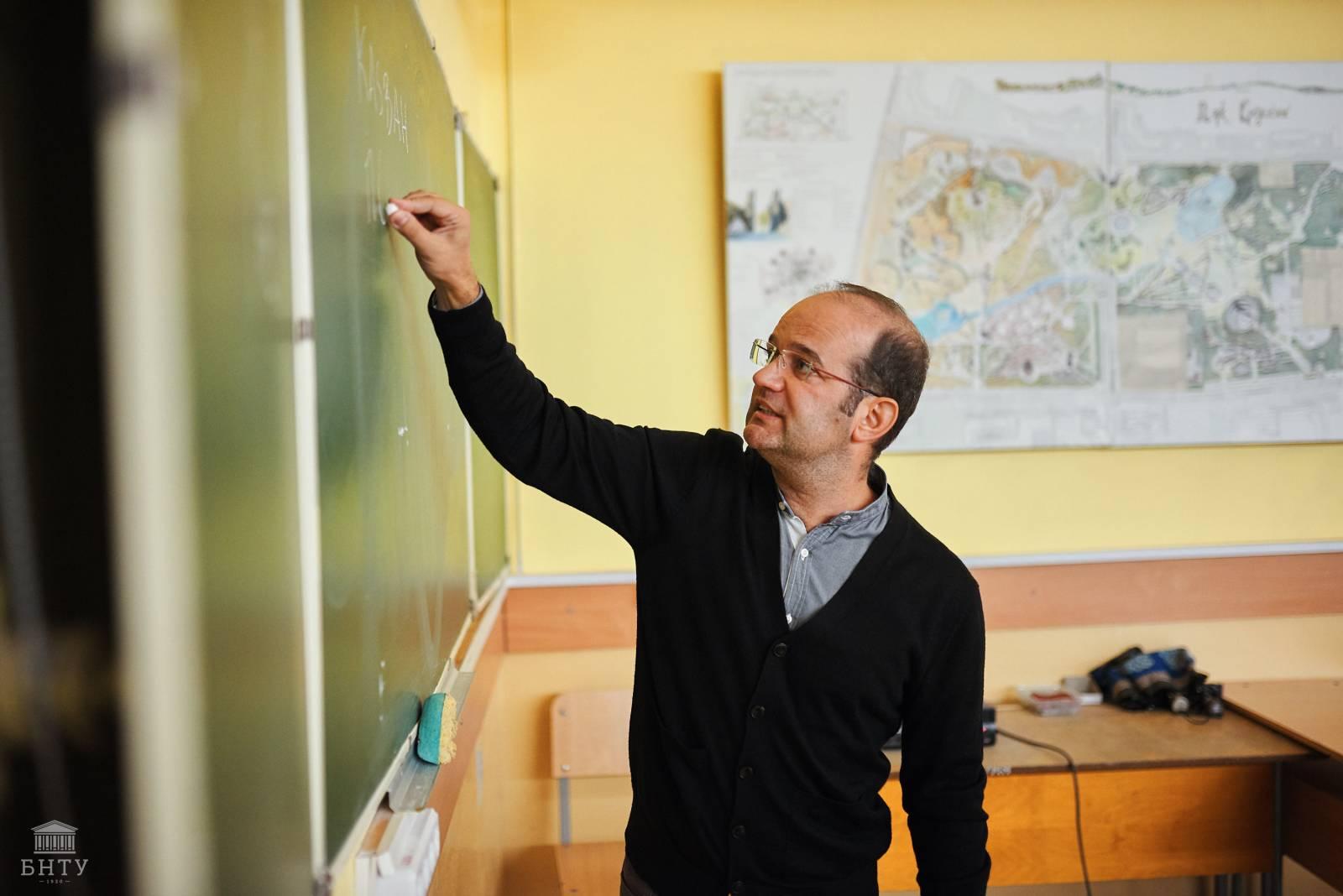
What was especially remarkable about the lecture of Jorge Correia, shared with us Zybailo Nikita:
“The enthusiasm and involvement of the professor! He told us a lot of stuff and drew alongside, not simply reading the text on his papers. The feedback from the audience was the same. You could see it yourself: each of us was listening to him carefully. Furthermore, we usually take our seats at the end of an auditorium, but today we didn’t act like that. The subject of the lecture isn’t related to my specialty, but still, I find this information interesting and useful for broadening the mind”.
.jpg)