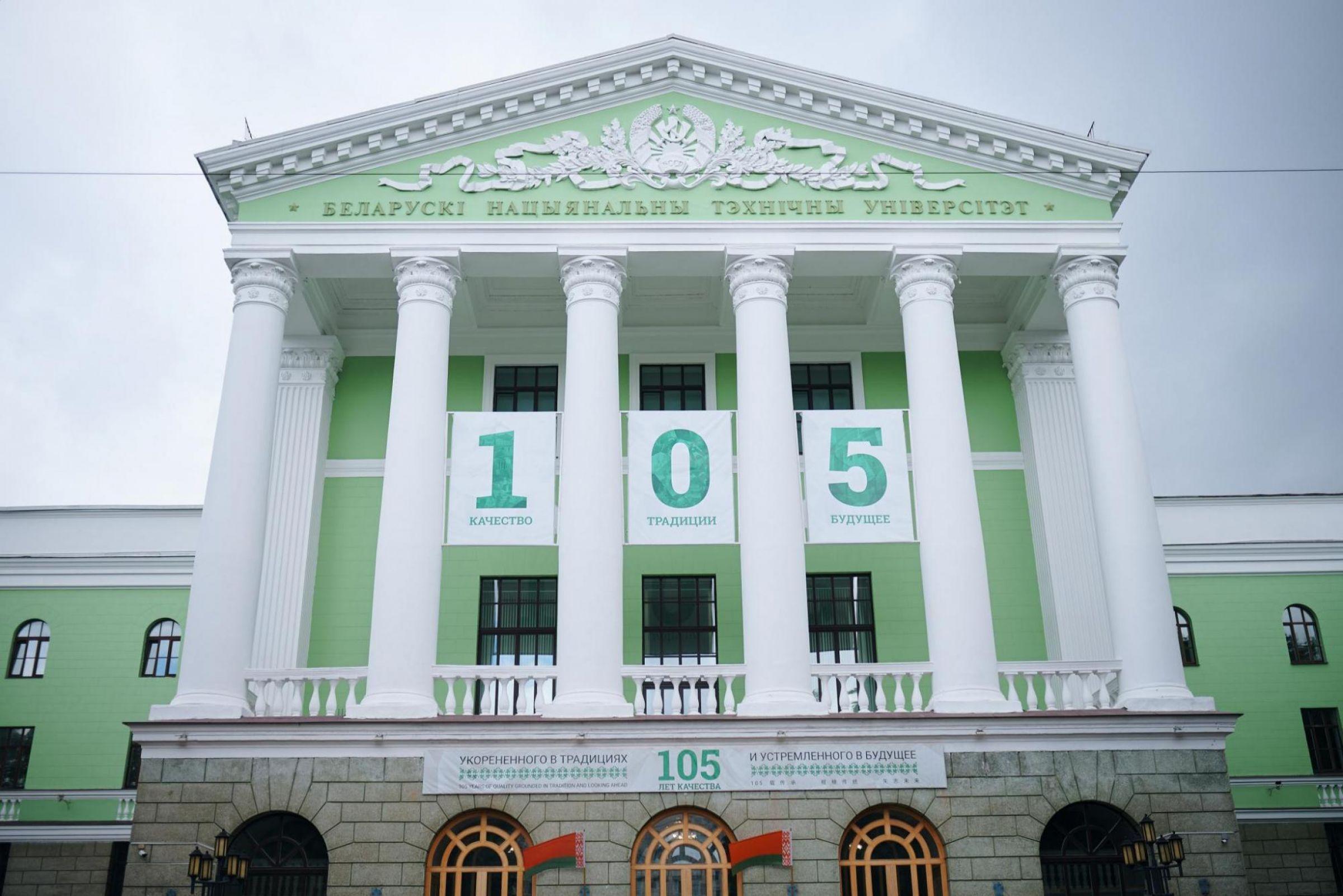
A temporary change in focus back in 1922, a large-scale student construction project near Zaslavl, and the first dual degrees. We're concluding June, and with it this beloved column, with a selection of facts about the dramatic turns and new beginnings in BNTU's history.
June 29
In June 1922, the Board of the People's Commissariat of Education and the People's Commissariat of Agriculture of the BSSR made a decision that could forever change the university's fate: the Belarusian Polytechnic Institute was transformed into the Belarusian State Institute of Agriculture, with four sections. The reason was both prosaic and dramatic: the young republic, devastated by World War I and the Civil War, could not financially support three higher education institutions at once, and the restoration of the agricultural sector required personnel immediately.
The agricultural institute did not remain an agricultural institution for long. In 1924, it was expanded and renamed the Belarusian Institute of Agriculture and Forestry named after the October Revolution. In 1925, the Minsk institute merged with the Gorki Agricultural Institute, shifting the center of agricultural education to the Mogilev region, where the famous Belarusian State Agricultural Academy was later established. But history took another turn: in 1933, the Council of People's Commissars of the BSSR corrected the bias toward exclusively agricultural education and reestablished a full-fledged technical university in Minsk, renaming it the Belarusian Polytechnic Institute. Thus, the institute, which had lost its technical identity, regained it – this time for many years to come.
In 2001, the Faculty of Natural Resources and Ecology was established at BNTU, a structure designed to train specialists in the field of sustainable environmental management. Since 2007, the faculty has operated under a new name—the Faculty of Mining and Environmental Engineering—and continues to train engineers for mineral extraction and environmental management.
June 30
In June 2023, BNTU held a graduation ceremony for the first graduates of its joint "2+2" educational programs with universities in Uzbekistan. The program, which entails spending the first two years of study in the student's home country and the remaining two in Minsk, began with a single agreement with Tashkent State Technical Transport University. By 2023, it had grown to 75 joint programs with partner universities in Uzbekistan.
The first students arrived in Belarus in 2021, and two years later, each of these students became certified specialists with dual degrees—from their home university and BNTU. "Since the signing of the first agreement to establish a joint educational program, we have all done a tremendous job to ensure that today marks the first graduation of graduates," BNTU Rector Sergei Kharitonchik noted at the ceremony.
Furthermore, on June 30, 2005, the grand opening of the Stalin Line historical and cultural complex took place near Zaslavl, attended by President of the Republic of Belarus Alexander Lukashenko. The open-air museum was built in just six months, at the initiative of veterans, to commemorate the heroism of Soviet soldiers in the early days of the Great Patriotic War.
The core of the construction teams that restored pillboxes, dug trenches, and landscaped the complex grounds consisted of 600 cadets from the BNTU Military Technical Faculty—future military engineers—who literally revived the memory of their ancestors' heroism with their own hands. The opening ceremony attracted over 10,000 spectators, culminating in a large-scale military-historical reenactment, "Invasion."
June has been written down to the last line. However, the history of the Polytechnic University doesn't end there – it continues to be written by everyone who studies, works, and creates within the university's walls today.
