Thirty-six years ago, a war broke out in the Persian Gulf in the Middle East (1990–1991), which became a major event in the new balance of power on the international stage. As a result of the liberation of Kuwait by US forces, the establishment of agreements with the USSR and the UN based on the condemnation of the principle of aggression in international relations, and the formation of a powerful coalition of Arab countries, the US defined its role in the new world. The victory of the American armed forces in the Persian Gulf coincided with a deep political and economic crisis in the Soviet Union, which was effectively losing its status as a 'superpower' before the eyes of the world, subsequently leading to the collapse of the bipolar system of international relations and the establishment of a unipolar system. Many experts agree that the modern world is once again becoming multipolar. In this context, the new war in the Persian Gulf raises a number of questions.
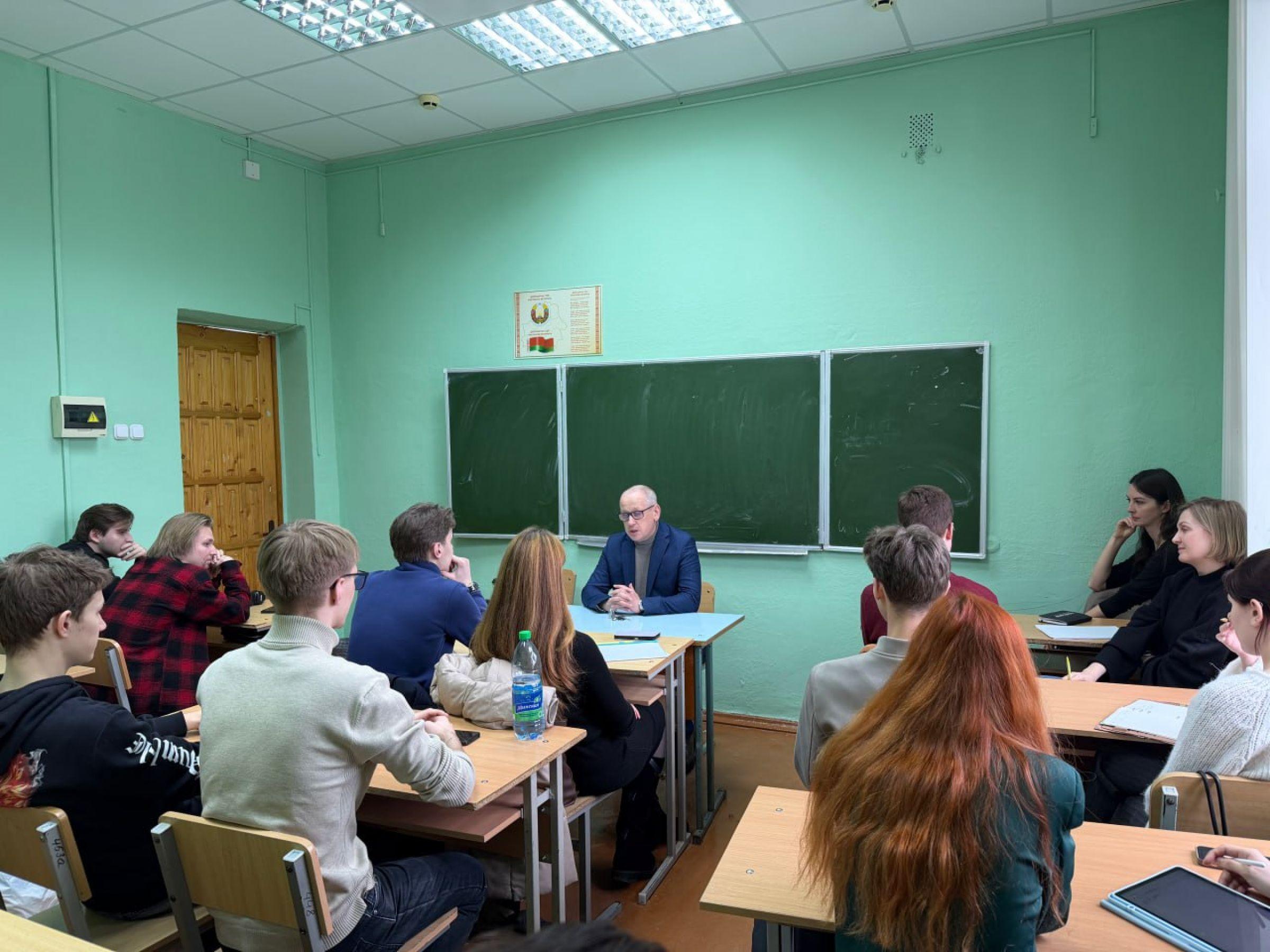
On March 3, 2026, a discussion took place between the head of the scientific school in the field of economic modernization research, Professor Sergei Yuryevich Solodovnikov, and students, master's students, graduate students, and interested parties on the topic "Geoeconomic and Geopolitical Consequences of a New War in the Persian Gulf." The beginning of the discussion was set by S.Y. Solodovnikov with a methodological remark related to defining the modern stage of economic development:
"... the modern stage of economic development should be defined as a risk economy. That is, it is a system that, in principle, cannot be fully calculated and predicted in its actions. When chaotic processes prevail due to the enormous number of actors. Then the following question arises: how should one consider the impact of a new war in the Persian Gulf, understanding that this phenomenon is, in principle, unpredictable?".
Indeed, it is impossible to reliably predict the course of events. However, one can consider the main trends and political-economic interest groups that correspond to one or another scenario of developments.
During the conversation, such issues were discussed as: the reasons for the start of military actions by the United States and Israel against Iran; what consequences arose for the political leadership of this country; possible benefits for the American ruling elites; nuances of price dynamics on the world oil market; possible consequences of military actions for China, India, Russia, the United Kingdom, and other countries; innovations in military technologies and strategies. As noted by Professor S.Y. Solodovnikov, 'the new war in the Persian Gulf today is, in essence, being conducted according to economic rules due to the impossibility of achieving a military-political victory for a number of reasons.'
The main problem for all those interested in news reports is identifying truthful news about the current situation. The assumption of one participant, that "the truth lies somewhere in the middle," was refuted by Professor S.Yu. Solodovnikov: "The middle position is always wrong. There is a principle that the worst course of action is a compromise." The following were proposed as effective practical tools that can help distinguish real information from fakes:
The conversation allowed us to look at the situation of the new war in the Persian Gulf from several perspectives, and the historical remarks of Professor S.Yu. Solodovnikov throughout the conversation make it fully possible to recognize the impossibility of giving simple answers to complex questions. Nevertheless, by not posing such questions, we risk maintaining an understanding of the world order at the level of simplified schemes, which inevitably leads to repeating past mistakes and losing the ability to comprehend the complex, multidimensional nature of the present. It is precisely the act of posing questions – even such difficult ones with ambiguous answers – that is the only way to keep this complexity in mind, and thus preserve the possibility for thoughtful actions rather than blind adherence to circumstances.
