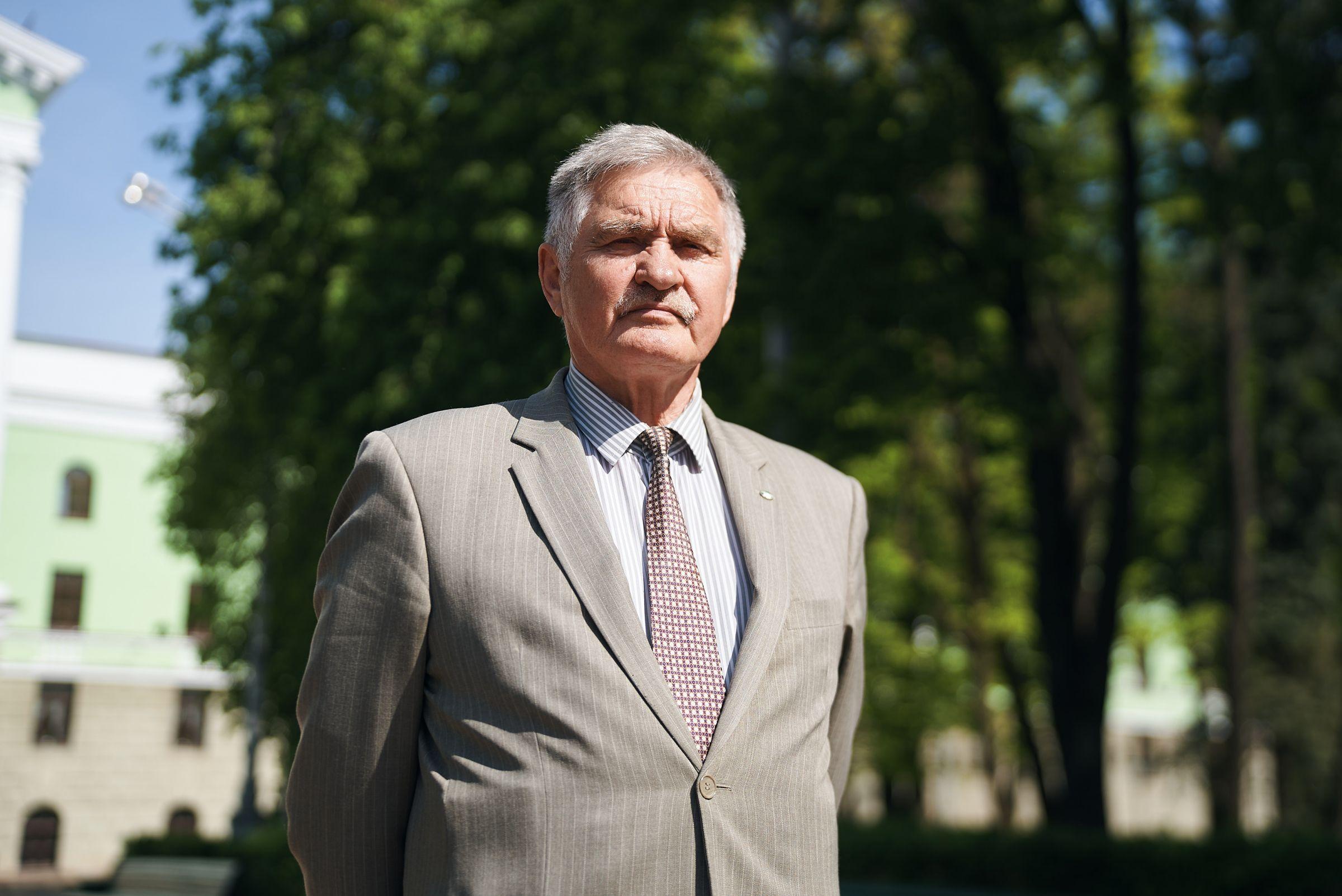
The scientists of the Research and Testing Laboratory of Concrete and Building Materials at the BNTU Research Polytechnic Institute developed innovative compositions of self-compacting concrete for the foundation slab of the high-rise administrative building of the Gazprom Center multifunctional complex in Minsk, an object that has no analogues in Belarus. Eduard Batyanovsky, Head of the Department of Building Materials and Construction Technology, Doctor of Technical Sciences, Professor and project manager, spoke about how unique formulations were created and what challenges had to be faced.

According to the professor, the choice of the construction industry was accidental.:
— To be honest, the choice was quite random, but after the first construction team in the city of Yakutsk in 1969, and then in 1970 in the northeast of Yakutia, it became clear that this was fate.
Eduard Ivanovich named both scientific and practical developments as his most important discoveries.
— From the perspective of scientific developments, the main discovery is the technology for a PhD or doctoral thesis related to the use of dry concrete mixtures in construction. However, when considering the practical application of these developments, there are two key areas that are crucial for the construction industry. The first is the use of low-energy and energy-saving technologies for the production of prefabricated products and monolithic construction, which involve the use of chemical additives. The latest major development that has been put into practice is the recycling of granite scraps for the benefit of the construction industry, which is a major problem at the Granit plant in the Brest region. Every year, the plant accumulates about 3-4 million tons of granite scraps. Last year, our team's collective efforts in this area won the Grand Prix and a first-degree diploma with a gold medal at a competition in St. Petersburg, which was organized by the Government of the Russian Federation.
Among the most significant recent developments, the professor highlighted his work on the Gazprom high-rise building.
— This is a collaboration with construction companies that are building a unique high-rise building in Belarus, with a planned height of 189 meters. We began this work in 2020 by developing formulations and technologies for the unique foundation slab of this building, which is more than 9,000 cubic meters in volume. The work was carried out under quite difficult conditions in terms of technology and organizational work, but nevertheless, everything was done successfully. Currently, as part of this project, the laboratory is working on the formulations and adjusting them as the construction of this high-rise building progresses. Work is also currently underway at elevations of approximately 150 meters and extending to the final floors of the building. During this work, the laboratory not only selected the concrete formulations but also monitored and, if necessary, adjusted the work of the construction team.
— Why was the method of pouring concrete under pressure chosen for the most critical parts of the building, the elements that prevent the high-rise tower from collapsing or swaying?
— The reason is as follows. First, such buildings always have so-called stiffening diaphragms. After a certain number of floors, there are floors with higher levels of reinforcement, larger volumes of concrete, and so on. These floors, especially in the initial stages, were made of concrete with a volume of more than 1,000 cubic meters. And the situation where it is necessary to lay such a volume of concrete in a short period of time requires the use of self-compacting concrete mixtures or self-compacting concretes, and such concrete is most effective in terms of both productivity and the future quality of the structure being concreted, and it is implemented with a high rate of supply, i.e. by the pumping method. This is the main reason. The pumping method is highly mechanized and automated. This results in excellent work quality.
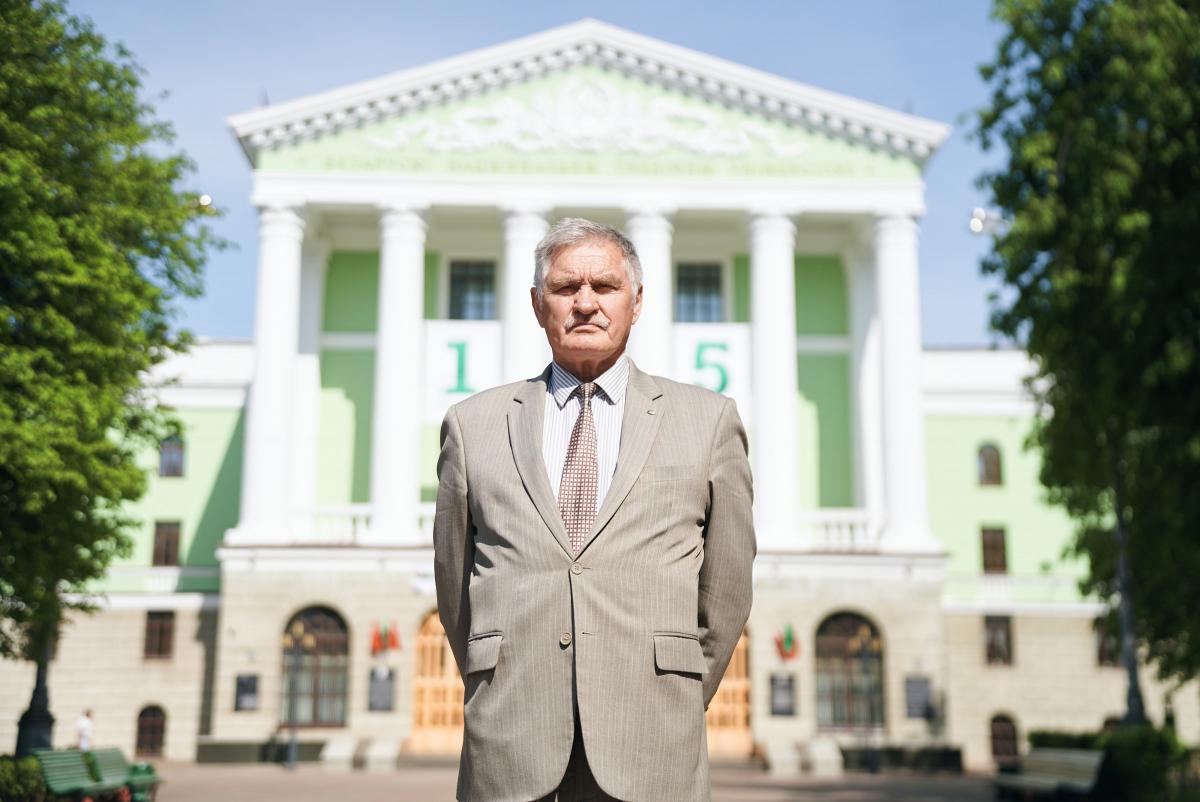
The scientist also shared the significant challenges faced during the research.
— We faced a very serious challenge in conducting our research: the instability of our geographical location. I mean, the laboratory was established within the framework of the Department of Construction Materials and Technology, which I have been heading for a long time. Although we are geographically separated, there are difficulties with equipment, but I would like to point out that the laboratory is certified and accredited, including independent expertise. It should be noted that the development of the laboratory base is supported by the university's management, particularly by the management of NIPI, as there is a clear understanding that only a well-equipped laboratory can meet the modern requirements for conducting research.
— What components or additives have been used to ensure that the concrete mixture remains stable at different heights, from the foundation to the 36th floor?
— No single component can provide the quality characteristics of concrete mixtures and reinforced concrete. This is achieved through a combination of data and component selection. In the case of construction, it was necessary to obtain concretes that would provide the required physical and mechanical properties, while also being able to be laid at a high pace. To achieve this, we utilized our previous experience, including the knowledge gained from creating a unique foundation slab in Belarus. As a result, we relied on our domestic materials in all these cases, with the exception of one. This material is known as ultrafine silica. This material is produced as a result of complex metal production processes, and there is no such material in the Republic of Belarus, but it is available in the Russian Federation.
According to Eduard Ivanovich, all the experimental results were obtained by the employees of the Research Institute of Building Materials. He clarified that all the candidates of science who were working at the laboratory at the time were involved in the research. Approximately a third of the laboratory's staff participated in a comprehensive range of tasks, from developing formulations to monitoring compliance with technological and organizational guidelines for concrete casting. As a scientific supervisor, the professor defined his role as a guiding force in the selection and design of formulations, as well as a link to the governing structures.
In addition, Eduard Batyanovsky explained in detail how the concrete recipe is adjusted as the building's height increases and the technological nuances associated with it.
— Of course, as the height at which concrete needs to be delivered increases, there are challenges in maintaining its formability. Naturally, the laboratory that accompanies the technological part of these works must monitor, firstly, the fulfillment of the requirements, and secondly, make adjustments to the concrete composition as needed. Specifically, we are talking about professional issues: such as changing the ratios between coarse and fine aggregates, adjusting the types and quantities of additives, and mandatorily incorporating ultrafine silica. The height of the structure, which can reach up to 150 meters, requires strict adherence to all technological parameters. Given that there are no complaints about the work, the laboratory and its employees are handling it well.
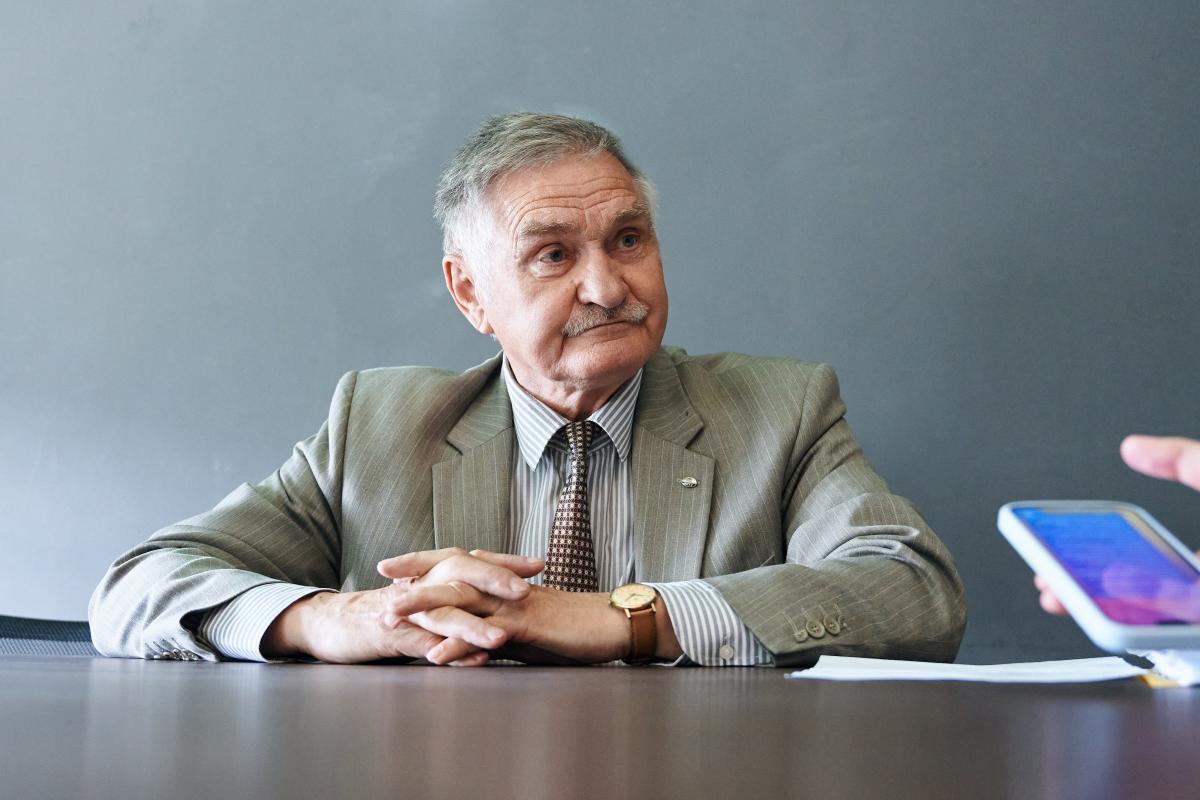
— Is this development comparable to global projects? What makes it unique in your opinion?
— This development is unique for our country, and there are currently no analogues in Belarus. As for the general approaches, they are classic and global. Yes, we had to significantly modify well-known principles to account for the properties of our local materials. It was a challenging task, but we successfully completed it.The only main challenge was to achieve our goals using our domestic materials. Unfortunately, these materials were not always of the quality required to solve these problems. However, since we were able to overcome this challenge, I believe that the overall work was completed at the appropriate level.
Eduard Ivanovich shared that Belarusian companies are already using this technology.
— We do not hide our developments, and in fact, through publications and conferences in which we participate, this information is known in the Republic of Belarus. At the moment, work is underway on the first domestic construction project in Minsk. We know that these developments are being used by OAO Stroytrest No. 4 and OAO Stroytrest No. 7.
As the professor noted, this year, the laboratory's scientists have set themselves several new tasks.
— For the laboratory, the first and foremost task is to meet the needs of construction organizations by providing the necessary services. These services include a wide range of activities, such as evaluating the performance and physical-mechanical properties of materials, as well as developing new technologies. Our laboratory is unique in that we not only perform testing and monitoring tasks, but also provide solutions to achieve the desired results. There is a development in the direction of assessing the corrosion state of steel reinforcement in reinforced concrete structures, which is especially relevant for structures that span over spans. This is a non-destructive method that is unique in its approach. We hope that at least two PhD theses will be defended this year by the laboratory's employees.
The development of the Research Institute of Building and Structural Materials at the BNTU-NIIPI branch is an example of how academic science responds to the real challenges of modern construction. Self-compacting concrete for the foundation slab and outrigger floors of the Gazprom high-rise building allowed not only to lay record volumes of concrete in a short time, but also to ensure the reliability of structures up to 150 meters high. This is the first large-scale implementation of such a technology in Belarus, using primarily domestic materials. The experience gained has already been applied to other unique structures. It is clear that BNTU's expertise in concrete science remains in high demand in both construction and other promising scientific fields, from the processing of granite scraps to rapid frost resistance diagnostics.
