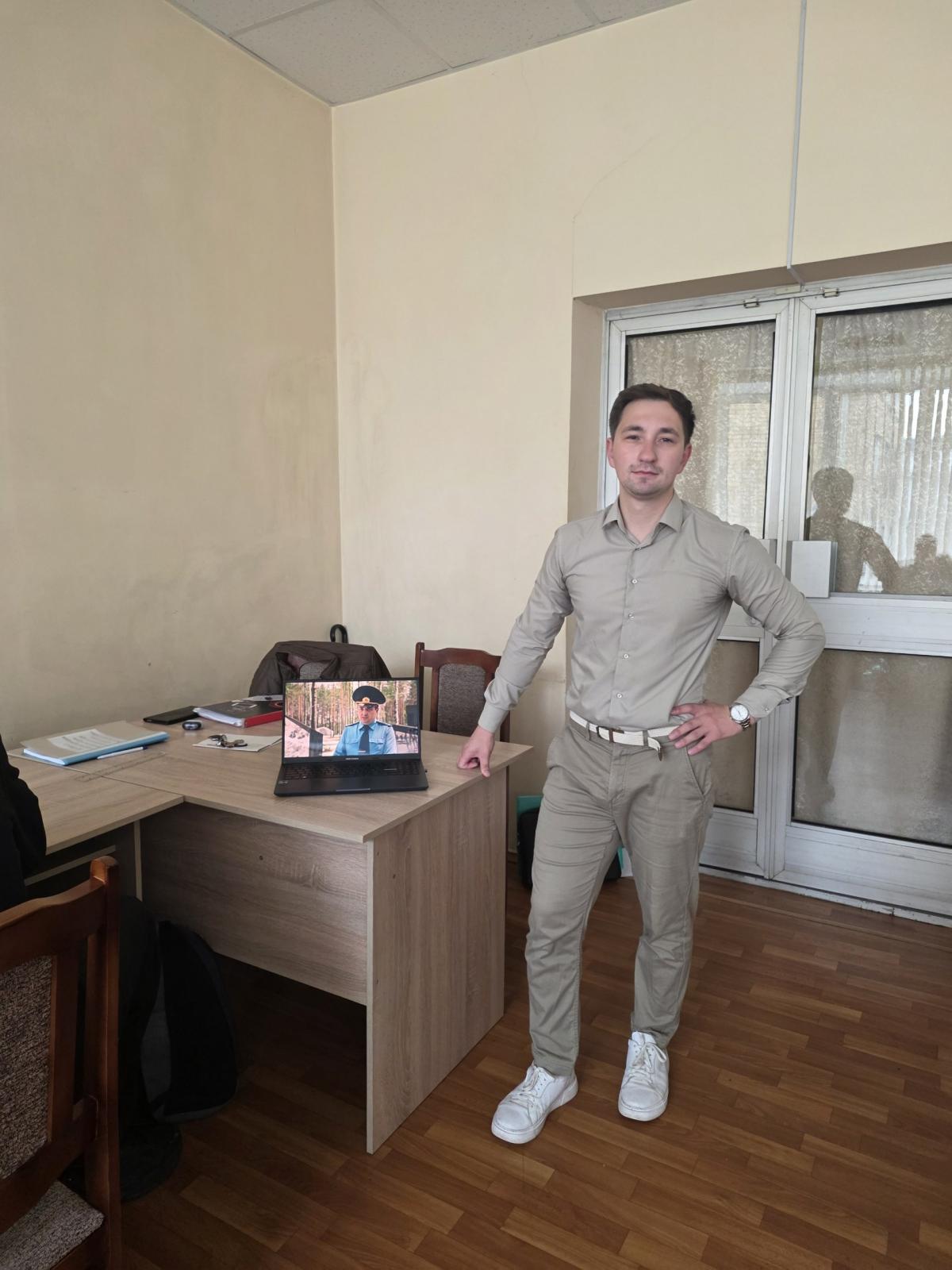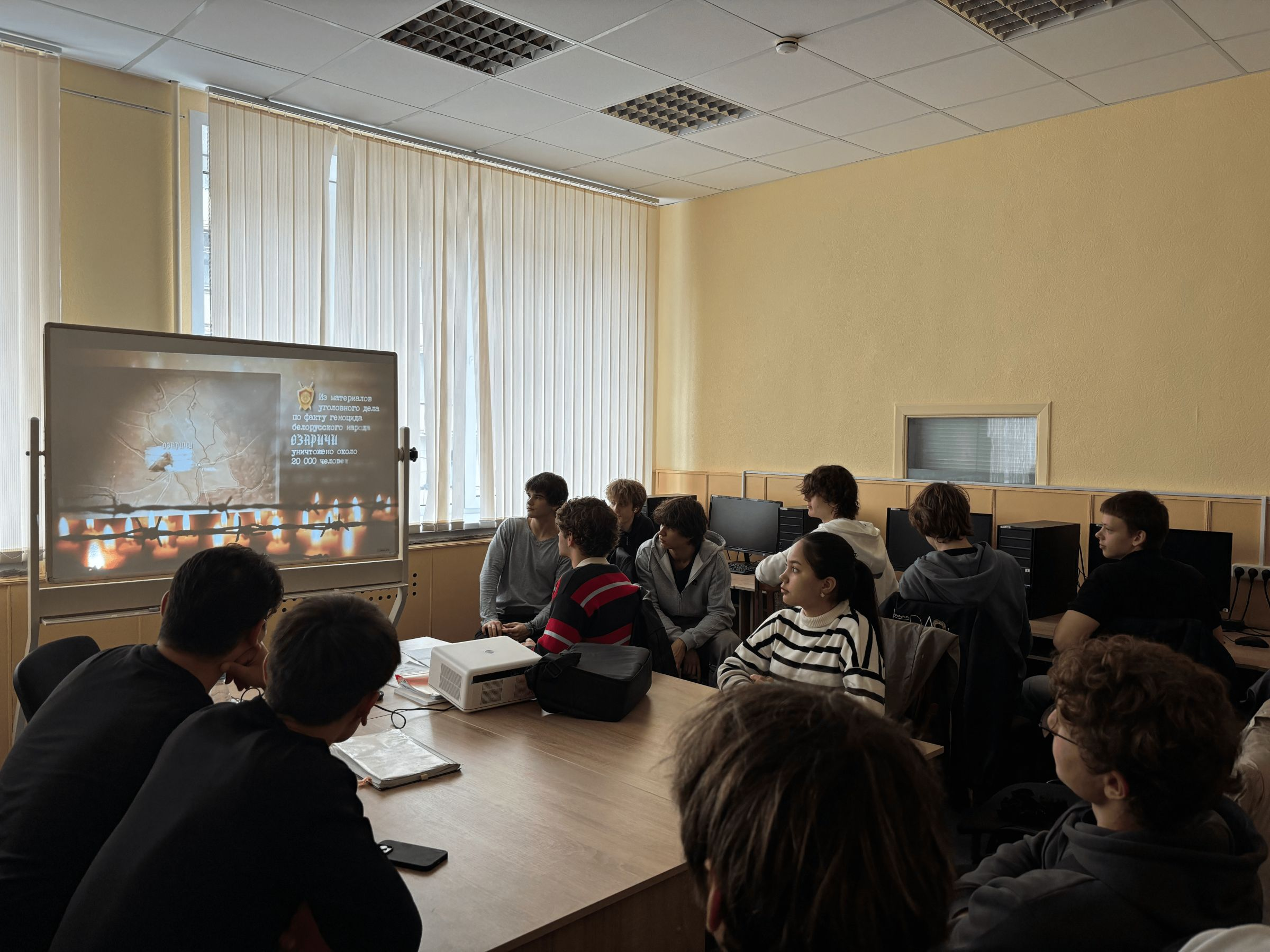
On September 23, curatorial sessions dedicated to the memory of the victims of the genocide of the Belarusian people during the Great Patriotic War were held for first-year students of the Faculty of Information Technologies and Robotics.
The main purpose of the event was to preserve historical memory, familiarize students with the tragic events of the war years, and foster a respectful attitude toward the past of their country. Particular attention was paid to the fate of Belarusian civilians who faced mass repression, the destruction of settlements, and other crimes committed by the Nazi regime.
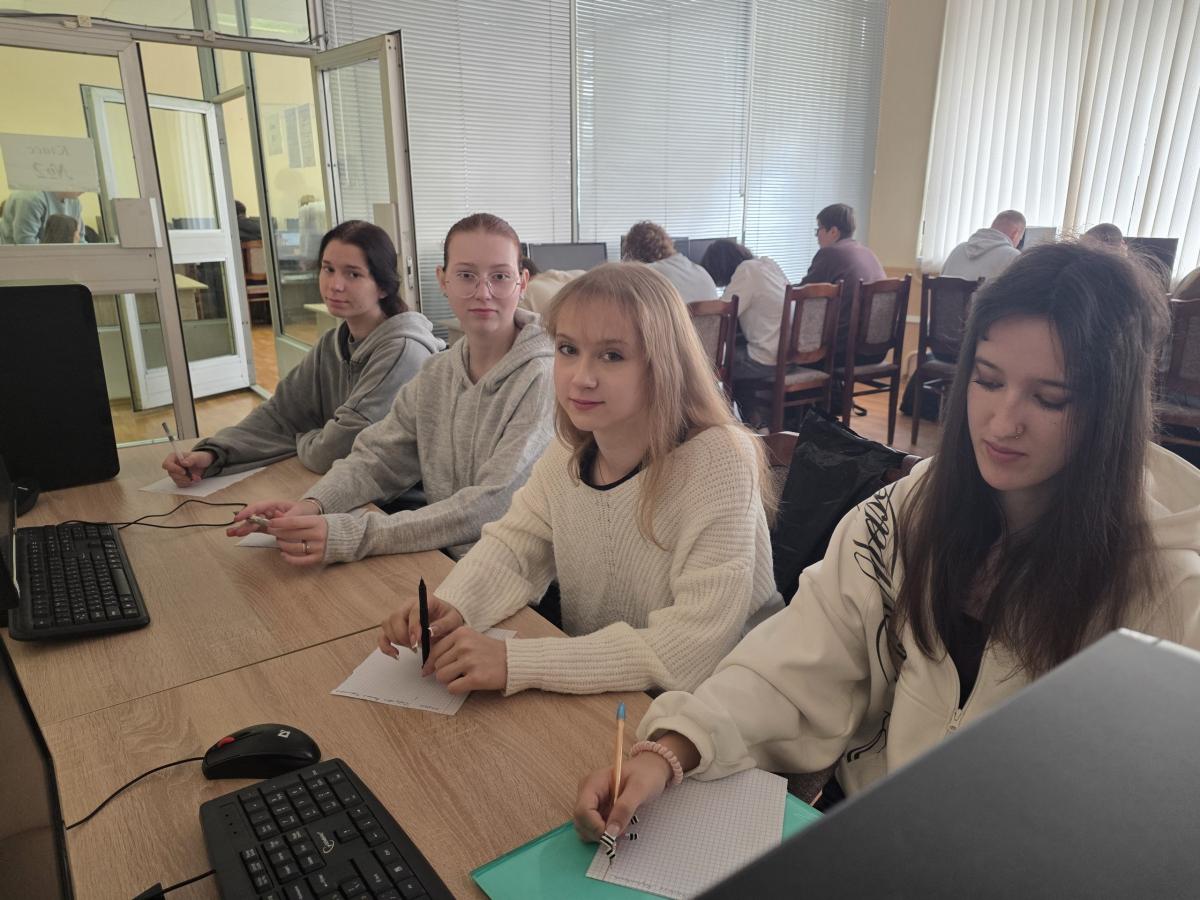 The students watched the documentary films Death Camps and Burned Villages, produced by the National Film Studio Belarusfilm. These films are devoted to one of the most tragic pages of Belarusian history and, through eyewitness accounts, archival materials, and the stories of individuals, help viewers gain a deeper understanding of the scale of the tragedy.
The documentary Burned Villages is based on real events and the memories of people who survived the years of occupation. The film focuses on the lives of residents of Belarusian villages who lost their homes, relatives, and loved ones. Through the personal stories of eyewitnesses, the film demonstrates the severe hardships endured by the civilian population.
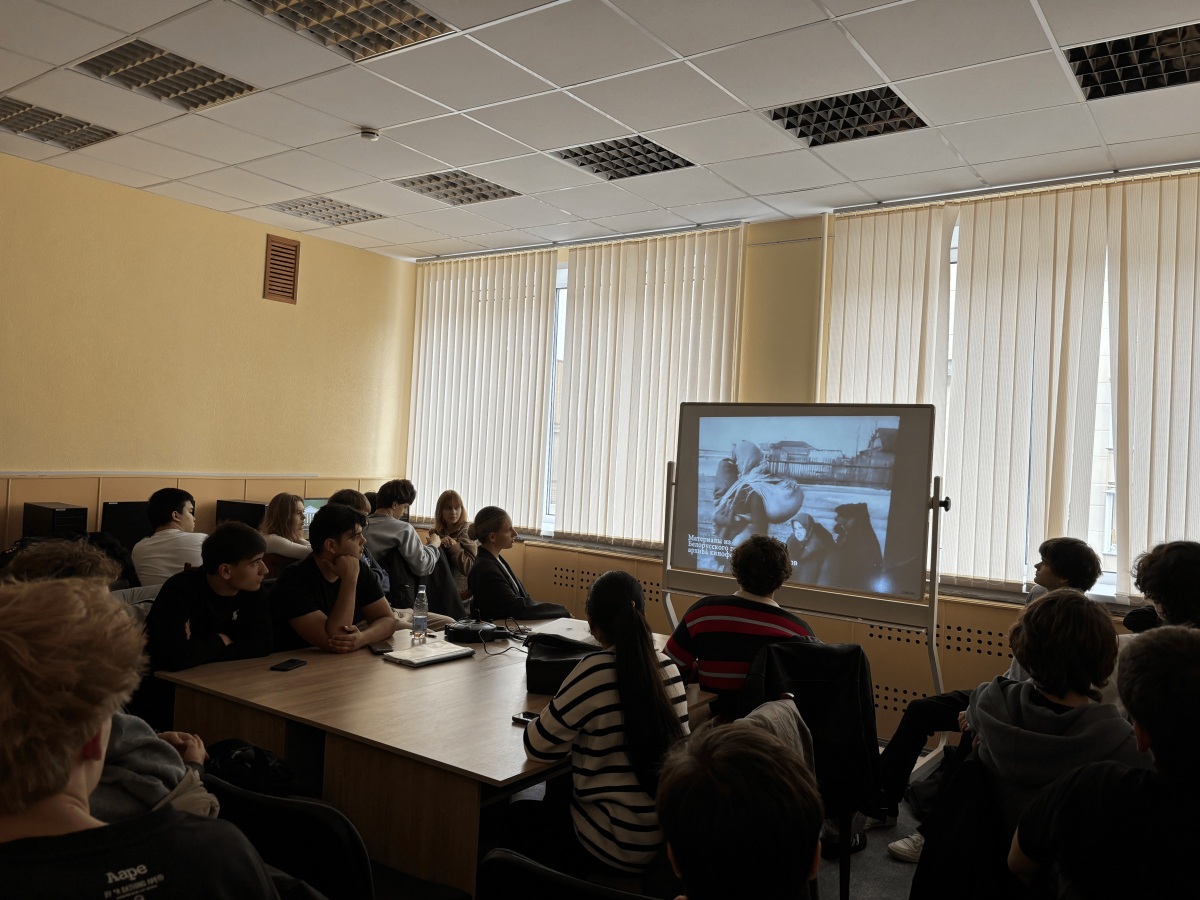 The film Death Camps addresses the mass extermination of people in the occupied territory of Belarus. It tells about the crimes committed by the Nazis, as well as the fate of camp prisoners and civilians who became victims of the brutal occupation regime. Watching the documentary materials allowed the students not only to learn historical facts but also to see the tragedy of the war through the lives of individual people.
The events were conducted by trainee lecturer A.A. Vaseka and assistants M.S. Savostyanov and Evsuk A.V.. They emphasized the importance of treating historical heritage with care and preserving the memory of those whose lives were destroyed by the war.
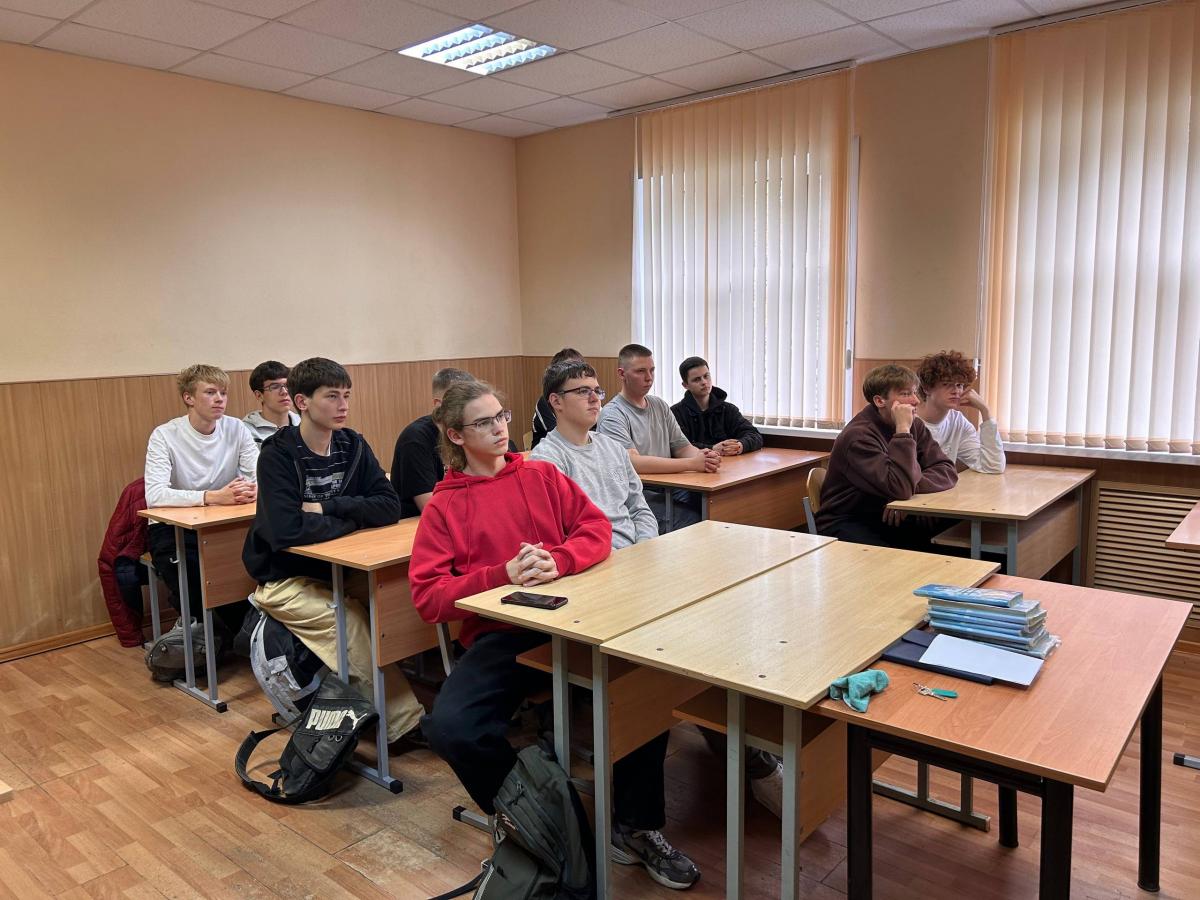 After watching the documentaries, a discussion was held. The students shared their impressions, spoke about the episodes that had the strongest emotional impact on them, and discussed the importance of preserving historical memory for the younger generation. Special attention was paid to the importance of knowing the history of one’s country, honoring the memory of those who died, and passing knowledge about past events on to future generations.
Events of this kind help young people gain a deeper understanding of historical events, develop a responsible attitude toward the past, and foster respect for the memory of the victims of the Great Patriotic War. Studying documentary evidence makes it possible to perceive history not merely as a collection of dates and facts, but as the real lives and destinies of people.
Preserving the memory of the victims of the genocide of the Belarusian people is an important part of Belarus’ historical heritage. It is a tribute to those who lost their lives, a reminder of the tragic consequences of war, and an opportunity for the younger generation to recognize the value of peace, human life, and responsibility for preserving historical memory.