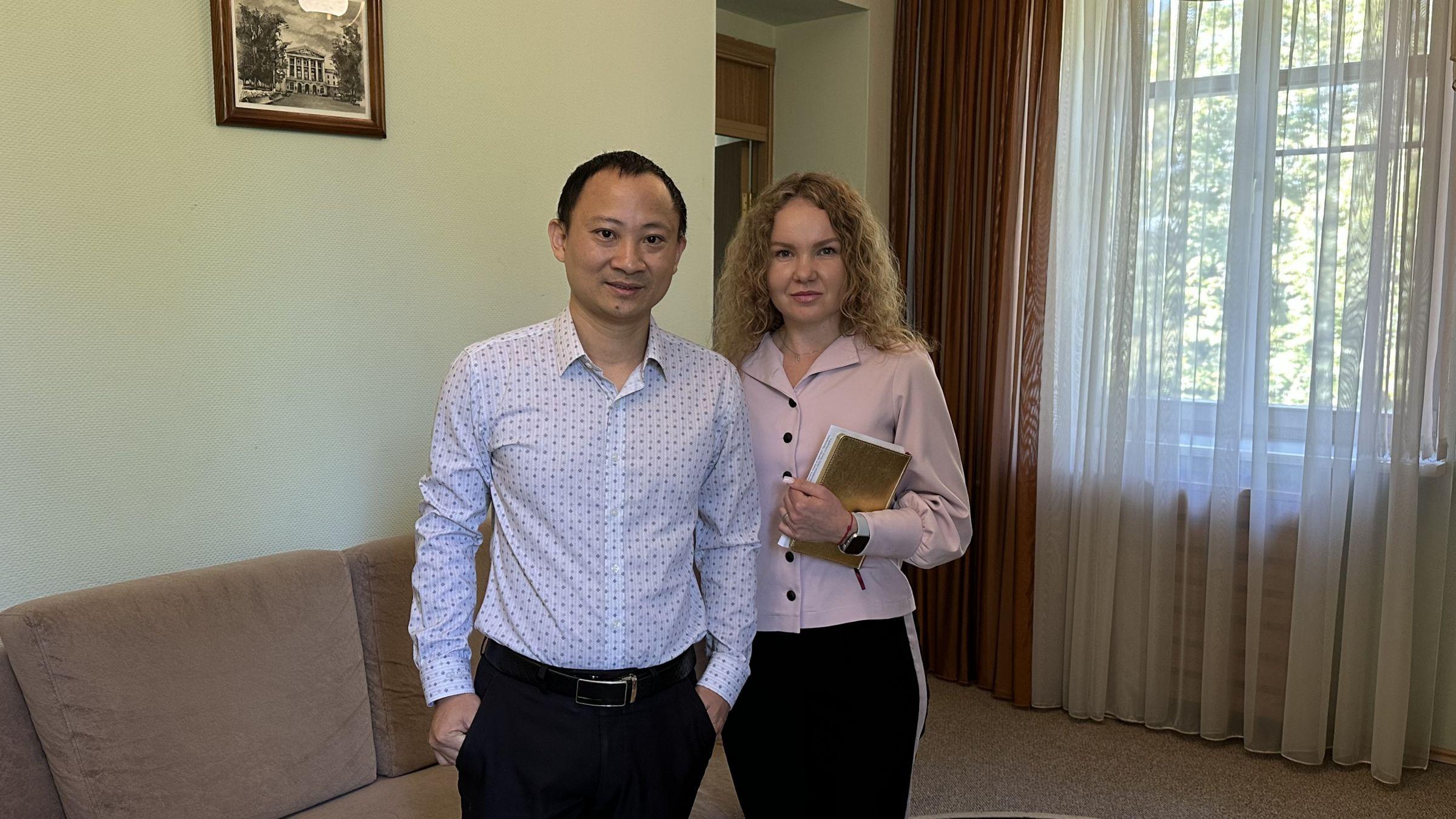
From June 15 to 19, 2026, the Belarusian National Technical University (BNTU) became a hub of international scientific cooperation by hosting the Second Innovation Camp for PhD Students, “China–SCO Graduate Education Innovation Center.” One of those who returned to his alma mater to share his experience was BNTU graduate, Candidate of Technical Sciences and Associate Professor at Hanoi University, Le Van Nghia from Vietnam.
His journey is a success story of an international student: from taking his first hesitant steps in a foreign country to defending his dissertation and receiving recognition at the state level. Darya Kobel, a specialist at BNTU’s Faculty of International Cooperation, spoke with him.
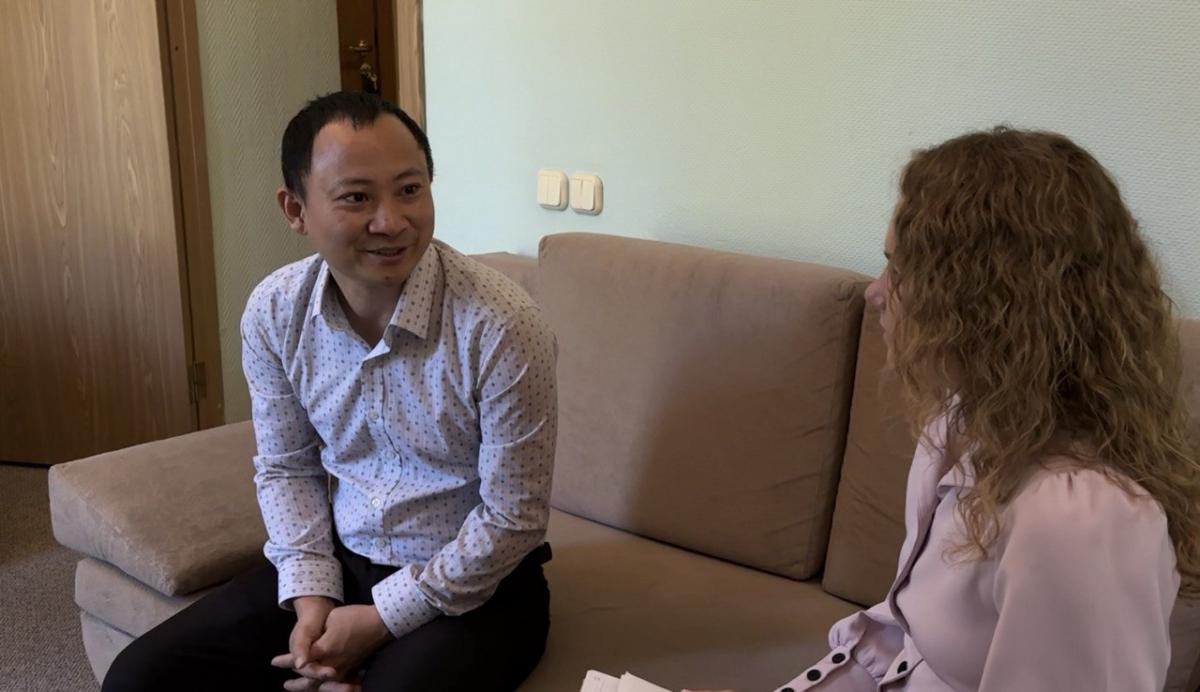
– Please tell us about yourself: what is your profession, and what position do you currently hold in your home country?
– I work in Vietnam at Hanoi University of Science and Technology. I hold the position of Associate Professor at the Department of Automotive Engineering and Energy Conversion within the School of Mechanical Engineering. It is one of the country’s leading engineering schools, and I am glad to share knowledge with students based on the foundation I received at BNTU.
– You graduated from BNTU’s Faculty of Automotive Engineering. Out of all the countries in the world, why did you choose Belarus and our university?
– I enrolled in 2010. It was a deliberate choice, though I was encouraged by acquaintances who had already studied here. Belarus has a very strong engineering education system, and it is known far beyond your country’s borders. I completed my bachelor’s degree, then my master’s studies, and later my postgraduate studies in 2019. Thanks to the high quality of education, I was able to successfully defend my dissertation and earn the degree of Candidate of Technical Sciences. My work was officially approved by the Presidium of the Higher Attestation Commission of the Republic of Belarus, which is a great honor and something I am very proud of.
– If I asked you, “Have you ever regretted choosing Belarus?” what would your answer be?
(Laughs.) Of course not. Definitely not. It was one of the best periods of my life.
– What surprised you the most about Belarusian culture and everyday life? Where did you live, and what local food did you try?
– I lived in a student dormitory, and that is where true friendship really began for me. Everyone was very open and kind. I was immediately welcomed as one of their own. Student life brought us together, and I made many genuine friends here. Perhaps that is the most important thing I took away from my student years — human warmth.
As for food, my typical “Minsk diet” mainly included draniki and borscht.
– Which skills you gained at BNTU became your “golden key” to success?
– Everything I learned at the university has helped me in my career. It was here that I understood what quality education truly means. I was fortunate to have professors who demanded deep understanding rather than superficial knowledge. This foundation allows me to remain a highly valued specialist at Hanoi University today.
– You have returned to your alma mater today. How has BNTU changed over the years?
– It has become much more modern. I see new buildings, and I can feel the development of technology and educational approaches. The university is not standing still; it is actively evolving and adopting state-of-the-art facilities. This is wonderful because it gives students even more opportunities.
– Even after defending your dissertation and returning to Vietnam, you continue to serve as a link between engineering schools in Belarus and Vietnam. How close are your ties with the university today?
– I remain actively involved in BNTU’s research activities. Today, I act as a bridge between our countries by helping implement joint technological developments and collaborative projects.
– And now a traditional question: what is your favorite place in Minsk?
– Without hesitation, I would say BNTU. People from all over the world come here to receive a high-quality engineering education. But they also gain something equally important — sincere international friendship.
– And finally, what advice would you give to current BNTU students?
– Study hard. Make use of every minute and every opportunity that this university offers you. Appreciate your professors, make friends, and absorb as much knowledge as you can. Your time at BNTU will pass quickly, but the foundation you build here will stay with you forever.
Le Van Nghia’s story is a vivid example of how education becomes a gateway to success not only for Belarusians but also for international students. BNTU graduates spread across the world, yet they continue to maintain strong connections with the university and collaborate with it as professionals.
