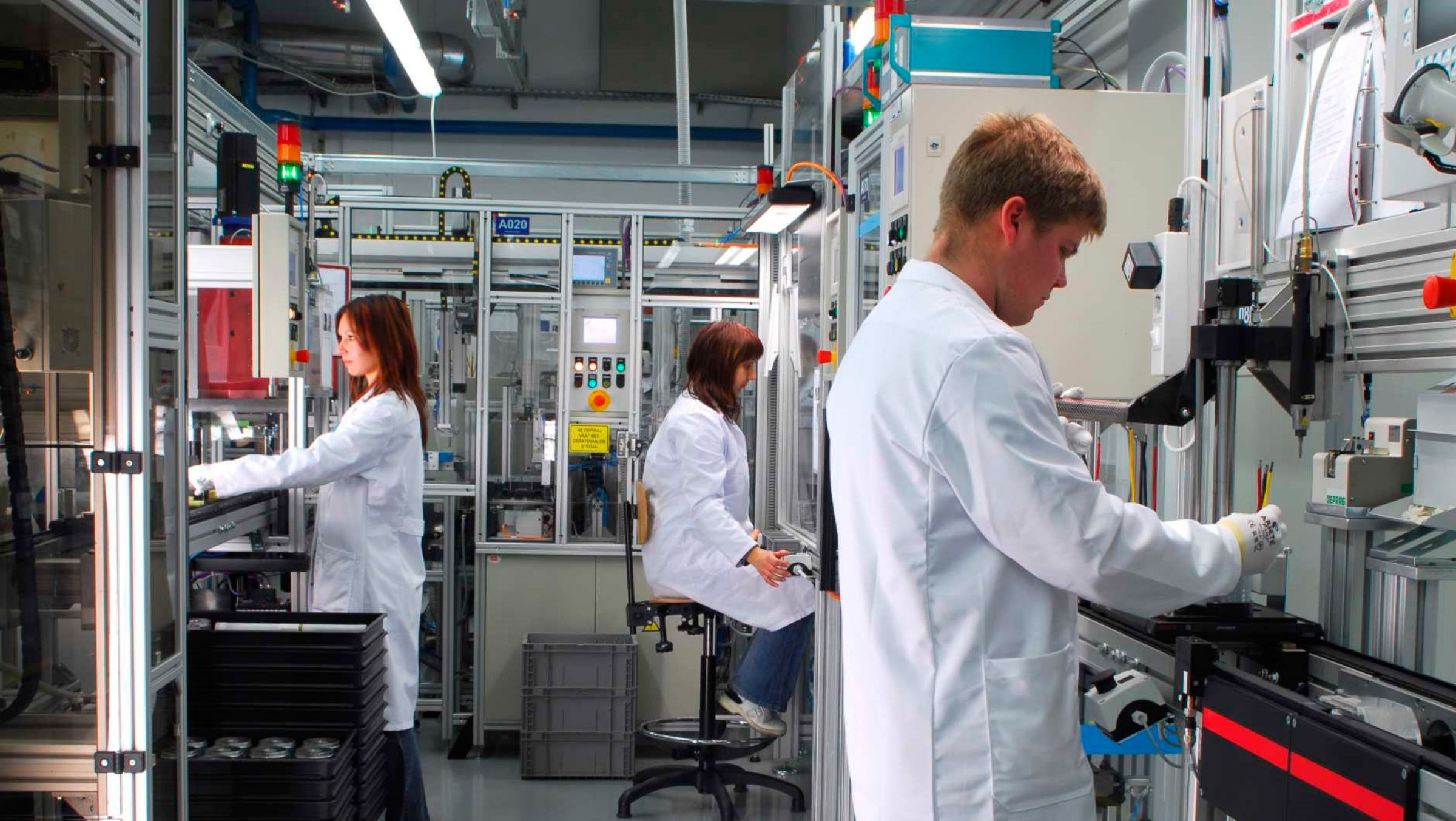
The admissions campaign is in full swing, and for many applicants, the moment of the final, most important choice is approaching. In the final issue of the "Specialties from the Inside" column, we decided to explore areas of expertise essential to modern industry, medicine, logistics, and even everyday life. This article will focus on specialists who manage extreme temperatures and pressures.
Two faculties at BNTU train these unique specialists: the Faculty of Management Technologies and Humanitarian Studies (FMTGS) and the Faculty of Engineering and Pedagogics (FEP).
Faculty of Management Technologies and Humanitarian Studies
The specialty "Equipment and Technologies for Vacuum, Compressor, and Low-Temperature Engineering. Low-Temperature Engineering" is a truly exclusive technical program. Nikolai Zhuk, Senior Lecturer at the UNESCO Department of Energy Saving and Renewable Energy, discussed why everyone needs refrigeration today.
Trends in the current labor market are such that refrigeration engineers will definitely not be left without work. According to Nikolai Zhuk, the shortage of qualified personnel is quite acute:
"There has always been a high demand for such specialists in the Belarusian market. Now the situation is even more acute: the climate is warming, production volumes are growing, and all industries are rapidly developing. And refrigeration is needed practically everywhere today: in the agro-industrial complex, the food industry, logistics, sports facilities, and, of course, in everyday life."
The most in-demand fields for graduates remain the food industry, agriculture, and the rapidly growing field of air conditioning. According to the lecturer, the key task of an engineer in these industries is to ensure the smooth, safe, and energy-efficient operation of systems:
"A refrigeration engineer is a very versatile specialist." Depending on the specifics of the company and personal preferences, they can handle a wide range of tasks: from equipment design and production to installation, setup, maintenance, and repair.
To successfully complete these tasks, students thoroughly study refrigeration theory, automation, design, air conditioning, and many other disciplines. Future engineers also have a wide range of internship opportunities.
"Our students can complete internships at numerous food industry facilities across the country, in logistics centers, ice rinks, and, of course, at the flagship home appliance manufacturer, ZAO Atlant. It's gratifying that during this time, company management has the opportunity to get to know the student and invite them for placement after graduation," noted Nikolai Zhuk.
The profession requires extensive technical training, but stereotypes about it being a strictly male field are long gone.
"If you have a background in physics and mathematics, a passion for technology, and a desire to create something with your own hands, welcome to join us!" "By the way, our graduates make excellent design engineers and sought-after refrigeration equipment sales specialists," the instructor emphasized.
Artem Gursky, a student in this specialty and class monitor, shared his impressions of his first year of study. He chose this program on the advice of a relative who is a specialist, praising the number of open positions. Artem admitted that adapting to the university was quite easy:
"From the very first days, I got the impression that our department is very active: various events for first-year students began almost immediately. Furthermore, it became clear that the people here are incredibly responsive, always willing to help and answer even seemingly silly questions. As for the academic side, many consider engineering graphics to be one of the most difficult, but I remember it most vividly. Sometimes the assignments are so challenging that you have to put in maximum effort and patience, and it is precisely this demanding nature of the subject that makes it stand out from the rest.
As a class monitor, a young person learns about the latest news faster and better understands the university's inner workings. - What's the most important piece of advice you'd give to applicants applying to the Faculty of Engineering and Pedagogics?
- Don't be afraid to ask questions! You're first-year students, and it's perfectly normal for you to not know something. Professors are always open to dialogue: feel free to ask again if you don't understand something, because it will be too late to clarify it during the exam period. And don't be fooled by the feeling of freedom that comes from less supervision at the university; otherwise, successfully completing your first exam period will be very difficult.
Faculty of Engineering and Pedagogics
Vacuum and compressed air control is another critically important economic niche, filled by graduates of the "Equipment and Technologies for Vacuum, Compressor, and Low-Temperature Engineering. Vacuum and Compressor Engineering" program. Sergey Korneev, Head of the Vacuum and Compressor Engineering Department, is confident that without specialists in this field, modern life would simply come to a standstill.
"Many factories would cease to operate, internet servers would go down, food in stores would spoil, and high-tech gadgets would cease to be manufactured," the department head cited a clear example.
Today, the labor market is experiencing a shortage of specialized engineers: demand significantly exceeds supply. Unlike many other fields, this specialty boasts a colossal variety of openings. Engineers are in demand in microelectronics (where vacuum is essential for the creation of processors and optics), at leading mechanical engineering companies (MAZ, BelAZ), and in the chemical and food industries.
"This is a transformative profession." Having obtained this specialty, a graduate isn't tied to a single enterprise, as gas physics is the same everywhere. Today, they might be setting up a vacuum furnace for smelting ultra-pure alloys, tomorrow, designing a pneumatic system for automating a production line, and the day after, launching a freezing system in a food production facility," the department head emphasized.
Training at the Institute of Applied Physics (IPF) is built at the intersection of fundamental physics, digital design, and practical equipment assembly. Students master 3D modeling, numerical engineering problem solving, and the fundamentals of automation. The department closely collaborates with the National Academy of Sciences of Belarus and the real economy, allowing future engineers to complete internships at leading engineering companies and major factories.
– Who, in your opinion, would be best suited for this specialty?
– Vacuum and compressor equipment is quite complex, so this specialty is definitely not for those who just want to sit quietly in front of a computer all day or shuffle papers. This major is for those who, as children, were curious about taking toys apart to see what was inside. It's ideal for kids who are equally eager to learn cool 3D modeling and who also enjoy touching, assembling, and running their creations in real-life conditions, explained Sergey Korneev.
Pavel Malevich shared what studying looks like through the eyes of an IAP student. He learned about the major through his brother, and after researching it online, he was drawn to the versatility of the field and the abundance of employment opportunities. According to Pavel, the reality exceeded his initial expectations:
"At first, my expectations were quite modest; I didn't really know what awaited me. But already in my first years, everything became clear: the deeper you delve into the process, the more clearly you realize how interesting and in-demand this field is. I especially remember the coursework on "Structural Elements and Calculation of Vacuum Systems," where we had to design a system practically from scratch, assembling everything into a single working system.
– Do you remember your first experience working with real-world professional tasks or specialized equipment? What impressed you most?
– It was back in my first year, literally at the very beginning of my studies – we were taken on a tour where we saw vacuum systems in operation for the first time. What impressed us most was the sheer scale and sophistication of the equipment – at that point, we didn't really know anything about the field, and seeing a real system was very exciting.
Later, during his internship, the student worked with a vacuum hardening system, which allowed him to see the application of theory in real-world production conditions. After graduating, Pavel plans to pursue a career in design:
– I'm considering working in the design department to design and calculate vacuum systems. I would advise applicants to come here with genuine interest and not worry if something seems unclear at first – the main thing is to be proactive, and then you will truly discover this specialty.
What you need to know when applying
"Equipment and Technologies for Vacuum, Compressor, and Low-Temperature Engineering. Low-Temperature Engineering":
"Equipment and Technologies for Vacuum, Compressor, and Low-Temperature Engineering. Vacuum and Compressor Engineering":
We hope this series of articles has given you a glimpse behind the scenes of the educational process and will help you make the right choice. We look forward to seeing you among BNTU's first-year students!
