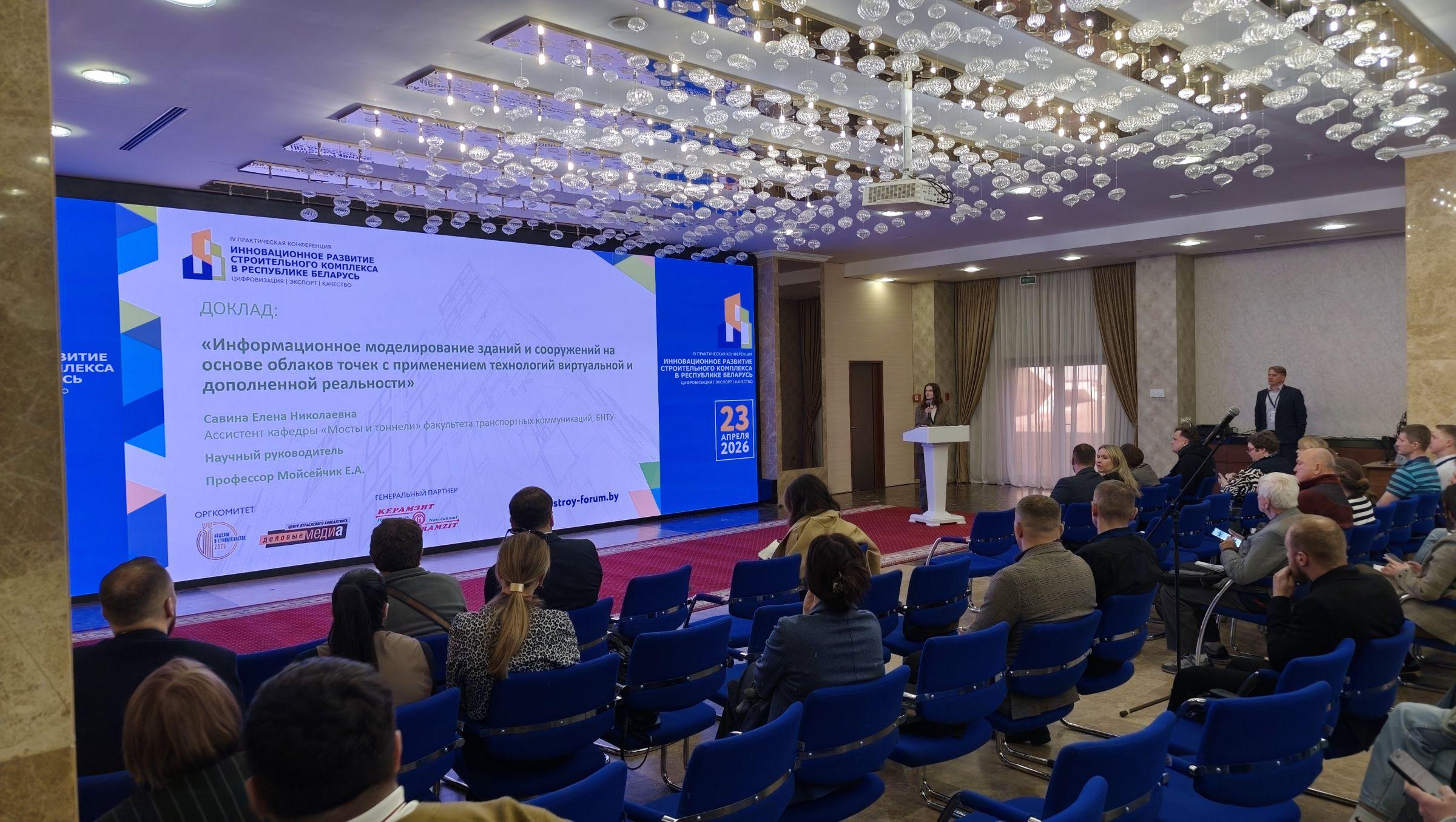
The reports covered the creation of digital twins, the use of BIM models, point cloud analysis, the use of virtual and augmented reality, as well as the use of artificial intelligence, assistants, agents, neural networks related to BIM technologies.
On April 23, 2026, the IV practical conference "Innovative development of the construction complex in the Republic of Belarus" was held at the President Hotel.
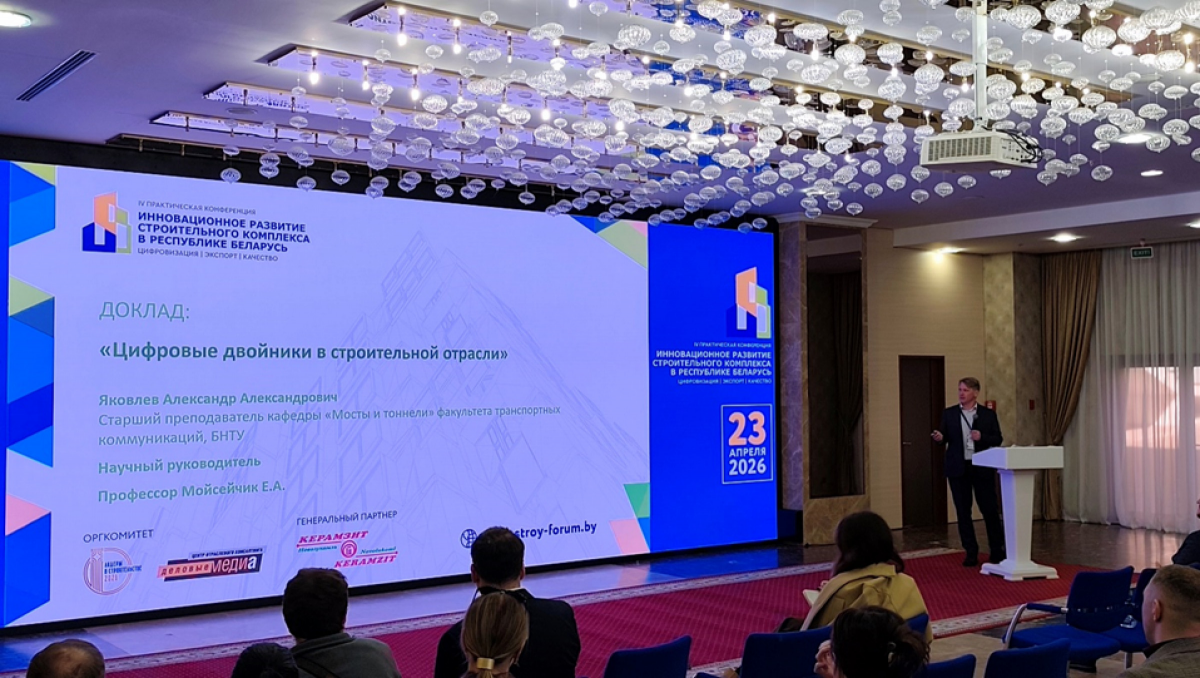
The event was attended by employees of the Department of Bridges and Tunnels of the BNTU Faculty of Transport Communications: speakers Alexander Yakovlev and Elena Savina, as well as the scientific supervisor, Doctor of Technical Sciences, Professor Evgeny Moiseychik.
Two complementary reports on digital technologies in the construction industry were presented during the conference.
The main topics of the speeches
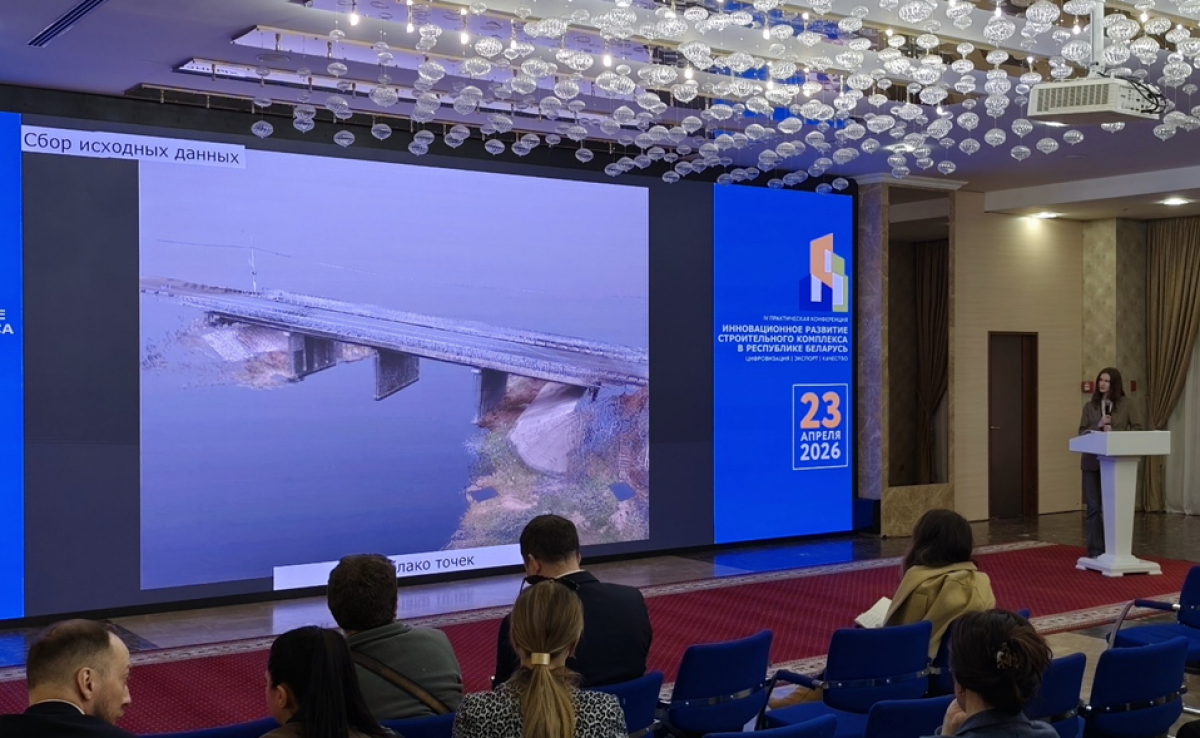
Savina E.N. covered the issues of collecting raw data using various types of equipment (laser scanners, UAV’s, mobile phones), processing point clouds, building digital models and applying virtual and augmented reality technologies at different stages of the life cycle of structures.
Yakovlev A.A. presented an analytical overview of the global BIM technology market, a comparative analysis of the digital model of an object and a digital twin, and a classification of the maturity levels of digital twins. He showed the practical results of using assistants, agents, and neural networks obtained at the department, as well as the prospects for using artificial intelligence in the construction industry.
Key results presented at the conference
According to the speakers, the volume of the global building information modeling market in 2026 is 4.74 billion US dollars. By 2035, it is expected to grow to $18.30 billion. The largest market share belongs to North America (46.5%), followed by the Asia-Pacific region (24%) and Europe (22%).
It is noted that the digital model of the object is updated manually and is static. A digital twin, on the other hand, is a dynamic system that receives real-time data and is capable of changing the operating modes of an object without human intervention.
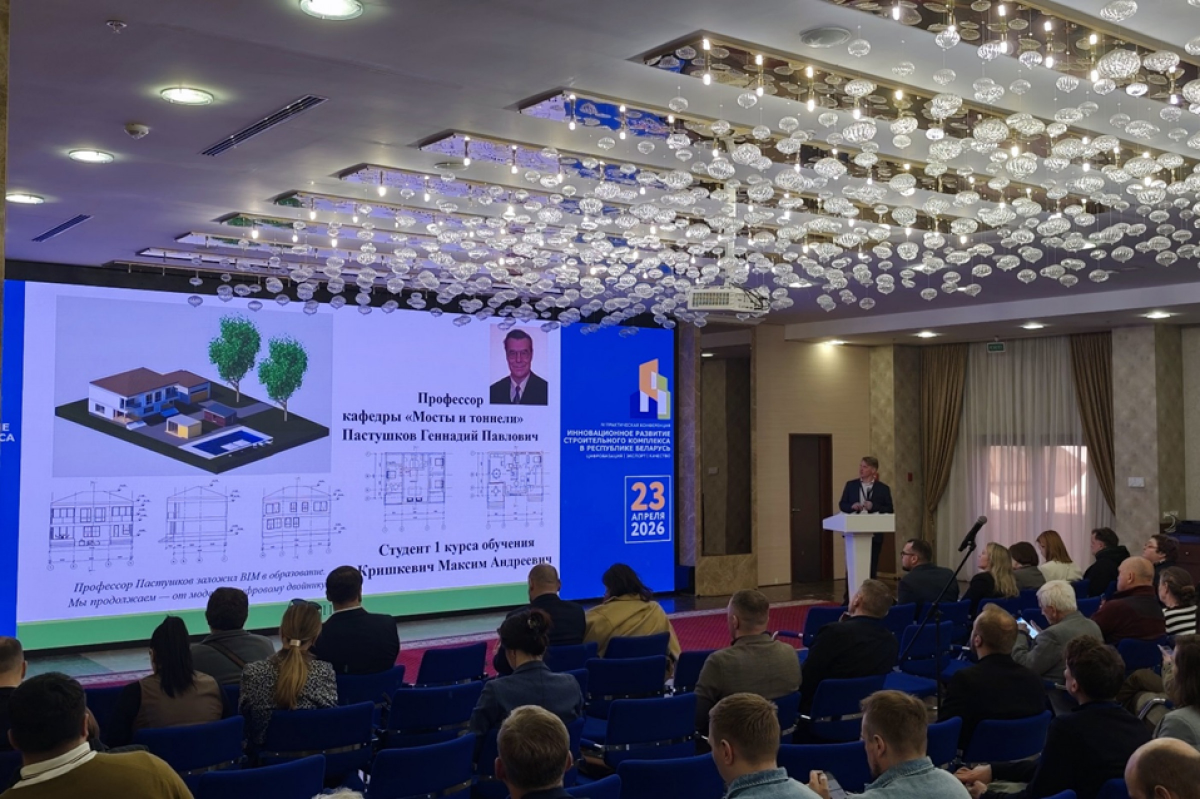
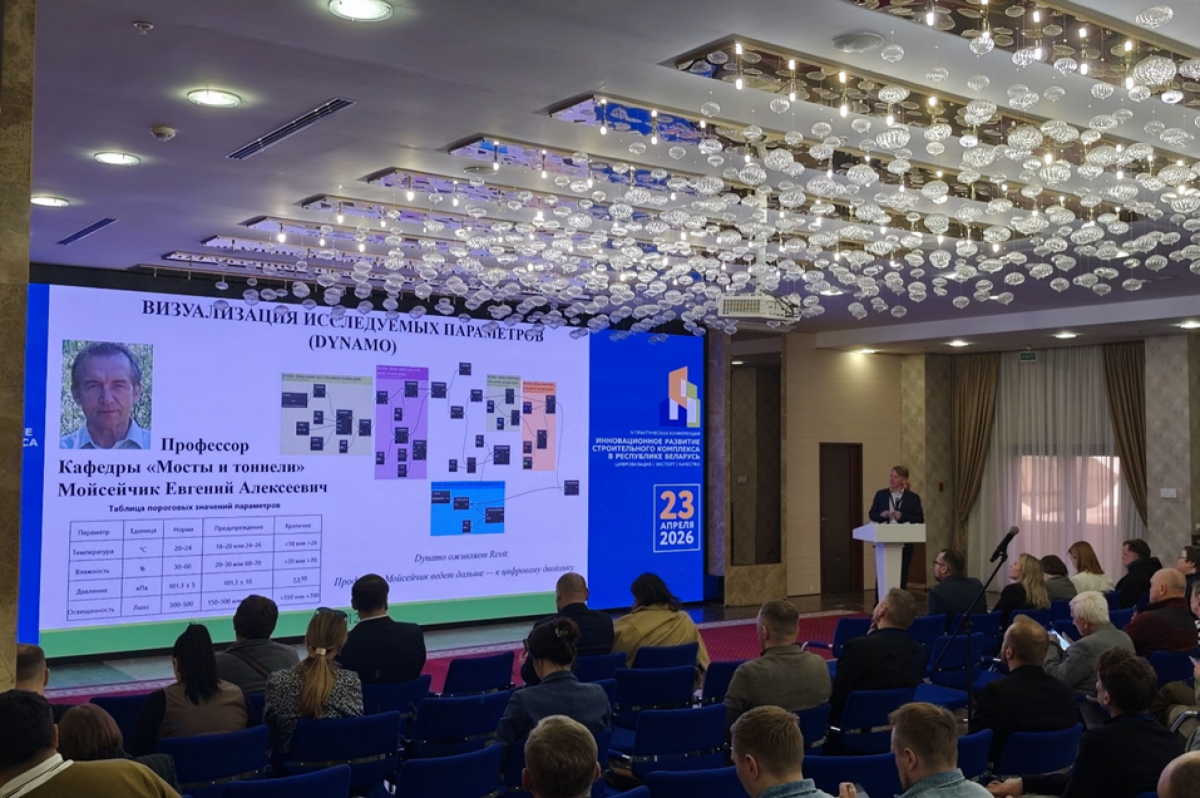
It was noted that since 2014, under the leadership of Professor G.P. Pastushkov, the department has been implementing BIM technologies in the educational process. Currently, this area is being developed by Professor E.A. Moiseichik.
The first-year student, with the support of the faculty of the department, produced a BIM model in the Revit software environment. In the course of the work, the geometry of load-bearing and enclosing structures was created, attribute data was entered and a collision check was carried out. An algorithm has been developed in the Dynamo visual programming environment that allows you to set the dynamics of measurements (period, number of cycles, minimum and maximum values). The created model has the ability to receive and display real-time data transmitted by the monitoring system. The monitor screen displays the actual values of the monitored parameters at specific points of the structure in real time.
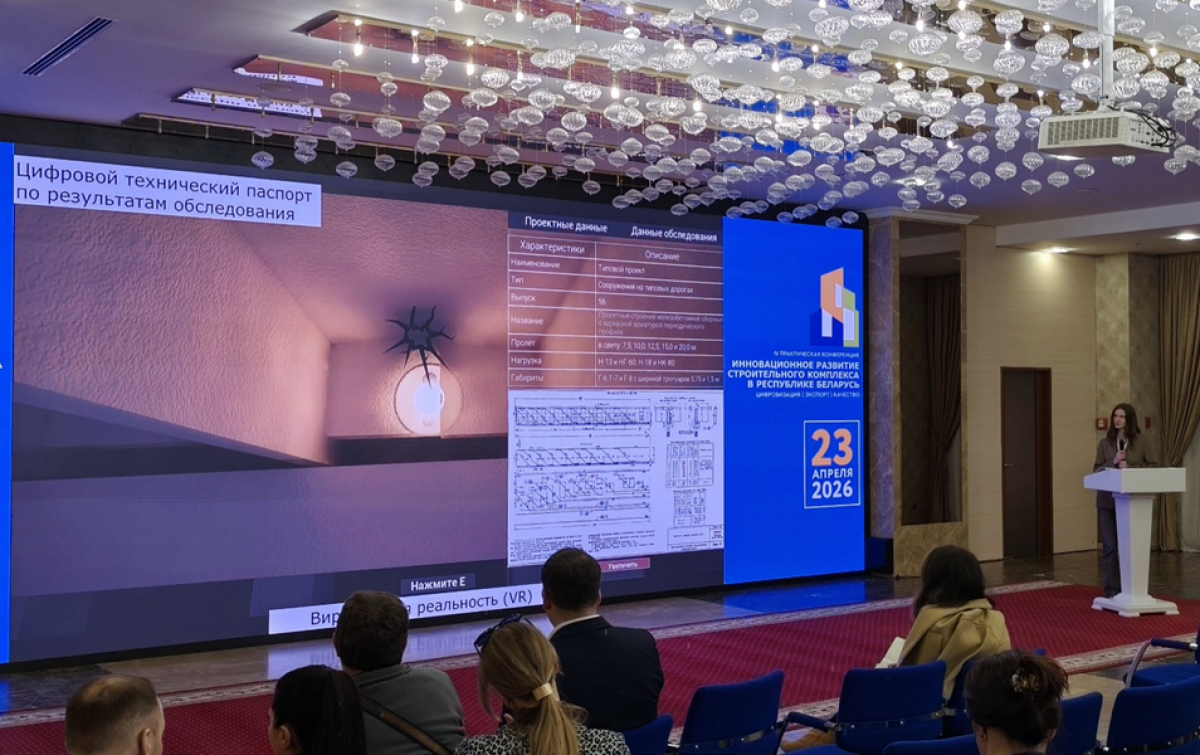
The possibilities of exporting a digital model to a virtual reality environment are demonstrated: immersion in an object, identification of collisions, training of personnel in emergency situations, presentation to the customer.
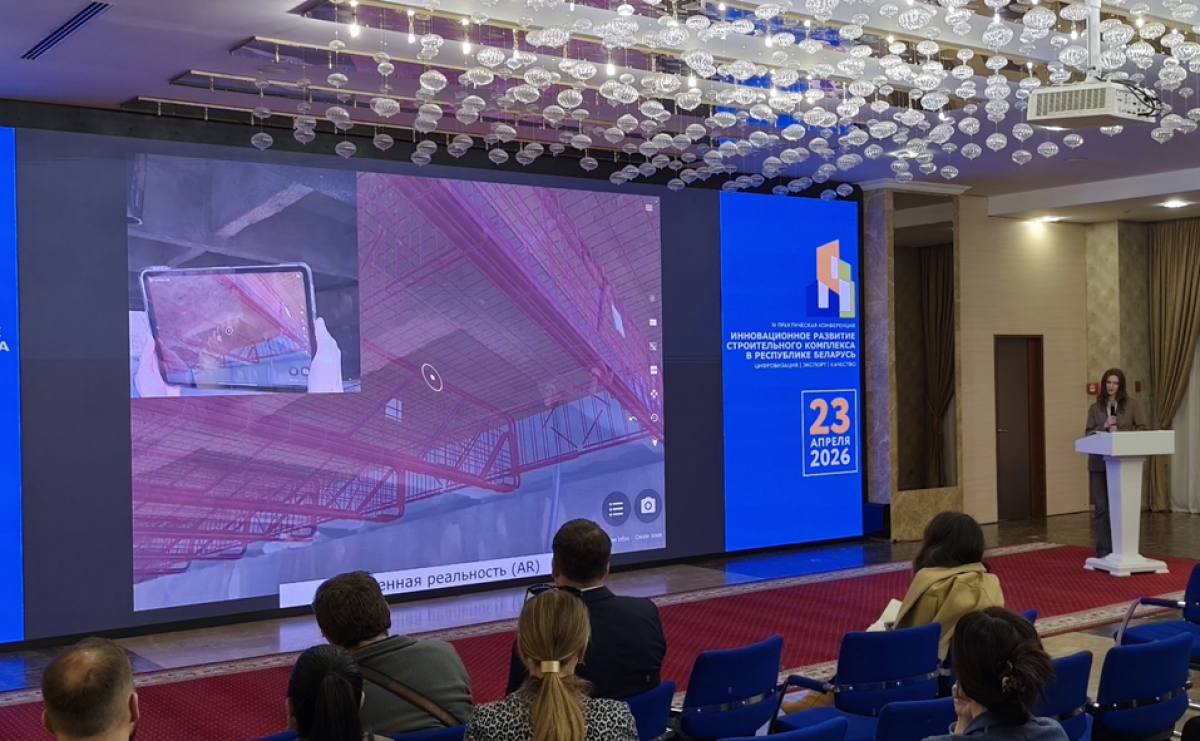
The results of augmented reality using a tablet are also presented. When the camera is pointed at real reinforcement frames, the developed model is displayed on the screen, which allows you to control the compliance of the design with the project without paper drawings.
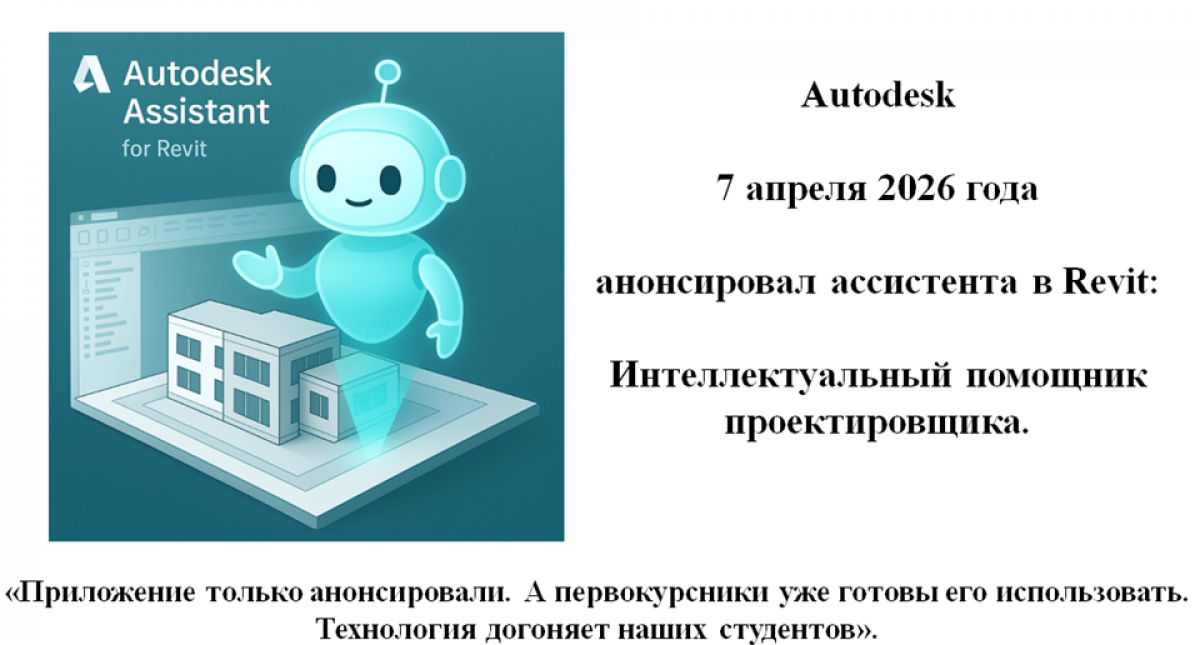
On April 7, 2026, Autodesk officially introduced the intelligent designer assistant embedded in Revit. This tool provides interaction with the digital model through text queries formulated in natural language. This allows you not to involve third-party agents and assistants, optimizes work with the model and simplifies data transfer for neural networks and artificial intelligence algorithms.
During the presentation, the practical experience of students with basic skills in Revit was presented. The demonstrated interaction with existing assistants indicates a high willingness to use the intelligent Autodesk assistant. Having an initial training greatly simplifies and accelerates the development of intelligent tools, opening up access to more efficient design methods.
Conclusions of the conference
The participation of the staff of the Department of Bridges and Tunnels in the conference confirmed the high level of research work in the field of digital technologies in construction.
The presented reports covered the full cycle of creating digital twins: from choosing equipment for data collection during scanning to building digital models, connecting real-time monitoring systems, using virtual and augmented reality technologies, using assistants, agents and neural networks.
