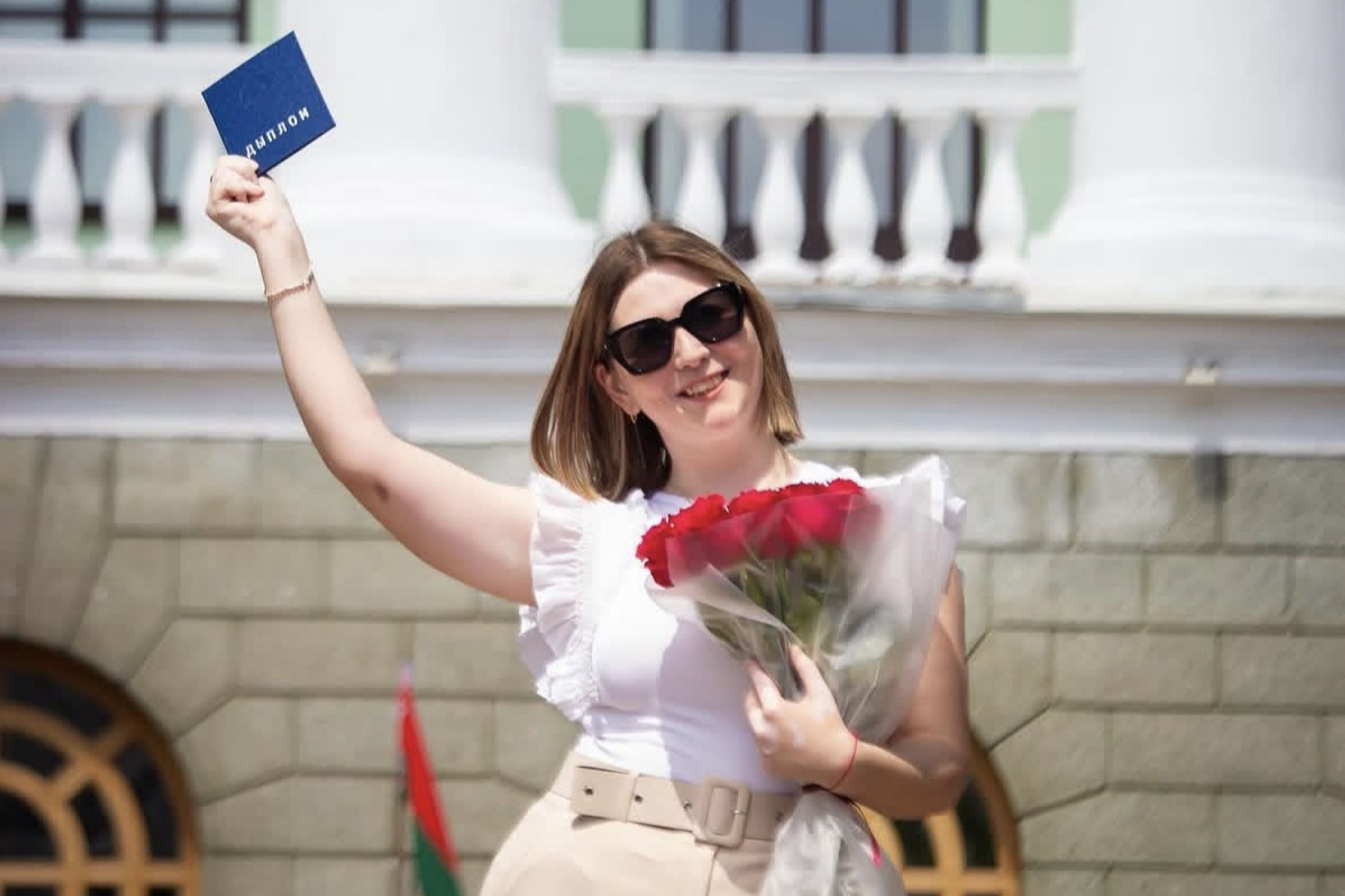
We continue to talk about graduates of the Belarusian National Technical University. The heroine of the new issue is Ekaterina Krasovskaya, a graduate of the Faculty of Mining and Environmental Engineering in 2024. She became the first BNTU student to join the Youth Ambassadors of the Sustainable Development Goals, and today she works at the Central Research Institute for Integrated Use of Water Resources and continues to actively participate in public life.
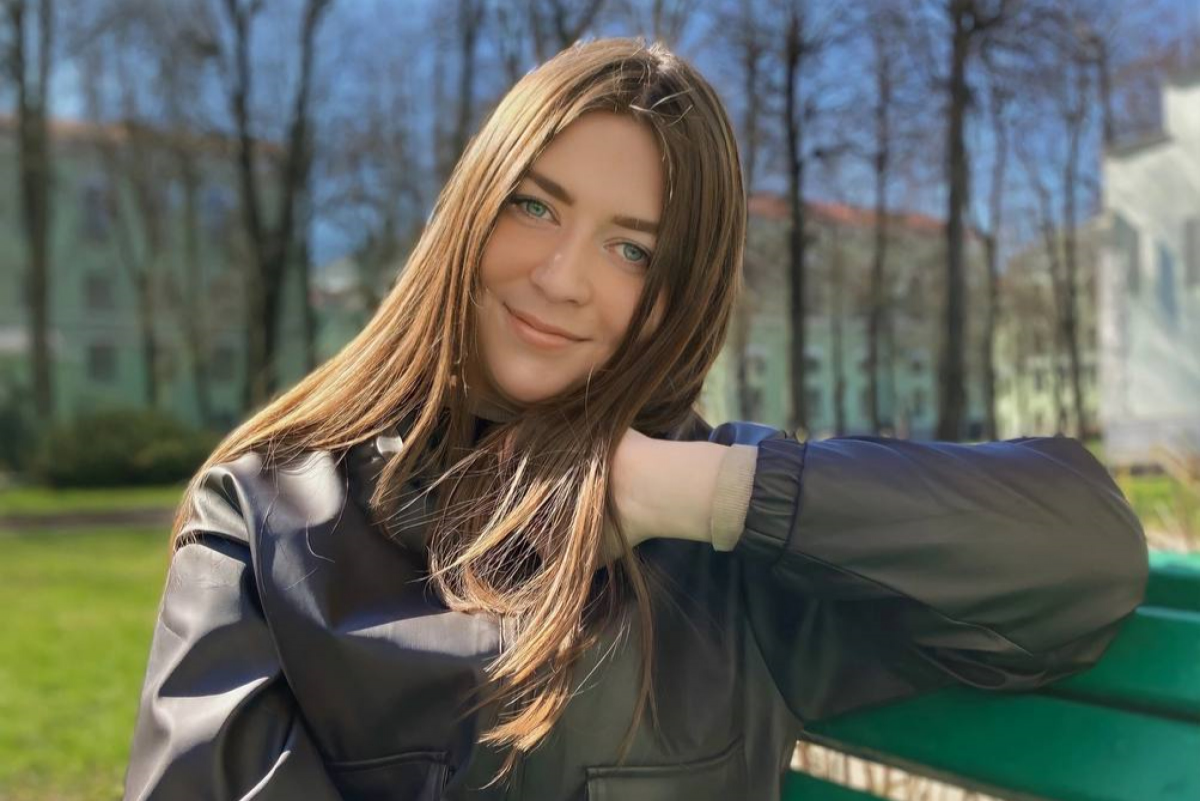
Back in school, Ekaterina Krasovskaya was sure that engineering was her vocation, but for a long time she could not decide on a specific field.
— My choice of future profession changed almost every month, from the Ministry of Emergency Situations to bridge construction. I studied in a physics and mathematics class at school and always knew that technical sciences were my thing, but for a long time I couldn't decide which field. One day, a friend from school who had already studied at BNTU told me about the Faculty of Mining and Environmental Engineering. He talked about how interesting engineering, ecology and management combine there, how much practice and real projects there are. I was interested in this, and I decided to give it a try. I had a good score, so when I applied, I knew I would definitely get in. Already at the first meeting with the faculty of the Department of Environmental Engineering, I realized that here I would become a professional in my field. Indeed, FGDE has given me not just a profession, but also many other competencies — systems thinking, the ability to work with large amounts of information, management and communication skills. It turned out to be exactly what I was looking for.
After graduation, the girl was assigned as a junior researcher at RUE TSNIIKIVR, which is a subordinate organization of the Ministry of Natural Resources and Environmental Protection of the Republic of Belarus.
— We are engaged in monitoring the condition of water bodies, assessing anthropogenic impact and developing recommendations for the rational use of resources. In addition, I head the council of young scientists of our institute and am engaged in increasing the recognition of the institute in the media space. The expectations from the first workplace were fully fulfilled. I wanted my work to be enjoyable, and it turned out that way. There is everything here: science, social life, the opportunity for career growth, the chance to realize oneself in various fields. At first it was not easy due to the large amount of field research and data processing, but over time I got used to it and now I feel confident.
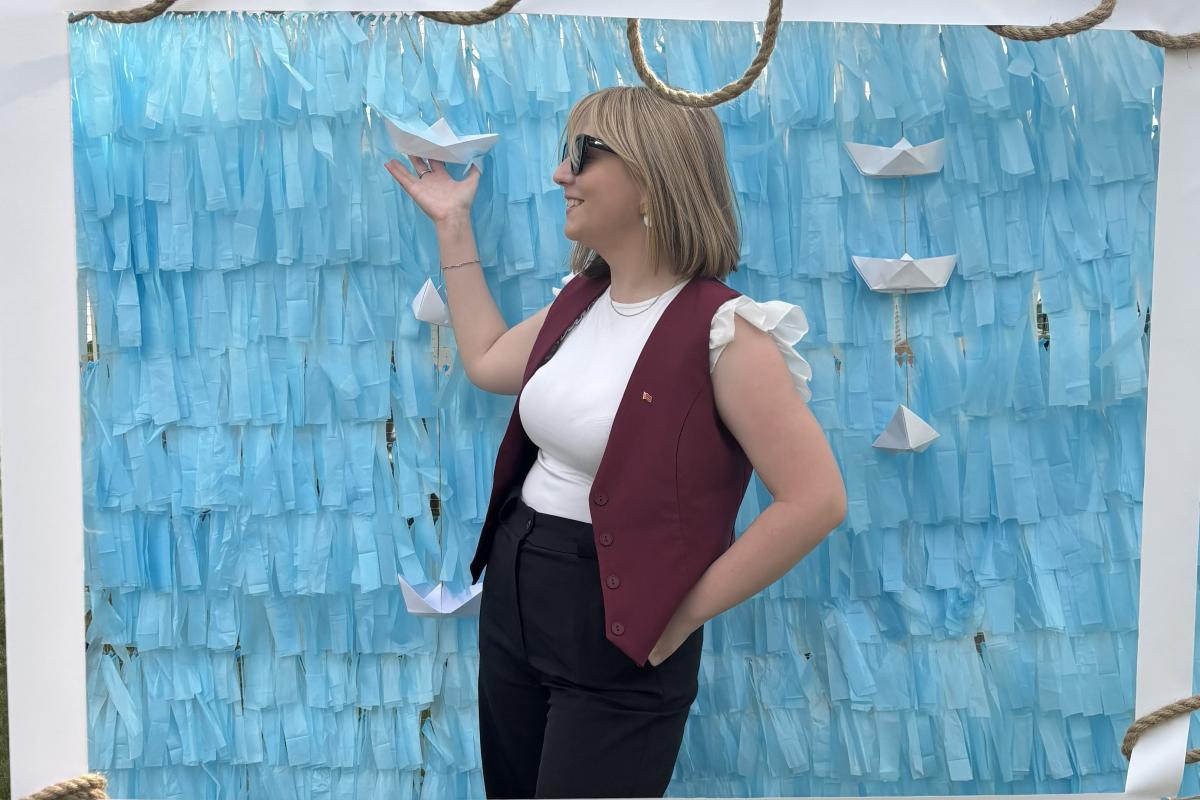
Speaking about the difficulties of adapting to her first job, the BNTU graduate noted that the main difficulty was the speed of decision-making: if students at the university have time to think about it, then at work they need to react quickly and be responsible for the result. It was also unusual at first to work with large amounts of technical documentation and regulations — she had encountered this at university, but the scale was completely different in a real workplace. According to Ekaterina, mentors provided great help, who supported her from the very first days, prompted and explained the subtleties. And the experience gained in the student council and the organization of events taught her to quickly find a common language with different people, which also played a role at work. Over time, she got used to it, got into the rhythm and now feels confident.
— You became the first BNTU student to join the Youth Ambassadors of the Sustainable Development Goals. How did you come to this and what did this status mean to you?
— I came to this through science. I started doing research in my first year, and since my second year I have been fully immersed in research. One day, Oleg Rodkin, the head of the Department of Environmental Engineering, invited me to participate in the Youth Ambassadors for Sustainable Development Goals competition. At the first stage, I had to choose a goal, write my concept and post on social media, where I would tell you why I should become an ambassador and what I plan to do. After a long wait, I was invited to a public defense. Initially, I chose the 13th goal, "Combating climate change," but after my presentation, the jury decided to transfer me to the 11th goal, "Sustainable cities and human settlements," because they felt that my concept was more appropriate there. It was a great honor and responsibility to become the first BNTU ambassador. For me, this status means not just a title, but a real opportunity to influence the agenda, draw attention to important topics and show that young people can be a driver of change.
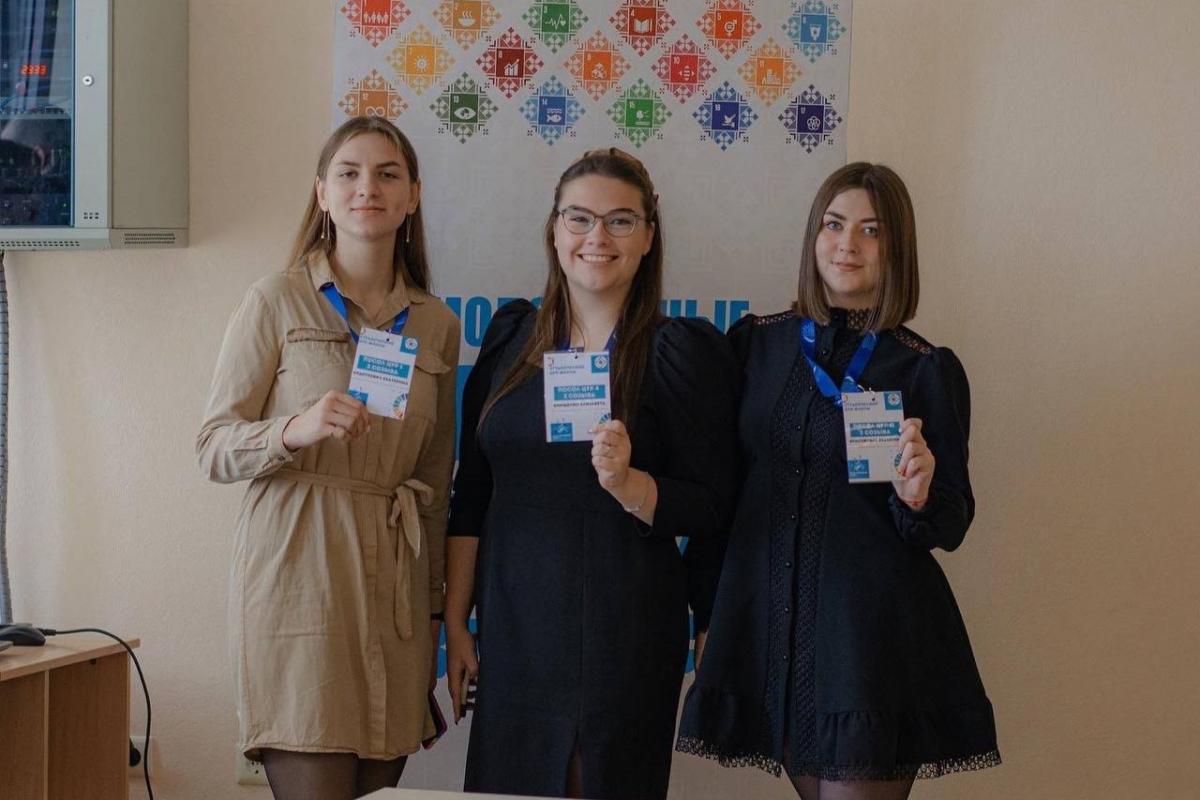
As part of the ambassadors' activities, she participated in the Sustainable Summer Project, a series of events for young people, as well as the Sustainable University project, where she taught students how to develop environmental initiatives.
— It was great to see how the guys got involved, offered their ideas and were eager to change something for the better. And I will always remember the keen interest of people, whether they are students or children in camps. When you see a sincere response, you realize that all this is really important and necessary.
Ekaterina is sure that the status of the SDG Youth Ambassador has given her something more than just a line on her resume — it has become a fulcrum and a source of important acquaintances that have developed into friendship and continue to help in her work.
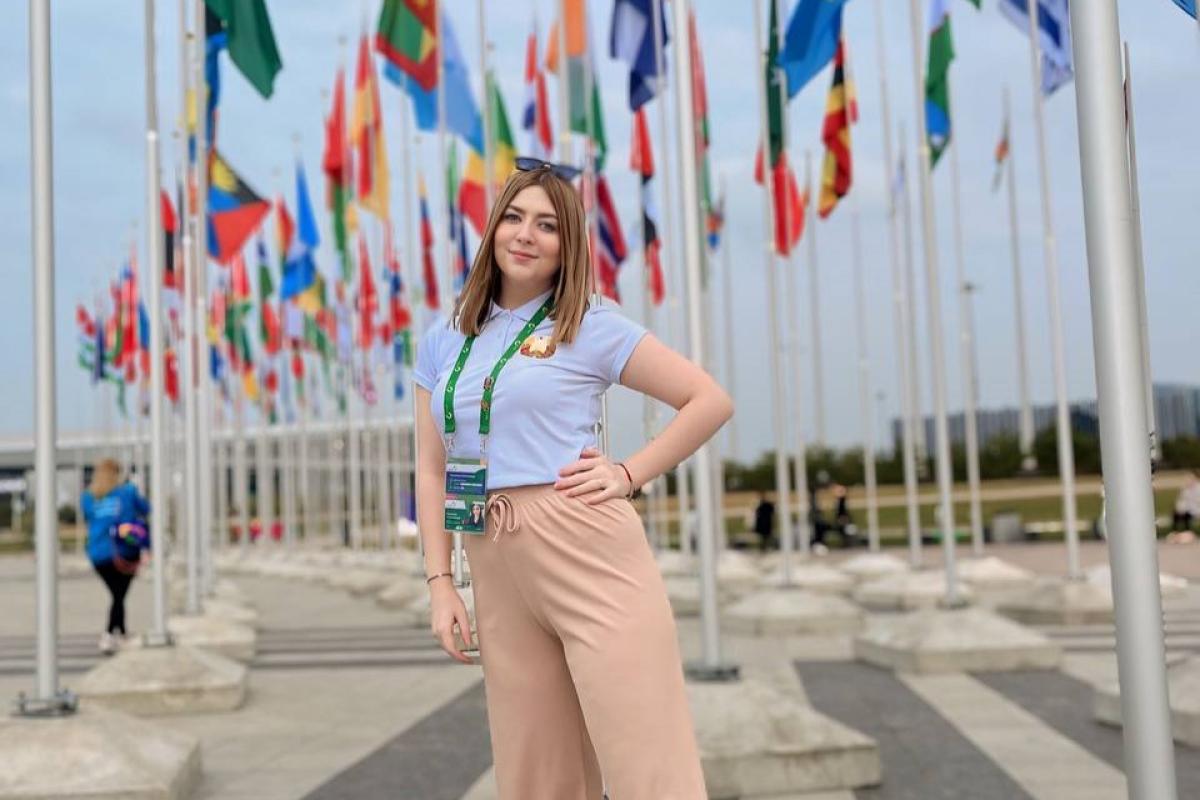
— The SDG youth ambassadors are one big family. We became good friends with some of the ambassadors, and we are still friends. We are still grateful to the SDGs for giving us each other. These are not just acquaintances — these are people with whom I have gone through common projects, ideas, emotions. All of this came in handy after graduation. These are acquaintances that open doors, and competencies that have appeared, and non-standard ideas that were born in the process. Public speaking and moderation skills, project work, the ability to find a common language with different people — all this helps every day in both scientific and social work at the institute. I was also among the participants of the World Youth Festival in Sochi, which was a powerful impetus for expanding my horizons. There I met with young leaders from dozens of countries, saw how global different topics sound, and brought back a lot of ideas that I still apply.
In addition to activities related to the SDGs, Ekaterina was also involved in social life at the faculty, where there were a lot of events, and each of them was remembered by the girl in its own way. Together with the student council and tutor Lyudmila Piskunova, they tried to make the students' leisure time diverse and interesting. According to her, the atmosphere at the cinema evening turned out to be especially warm, when the guys watched films and discussed them in a cozy company. The creative evening "Hello, we are looking for talents!" revealed so many unexpected abilities that the organizers themselves were surprised: the students prepared songs, poems, dance numbers — and it turned into a real show. The girl called the annual clean-up trips to the Republican Scientific and Practical Center of Pediatric Oncology, Hematology and Immunology especially important and touching. BNTU volunteers helped with the cleaning of the territory, communicated, and each time it left a deep mark on Ekaterina's soul. The students also jointly prepared patriotic events for Victory Day: they learned songs from the war years, prepared creative numbers, read poetry — this was their way of expressing gratitude and preserving memory.
— All this preparation really brought us together. I am sure that leisure is an important part of student life, and our team managed to make it special.
Looking back, the girl believes that being an activist at the university is definitely an advantage, although the workload was serious.
— It was not easy to combine studies, scientific work and community projects — sometimes there was not enough time or energy. But looking back, it was worth it. The rhythm of an activist has taught me very important things: to plan time, set priorities, work in a team and take responsibility. These skills have become my foundation, and now they help me in any field: be it science, work or social activities. Yes, it was hard, but it was a burden that fully paid off with invaluable experience, acquaintances and self-confidence.
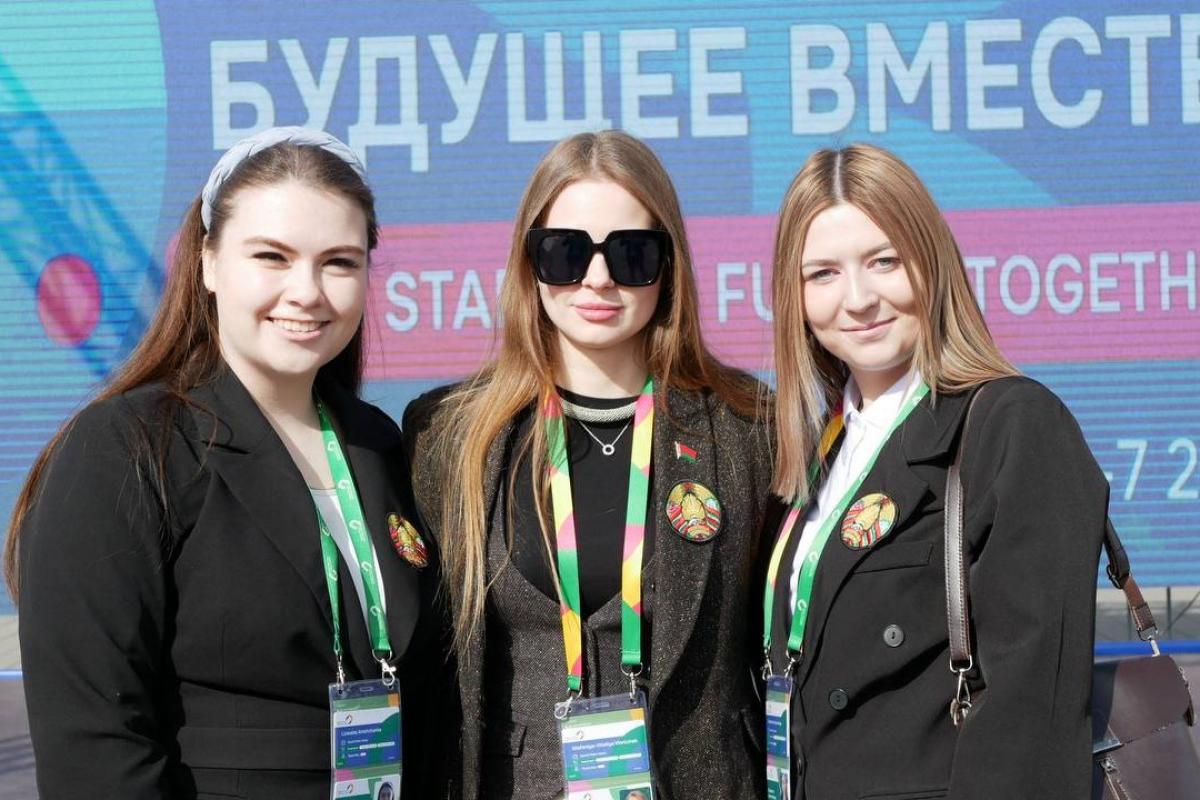
During her studies, Ekaterina was lucky enough to participate in various projects and events. She traveled annually to UNESCO summer schools in St. Petersburg, attended a forum dedicated to the 50th anniversary of the World Heritage Convention. The most striking event for the girl was the World Youth Festival in Sochi, where she met with children from dozens of countries, exchanged ideas, participated in discussions and master classes, which broadened her horizons and gave her many new ideas for work. But the graduate considers the most significant result to be that her photo was posted on the BNTU Honor Board. For her, this recognition has become a symbol that the university sees and appreciates the efforts of students.
After graduation, the girl also often remembers her friends and the atmosphere at the university.
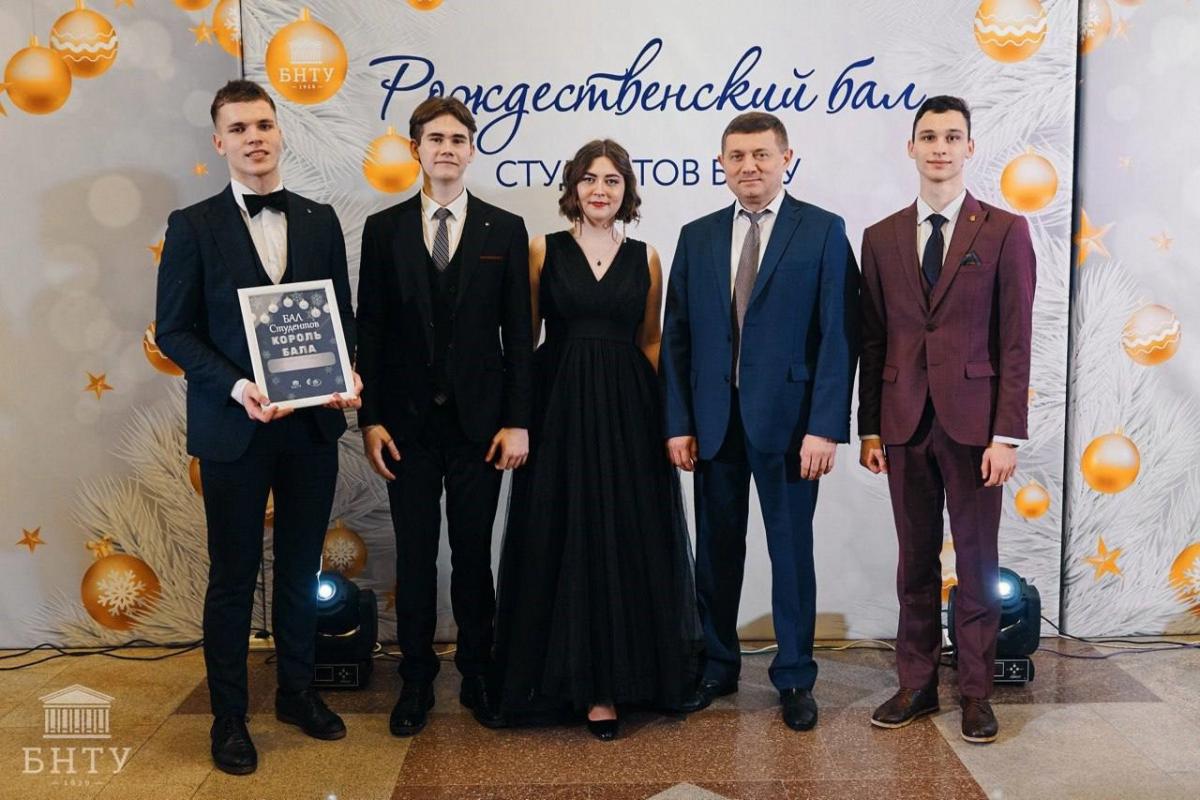
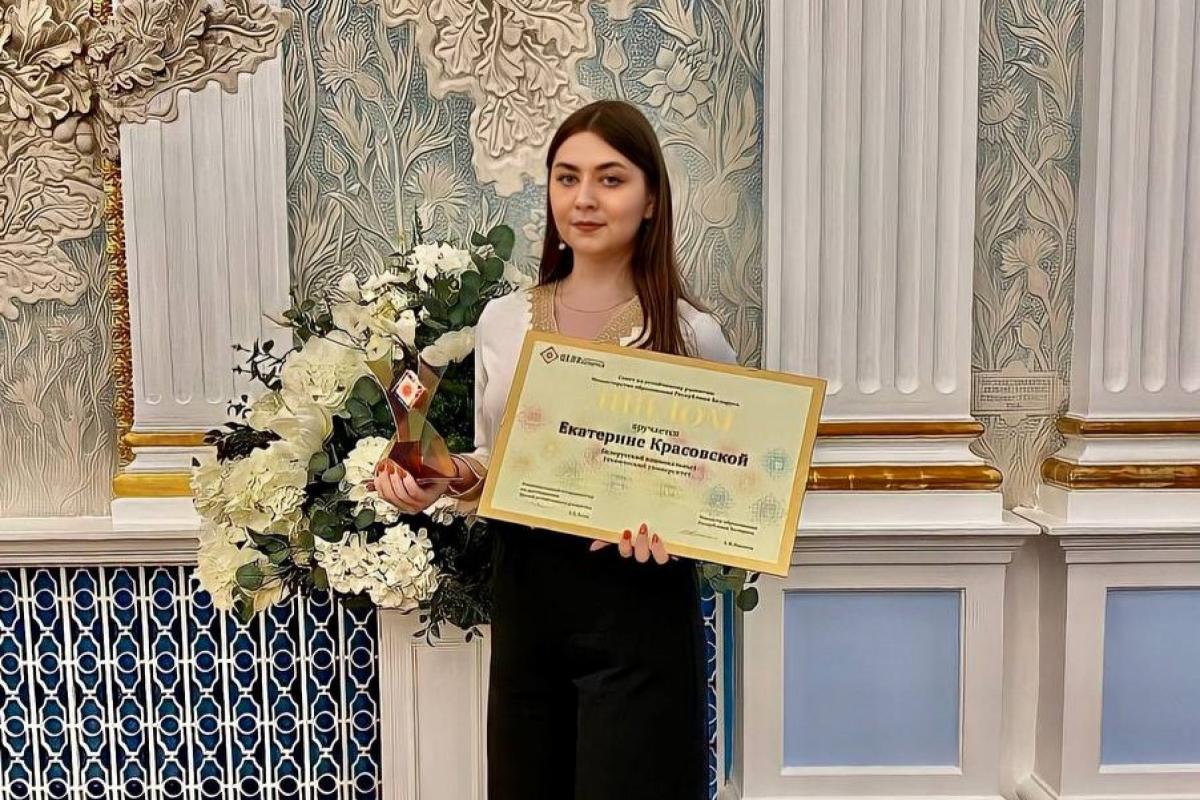
— Our faculty is small, we were all friends and talked to each other. It was really family friendly. During the session, everyone helped each other, the senior courses helped the younger ones. There was a working atmosphere in the dormitory. That's where all the minds of our faculty came together. One of the highlights at the university that I would like to highlight is the Christmas Ball of BNTU students. It was there that I received my first award, a commendation for my active public life from the rector of BNTU. It's at times like this that you realize it's not for nothing. Then the rewards only multiplied. I keep them all at my parents' house, and when I come home, I always feel nostalgic and remember that active student life. I cherish all the moments in my memory and do not want to single out any one - each of them is dear in its own way.
Ekaterina Krasovskaya noted that BNTU graduates are specialists in their field. According to her, professional knowledge cannot always be applied immediately, but everything comes with experience.
– The social skills acquired at the university played an important role in my development as a specialist: the ability to communicate, work in a team, speak in front of an audience, find a common language with different people — this is what helps every day. Now, as head of the council of young scientists and working to increase the recognition of the institute, I am constantly using everything I learned as a student.
— What does it mean for you to be a graduate of BNTU today? Are you proud of your alma mater?
— It is a great pride for me. BNTU gave me not just a diploma, but a foundation of thinking, self-confidence and a community of people who are always ready to help and support. I am proud to have studied here, and especially at my faculty. FGDE is forever one big family. I am very pleased to receive invitations from current students to faculty holidays. It's like an opportunity to return to that carefree time and feel like a student again. I always warmly remember the teachers and feel connected to the university. For me, BNTU is not the past, it is part of my professional identity. I would like to thank everyone who was on my student journey: the university and faculty leadership, the dormitory teacher, the center for ideological work and youth affairs. They provided all the necessary knowledge, supported and guided. Thank them for that!
Ekaterina advises students who want to combine studies, science and social activities to start small, look for mentors at the department and not be afraid of mistakes. And before the distribution, he recommends graduates to go to their liking, but remember that the first place of work is a school, where the desire to learn and responsibility are important. Even if the distribution seems imperfect, it should be treated as a launching pad to gain experience and look for a job that brings pleasure.
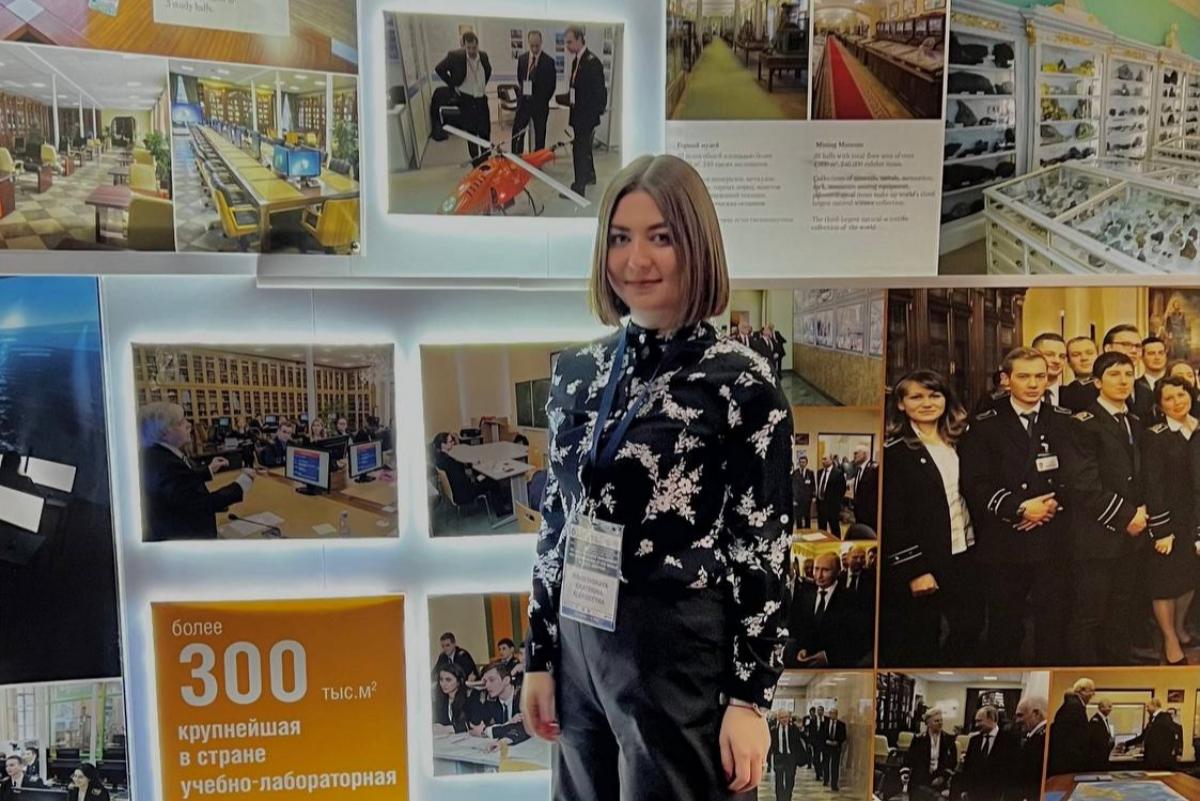
Ekaterina Krasovskaya is an example of how active student life, science and social activities become the foundation for a successful career and personal growth. She was not afraid to try new things, take responsibility and go beyond the standard student routine. Today, two years after graduation, she continues to develop in her profession and is proud to be a graduate of BNTU.
