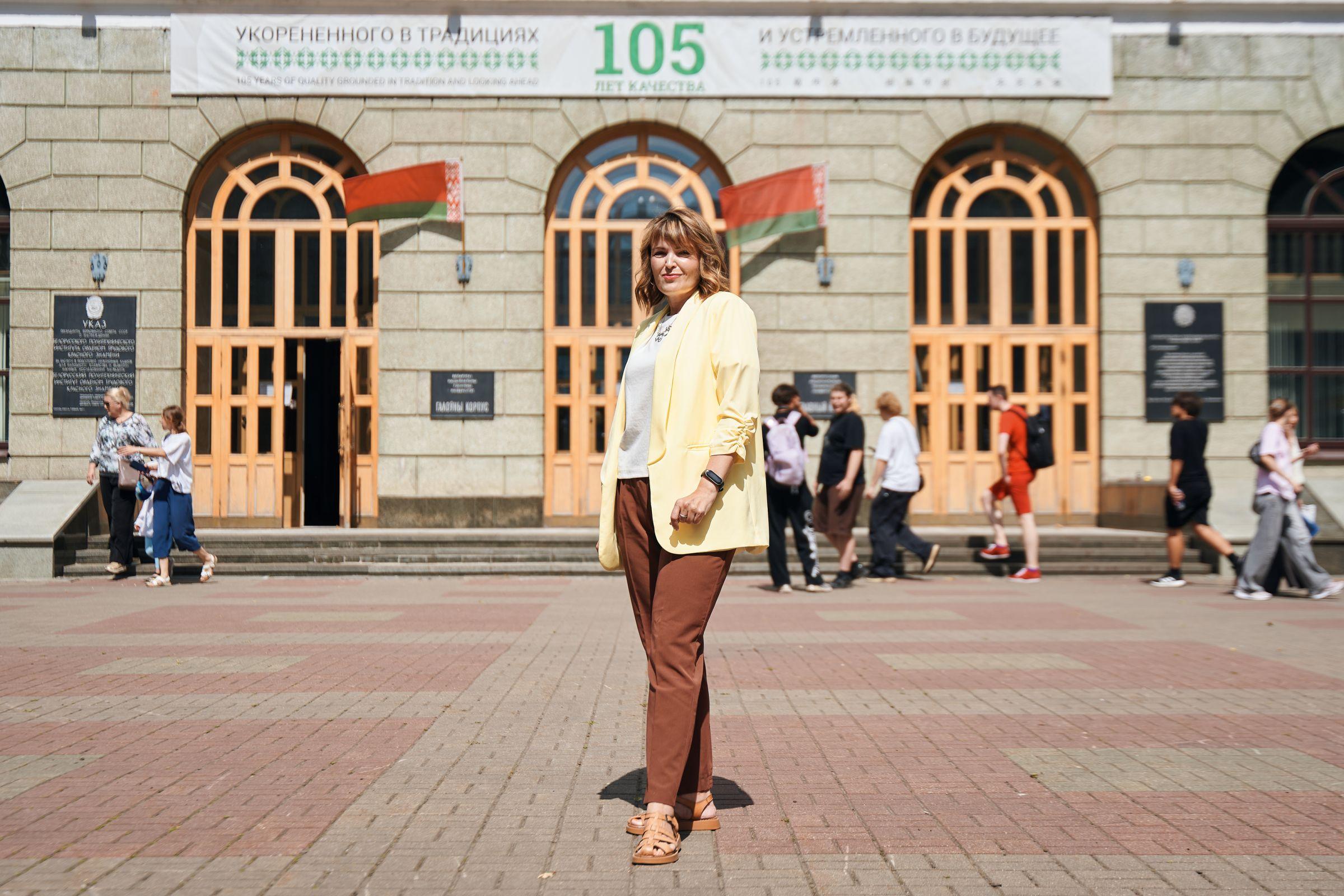
Natalia Gurinenko, Candidate of Technical Sciences, Associate Professor at the Department of Building Materials and Construction Technology at the Faculty of Construction of BNTU, graduated from the Belarusian State Polytechnic Academy (now BNTU) in 1999, worked at OJSC MAPID, and has been teaching at the university since 2006. During this time, she has defended her PhD thesis and raised an engineer daughter who continues the construction dynasty.
Natalia Gurinenko has come a long way from graduating from the Faculty of Construction to becoming a Candidate of Science and Associate Professor at BNTU. Behind these achievements are years of teaching, scientific experiments, and a desire to grow in my profession.
— In 1999, I graduated from the Faculty of Construction with a degree in industrial and civil engineering. After university, I worked at OAO MAPID, our flagship construction company. I worked in the 204th Department of Finishing, in the Production and Technical Department. When I came to university after this company, it was a bit challenging. Since 2006, I have been working at the department. Now it's called "Construction Materials and Technology," but it used to be called "Concrete Technology and Construction Materials." For a few years, I just worked as a teacher, but then I got bored with teaching alone. I wanted to do more, so I decided to pursue research. I approached my supervisor and told her that I wanted to do research. Gradually, we started working together. In 2010, I completed my master's degree, and in 2014, I completed my PhD. During this period, I began working on my dissertation in the field of construction materials and products. This field is considered challenging, and it is difficult to write a dissertation quickly. There is a significant amount of experimental work, vast amounts of information, and constant experimentation, data processing, and additions. In 2020, I successfully defended my dissertation and earned my Ph.D. in engineering. Two years later, I was awarded the title of Associate Professor. This is how I have reached where I am today.
Her family has been an engineering dynasty for three generations.
— My father is a civil engineer and a road builder. He was the first in the family to pursue this field. He currently works at the Faculty of Transport Communications at BNTU. After him, my daughter continued in this field. She graduated from BNTU three years ago with a degree in industrial and civil engineering. Currently, she works at the 35th Trust. She chose to pursue a career in the construction industry, which came as a surprise to me. This is how the dynasty continues.
— What prompted you to pursue a scientific career? Were there any teachers who instilled a love of science?
— My immediate supervisor, Eduard Ivanovich Batyanovsky, pushed me. I went up to him and said: "I want to study." And so we started. It's difficult to write a dissertation on building materials: it involves a lot of experimental work and data processing, but it was interesting to me.
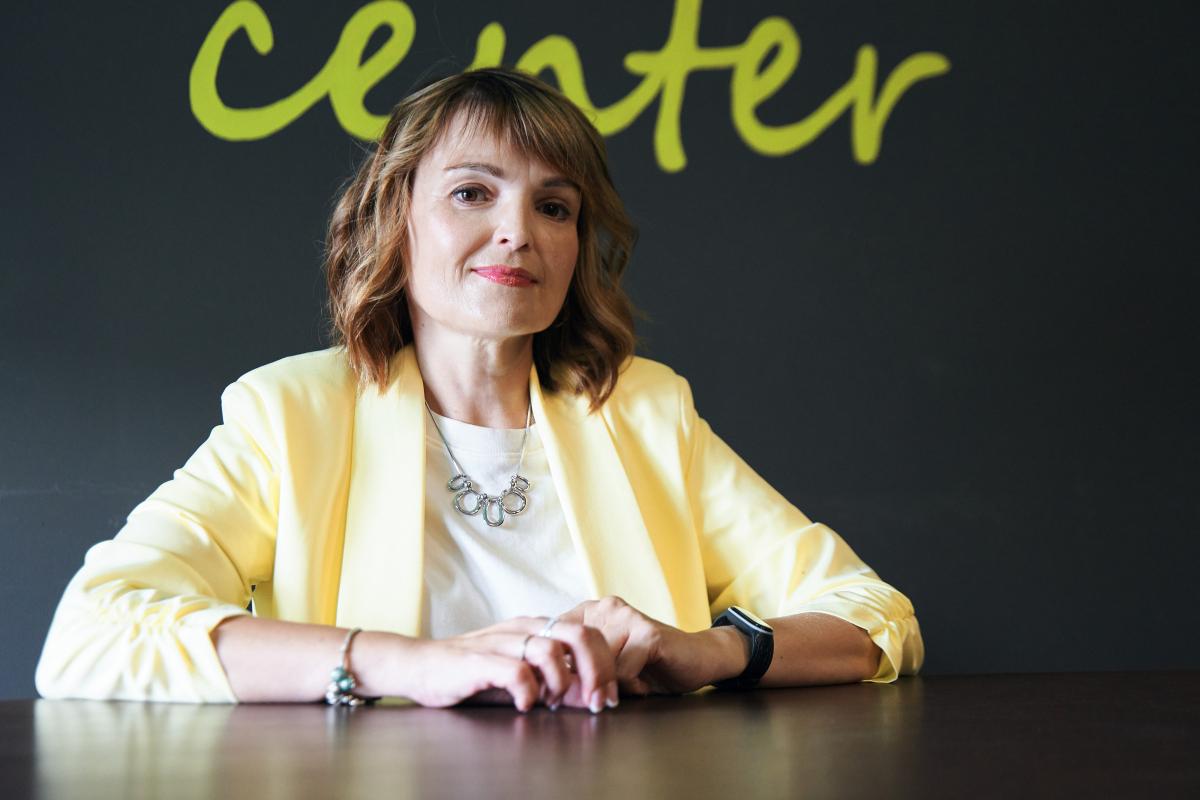
According to the associate professor, students now remember more about where to find information, and the teacher's task is to teach them not only how to find it, but also how to structure it properly.
— The generation of Zomers has come. Their approach to knowledge and the type of memory have changed: they prefer to remember not the information itself, but the way to get it—how to find it on the Internet. In the past, students were more diligent and learned more. Now, they need to be interested and keep their attention. They listen to the first 15 minutes of a lecture, but then start to get distracted. I'm still learning to control the audience: to make a joke somewhere, distract for a couple of phrases, bring back to the topic.
According to the teacher, girls are more diligent, they delve into details, they are responsible, accurate and they have higher academic performance. This doesn't mean that the guys are worse, it's just that the approach is different. But in the end, when they go into production, all these differences are erased. That leaves just the engineer.
The qualities that she tries to instill in future builders, Natalia Sergeevna formulates clearly:
— An engineer is a special mindset. A task is set — and you have to solve it. I teach them not just to memorize definitions, but to understand: what affects the property, how it works. Think, not memorize, because what you learned came to you and will go away, but what you understood will remain. And most importantly, I always tell students: A construction worker must be able to make quick decisions in stressful situations, be disciplined, and know the rules. Safety is the most important thing.
She believes that a modern teacher of technical subjects should not only have a deep knowledge of the subject, but also be a skilled mentor.
— You can be a good scientist and have knowledge in your field, but not everyone can teach others. Most teachers of technical subjects do not have a degree in education, and a good teacher must also be a psychologist in addition to having knowledge in their field. A modern technical teacher should not only be a strong subject matter expert, but also a good mentor: explain complex concepts in simple terms, link theory to practice, and help students learn independently. They should also constantly update their knowledge, master modern teaching methods, and be prepared for changes in technology and the educational environment. They should understand how AI can be used in data analysis, modeling, programming, design, and hypothesis testing, as well as where its use may be misguided or unethical.
— Do you involve students in your research? How does it happen?
— I appreciate curiosity. When a student asks questions in lectures, I immediately notice it. I suggest topics and recommend something new that is not part of the main course. I had a similar experience many years ago. A student was studying in our field and constantly asked questions and expressed interest. We have a laboratory at our department that studies construction materials, and I recommended him to work in this area. And how do we attract students? We have student research work — SRW. Each teacher in the individual plan records who he has attracted and what success he has achieved. Sometimes in lectures we listen to reports, we hold student conferences. I can recommend a topic to someone. I really like it when the guys find something new, because it is impossible to cover everything in the lecture course. I always say: tell us about what you like, make a presentation. This is how they are attracted.
One of the most memorable cases in practice was when a student not only wrote a scientific article, but also brought samples to the conference for demonstration.
— There was another case: the boy's father worked at a company that dealt with clay additives. He presented at the conference and even brought flasks with samples, which everyone enjoyed. The person was passionate, and we collaborated on an article. This is highly valuable, as not everyone is willing to go beyond the scope of their program.
According to her observations, there are about 20-30 percent of girls in the construction department.
— We have almost erased the boundaries between male and female professions. There are girls among pilots, cosmonauts, and crane operators. In construction, too. Of course, there are stereotypes, but when you are a professional in your field, these conversations quickly fade into the background. Respect is earned not by gender, but by knowledge and responsibility. I rarely encountered the warning that construction is not a woman's job, but something may have slipped up in conversation. Over time, you realize that it's not the gender that matters in a profession, but rather the knowledge, responsibility, and ability to work towards a goal. When someone truly understands their field, stereotypes quickly fade into the background.
— What do you think women bring to the construction industry and the science of materials?
— We all strive for comfort. In ancient times, housing protected from wind, rain, weapons. Today, we want where we live and work to be still warm, light, comfortable. And who better than women understand what is needed for comfort, successful work. Residential buildings should be convenient and comfortable, so that families lived there long and happily. Therefore, women partly shape the construction industry with their understanding of the comfort and quality that the industry should create. Women are creating the future. In my opinion, women bring attention to detail, accuracy, a systematic approach, and the ability to make informed decisions to this field. This is especially important in construction and materials science, where precision, quality, and responsibility are crucial. Additionally, women often enhance teamwork and make the professional environment more open and modern.
The associate professor shared that what inspires her most in the industry is that beautiful homes and structures that will stand for decades are born from simple materials.
— In teaching building materials, what inspires me most is the opportunity to observe how seemingly fundamental science becomes the foundation for real creation. To see how durable, safe, and innovative structures are born from materials that shape the face of our cities. This is what inspires me the most: when you see how simple powders and liquids (such as cement and water) enter into the most complex hydration reactions to form a solid stone; the construction industry is changing rapidly. New materials are emerging; to pass on knowledge to the next generation of civil engineers, understanding that the reliability and durability of buildings depend on their knowledge of the properties of materials.
— What advice would you give to female applicants who are afraid to go into the construction industry?
— Construction is not necessarily physical labor, you can be a builder with manicures and makeup in nice clothes. Girls can work in various departments, for example, PTO, engage in design. If you have a technical mindset, like working with numbers, like to create, feel comfortable in a male team — welcome to construction!
Natalia Gurinenko is an example of how an engineering profession can become a life's work. She grew up in a family where one of her parents chose construction, and she has gone from being a student to becoming an associate professor, teaching students to think, make decisions, and not be afraid of challenges.
