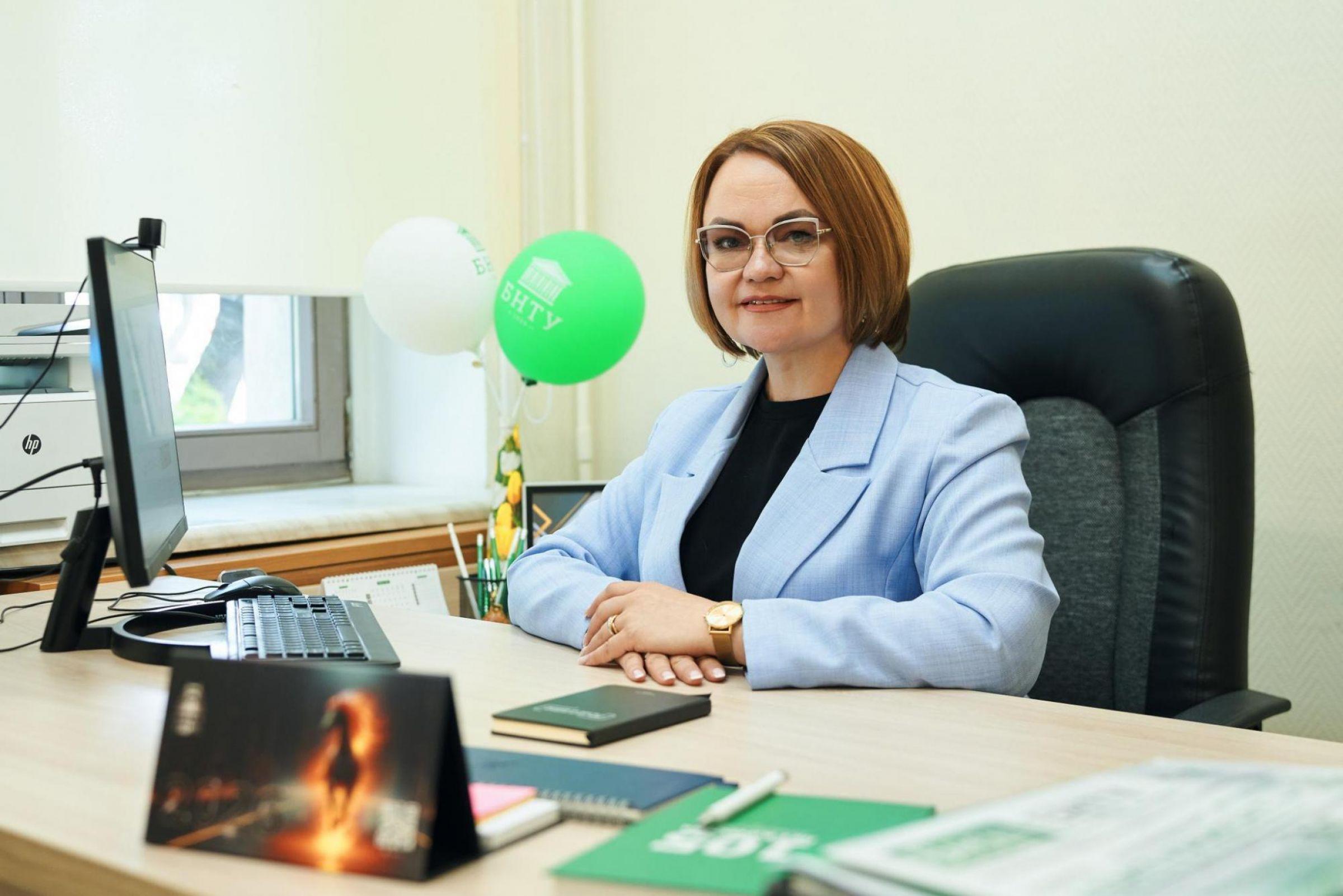
“Love for what you do” – this is how you can describe the career path of the director of the Belarusian-Uzbek Intersectoral Institute of Applied Technical Qualifications, a senior lecturer at the Department of Roads, Elena Khodan. Exactly 25 years ago, she crossed the threshold of the university as a student, and today she trains engineers for the country and develops international cooperation.
Elena Petrovna admitted that her route to the road industry is a love story that began 25 years ago. According to the senior lecturer, her family played a huge role in her life.
— I grew up in a family of hydraulic engineering specialists, so technology and drawings were my native language. At school, I adored mathematics and was initially firmly convinced that I would enroll in the BSU Faculty of Mechanics and Mathematics. But my father, who, as I now understand, saw in me a practical engineer, said: "Let's go, I'll show you a university, and you won't want to leave it." He brought me to the BNTU (then - BGPA) and was not mistaken. I felt the atmosphere of real, large-scale creation. I realized that I wanted to apply my favorite mathematics not in abstractions, but in tangible things: in cement concrete, asphalt concrete, and kilometers of new highways. I also want to mention that this year is a personal anniversary for me: it was exactly 25 years ago that I stepped into the BNTU as a student. Looking back, I realize that my father was absolutely right. I have never regretted my choice, and I truly do not want to leave these walls.
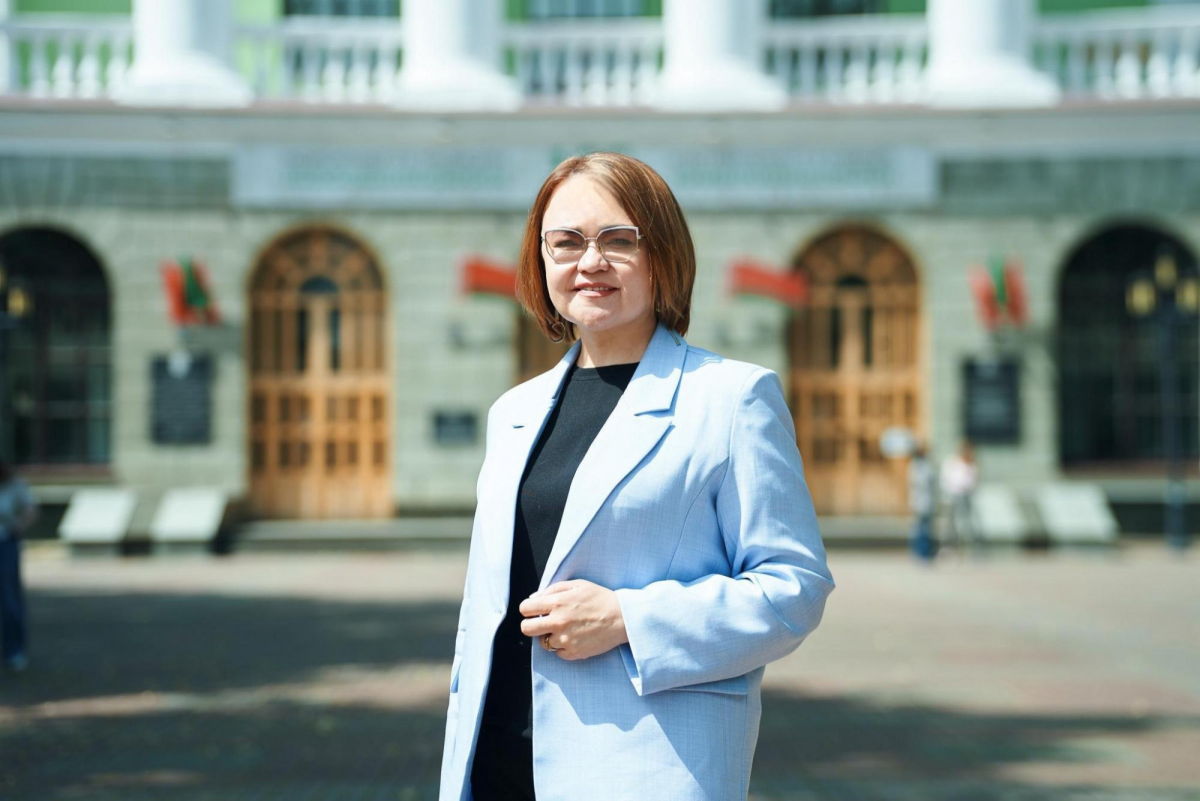
Elena Khodan graduated from the Belarusian National Technical University with a degree in civil engineering. In parallel, she received a degree in management and economics. When it was time for her to be assigned to a department, she was assigned to the Department of Road Construction and Maintenance.
— This was her second professional discovery. I realized that while road construction is about building infrastructure for the country, teaching is about building the people who will build that infrastructure. I am passionate about my work. And I've never been bothered by the fact that road construction is a male-dominated field. First of all, in the academic and engineering fields, intelligence and competencies are the most important factors. Secondly, my experience shows that men often build roads, but it is women who teach and shape these male engineers, instilling in them a culture of production, attention to detail, and a love for precise calculations. I believe that I belong in this field and am in my element.
— You have been teaching for many years. What has changed in students during this time?
— They say that modern students have become less persevering, but I disagree. They have simply become different. They have a completely different type of perception of information — they are clip, fast, digital. Previously, the teacher was the main source of knowledge. Now, any student can find a formula or standard in a smartphone in a second, so the role of the teacher has changed. I am no longer just a “transmitter of knowledge.” My task is to teach them to distinguish between correct and erroneous information, to teach them to think like engineers, and to teach them engineering intuition. I absolutely love this. Adapting to them, finding new formats, and explaining complex road-related topics using modern examples keeps me on my toes and prevents me from becoming stagnant. They are changing me, and I am helping them become professionals.
Elena Petrovna noted that there is a difference in the way boys and girls are taught, but it is not about their ability to understand structural mechanics or the basics of design, but rather about their approaches. Girls are often more meticulous and attentive to details, regulations, and the aesthetics of a project. Boys are more likely to propose bold, sometimes adventurous, and unconventional solutions.
— However, the most important thing happens at graduation. When they cross the threshold of the university and enter the production sector, all these gender differences disappear. They become simply engineers. When they design and build a road, no one will ask if it was designed by a boy or a girl. The only question will be whether it is reliable and safe.
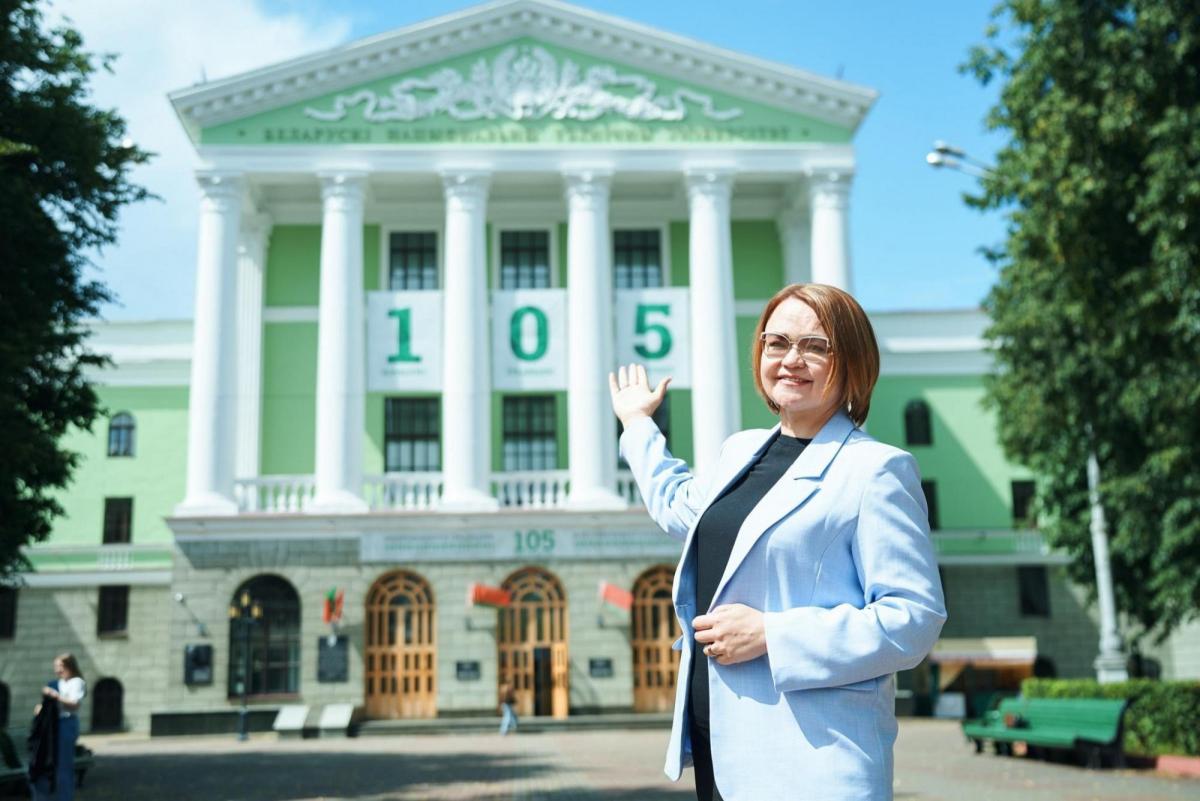
Speaking about the qualities that she is trying to instill in future road engineers, Elena Petrovna highlights responsibility, as well as an engineering conscience, a sense of numbers and thinking decades ahead.
— The first place is always responsibility. A mistake in calculations on the road is not just an overspending of the budget, it is human lives. I have for myself deduced several qualities that are more important than any formulas. They will find the formulas in the reference book, but these qualities need to be instilled. The first is an engineering conscience. Road construction is an area where a mistake can cost lives. I teach my students that if you're not confident in a calculation, don't sign it. If you see that the technology is flawed, don't be silent. This quality is more important than any degree. The second is a "sense of numbers" and engineering intuition. I'm a mathematician by nature, and I'm often asked, "Why calculate so deeply when there are programs?" I explain that a program can produce any result, even an absurd one. A program is a tool, but it's the engineer who makes the decisions. And perhaps the third is thinking decades ahead. A road is not built for a year. I try to ensure that every student, when making a calculation, imagines that they are designing a road not for cars, but for people. The road should be safe and comfortable, so that families with children can travel on it. Ultimately, my goal is for them to leave the walls of BNTU not just as knowledgeable engineers, but as thoughtful ones. If I manage to instill these three qualities in my students, it means that I am doing my job well.
According to the director of the institute, a modern teacher is a mentor who does not just transmit theory, but also teaches students how to apply their knowledge in practice.
— A modern teacher of technical disciplines is not just a person who imparts knowledge, but also a mentor who helps students learn how to think, analyze, and apply theory in practice. Today, a teacher is required not only to have a deep knowledge of their subject, but also to be able to explain complex concepts in a clear and understandable way. It is important that education goes beyond mere theory, and students should see how their knowledge is applied in real engineering, scientific, or industrial settings. In addition, a modern teacher should be flexible and open to change. Technology is evolving rapidly, so it is important to use up-to-date teaching methods, digital tools, project-based learning, and research elements. The teacher's attitude towards students is equally important. A good teacher knows how to support, motivate, provide feedback, and foster independence. They not only provide guidance but also help students grow. Thus, a modern teacher of technical disciplines is a professional, mentor, and organizer of the learning process who combines knowledge, practice, and a human approach towards students.
Elena Khodan described her arrival at the Belarusian-Uzbek Intersectoral Institute of Applied Technical Qualifications as a natural step. Prior to this, she had served as the Head of the Department of Roads for four years, gaining experience in administrative and managerial work, as well as actively implementing joint educational programs with Uzbekistan, which allowed her to gain a deeper understanding of the significance and prospects of international educational cooperation.
— It is particularly important for me that I now have the opportunity to continue this work at a new level, in an institute that brings together the Belarusian engineering school and the Uzbek educational potential. This is a great honor and a great responsibility. I would like to express my sincere gratitude to the university administration for the trust they have placed in me. For me, this trust is not only a high appreciation of my experience, but also an incentive to work with full dedication, meet the expectations placed on me, and contribute to the development of the institute, strengthening interstate cooperation, and training highly sought-after specialists for our countries.
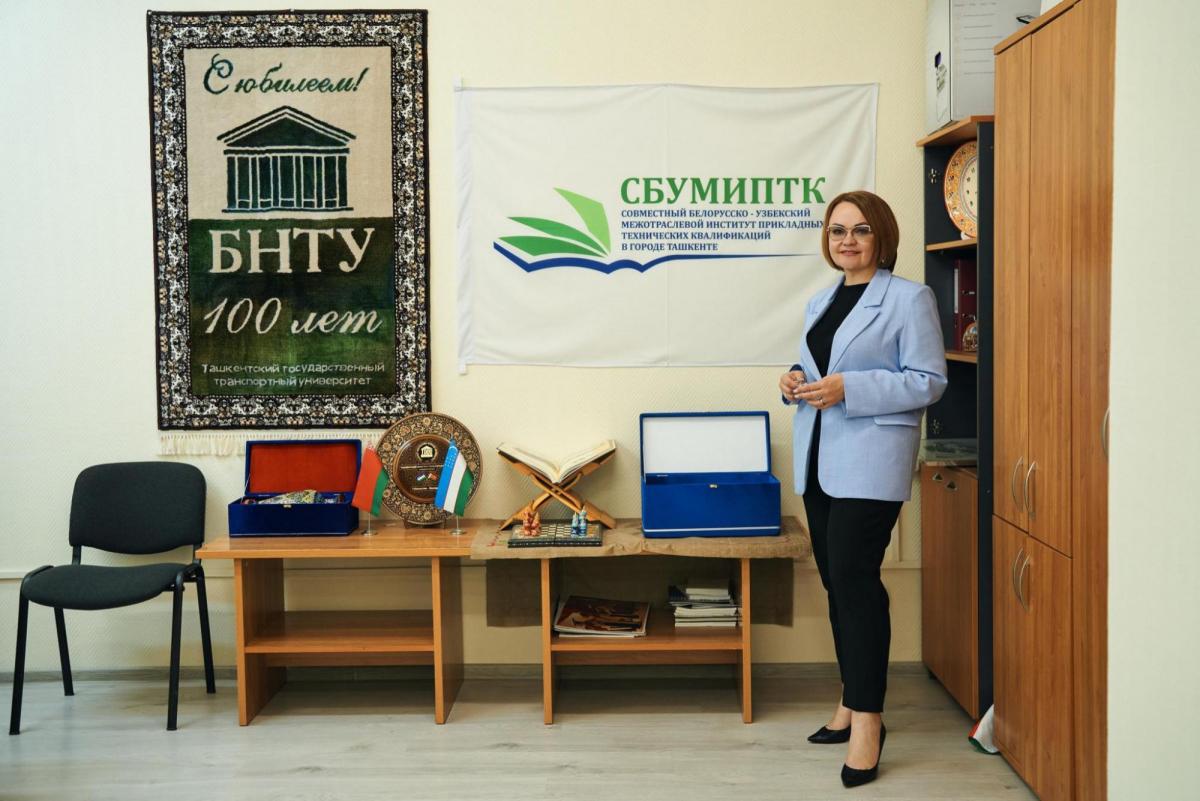
— Is being a female leader at a technical university an advantage or a challenge?
— Being a female leader at a technical university means balancing between two realities every day: the need to prove your expertise and the opportunity to use your strengths as a managerial resource. I combine toughness in decision-making with diplomacy. If a decision is based on data and is important for the result, it must be implemented, but the way it is presented helps to maintain trust and working relationships. For me, "women's wisdom" in management is about choosing the right tactics: when to insist, when to negotiate, and when to give room for initiative. For female students and young female professors, my presence in a leadership position sends a message that there is room for different leadership styles in the technical field, and success depends not on gender but on competencies, responsibility, and teamwork.
Elena Khodan has faced prejudices that the road industry is not a "women's" field, but she believes that respect is earned not through discussions about women's place in the industry but through the quality of work.
— If the program is well-structured, students leave with real skills, and production workers get a well-trained specialist, then no stereotypes matter. For me, it's not about fighting, but about focusing on areas where results can be achieved.
Elena Petrovna noted that the road industry is rapidly changing, and in this new reality, qualities traditionally associated with women are gaining importance.
— If we talk about the road industry today, it is less and less like the “masculine romance” of rollers and foremen in quilted jackets. Today, it is about digital models, BIM technologies, complex calculations, environmental requirements, and project management. And here, the qualities that women traditionally excel at come to the fore: multitasking, attention to detail, the ability to work with large amounts of information, and communication skills. The road is becoming an intellectual product, which means that the requirements for those who create it are changing. And women feel absolutely confident in these new realities. We bring a “human dimension.” A male engineer often sees the load, materials, estimate, strength. A female engineer sees how a tired person will drive on this road after a long day at work, how the route will fit into the natural landscape. We make engineering more human-oriented, safe and aesthetic.

Elena Khodan noted three reasons why girls are increasingly choosing the road industry. First, engineering itself has become different — digital and intellectual, which has attracted those who are strong in analytics. Second, the new generation is pragmatic: girls see that a technical education provides stability. Third, role models have worked — when a girl sees successful female engineers, she stops doubting.
— What stereotypes about women in construction have you personally encountered?
— There were stereotypes in my life, but they were shattered by reality faster than I could even notice them. I faced three main stereotypes. The first one is "she's a theorist who doesn't know about real construction." This stereotype can only be shattered by professionalism, when you show your students that you understand all the nuances of production. The second stereotype is "a female teacher is soft." In reality, it's the demanding nature that is highly valued, and it's the demanding nature that graduates appreciate. The third stereotype is "teaching is a backup option for those who didn't pursue a career in production." But explaining the material in a way that future engineers won't make mistakes is a very challenging task. Today, there are fewer such stereotypes. The best thing you can do is simply do your job well. Authority is gained not by gender, but by competence and integrity.
Elena Khodan, a motherly-sounding advice to a young woman who aspires to study engineering but fears it is not a woman's field.
— My dear, listen to me very carefully. A profession has no gender, it only has the level of your talent and your love for it. Look at the map of your country. Do you see these lines connecting cities? Someone has to come up with them, calculate them and build them. And this "someone" can quite be you. Don't listen to those who say "not feminine". It's not muscles that build roads, but minds, hearts and courage. The world is in dire need of your bright, smart and sensitive ideas. The profession of an engineer is the profession of a creator! Come to us, I will personally teach you everything I know! I have unlimited faith in you, and you will succeed!
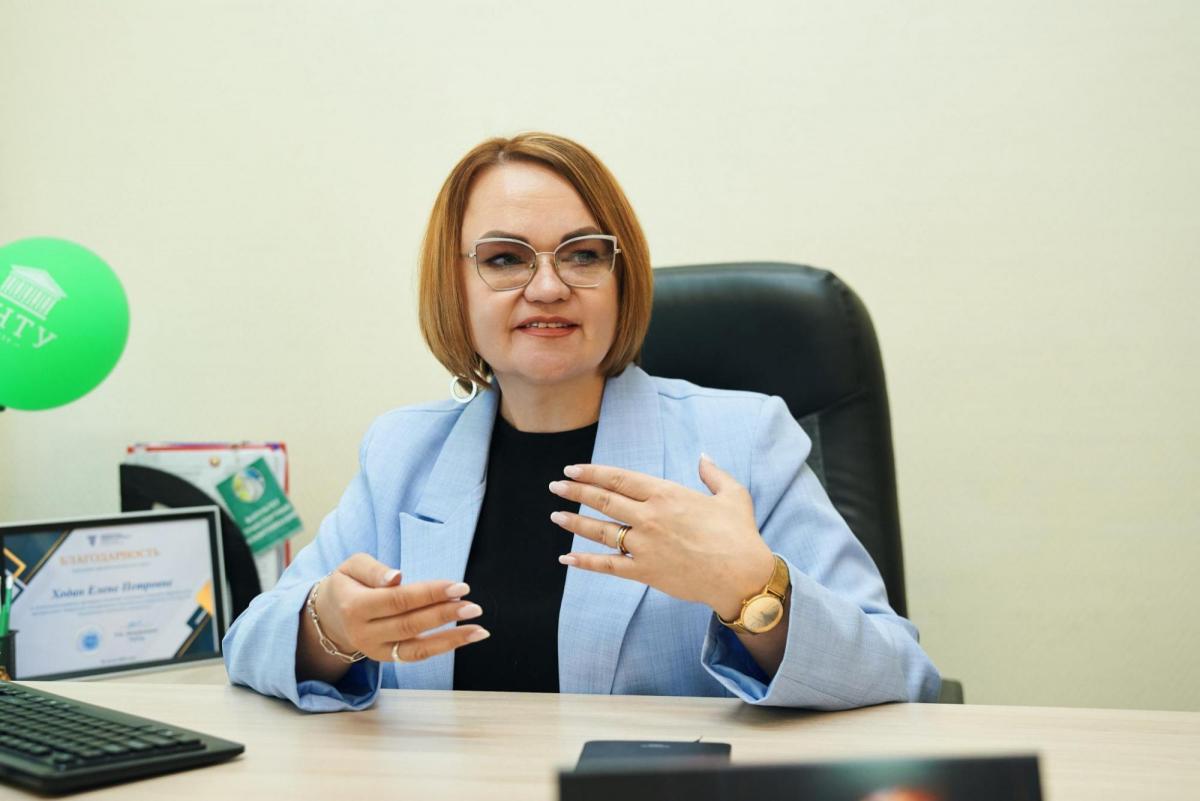
Elena Khodan is an example of how love for a profession and family traditions can lead to great success. Management of an international institute, 25 years at BNTU, hundreds of graduates - and not a single doubt. Stereotypes that roads are not a woman's business, she breaks with her daily work and attitude towards students.
