
The results of the centralized exam and testing are already known, applicants are actively studying faculties and specialties, and we continue to help them make such an important choice of future direction in the "Do the Right Thing" column. Today, we are getting acquainted with the Faculty of Energy Construction (FES).
The Faculty of Energy Engineering at BNTU was officially established on October 1, 1986, although the roots of its specialties can be traced back to 1920, the year of the university's founding. Today, the faculty enrolls over 1,000 students in both full-time and part-time programs. The faculty offers a wide range of specialties and concentrations related to the construction and operation of energy, water management, and natural resource utilization facilities. Training is conducted in 4 specialties and 6 subspecialties covering the following key areas: hydropower and hydraulic engineering, water transport and shipbuilding, heat and gas supply and ventilation, water supply and sanitation, construction of thermal and nuclear power plants, and engineering economics.
The main customers of the FES staff are UP "MINGAZ" (a special training center has been established for practical classes for BNTU students), UP "Minskvodokanal" and enterprises for the operation of water supply and sanitation systems, RUE "Belnipyenergoprom" (a leading design and survey institute in the field of energy, which has its own branch of the Department of Heat and Gas Supply and Ventilation of the FES), the Belarusian Nuclear Power Plant and organizations in the nuclear industry, design and survey institutes in the field of thermal and nuclear power plants, organizations engaged in reclamation activities, construction, installation, and operational organizations in the energy sector.

Dmitry Livansky, Dean of the Faculty of Energy Construction, noted that the faculty's graduates are traditionally in the focus of the country's largest organizations' personnel interests.
— The specialties of the Faculty of Energy Construction are in high demand in the real sector of the economy of the Republic of Belarus. According to the admission campaigns of the last three years, the demand for energy construction specialties has significantly increased. The faculty has a significant number of filled target places among all the faculties of BNTU. In general, more than 190 Belarusian enterprises are the employers of the FES BNTU graduates.
Speaking about the faculty's attractiveness for applicants, the dean highlighted several systemic advantages, from employment guarantees to the technological equipment of the educational process.
— Studying at the faculty provides a number of competitive advantages: guaranteed employment, state-funded graduates receive a two–year work placement at enterprises; with targeted training - for 5 years with a guaranteed job; high demand in the labor market, some specialties are included in the list of the most demanded by the country's economy; demand for graduates of the faculty is growing annually; modern educational and laboratory facilities, departments have modern well-equipped laboratories and research centers; branches of departments are located at leading enterprises, training is partially conducted directly at the leading enterprises of the country in RUE Belnipienergoprom and UE MINGAZ; scientific activities, students can participate in national and international conferences, conduct research under the guidance of experienced teachers; international relations, BNTU participates in academic exchange programs, diploma is recognized in almost all countries of the world; CAD technologies, students master modern computer-aided design tools.
Dmitry Livansky also focused on how theoretical knowledge is transformed into professional competencies through continuous practical training at real industry facilities.
— Practical training at FES is systematically integrated into the educational process and is conducted throughout the entire period of study. The theoretical knowledge acquired in lectures is reinforced during annual practical training. Students undergo several types of practice: familiarization practice – at real hydropower and energy facilities of the republic; technological and production practice – at construction and production facilities, in design organizations and research institutes; pre-diploma practice – in organizations-customers of personnel, which are often the first place of work. Practice bases cover water utilities, hydropower facilities, the Belarusian NPP, reclamation organizations and design and survey enterprises. A special role is played by the branches of the departments directly in the organizations: for example, in the training center of UP "MINGAZ" about 78 full-time students undergo practice every year.

— For those who plan to enter the FES in the upcoming admission campaign, it is worth considering several important points. Choose a specialty consciously. All specialties of the faculty are aimed at the life support of the population – without water, heat, gas and electricity it is impossible to imagine modern life, so these professions will always be relevant. Consider targeted training. This guarantees 100% employment in the first place of work and a separate competition at admission. Take advantage of the benefits. Medalists, winners of republican competitions and other separate categories of applicants are accepted without entrance examinations or under special conditions. Prepare for specialized subjects. For admission to technical specialties, specialized disciplines are taken – mathematics, physics, Russian language, as well as English (for the specialty “engineering economics”). Participate in student life from the first days – the faculty has developed student self-government, scientific work and cultural and sports life.

Full-time education
|
General competition for a group of specialties |
Qualification |
What to take? |
|
Water vehicles. Automated vessels |
Engineer |
|
|
Construction of buildings and structures (two specializations)* |
Civil engineer** |
|
|
Engineering networks, equipment of buildings and structures (two specializations)* |
Civil engineer** |
|
Specialty competition |
Qualification |
What to take? |
|
Engineering Economics. Municipal and Water Management |
Engineer-Economist |
|
*You can find the list of specializations for each specialty on the website of the BNTU Admissions Office at the link.
Correspondence form of education (shortened term)
|
Competition for the specialty |
Qualification |
What to take? |
|
Engineering networks, equipment of buildings and structures. Water supply, sewage disposal and protection of water resources |
Civil engineer** |
Entrance tests at BNTU:
|
** After studying, the degree "Master" is awarded.
FES lives not only serious scientific projects, because the students of the faculty prove that an engineer can be creative, sporty and scientific at the same time.
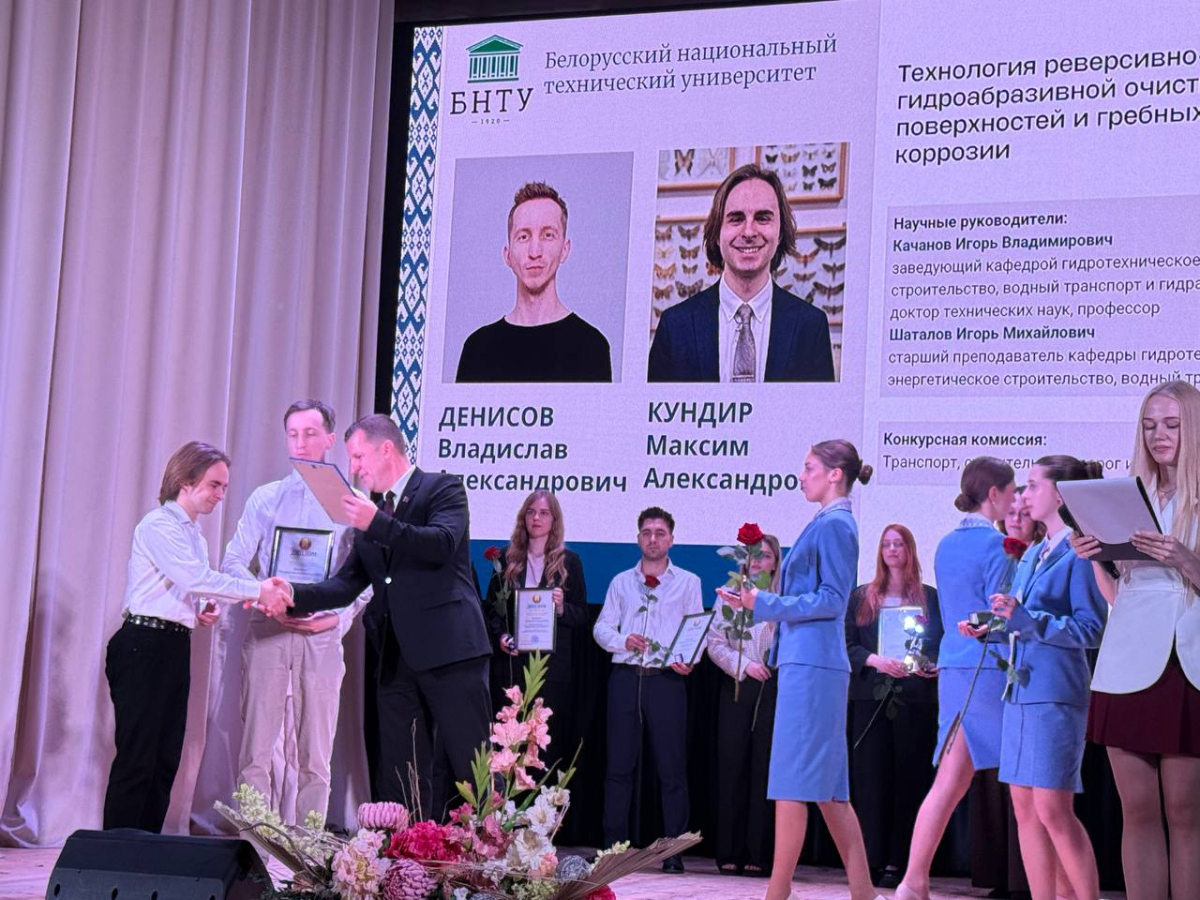
In science, students have already made a name for themselves. For example, at the XXXII Republican Competition of Students' Research Papers, Vladislav Denisov and Maxim Kundir won awards for their innovative technology of hydroabrasive cleaning of ship surfaces and propellers from corrosion, a work that has direct industrial applications.
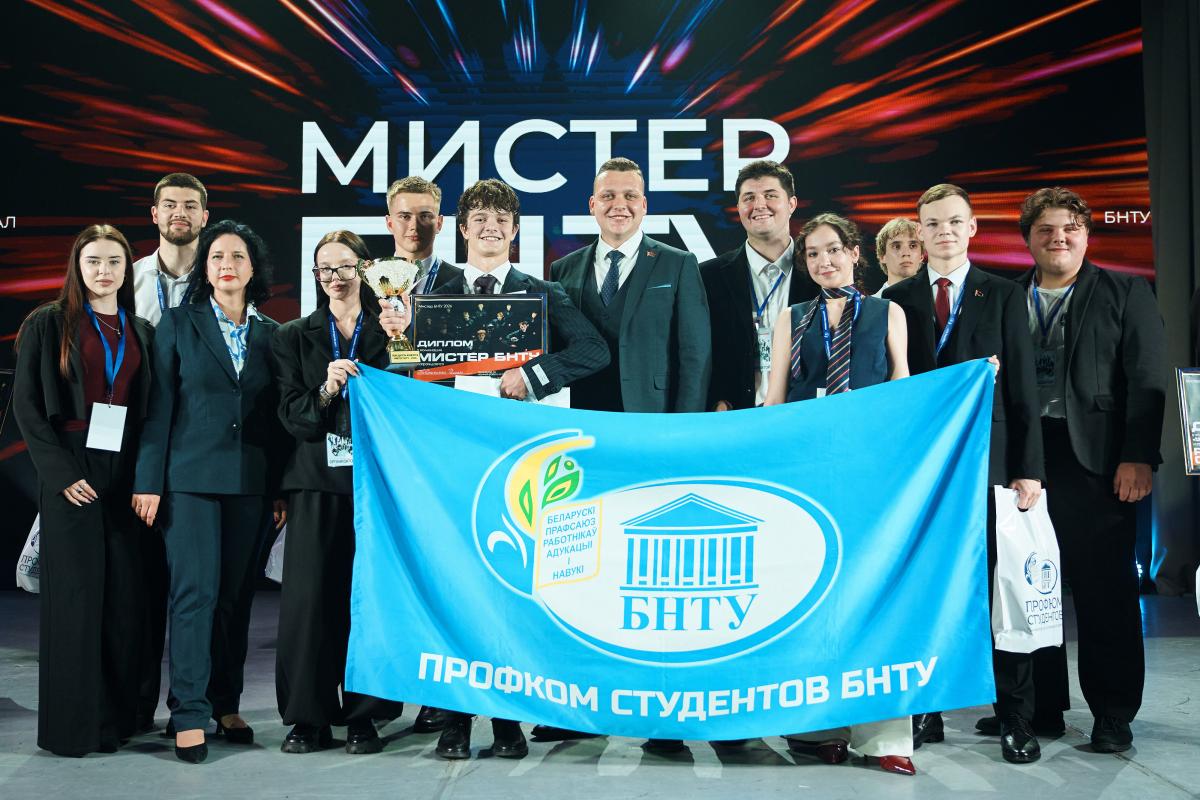
In the arts, there have been no defeats either. This year, FES student Roman Pavlyuchenko won the title of "Mr. BNTU," and FES student Yulia Romanovich won the title of "Miss BNTU."

The faculty's students are also active in sports. In the final of the Republican Universiade in mini-football, the BNTU team once again became champions, and it included a FES student Vladislav Sulakov.

Follow the new materials in the section to make the most correct decision in choosing a future specialty.
