Round Table in Minsk: how digital solutions and circular economy are changing sustainable transport
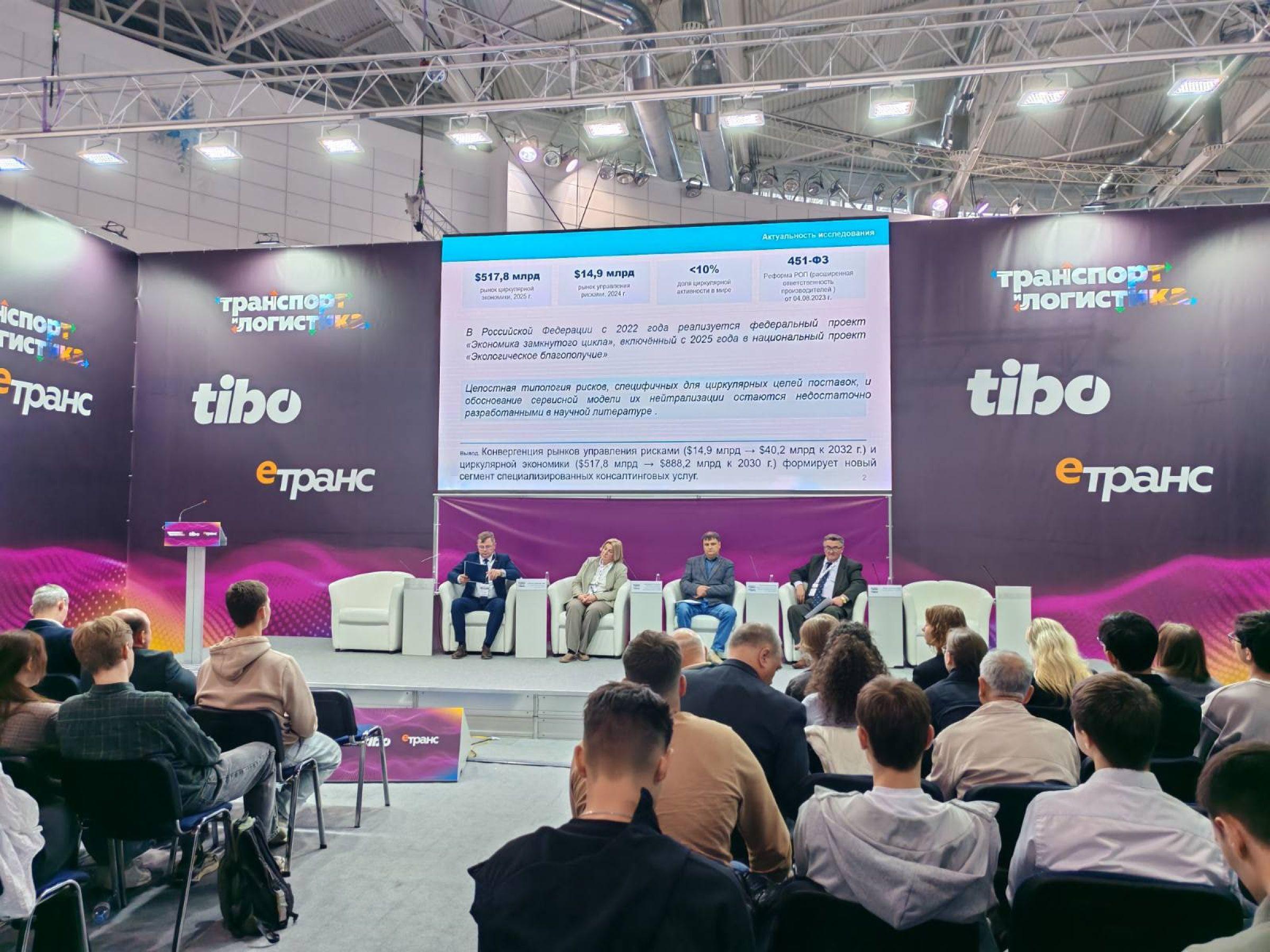
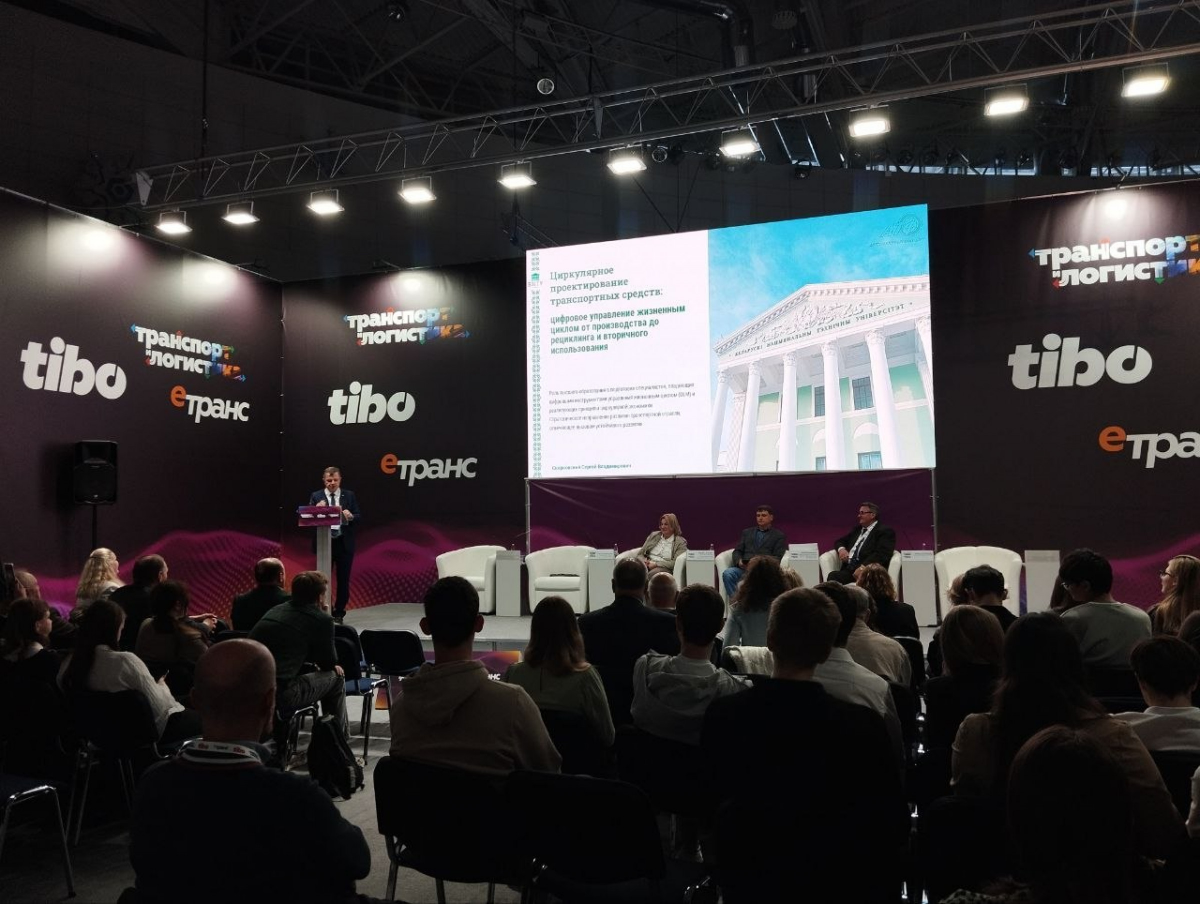
On May 27, 2026, conference hall No. 2 of the MSCSC "Minsk-Arena" hosted a round table "Sustainable transport. Digital solutions of the circular economy". The organizer was the Auto-Tractor Faculty of the Belarusian National Technical University. The event brought together leading experts, representatives of government, transport enterprises, the scientific community and business. The main topic was discussing how closed production cycles, digital twins and sustainable transport are becoming the new standard for the transport of the future.
♻️ What is circular economy in simple words
A circular (or closed-loop) economy is a model where resources are not always "returned to circulation". Unlike the linear approach "take-make-dispose", the circular approach involves:
📃 From strategy to action: Council of Ministers Resolution No. 393
It is important to emphasize: the discussion was not abstract. It was based on a specific government document.
On May 29, 2024, the Council of Ministers of the Republic of Belarus adopted Resolution No. 393 "On the National Strategy for the Development of a Closed-Loop Economy (Circular Economy) of the Republic of Belarus for the period up to 2035". It is this document that sets goals and indicators for the transition to circular rails – from reducing waste disposal to introducing the best available technologies in industry.
As Sergey Skirkovsky, Dean of the Auto-Tractor Faculty, told us, it was in light of this resolution that Sergey Semchenkov, Associate Professor of the Department "Transport Systems and Technologies", initiated the round table in the autumn of 2026.
"Sergey Sergeevich and I realized that we have a strategy, but we need a platform where science, production and urban economy can sit down at one table. Circular economy in transport is a knowledge-intensive area, digital twins of traction batteries, BIM modeling of roads, life cycle contracts. Our task was to translate the language of the resolution into the language of specific projects", – emphasized Sergey Vladimirovich.
🎤 Sergey Skirkovsky: "This is not a trend, this is technological sovereignty"
– Sergey Vladimirovich, why did the Auto-Tractor Faculty of BNTU act as the organizer?
– Because we train engineers who will design and operate the transport of tomorrow. If today a person does not understand the principles of 'second-life' or does not know how to work with digital models, he will be uncompetitive. The round table is a bridge between education and the real sector.
– What place does the circular economy occupy in education?
– Already now we touch upon aspects of circular design of vehicles when teaching students. And this is directly related to Resolution No. 393 – the strategy requires the introduction of such approaches by 2030 at all large enterprises.
– What was the most important thing at the round table?
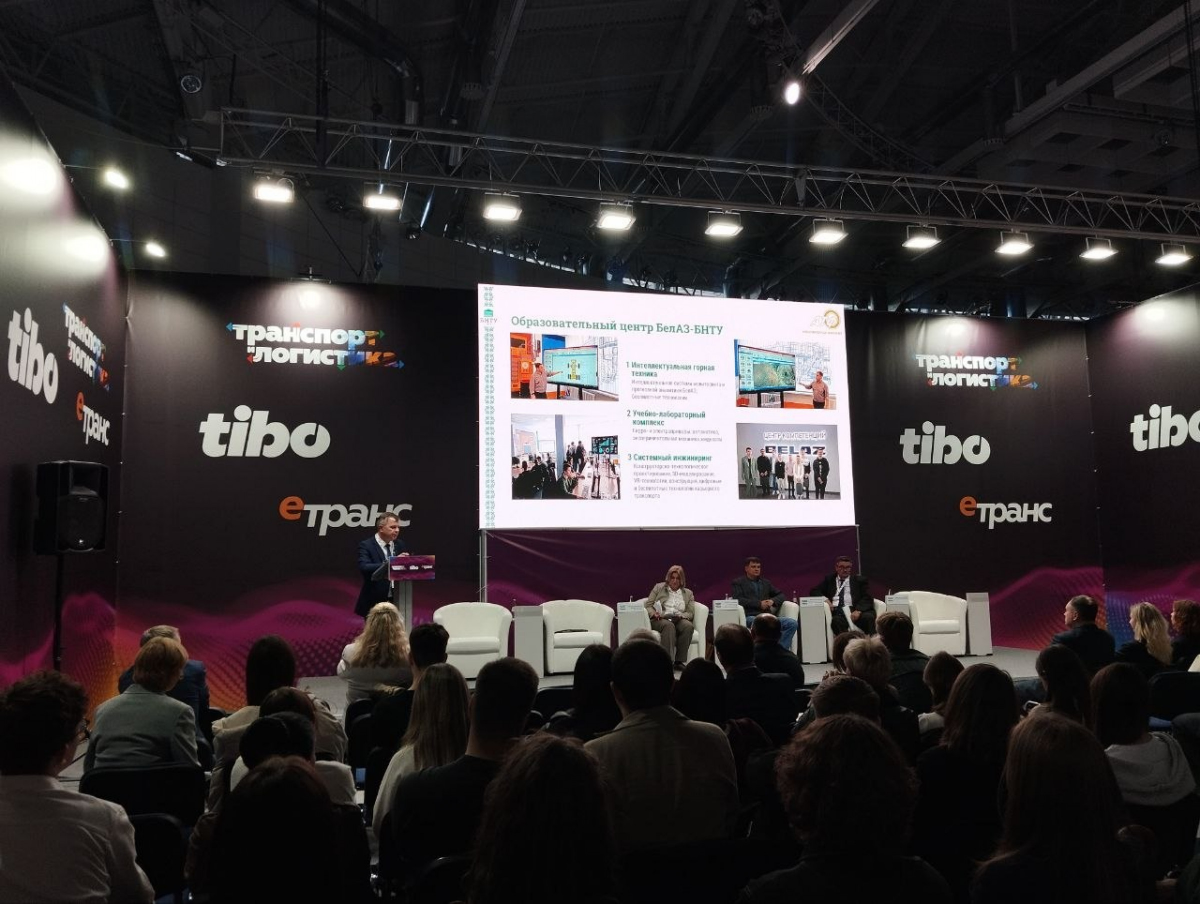
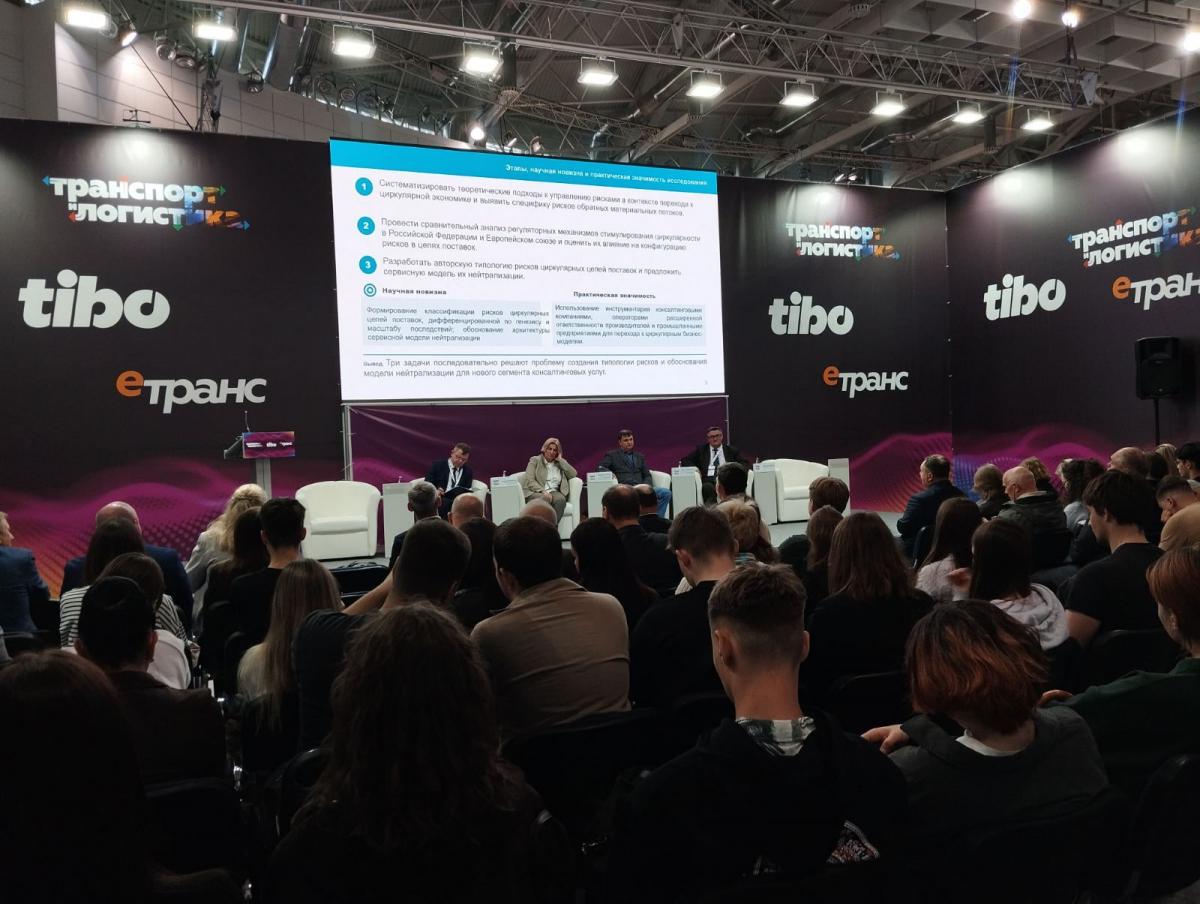
– The main thing is that we heard each other. The chief designer of MAZ Andrey Savchits, the "Belarusian Railway" represented by Alexander Khoroshevich, the "Tram Park" represented by Maxim Korolchuk, and a Russian professor from the Financial University all spoke. We discussed not only technologies, but also risk management of closed supply chains – that was the report by Nadezhda Kapustina. And, of course, I would especially note Maxim Korolchuk's report on recuperation – a practical example of how the braking energy of a tram is returned to the grid.
– What topics seemed the most promising?
– Personally, I am very attracted to digital control of recuperation in the context of the circular economy – this is what we should be doing now. But when I listened to the reports on modular architecture and the second life of traction batteries – I realized that we are moving in the same direction. The circular economy begins with an honest digital twin of the battery. If you don't know the residual capacity of each module, you can neither sell it a second time nor safely dispose of it.
– What development directions would you highlight based on the results of the round table?
– We urgently need to form joint working groups: plant-carrier-science-regulator, we need to popularize this topic, move forward!
💬 Maxim Korolchuk: "In one place – two chief designers, the railway, science and the Ministry of Transport"
We asked Maxim Alexandrovich Korolchuk, First Deputy Director – Chief Engineer of the branch "Tram Park" of the State Enterprise "Minsktrans", to share his main impressions of the event.
– Maxim Alexandrovich, what impressed you the most personally?
– You know, I have been working in urban electric transport for more than 20 years, and I want to note how significant it is when two chief designers (MAZ and Belkommunmash), the management of the Belarusian Railway, representatives of the Ministry of Transport, Science, and the Academy of Sciences gather in one hall. And they not only gave presentations, but discussed, argued, made plans for pilot projects. This is incredible synergy.
– What was the essence of your report?
– The essence is simple: today, when a tram brakes, the energy is either dissipated in braking resistors (simply heating the air) or can only be used provided that there is another tram in the same section of the contact network that will take this energy. Our research has shown: most braking in Minsk occurs without recuperation into the network due to the lack of consumers on the section. Losses – from 12 to 20% of consumed electricity. And these are not only money, but also additional heating and heat emissions into the atmosphere – that is, a purely irrational use of resources.
– And how to fix this in the spirit of the circular economy?
– I see the solution in equipping trams with onboard energy storage devices – supercapacitors (ionistors). They are installed in parallel with the braking resistors. The principle: during braking, the energy goes not to the resistors, but to the storage device. Only when it is fully charged, the excess is dissipated on the resistors. And during acceleration, the energy from the storage device returns to traction. This is a pure closure of the energy cycle – full compliance with the three pillars of the circular economy: minimizing losses, reusing resources, closing flows".
– What is required for implementation, besides the storage devices themselves?
– Digital control is needed. We cannot simply 'parallel' supercapacitors with resistors – we need to monitor the charge level in real time, automatically switch between 'braking – storage – traction' modes. We propose using a digital twin of the facility, predicting recuperation moments based on data on speed, route profile, and location of stops. And, of course, telemetry and remote diagnostics of the ionistors' condition. Without 'digital' it will just be an expensive toy.
Main results of the round table
In two hours, 12 reports were presented, and a lively discussion ensued at the end.
"Today we didn't just talk about how to reduce emissions. We talked about how to make the transport system economically closed – without landfills, without import dependence on materials. This is a matter of technological sovereignty", – summarized the moderator of the meeting, Candidate of Technical Sciences, Associate Professor Sergey Vladimirovich Skirkovsky.
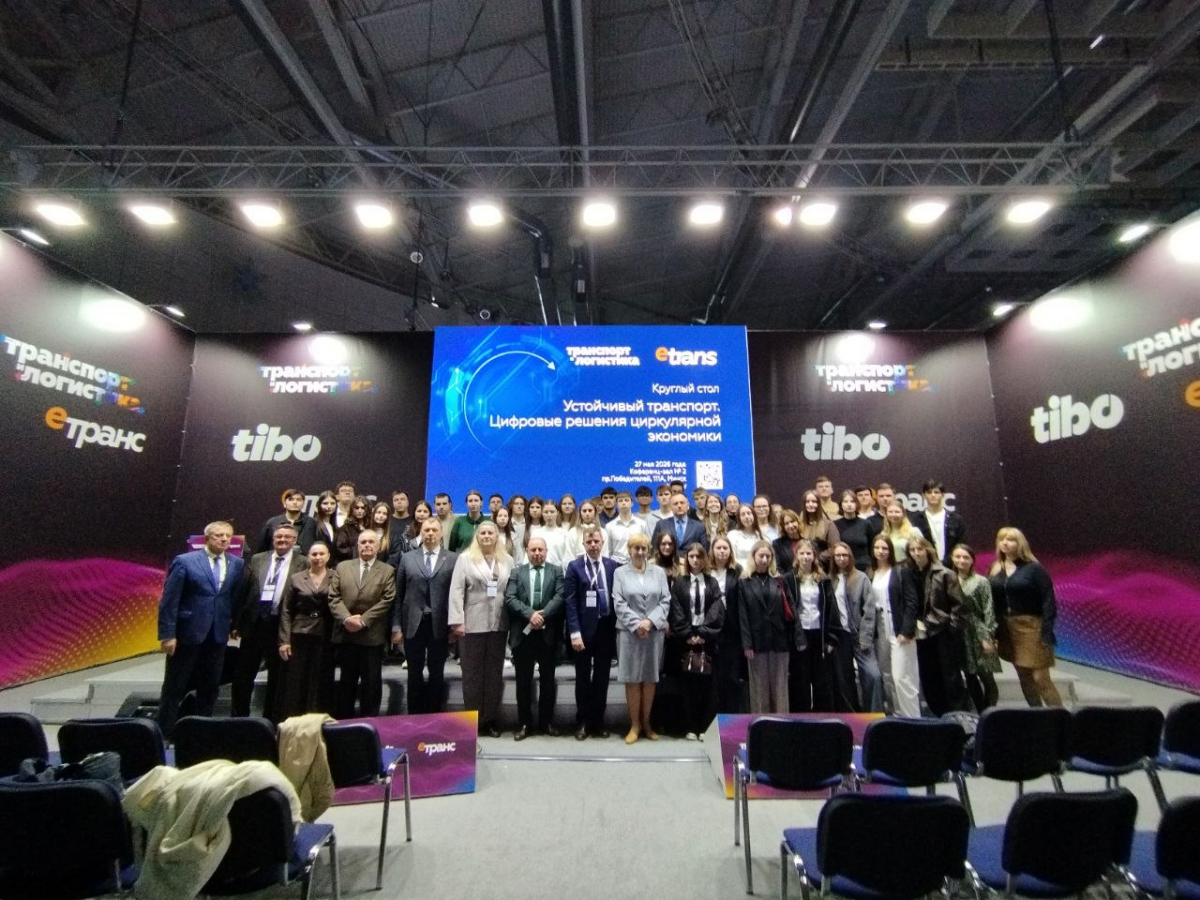
Special thanks — Tatyana Vladimirovna Pilgun, Associate Professor of the Department "Economics and Logistics" of the Auto-Tractor Faculty of BNTU. It was Tatyana Vladimirovna who selected the venue, organized work with the exhibition organizers, coordinated participants, the program and technical aspects of the round table.
"Without such a reliable and professional organizer, any event risks turning into chaos. Tatyana Vladimirovna made sure that every speaker felt confident and that all regulations were observed. Thank you for your work and dedication!" – noted Sergey Skirkovsky.
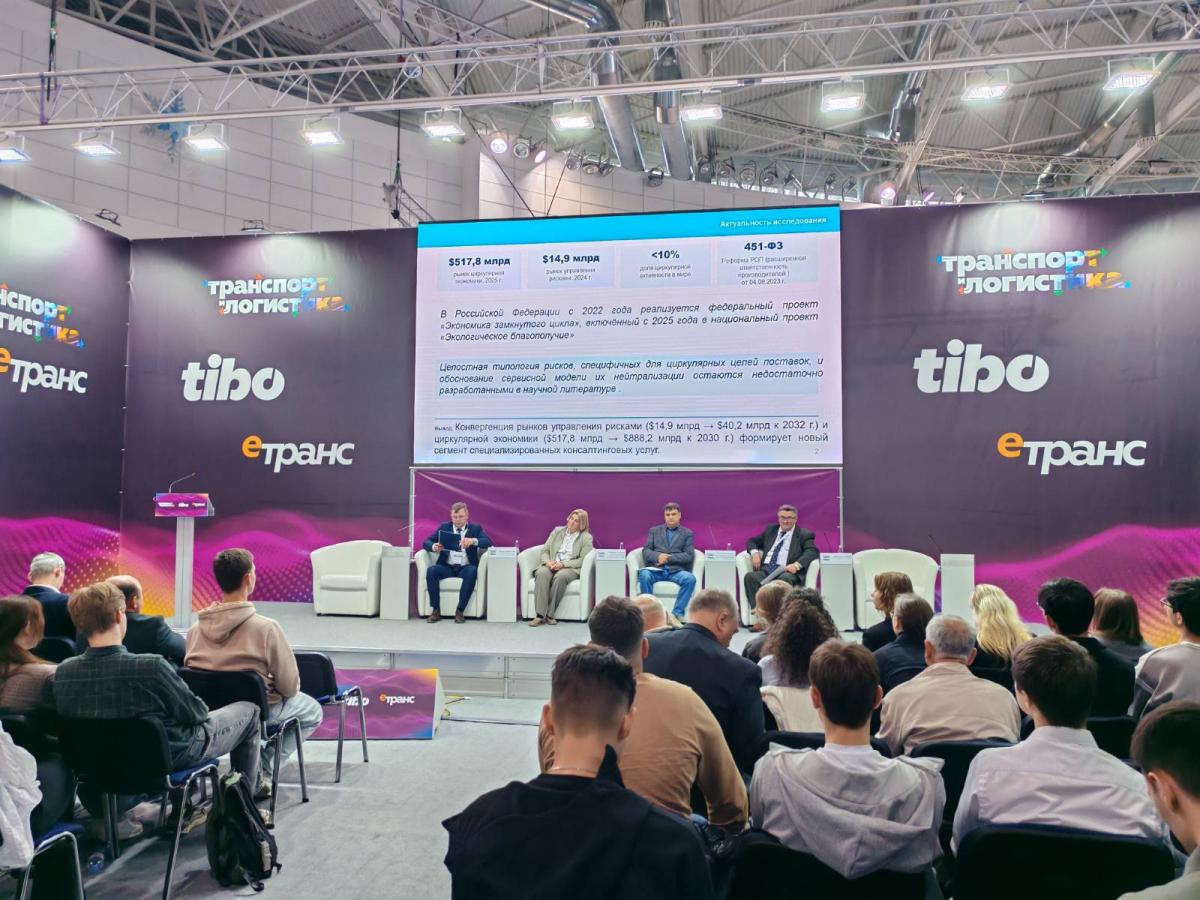
📅 The event took place on May 27, 2026.
Organizer: Auto-Tractor Faculty of BNTU with the support of the Departments "Transport Systems and Technologies", "Economics and Logistics", organizers of the Electric Transport and Innovative Transport Technologies Exhibition
#circulareconomy #sustainabletransport #BNTU #Minsktrans #MAZ #resolution393 #electricmobility
