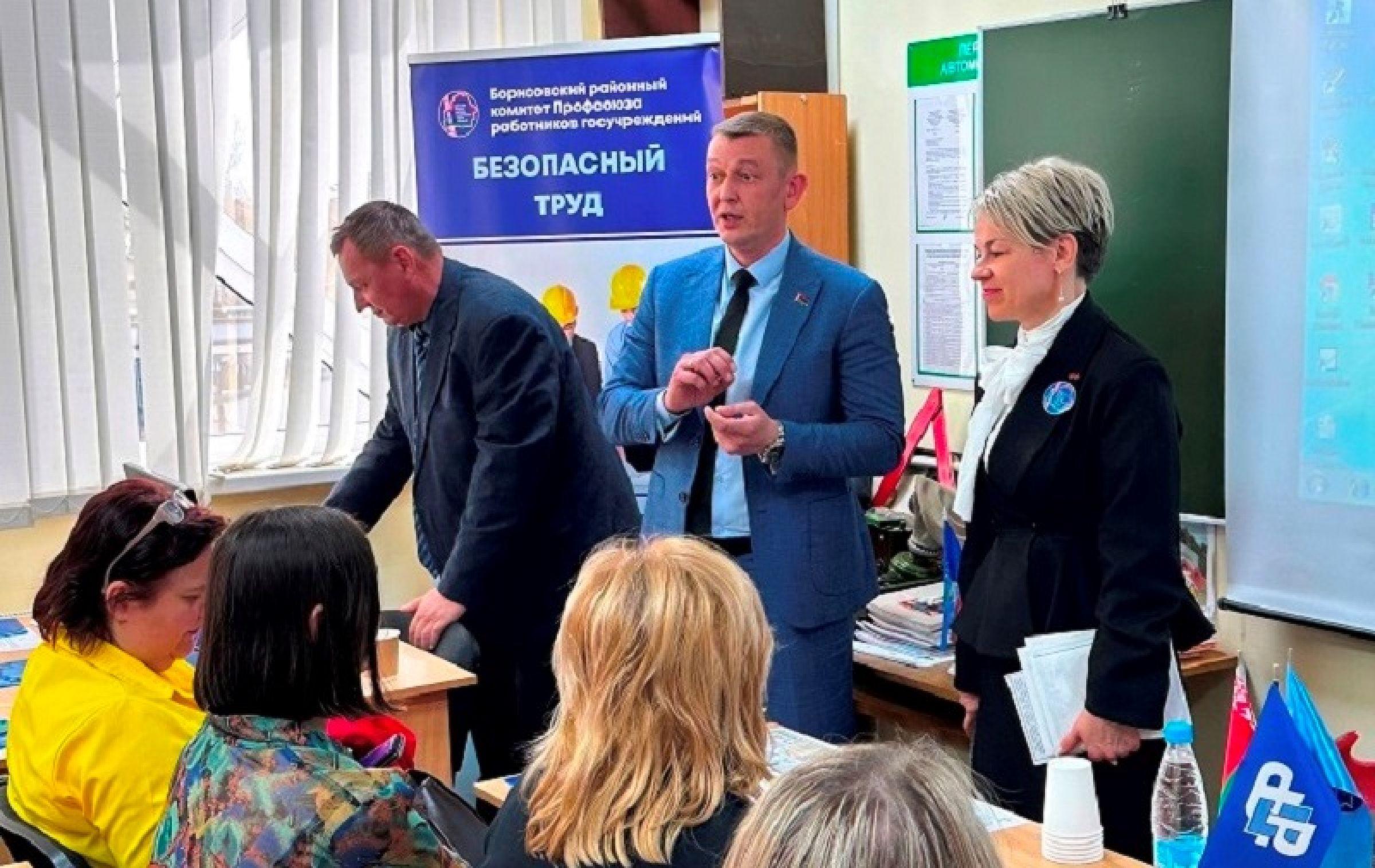
The Borisov branch of the Branch of BNTU "Intersectoral Institute for Advanced Studies and Retraining of Personnel in Management and Development of Personnel" (IIASRP BNTU) held a training seminar for public occupational safety inspectors from the Trade Union of Employees of Government and Other Institutions. The seminar focused on "Prevention of Occupational Injuries and Current Issues in Occupational Safety and Health in Trade Unions."
The event brought together approximately 30 representatives of businesses and organizations in the Borisov region.
The organizer of the training seminar was Natalia Silchenko, Chairperson of the Borisov District Committee of the Belarusian Trade Union of Employees of State and Other Institutions.
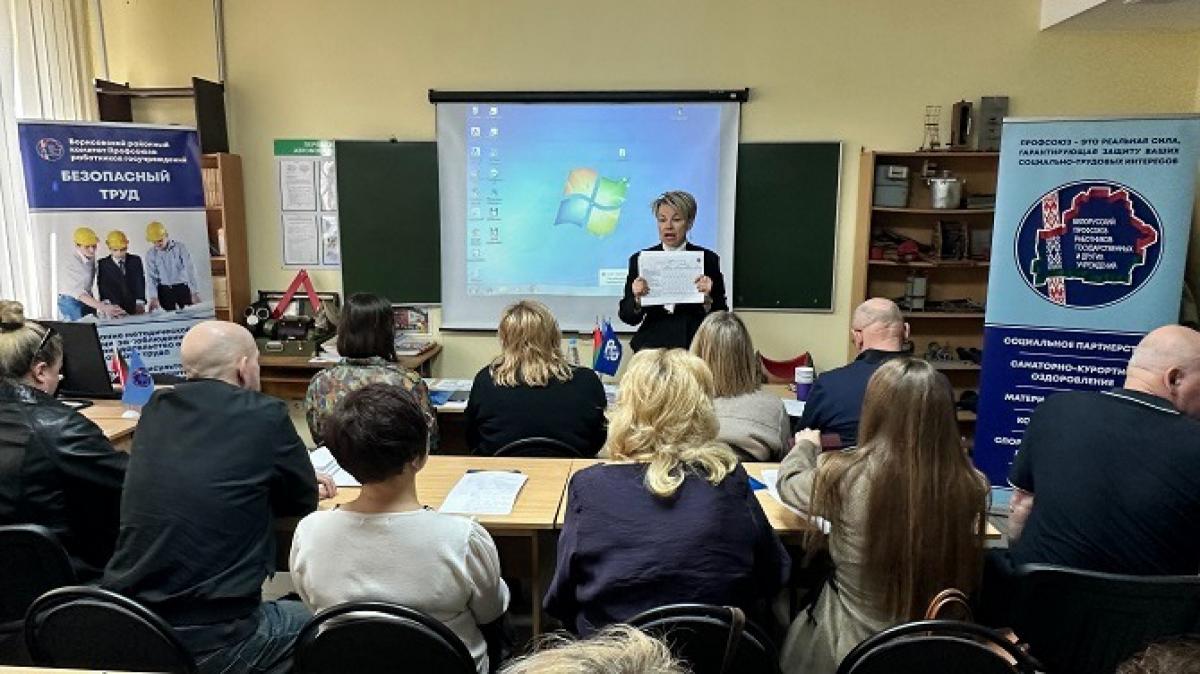
Artem Zvyagin, Chief Occupational Safety Inspector of the Republican Committee of the Belarusian Trade Union of Employees of State and Other Institutions, emphasized the importance of upgrading the qualifications of public inspectors in his speech, noting that training and informing inspectors is key to creating safe working conditions in the workplace.
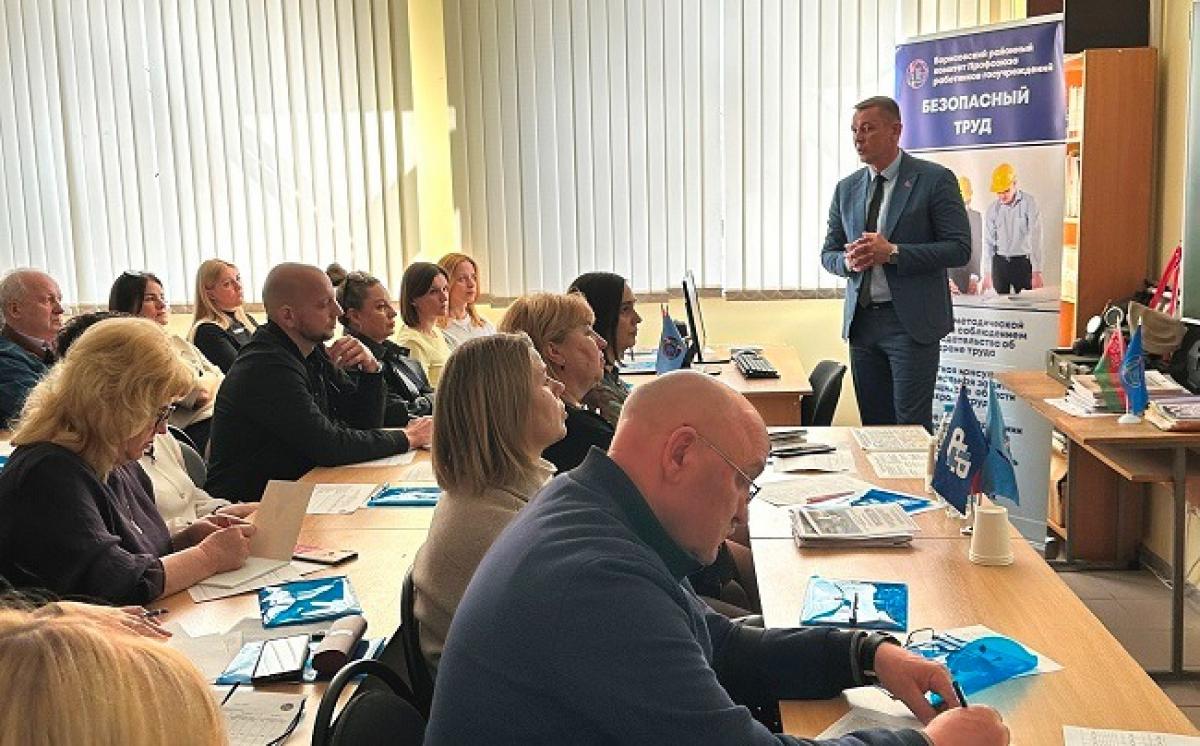
During the seminar, the chief inspector examined occupational safety issues affecting organizations in detail. He emphasized that every employer is obligated not only to comply with laws but also to create conditions that minimize the risk of injury.
The seminar also reviewed statistical data on occupational injuries in organizations. Artem Zvyagin emphasized the need for preventative measures and active monitoring of occupational safety in organizations, noting that injury prevention is not simply a management task but a shared responsibility for all stakeholders.
Viktor Velikokhatko, Head of the Borisov Branch of the Branch of IIASRP BNTU, welcomed the seminar participants on behalf of the institute's management, stating that it was a great honor for us to host the seminar organized by the trade union activists. "We are deeply convinced that the trade union is not only an advocate for workers' rights but also our main partner in creating a safe educational and work environment, preventing injuries, and fostering a safety culture."
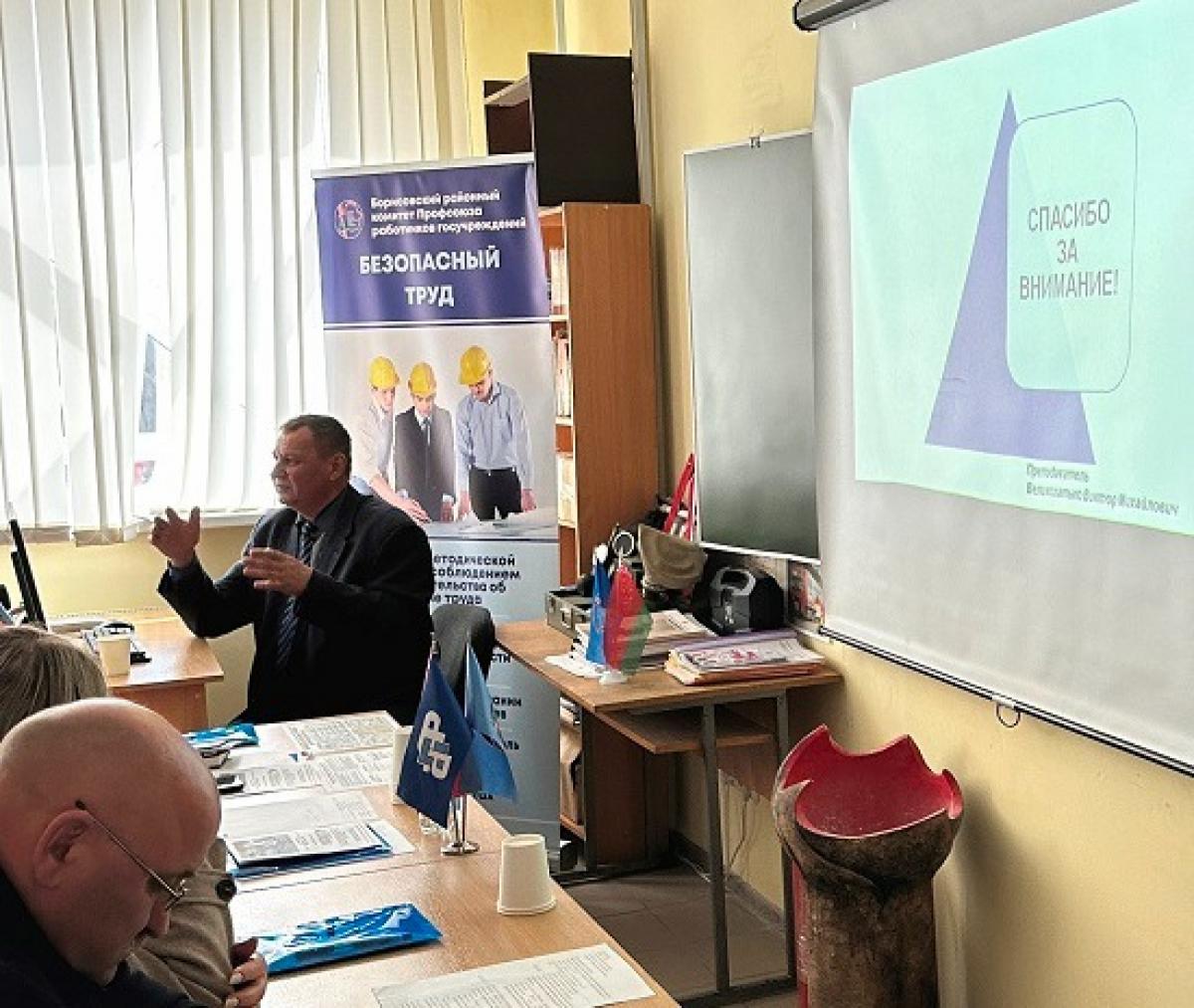
In his presentation on "Legal Framework for Occupational Safety and Health Activities in Organizations," he emphasized the legally mandated nature of training and liability for violations of occupational safety and health requirements. His presentation was based on current occupational safety and health legislation in the Republic of Belarus and the personal responsibility of officials for occupational safety and health and ensuring safe working conditions. Viktor Velikokhatko noted that everyone, from managers to workers, including those employed under civil contracts, must undergo training. He also recalled that new occupational safety regulations for working at height will come into effect on April 26, 2026. As a result, all workers (including fitters and builders), foremen, site managers, committee members, occupational safety specialists, and those responsible for the safe execution of work are required to undergo training. A competent worker, he noted, works safer and more efficiently, while an untrained worker violates legal requirements.
Viktor Velikokhatko expressed hope that the knowledge acquired at the seminar will help public inspectors in their future work to create healthy and safe working conditions in their teams, and that our collaboration will continue.
