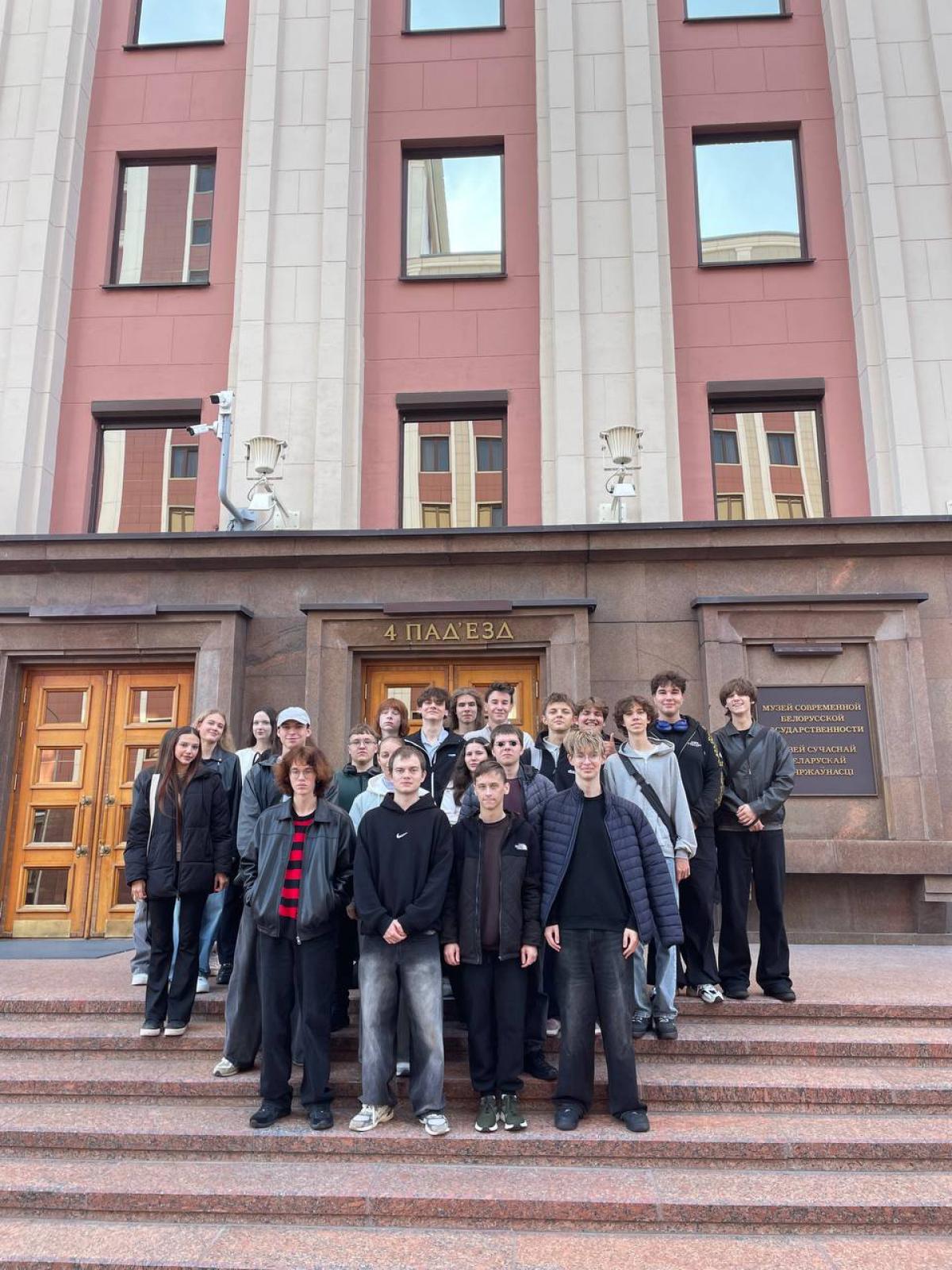
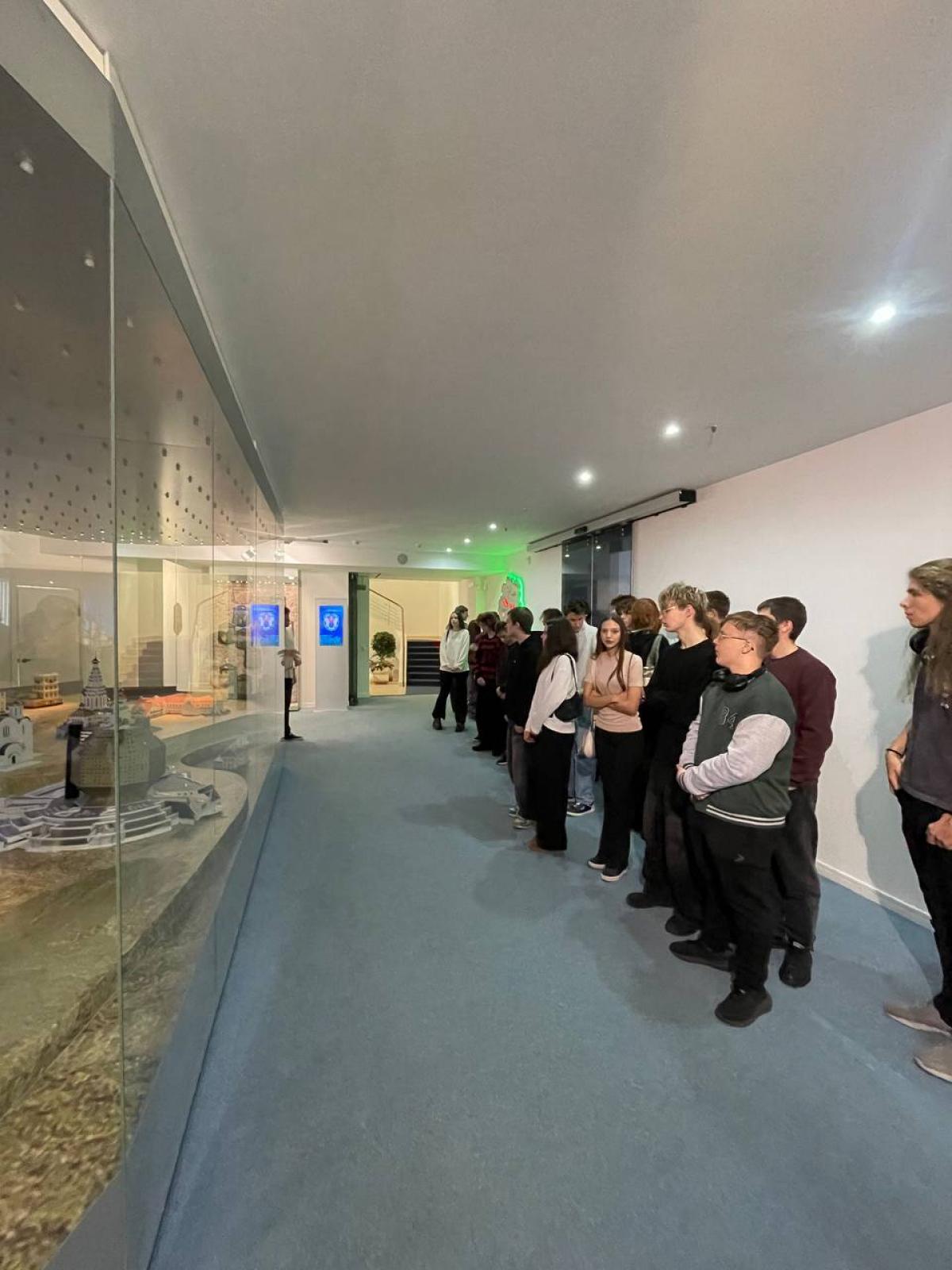
On September 28, students from group 10903726, along with their curator, went on a tour of the Museum of Modern Belarusian Statehood, one of the country's youngest and most technologically advanced museums.
For reference: the museum's exhibition has been open to visitors since August 2012. It covers the modern history of the Republic of Belarus and is dedicated to the country's political, economic, scientific, cultural, and sporting life. The museum's collection comprises approximately 4,000 items, 800 of which are on display.
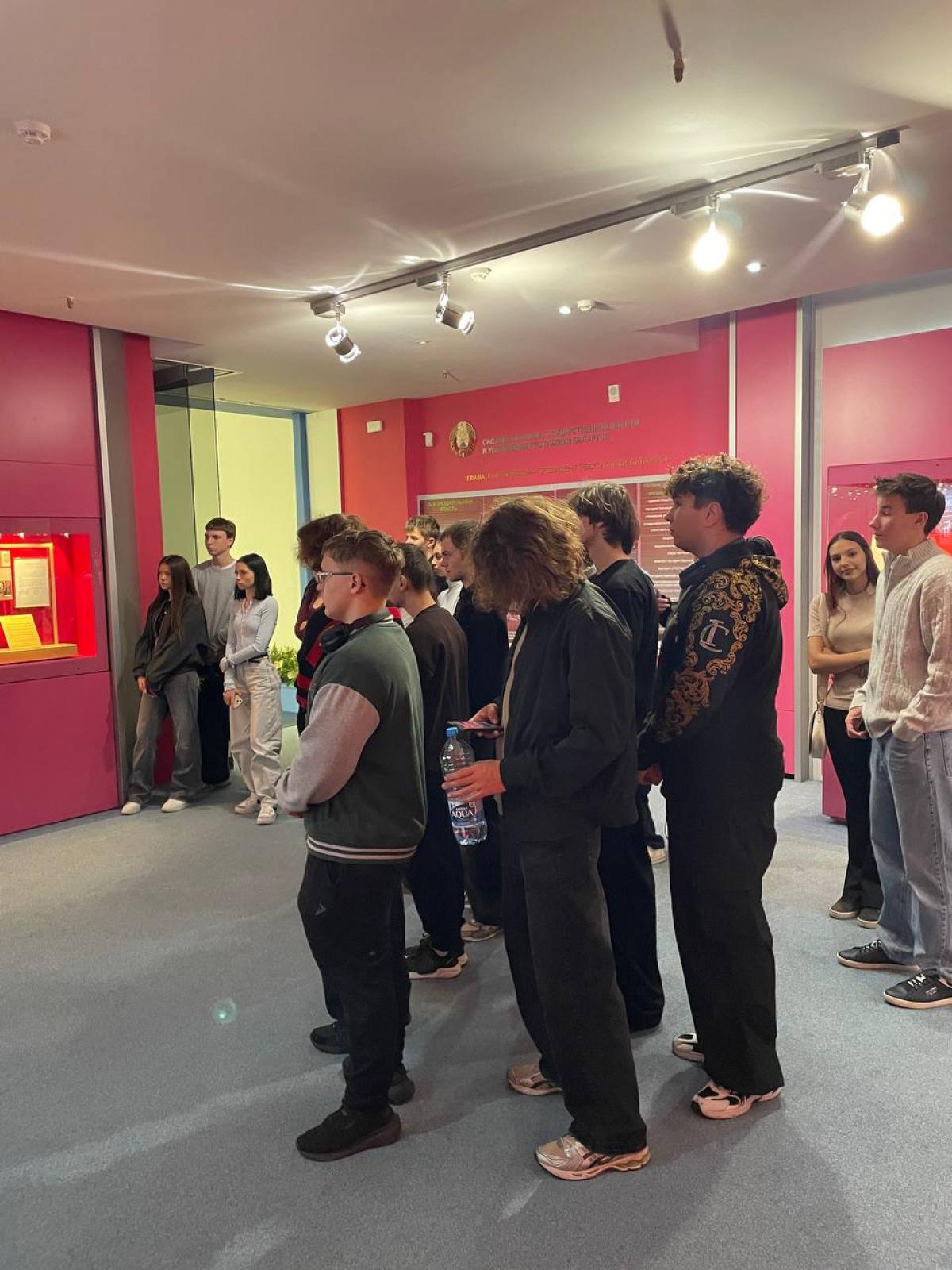
The children walked through the halls, where each exhibit bears witness to the formation and development of sovereign Belarus. The museum's exhibition is spread across six halls. The introductory hall is dedicated to the historical and cultural heritage of Belarus.
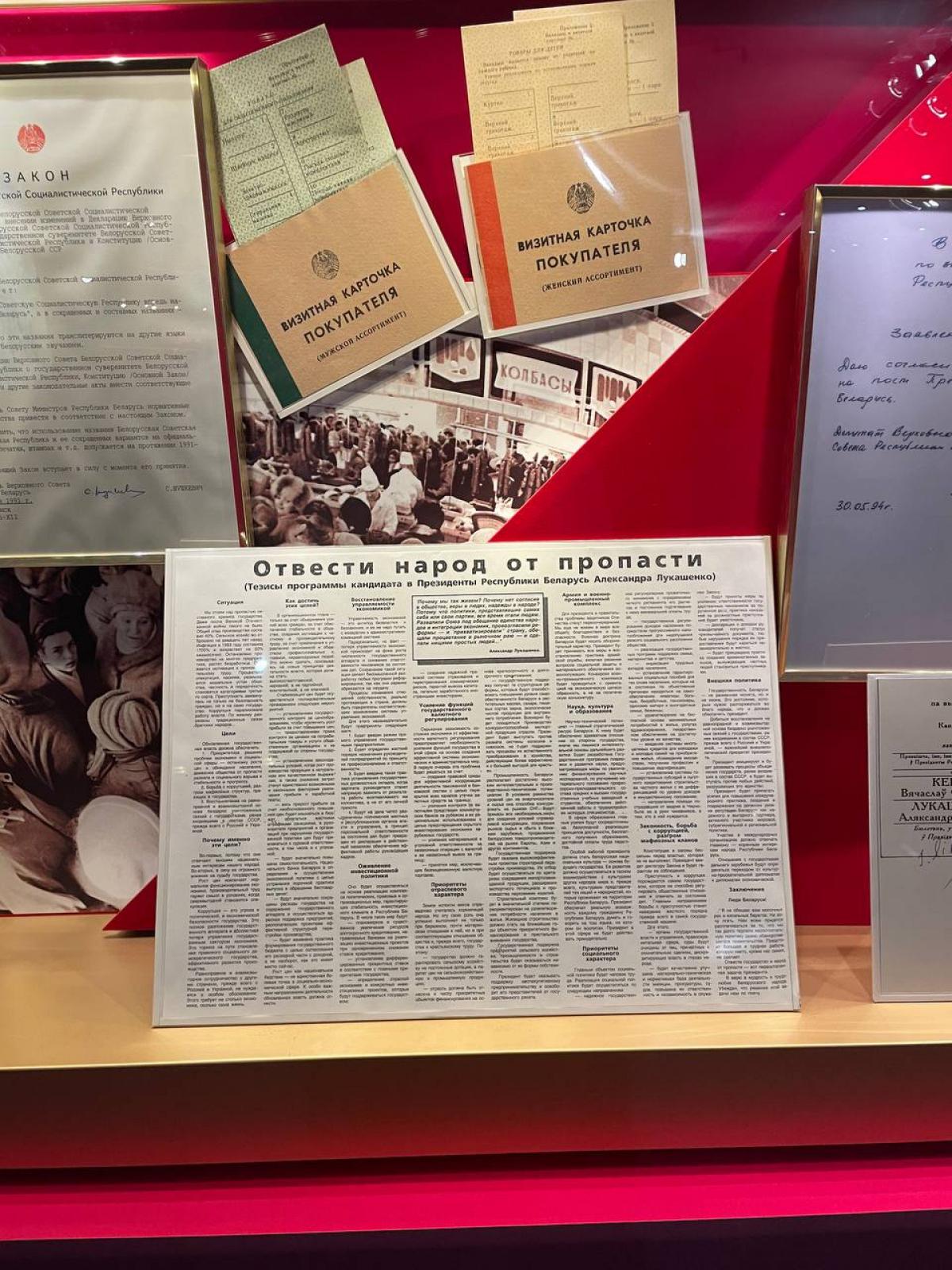
The first hall of the main exhibition is dedicated to the state structure of the Republic of Belarus. Within its walls, visitors can view documents and video materials from the period of the formation of modern Belarusian statehood, as well as presidential and state symbols, banknotes and coins of the National Bank of the Republic of Belarus, state awards, and Heroes of Belarus.
The second hall reflects the socioeconomic development of Belarus. Its exhibition introduces visitors to the activities of the National Academy of Sciences, the achievements of the Belarusian chemical and petrochemical industries, mechanical engineering, agriculture, and medicine.
The third hall explores the development of culture and sports in the country. It displays awards to cultural and artistic figures, models of cultural and sports facilities, and Olympic medals for Belarusian athletes.
The fourth hall presents the ethnic and religious situation in the country, as well as various aspects of Belarus's foreign policy. Museum exhibits in this hall include gifts to the President from foreign delegations and much more.
The museum houses a conference hall, which is intended for temporary exhibitions, interactive and patriotic events, as well as for negotiations of foreign delegations.
" This isn't just a tour, but a true journey through time—I now better understand how our state institutions were formed ," one student shared.
"I thought I knew the history of Belarus from textbooks. But when you see real artifacts—state awards, the first presidential decrees, the personal belongings of government officials— it's a completely different story. I was particularly struck by the hall dedicated to socio-economic development: how the country recovered, built factories, and developed science and culture. These are true achievements."
The children were particularly impressed by the interactive zones: there, they can literally "relive" key moments in the country's formation. Such trips not only help broaden their horizons but also help them feel the connection between generations and the significance of historical heritage.