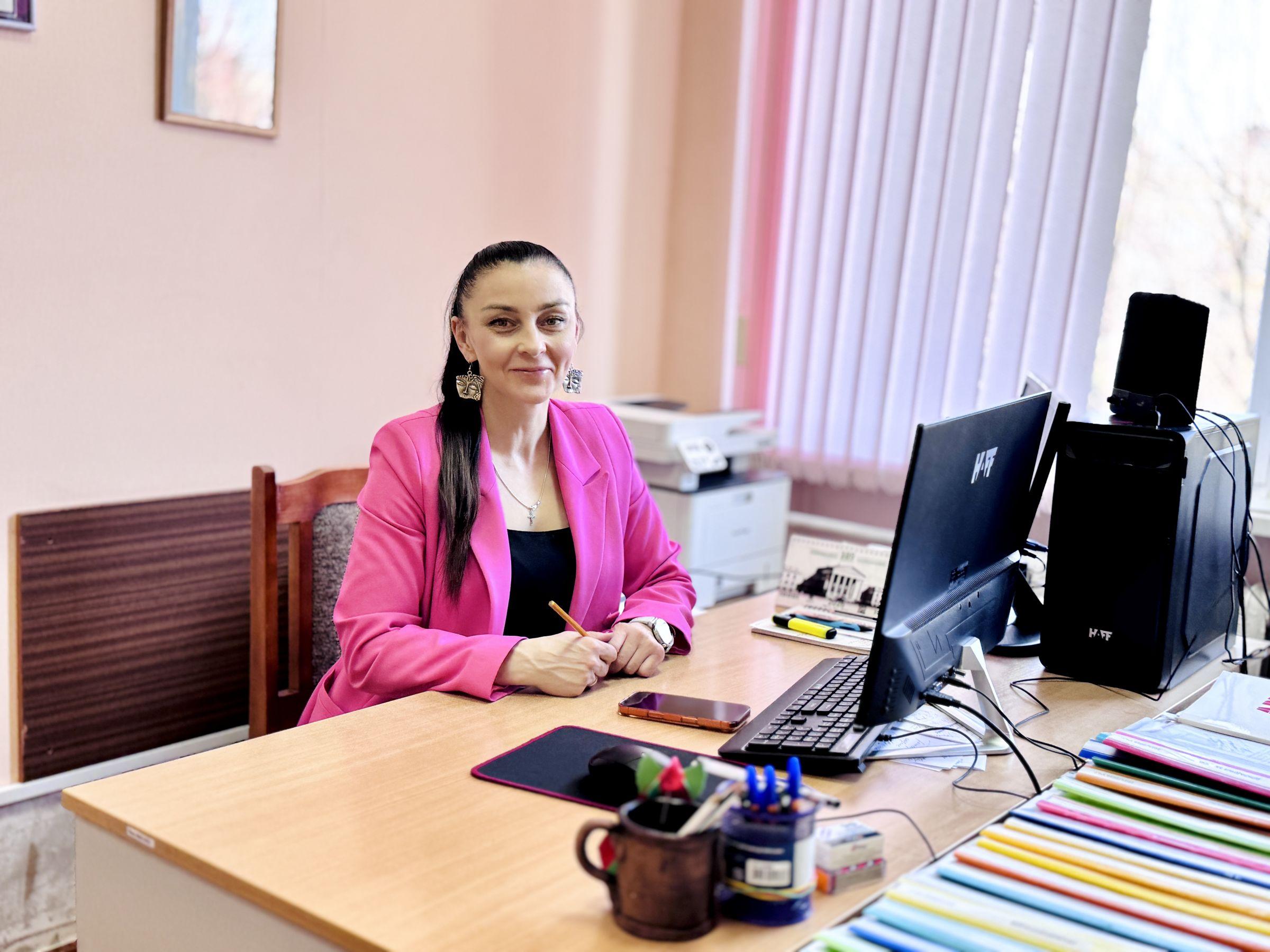
We continue to get acquainted with the beautiful girls of the Belarusian National Technical University. As part of the "Girls in Engineering" section, we spoke with Irina Poloz, Associate Professor at the Department of Industrial Design and Packaging at the Faculty of Management Technologies and Humanitarian Studies at BNTU, Candidate of Agricultural Sciences, Doctoral Student at the Sakharov International State University, and mother of many children. She shared her insights on how science can coexist with motherhood, why waste landfills are a ticking time bomb, and what a modern engineer truly needs.
Irina Ivanovna noted that her desire to not just do science, but also to teach others, did not come from the classroom or the laboratory. Ten years ago, she led a science club for schoolchildren at the request of a friend who was a teacher. One day, a twelve-year-old girl asked, "Is it true that you can make something useful out of garbage? Or is it just something that adults say to make us not litter?" Irina Ivanovna began explaining about waste, recycling, polymers, and biodegradability, and the child listened attentively.
— That evening, I realized that science that cannot be shared is dead. I don't just want to know, but to ignite others with this knowledge, especially those who are just choosing their own path," the associate professor shared.
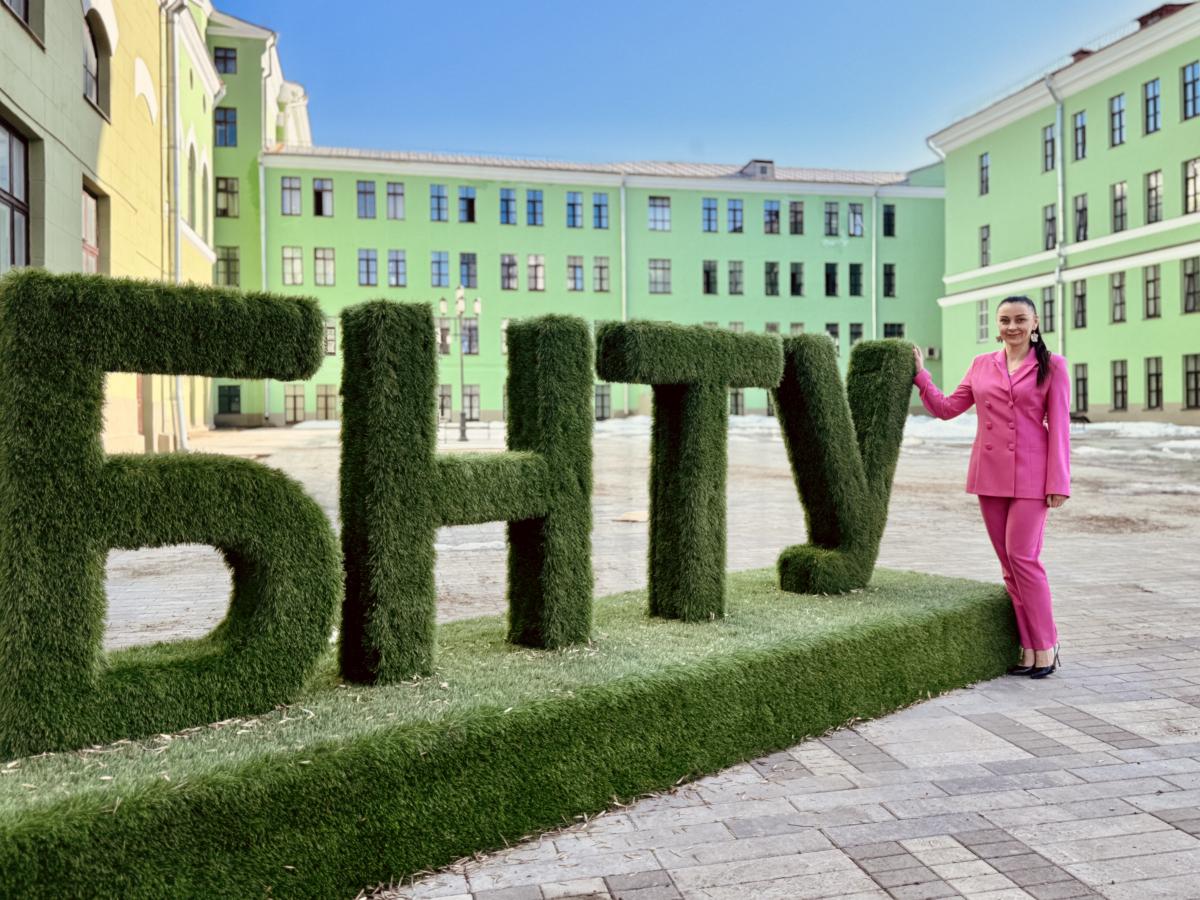
The professional path of the associate professor was influenced by her mother, the head of the PhD thesis, Doctor of Agricultural Sciences, Professor Nikolay Semenenko. They gave Irina Ivanovna a lot of knowledge, which she is actively using now.
— Yes, there were mentors in my life who influenced my life path. And I'm very grateful to them. My first and main mentor is my mother. She spent her entire life working as a teacher, with 45 years of experience. She's not a professor or a doctor of science, and she doesn't have any special titles. But she taught me patience, the ability to explain things a hundred times, and the importance of staying calm. She always said, "Treat people the way you want to be treated." This simple rule works just as well in science as it does in life. When I'm feeling down, I remember her words: how she checked her notebooks until night after school, prepared for lessons, and never complained. She was a mentor not by position, but by vocation. My main mentor in science is my PhD thesis supervisor, Doctor of Agricultural Sciences, Professor Nikolai Nikolaevich Semenenko. The person is demanding, without taking into account age, gender or personal circumstances. I was afraid of him, honestly. But he taught me the most important thing, to think. Not to cram, not to rewrite, but to think with your own head, without prompting. He could tear my chapter to shreds, and then calmly say, "This part is good. Now fix the rest." It was scary, but also interesting. Now that I'm writing my doctoral thesis, I often remember his questions and thank him for this experience. Do I want to be a mentor myself? Yes, I do. I've already become a mentor to my students, my master's students, and even to my son, Nikita, who is now studying at BNTU. I think a good mentor is not someone who gives you the answers, but someone who teaches you to find them yourself, like Nikolai Nikolaevich, and adds a touch of human warmth, like my mom. If I'm even slightly successful, it means I'm doing something right in this profession.
When she talks about her decision to pursue a doctoral degree in 2025, she admits that it's a remarkable feat considering her busy schedule. For her, it's not just a career move but a journey of self-discovery.
— In 2025, I took a step that may seem crazy with my schedule: I enrolled in the doctoral program at the A.D. Sakharov Moscow State University of Environmental Engineering, where I specialize in ecology. This is not just a new career aspiration; it is more of a quest for a new self. It is an opportunity to prove that a woman can be not only a source of care but also a generator of ideas, and that the silence in the library and the laughter of children are not two separate universes, but one life, my own.
The topic of my doctoral thesis was not chosen randomly.
— The topic of my doctoral thesis, "Prediction of Emissions and Mechanisms of Absorption of Greenhouse Gases in the Territories of Environmental Facilities," was chosen for a reason. Many municipal solid waste landfills are 90% full. Essentially, they are time bombs. Every year, landfills release thousands of tons of methane, a greenhouse gas that is 25 times more potent than carbon dioxide in its contribution to global warming. If we don't learn how to manage them, our children will be breathing the emissions from these landfills.
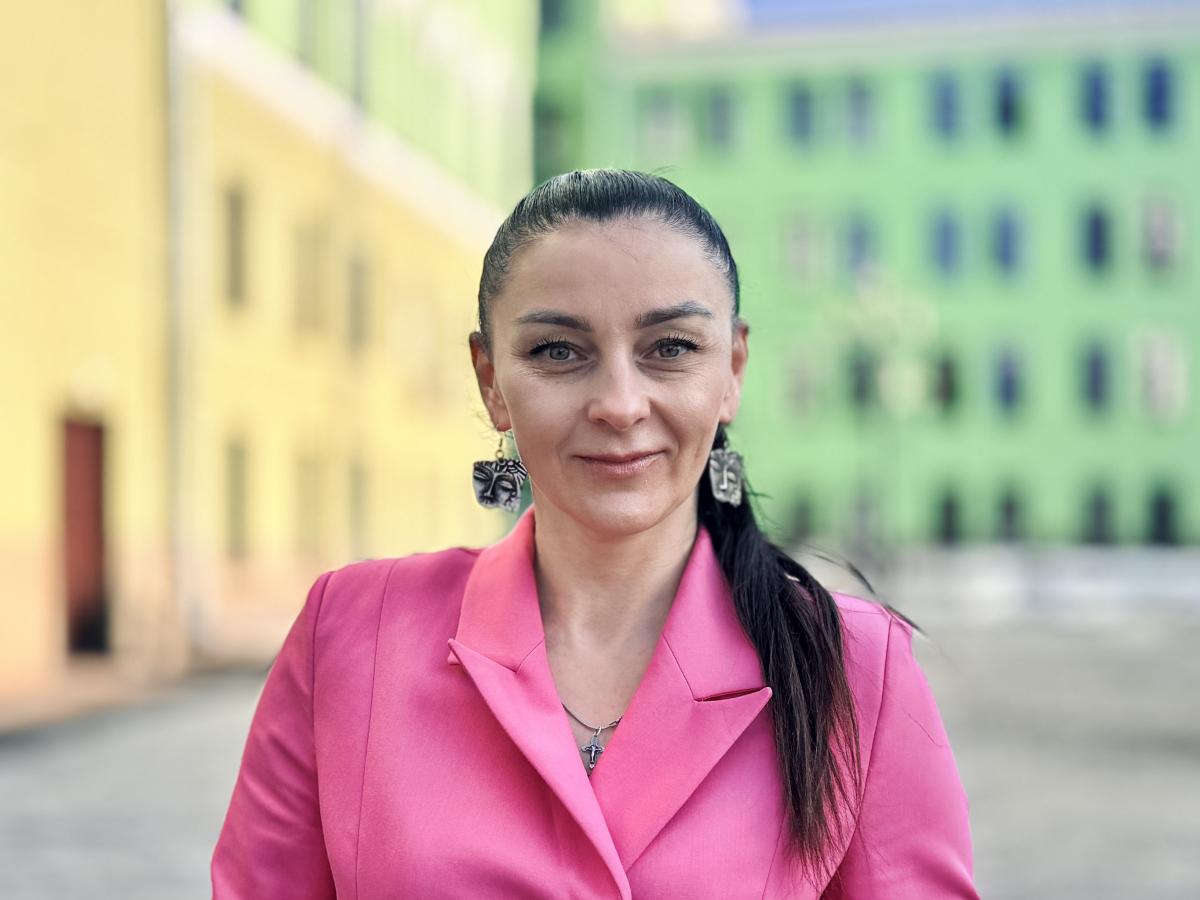
Irina Poloz calls the secret of combining raising children, university, science and doctoral studies simple and cruel at the same time.
— I am often asked: “How do you manage everything?” The honest answer is: “In no way.” I just live in a multitasking mode, where the deadline for the project is next to the daily routine of my three-year-old daughter Eva, and preparation for an international conference with checking the lessons of my older sons. My husband is a sailor, goes on a voyage for four months. When he's at sea, I'm the general on the battlefield: three children, a university, research, doctoral studies, and everyday life. I don't have a magic pill. There are three simple things I've learned. First, I've stopped being a hero. I ask my husband and older sons for help when I'm running out of time or just want to get some sleep. Second, I've allowed myself to be a failure. My calendar is always filled with red flags indicating "not done." I live with them. It's not a failure, it just means that something else was more important today. Third, I allowed myself to spend time on myself. Dancing, shooting, shopping—without guilt. It's not a luxury, but fuel for my tomorrow.
— They say that science and a large family are “two full shifts.” Do you have a secret that helps you maintain balance?
— A secret? There isn't one. And that's the most important secret. You know, I compare my life to a train that runs without a timetable. You don't know when there will be a stop, or when the train will even derail. And the main skill is not to plan the perfect route, but to learn not to fall out of the window on turns. I don't have two shifts. I have an indefinite shift with the right to a short smoke break. And within it there are priorities that change every hour. Honestly? Balance is an illusion. It's like a horizon line: you see, but you'll never reach it. Balance for me is not about equilibrium. It's about being able to choose the most important thing at any given moment and being comfortable with the fact that you haven't chosen something else.
The associate professor is convinced that a modern engineer needs a humanitarian component.
— An engineer is no longer just calculating details; they are persuading, communicating, writing, and analyzing the consequences for people and the planet. Technology without humans is dead, and an engineer without a humanitarian mindset is blind.
Over the years, Irina Ivanovna has faced many stereotypes in the academic community, but this has not deterred her from moving forward with confidence.
— Over the years of working in the academic environment, I have encountered many stereotypes, which, unfortunately, have not only a common-place but also a certain professional basis: “A woman can’t be a doctor of science,” “A mother of many children can’t be a serious scientist,” “Young — not mature, older — too late,” “You are an associate professor and a mother — why do you need a doctorate?” I have heard all of this more than once and in different tones — from sincere concern to slight contempt. But I take it and do it. While they are arguing, I am writing my doctoral thesis. While they are doubting, I am raising my third child. While they are explaining that it is impossible, I am simply moving forward.
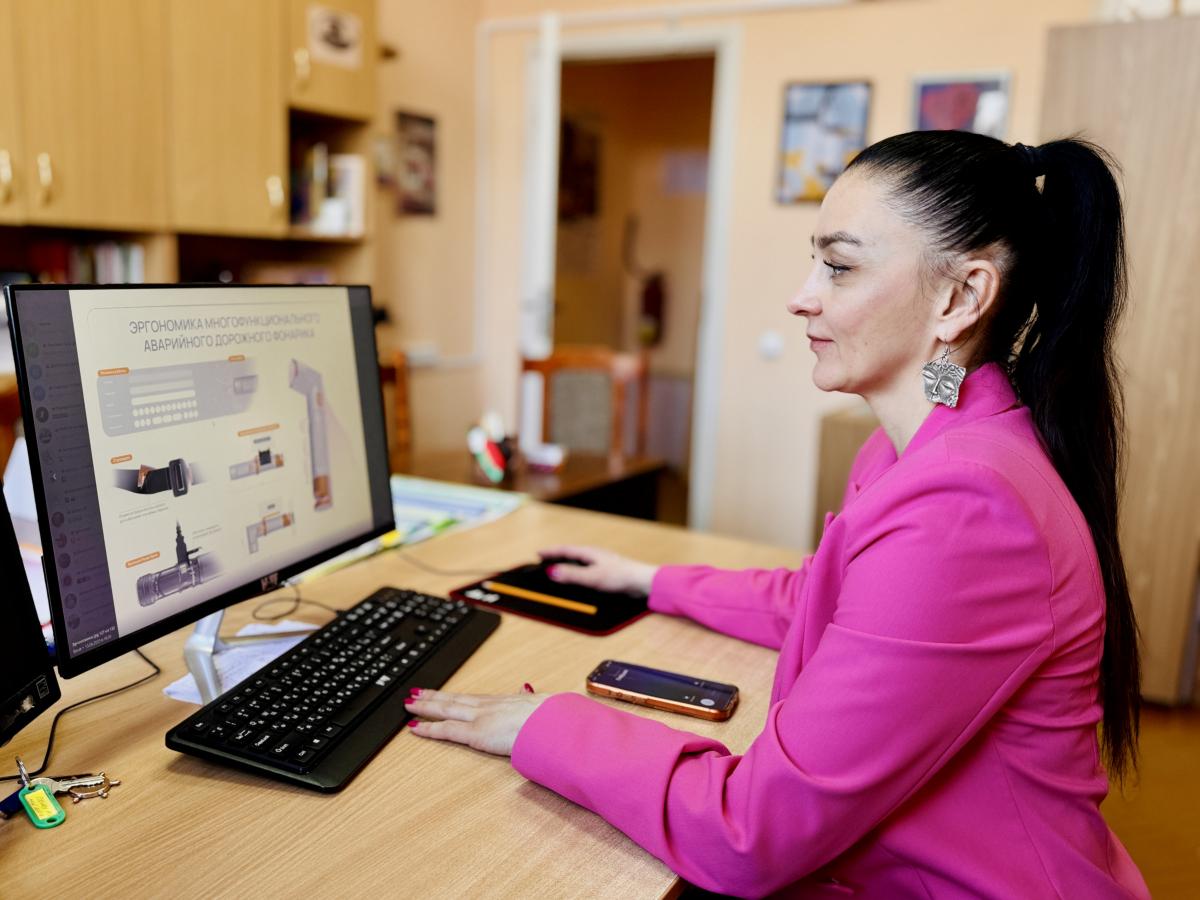
According to Irina Poloz, there have been and still are doubts. As Irina Poloz noted, sometimes an inner voice arises: "Am I competent enough? Am I in the right place?" This is a common experience for many female scientists, leading them to constantly question and reevaluate their decisions. The assistant professor came to the following conclusion: "You can doubt, but you can't stop. I keep going, even when I'm afraid."
— Who was your role model? Are there any female scientists you look up to?
— One of the most inspiring stories for me is that of Lisa Meitner, a nuclear physicist who discovered nuclear fission but was awarded the Nobel Prize by a male colleague. She didn't give up. This reminds me that even if you don't get noticed, the most important thing is what you've accomplished. Your legacy remains regardless of others' opinions. However, to be honest, my main reference point today is myself from the past. The Irina who enrolled in graduate school in 2005, the Irina who defended her PhD thesis while pregnant with her second son in 2012. She literally left the defense and went to the hospital a few days later. At that time, it seemed like the limit of her endurance, the summit she had to conquer before she could breathe a sigh of relief. And then I turned 180 degrees: I left my usual agronomy for waste ecology. Where it doesn't smell like flowers, but like garbage. And now, looking back, I realize that that defense was just a warm-up. The real marathon is just beginning.
Irina Poloz talks with a special feeling about what the associate professor tries to instill in students beyond the standard curriculum.
– I sometimes ask my students at the end of the semester, 'What have you learned?' And almost never do they call the formula. They remember our conversations. How I said about landfills: "Imagine that this garbage is not abstract tons, but the bags that you yourself threw away yesterday." Or how a student asked: "And what is my carbon footprint?" And I said: "What you decide to leave." I'm not just giving them knowledge, I'm trying to instill a sense of responsibility, that they are not just learning and then going to work, but that they are already part of this planet, society, and engineering. That their coursework is not a tick in their report card, but the first footprint. It's up to them to decide what it will be. The most important lesson? You're not on your own. Your work will one day affect other people. When you design packaging, you're influencing the environment. When you calculate a structure, you're responsible for safety. When you pretend to care, you're leaving a trail of indifference. I want them to ask themselves, "Why am I doing this?" It's not about "what grade will I get," but "why is this happening?" If any of them find their answer, I've done my part.
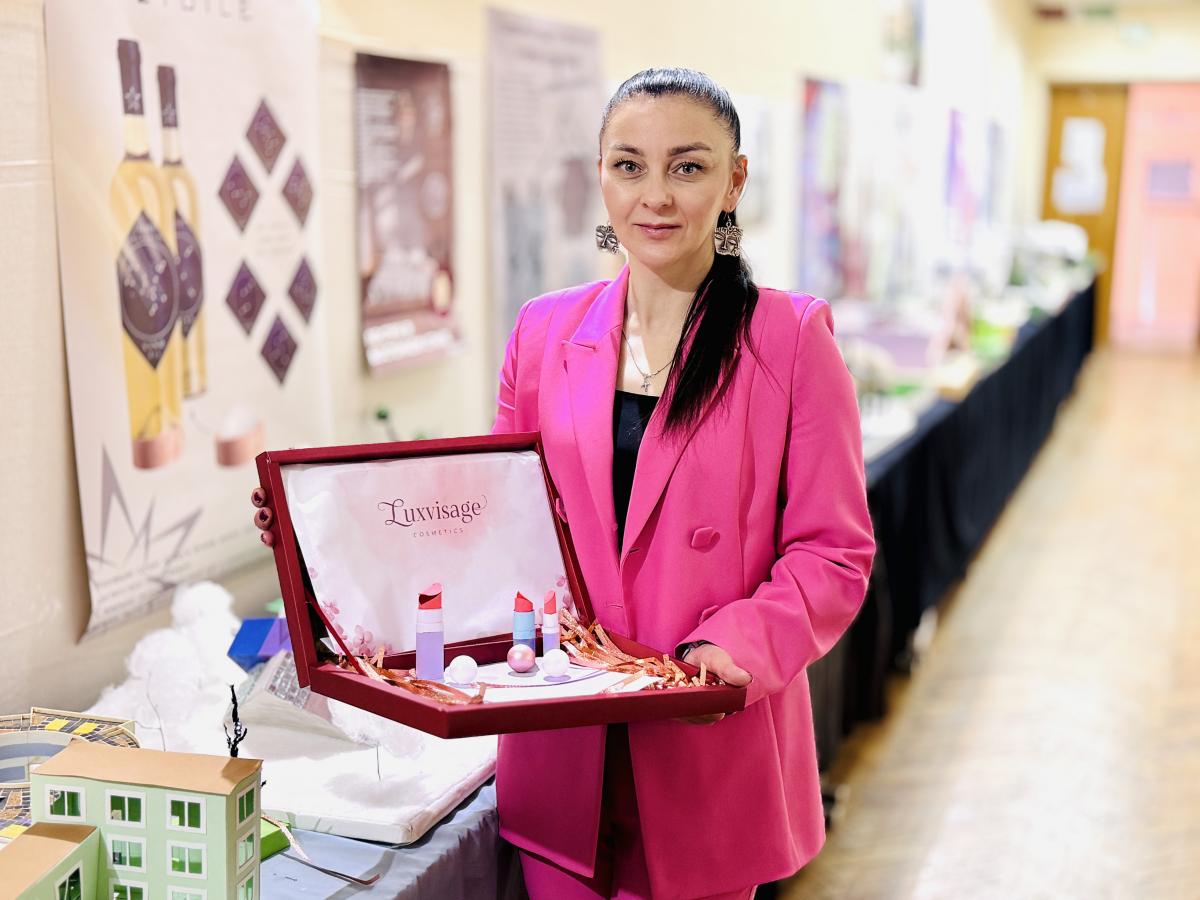
If an associate professor had the opportunity to invite anyone to their lecture, they wouldn't invite great scientists or Nobel laureates, but someone who invented biodegradable plastic that actually decomposes. Not the kind that breaks down into microplastics and floats in the ocean for hundreds of years, but the kind that becomes safe organic matter within six months. This, as Irina Ivanovna noted, is her pain as an environmentalist and as a person, because we throw away tons of packaging every day, and "biodegradable" on labels is often just marketing. All of this is to ensure that her students hear firsthand how to do it cheaply, technologically, and on a large scale. To ensure that the "biodegradable" on the label matches the "biodegradable" in real life. According to Irina Poloz, this would not just be a lecture, but a plan of action for her, her students, and the planet we all live on.
— What life rule or phrase helps you not to burn out and to remain optimistic as a woman-scientist, teacher and mother of many children?
— I have several. The first is not to lie to yourself. If the hypothesis failed – admit it. If you are tired – admit it. If you want to go to a doctorate in 40+ with three children – admit that it will be difficult and go. The second is to look for your “ecological niche”. In science, as in nature, it is important to find a place where you can be useful and where you can realize your potential. I have found my niche at the intersection of ecology and education. Third, instead of erasing boundaries, it is important to negotiate with them. I have long understood that it is impossible to be everywhere at once, but it is possible to establish a system of rules. You can negotiate with your family about a quiet hour for work, with your boss about a flexible schedule, and with yourself about making Sunday our own. Fourth, it is important to watch your children grow. To look at my children and learn from them the speed, the pressure, and the ability to fall and get up. I know for sure that everything I do is for them and their victory: this is my main reward.
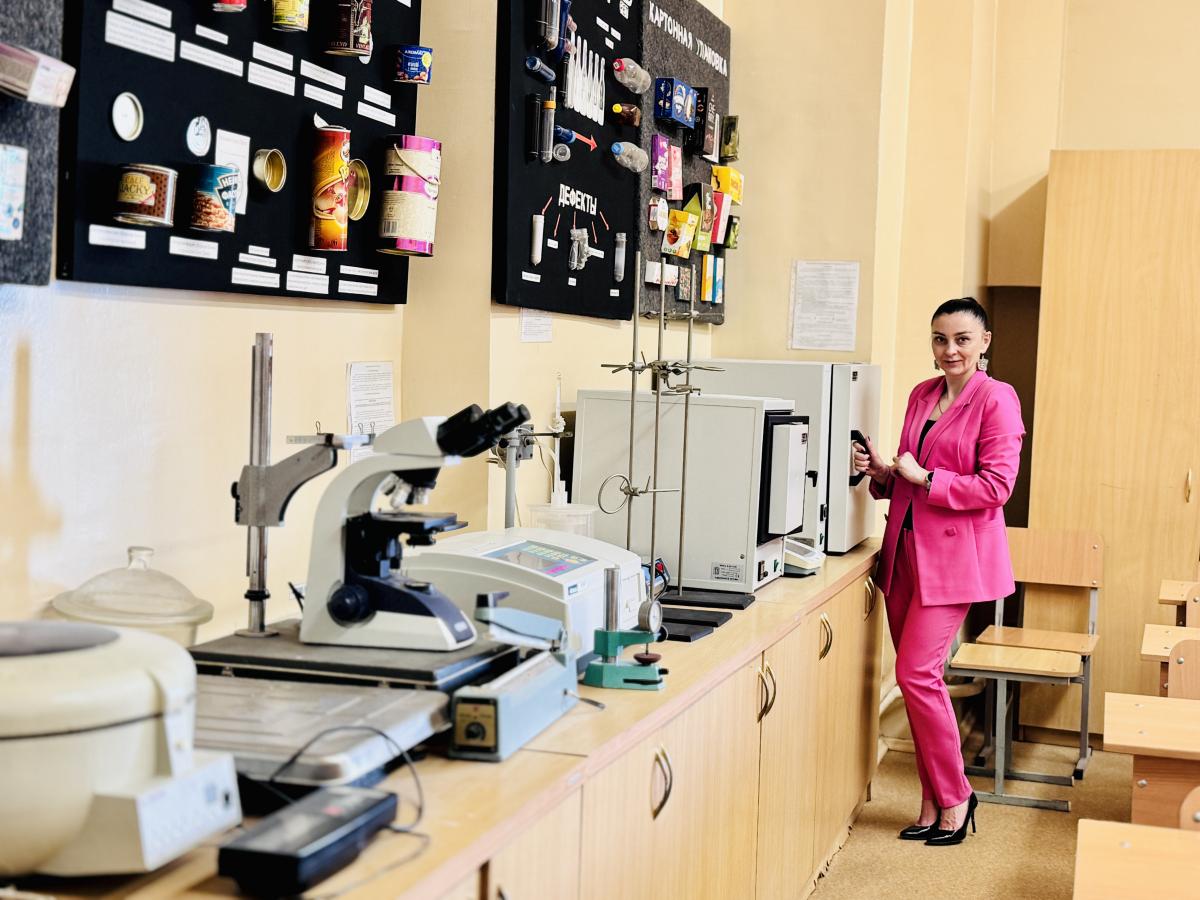
Irina Ivanovna's advice to young women who are currently choosing between family and career is as follows:
— Don't choose. A woman is a multitasker by definition. Yes, it will be difficult. Yes, there will be sleepless nights. Yes, you will be judged "on both sides": the family - for working a lot, colleagues - for spending a lot of time on the family. Stop being afraid of the "non-ideal scenario". Don't plan life as if on the notes - marriage, then career, then children. Life likes to confuse the order, and this is normal. Look for a man who will not be a competitor, but a back. You will have to sacrifice, but not family or career, but sleep or perfect order in the house. And remember, life doesn't have a draft. You write it in its final form, so write it interestingly. Let your book include children's laughter, scientific articles, sleepless nights with your dissertation, and shared dinners. Don't delete a single chapter. This is your book. And you are its author.
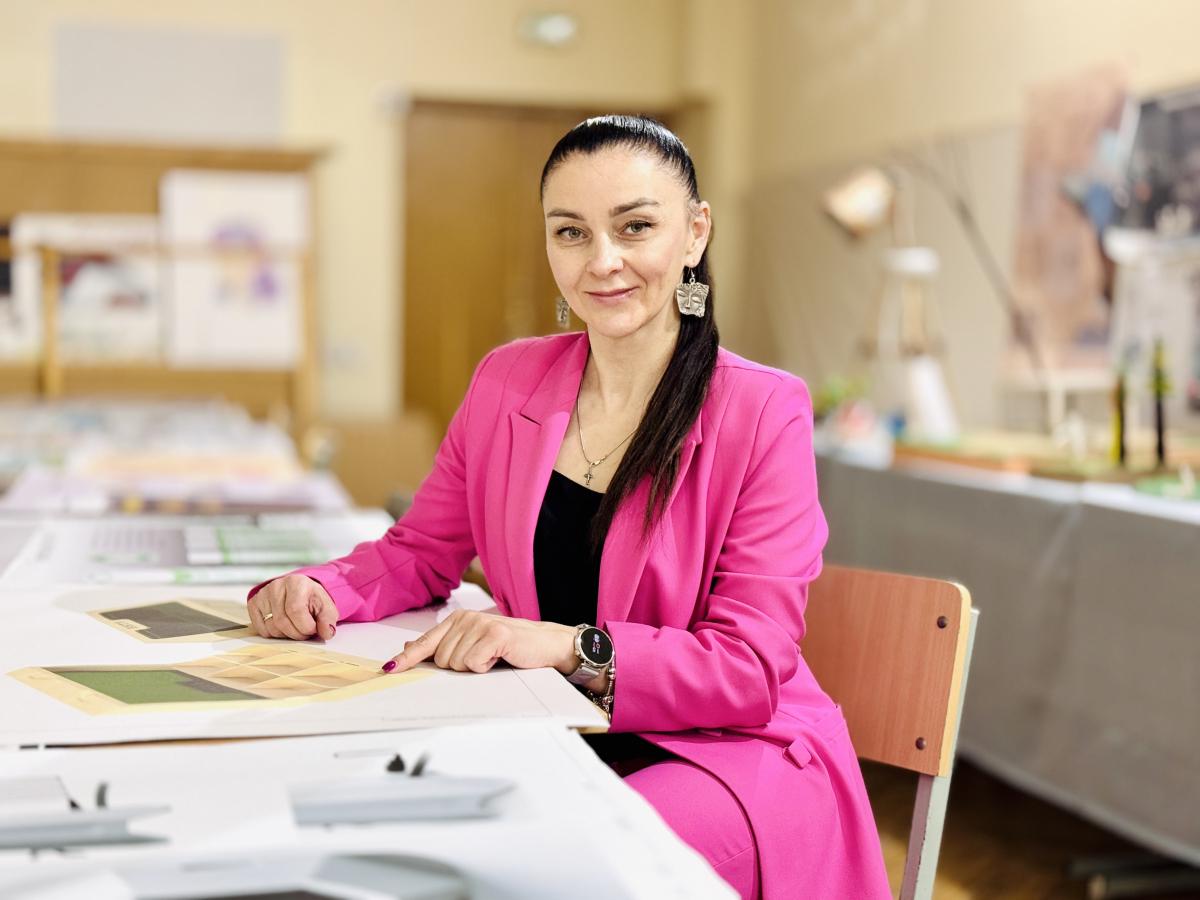
Irina Poloz is a testament to the fact that science and family don't exclude each other but rather complement each other. In the Year of the Belarusian Woman, her story reminds us of the most important thing: there is no need to choose between a career and children. All you need to do is not be afraid to experiment and keep moving forward.
