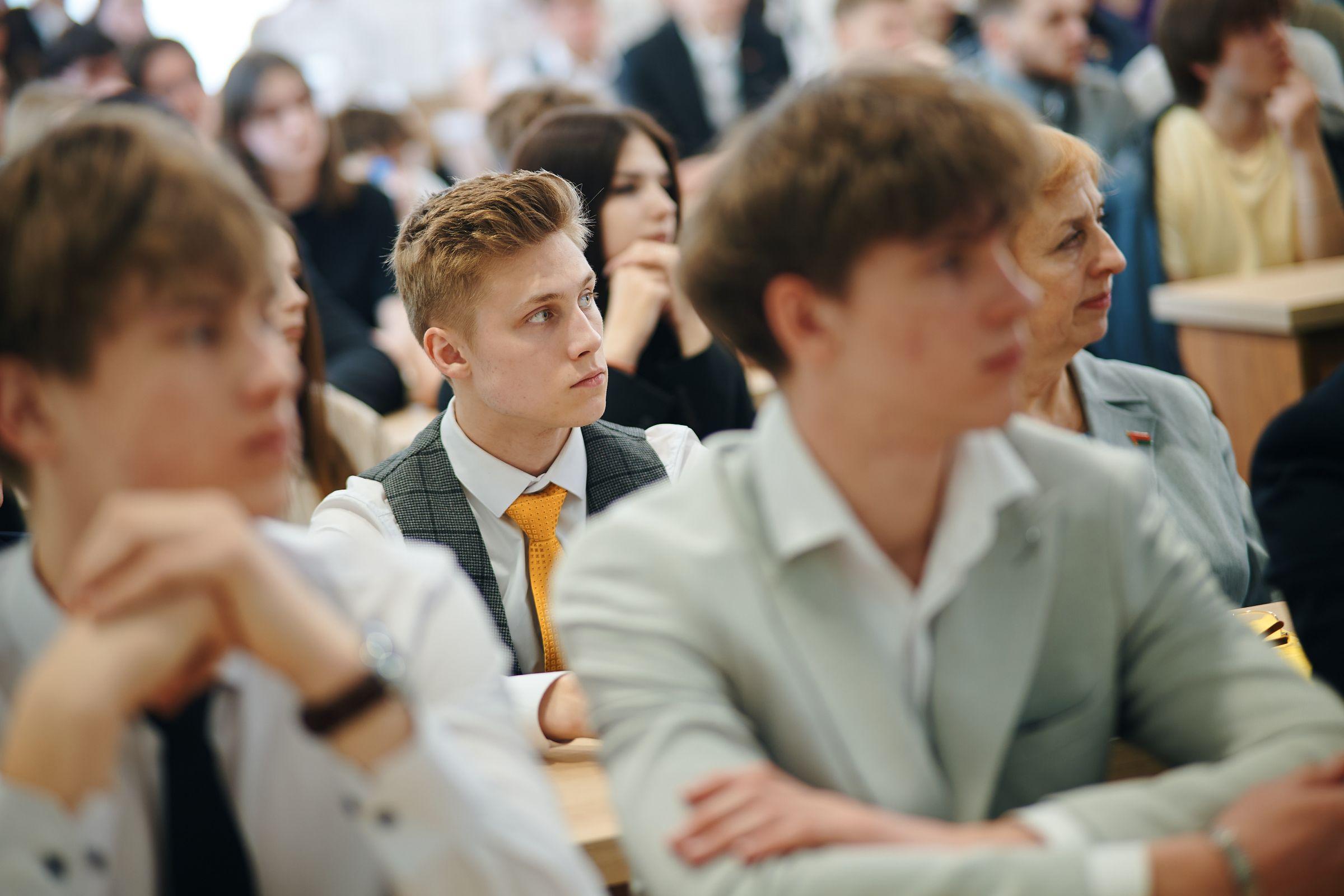
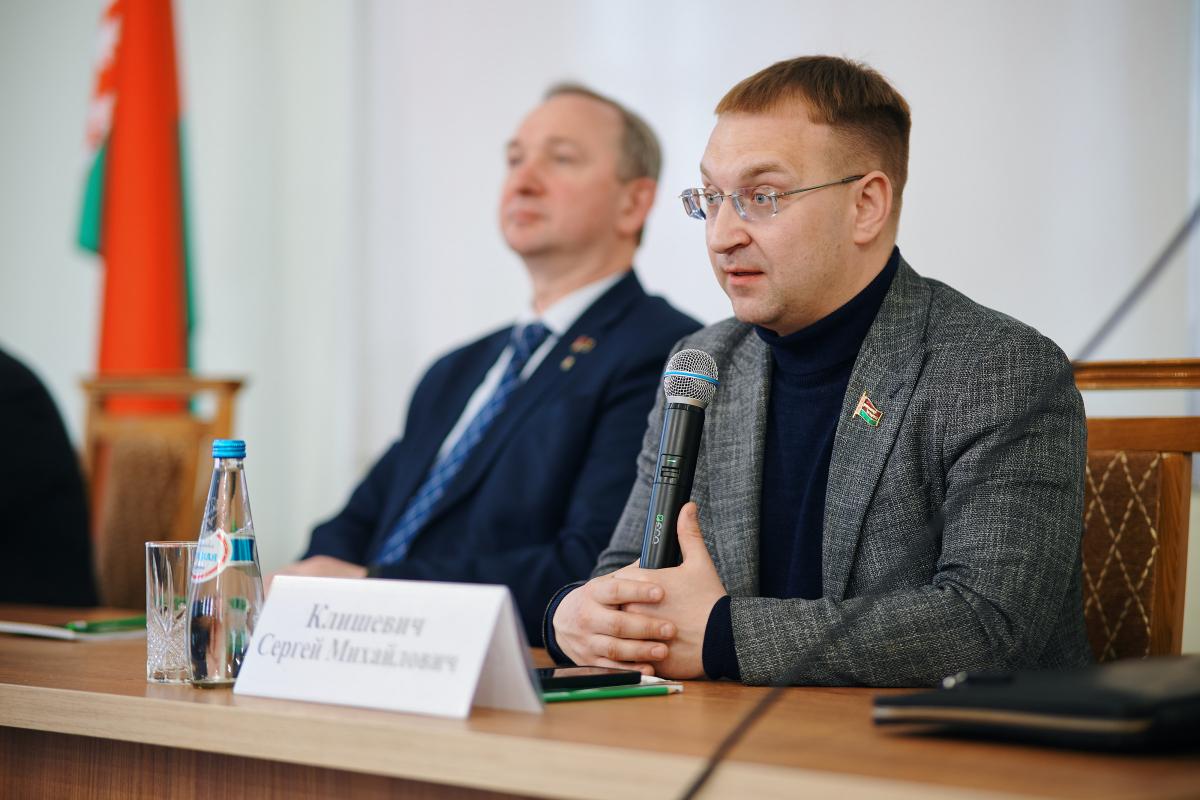
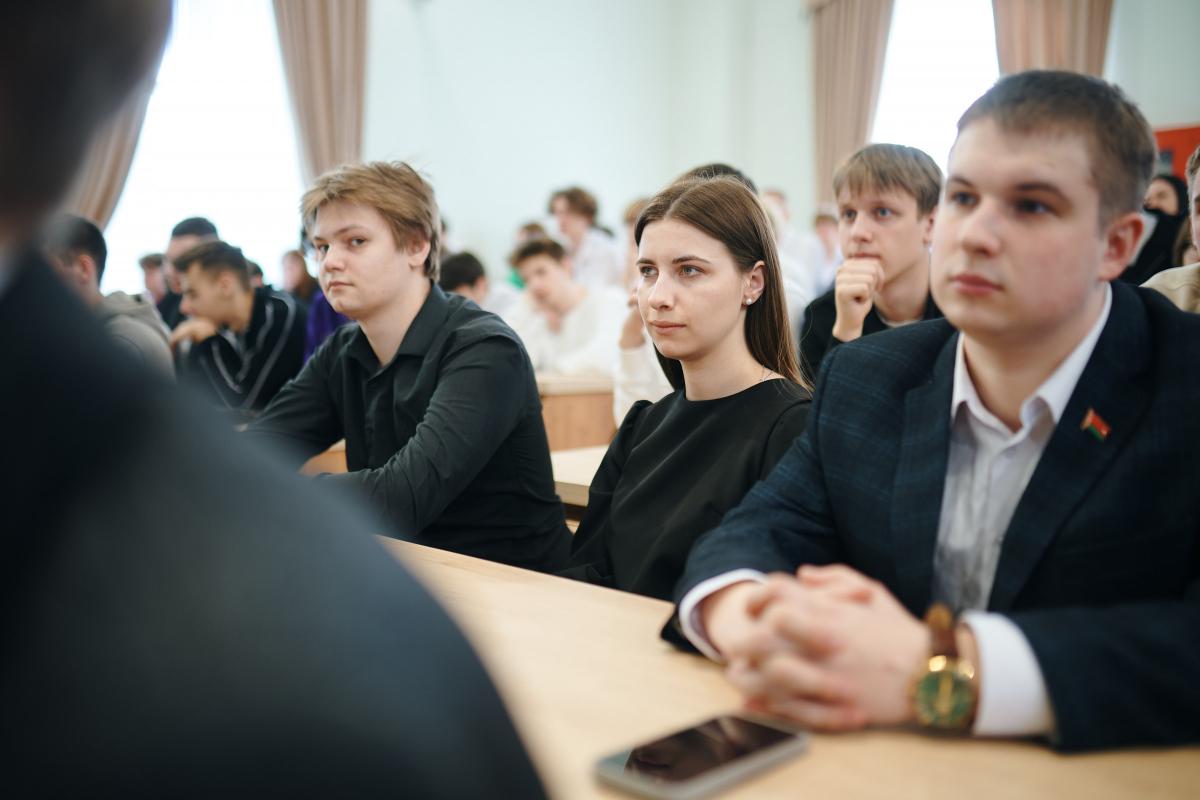
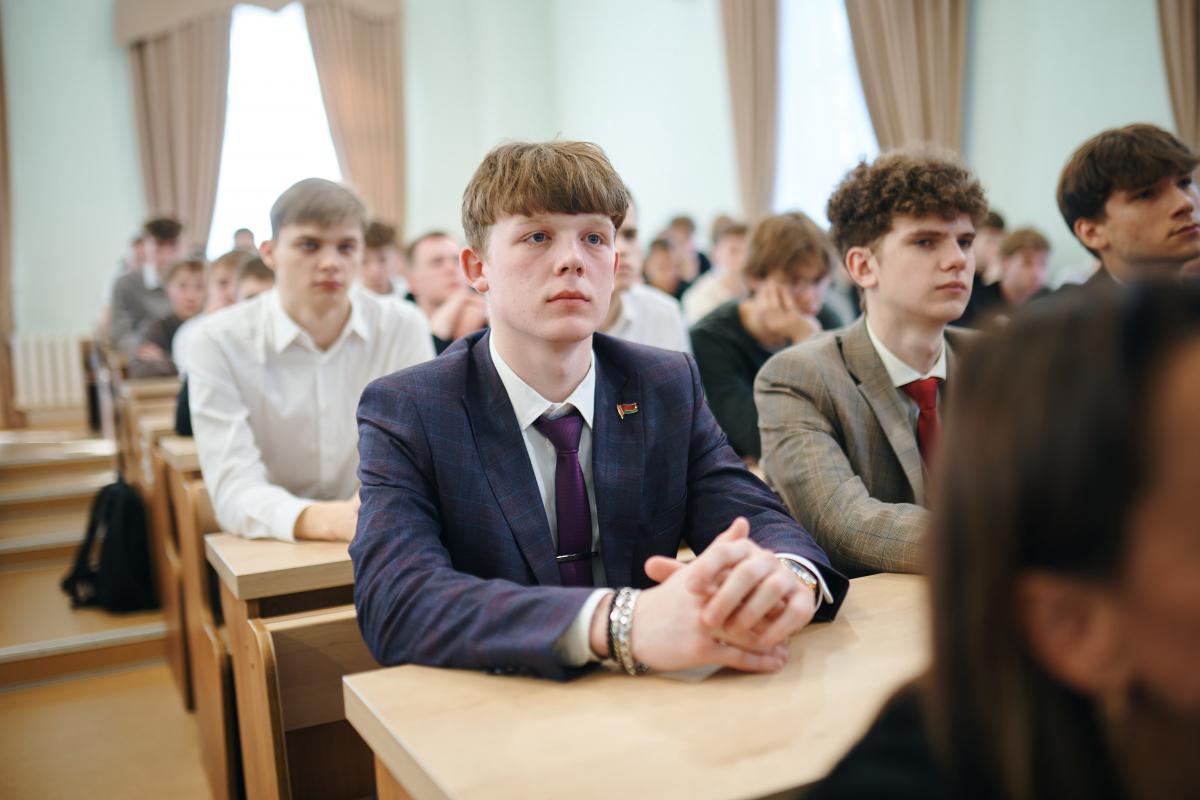
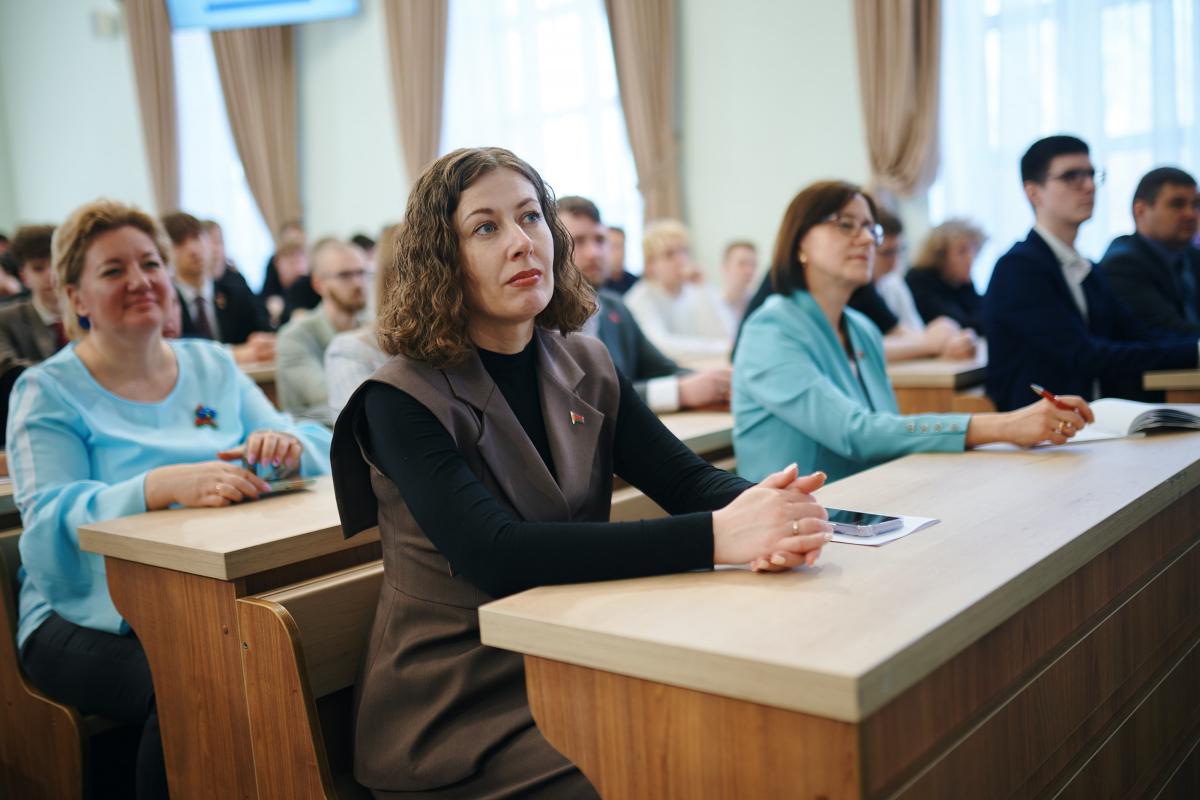
Today, March 24, a dialogue platform was held at the Belarusian National Technical University as part of the information and educational project "Youth for Belarus!" The speakers at the event were Vadim Ipatov, Deputy Chairman of the House of Representatives of the National Assembly of the Republic of Belarus, Sergey Klishevich, member of the Standing Commission on Education, Culture and Science of the House of Representatives and Sergey Kharitonchik, Rector of BNTU.
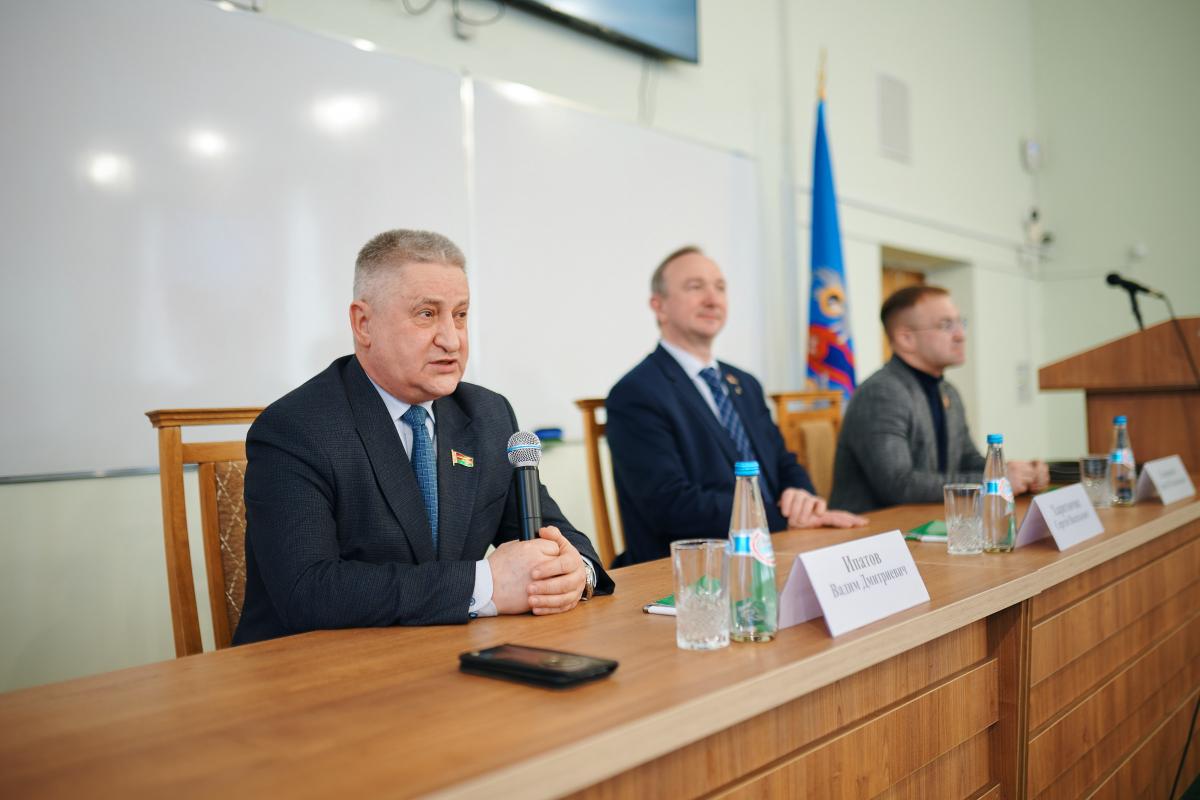
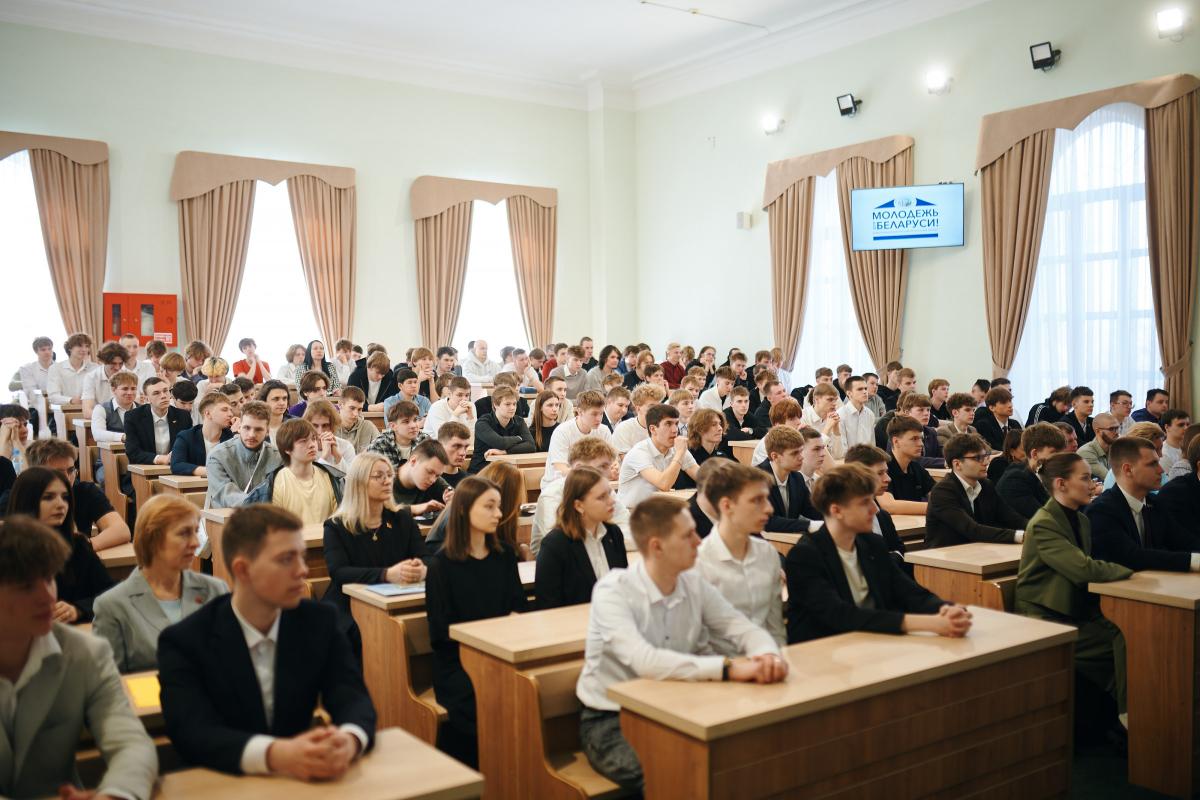
Opening the meeting, Sergey Kharitonchik emphasized the importance of holding such meetings for students, introduced the invited guests, and set the tone for an open dialogue with the youth.
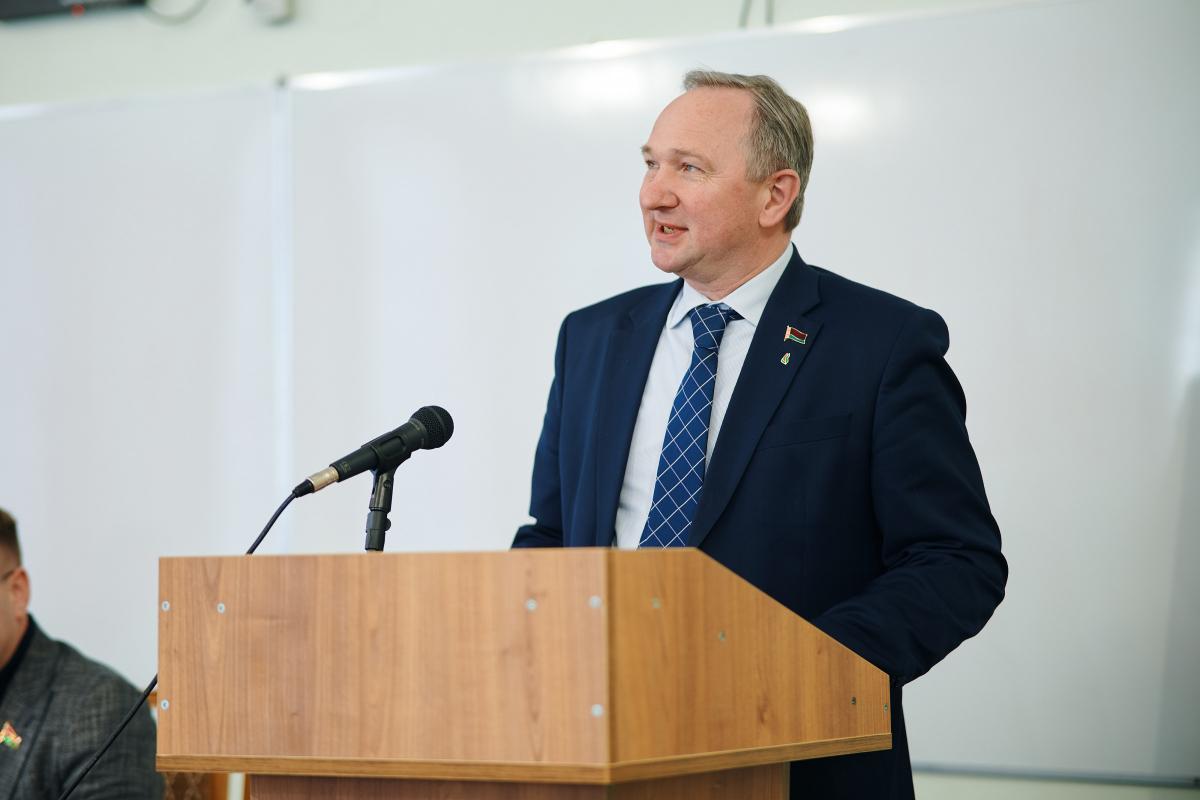
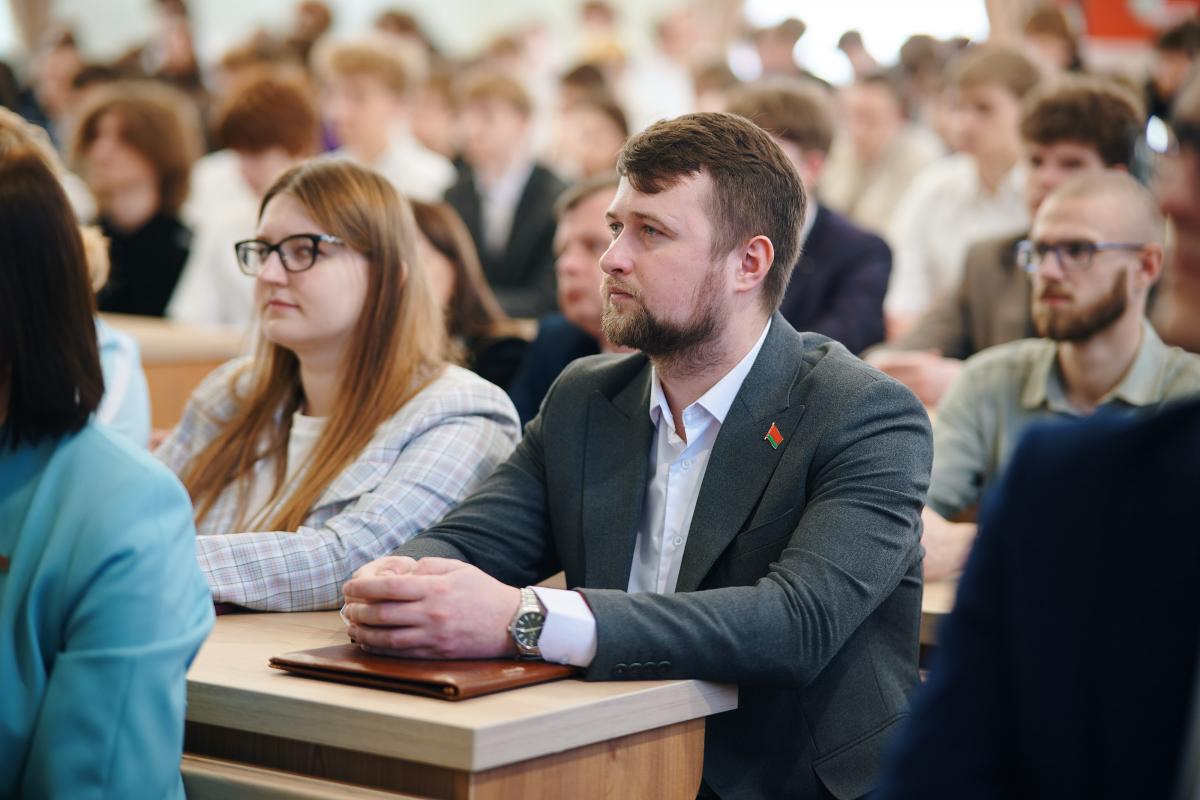
Vadim Ipatov began the conversation with an important topic — the influence of information on the worldview of young people. He drew the students' attention to the fact that in the context of the formation of a new world order, any fact can be presented from different sides. Speaking about the manipulation of consciousness, the speaker gave an example from real life.
— Sergey Mikhailovich and I recently held a meeting with students at one of the educational institutions. A student began to ask a question about a certain topic. I said: "Where did you get this information?" — "From the internet." Well, it was clear, we were aware of which resource it was published on. And recently, on the same issue, we had a meeting in the House of Representatives, which was attended by the Minister of Health, and he answered this question. The situation turned out to be completely different, — the parliamentarian emphasized.
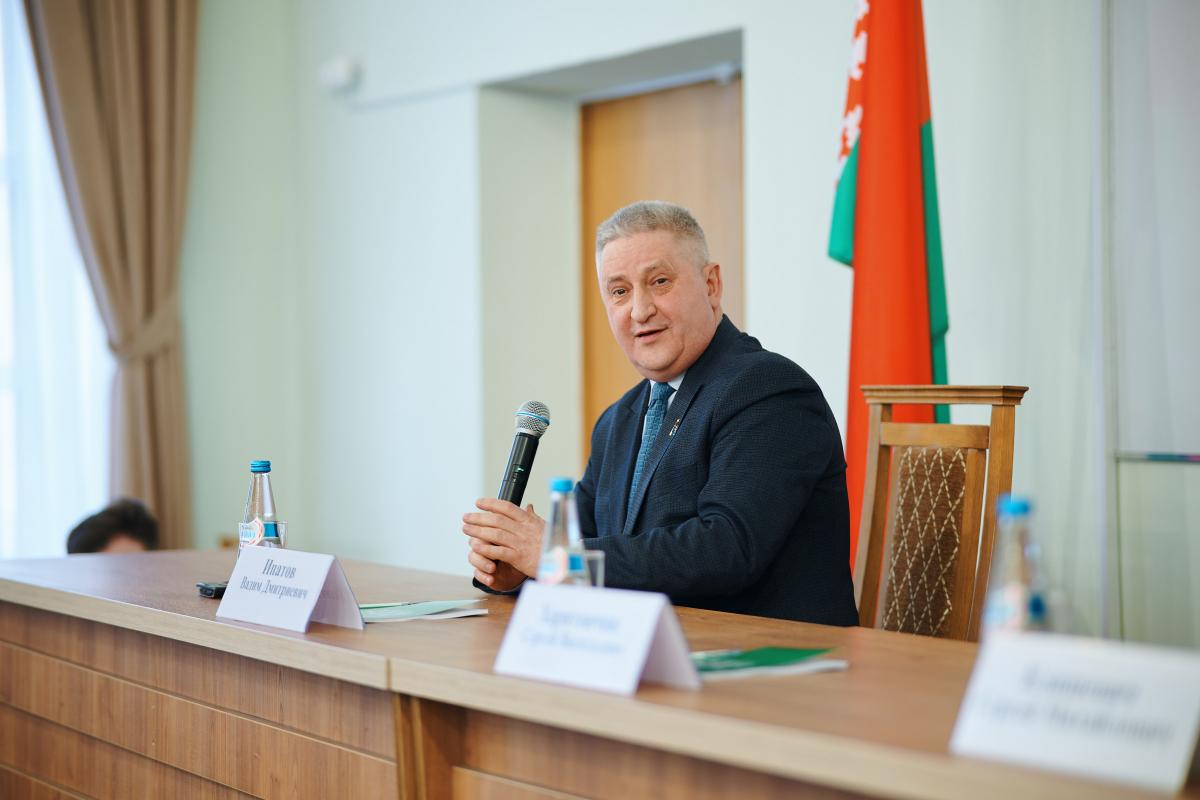

He warned young people against trusting half-truths, which, in his words, are the most dangerous weapon in the information war. The speaker urged students not just to consume information, but to learn to see the essence, compare and analyze, especially when it comes to the future of the country.
— If you feed on distorted information, on half-truths, then your corresponding behavior may affect your future and the future of the country, — Vadim Dmitrievich summarized.
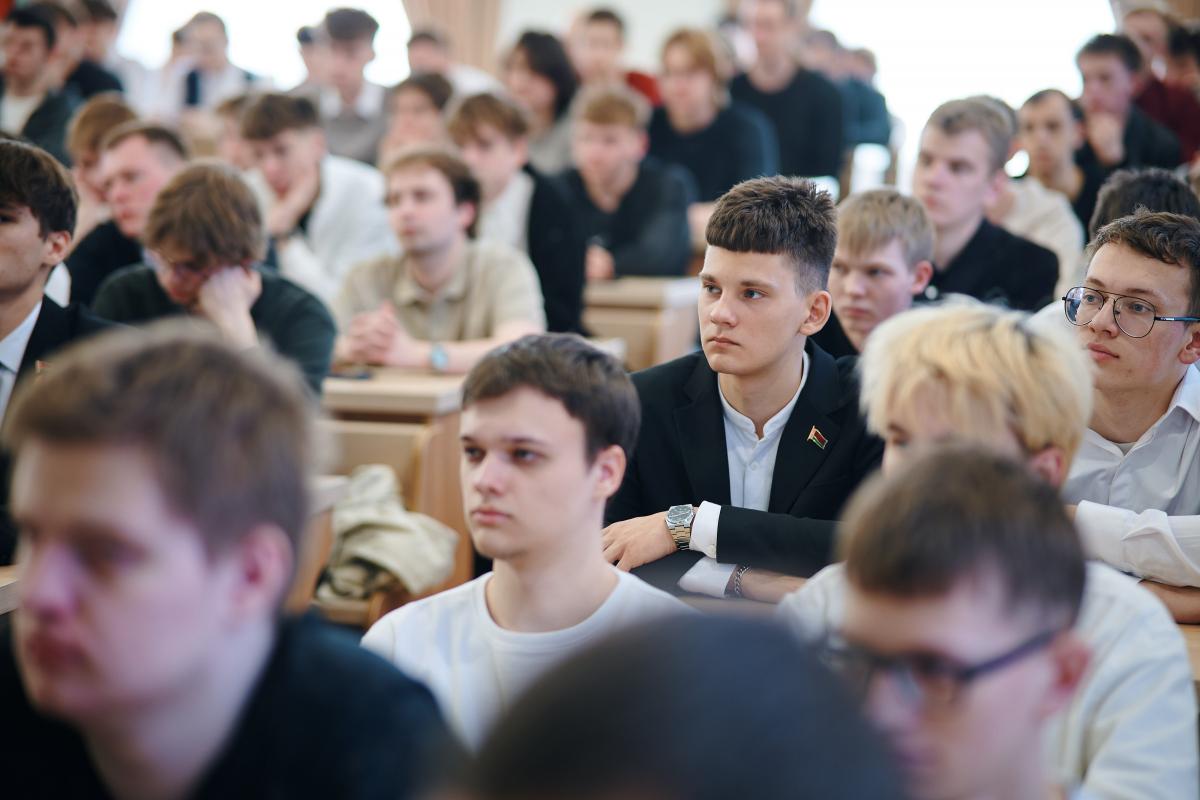
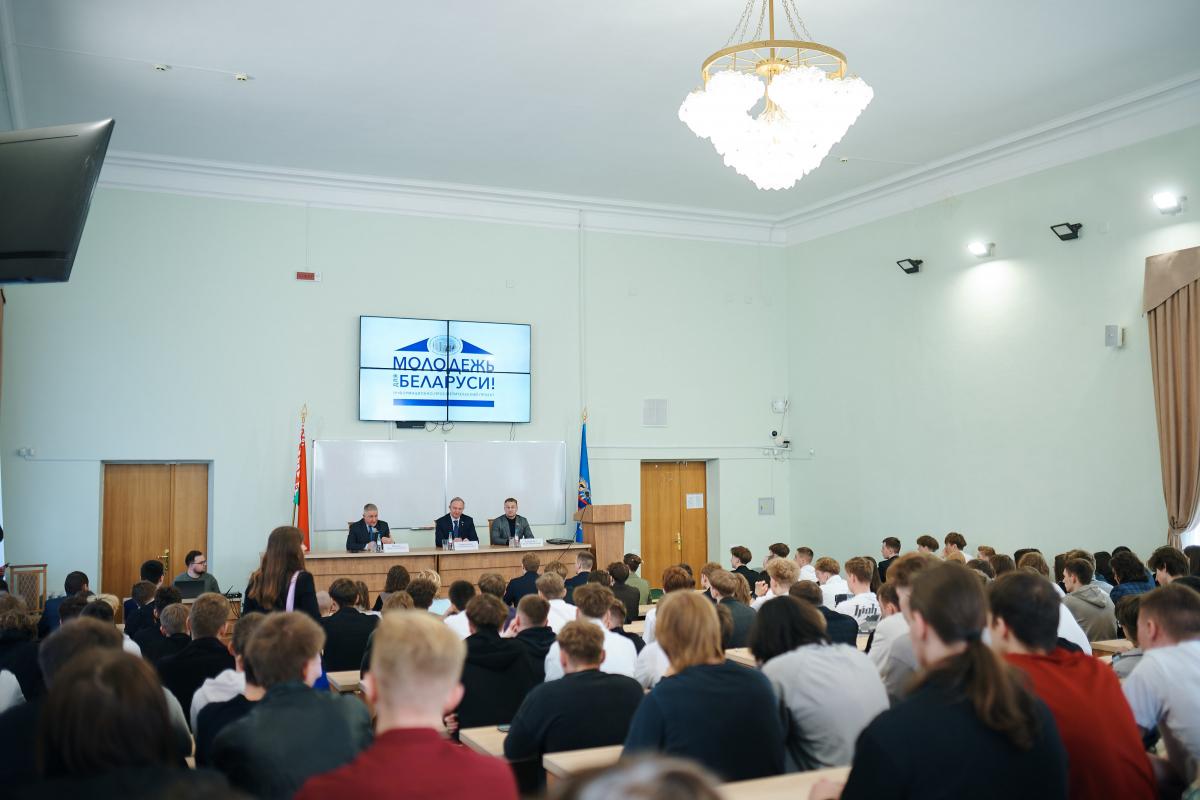
In turn, Sergey Klishevich in his speech focused on a problem which he called key for the country's future — demographic security. He addressed the students with a question about how they see the solution to the situation where the number of working citizens is decreasing and the burden on the pension system is increasing.
— This is a problem of demographic security, it needs to be solved today. Why? Because, for example, today for every 10 working people, there are 6–7 pensioners, — explained Sergey Mikhailovich, emphasizing that refusing to start families and have children would lead to serious economic consequences in the long term.
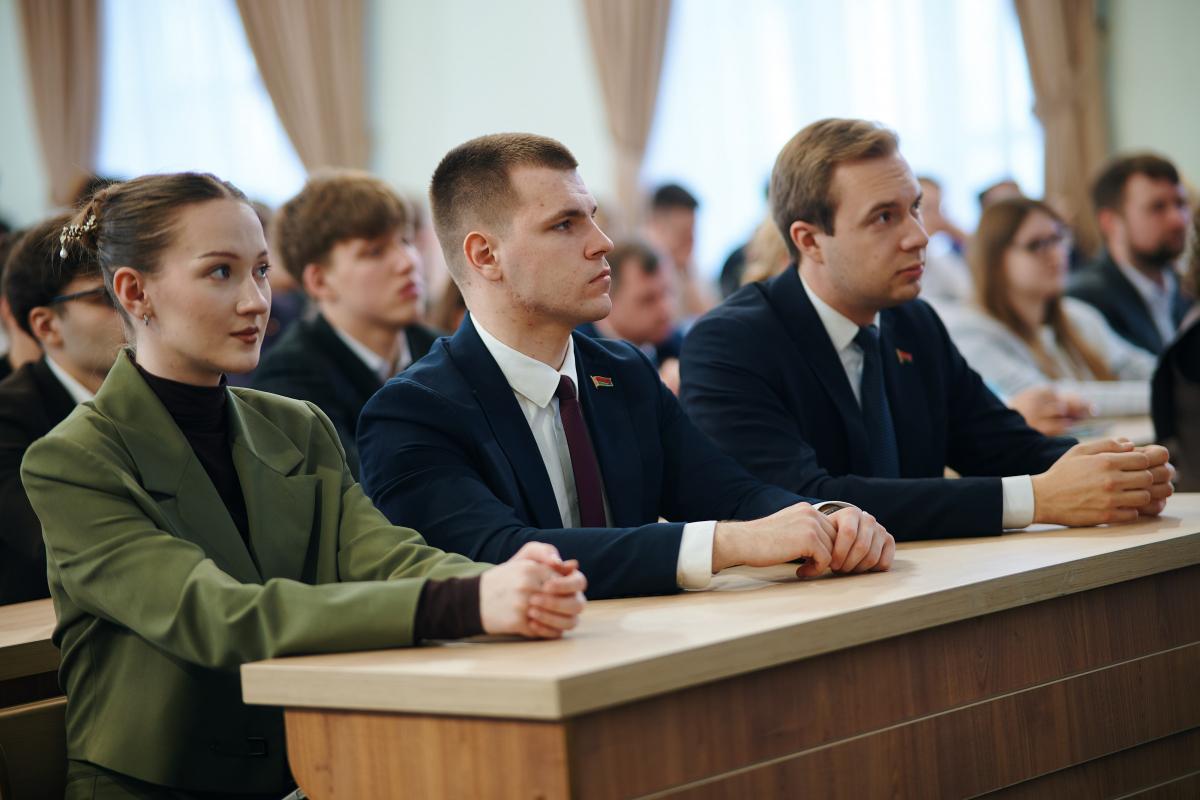
During the lively discussion, students proposed various solutions: increasing the number of jobs, attracting foreign labor, and stimulating the birth rate.
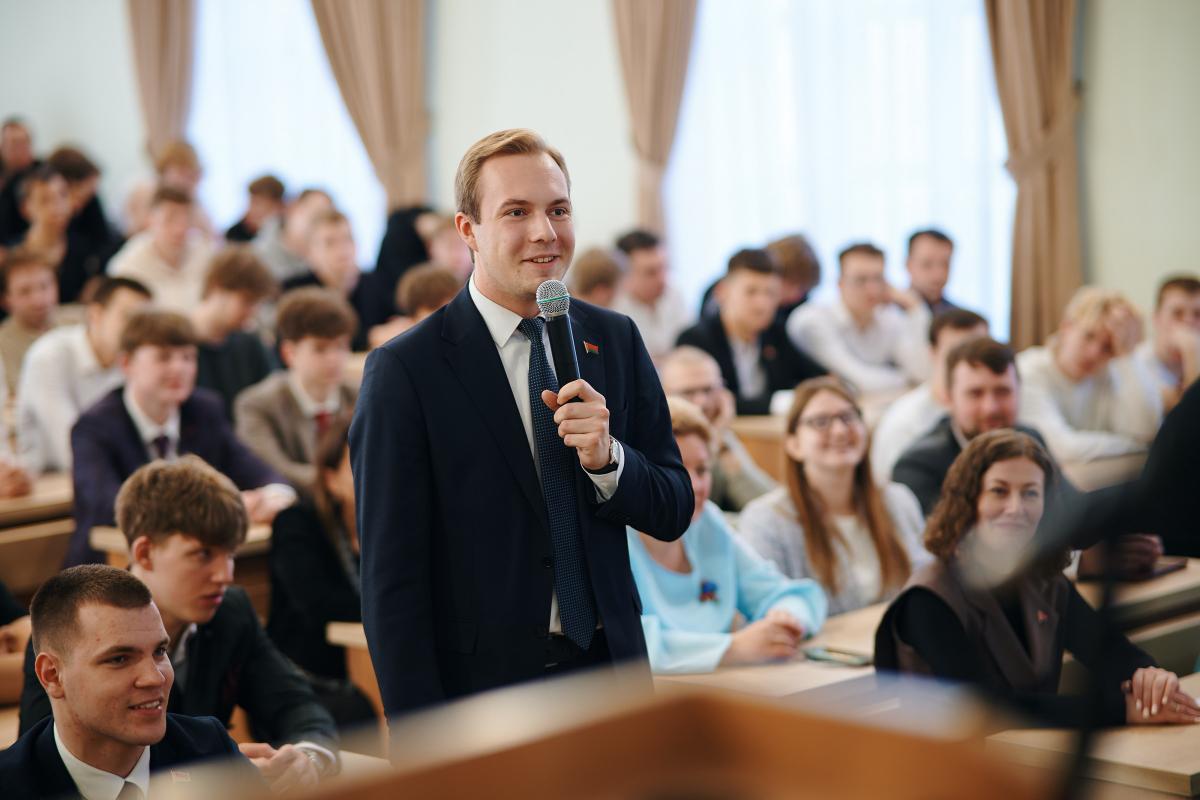
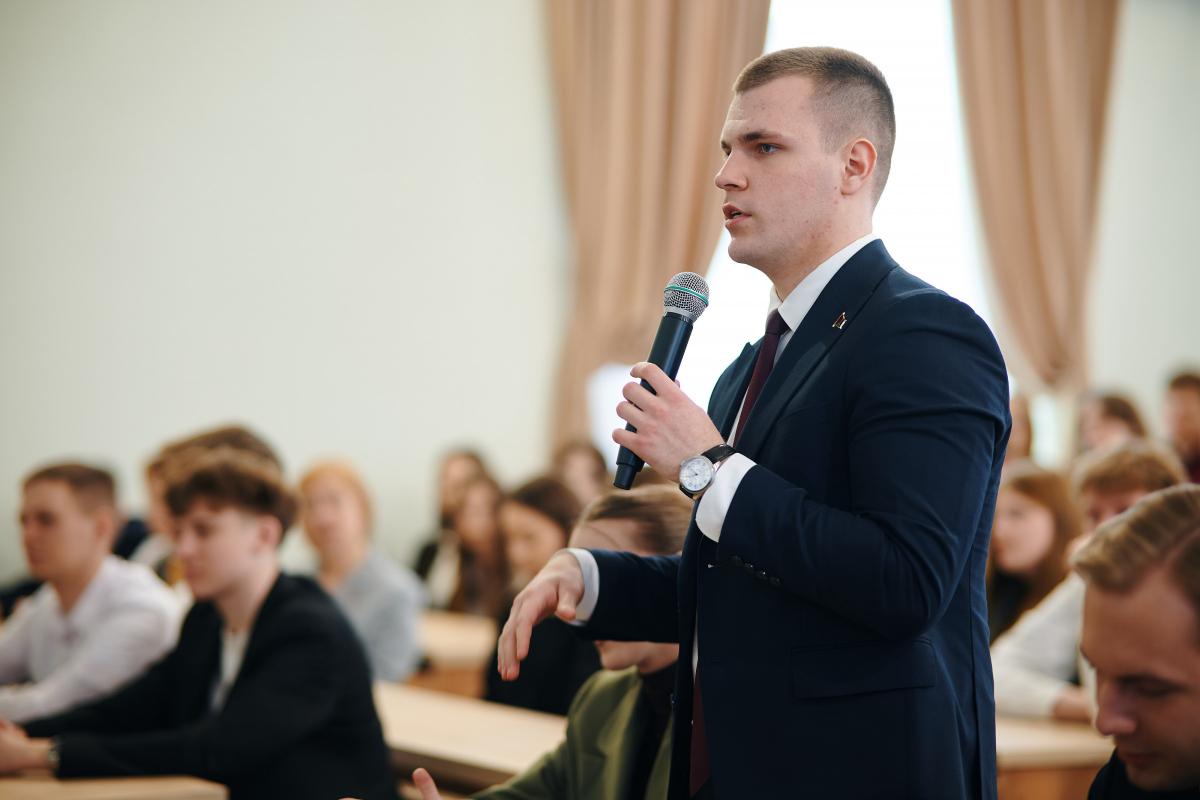
Vadim Ipatov supported his colleague, adding that the state creates all the conditions to support families. He also touched upon the topic of value orientations that are transmitted to young people.
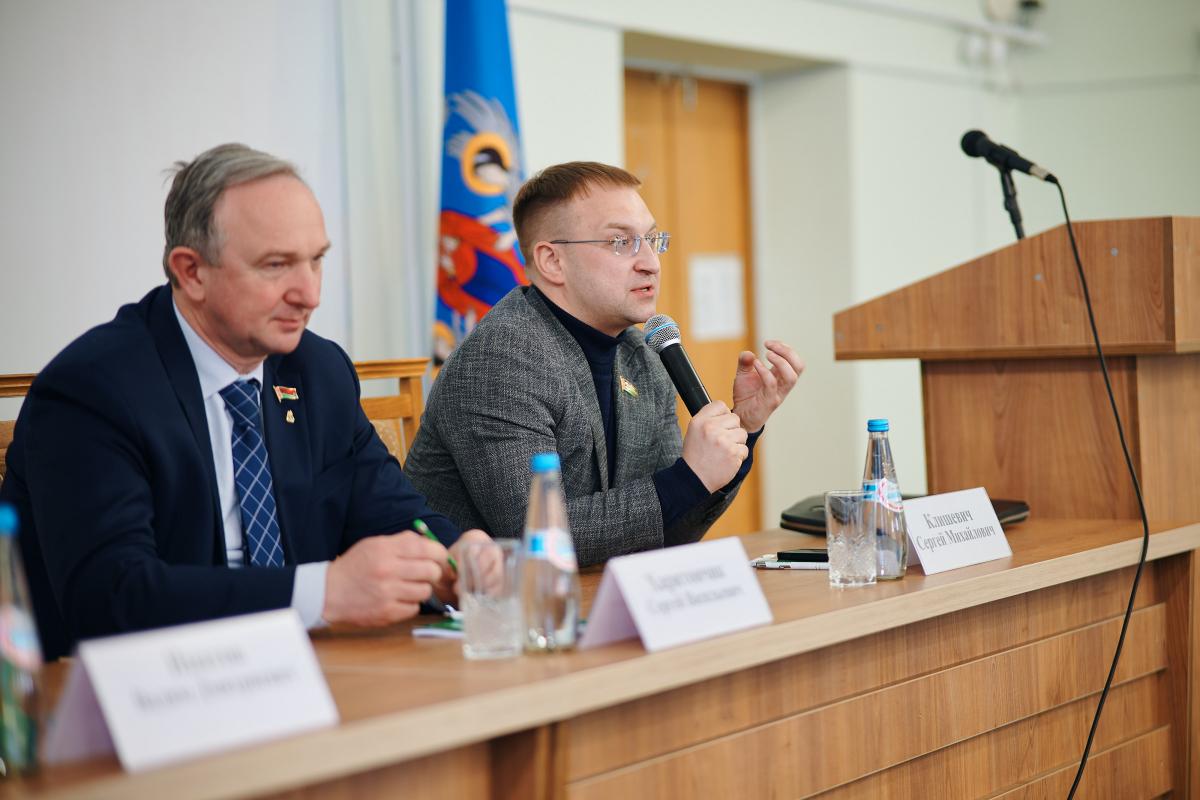
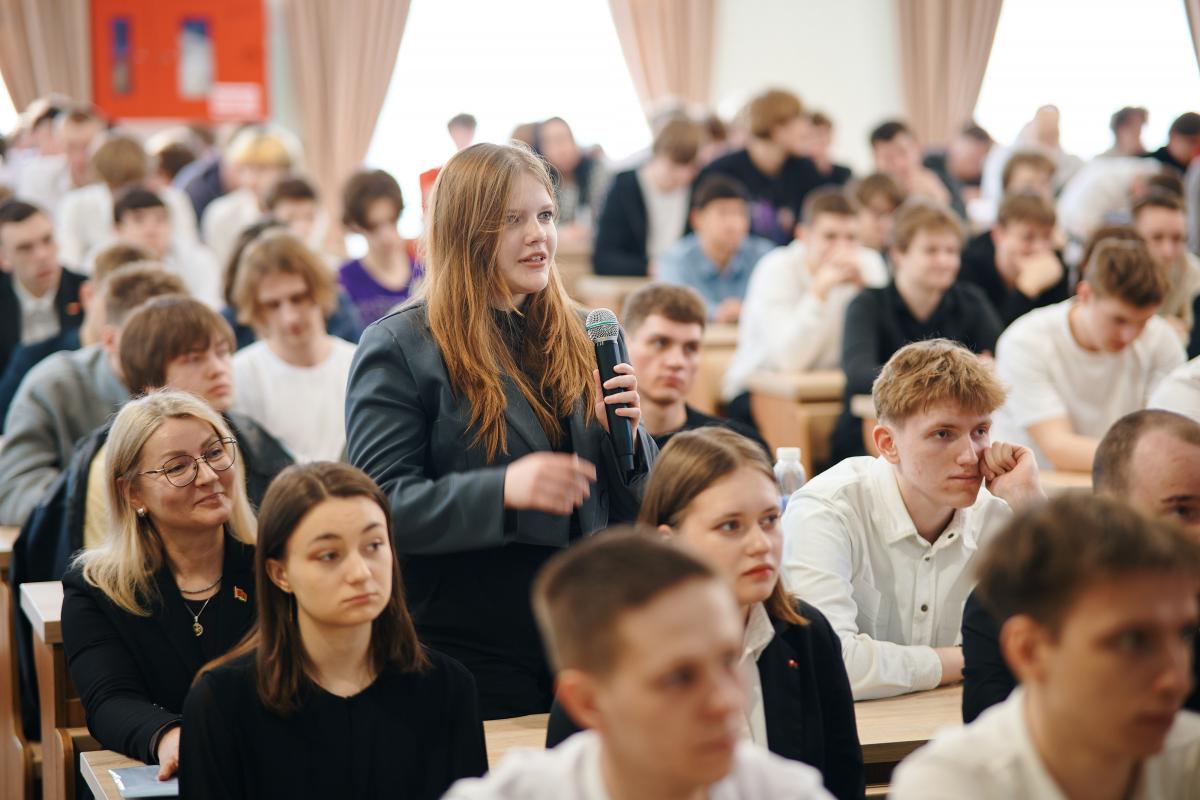
The next stage of the meeting was answering questions from students. So, a third-year student named Andrei asked a question about the place of artificial intelligence in the engineering environment, recalling the phrase that artificial intelligence will not replace an engineer, but an engineer who uses AI will replace one who does not.
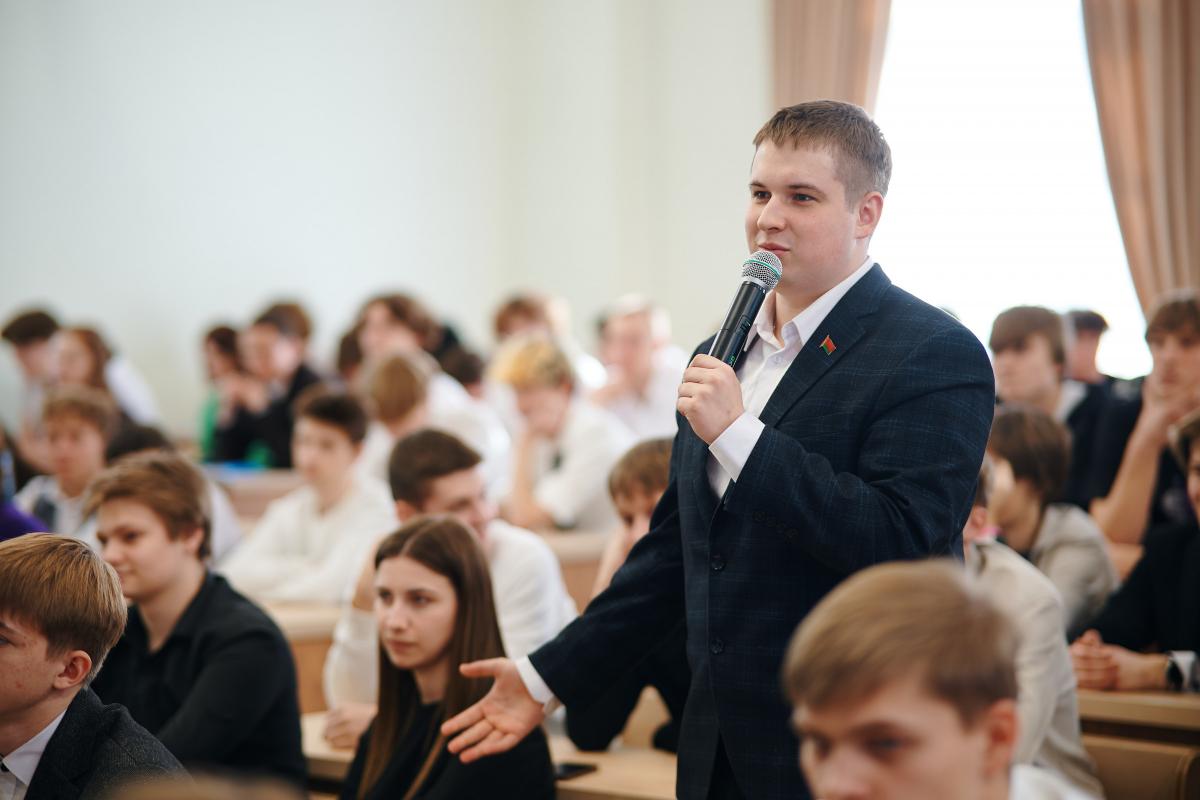
Answering this question, Vadim Ipatov suggested that the students define artificial intelligence for themselves. After listening to the audience's opinion, he emphasized that, despite the development of technology, the machine is not yet capable of thinking like a human, especially in non-standard situations.
— Man, first and foremost, creates this machine. He lays down the mathematical model in this machine. And, in principle, one can probably immediately conclude that whatever model we lay down is what we will get. The answer to the question you asked, about whether it can replace an engineer or not, is no, it cannot, — the speaker emphasized.
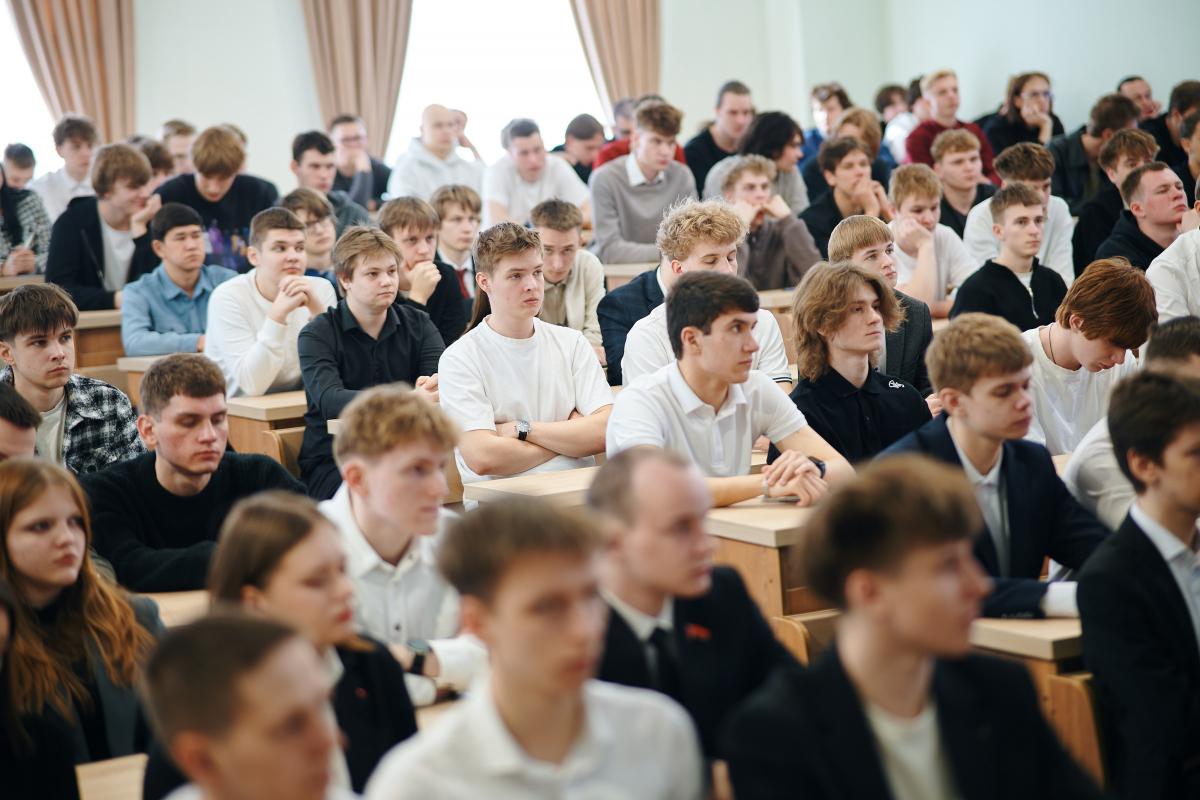
The next topic for discussion was the preservation of historical memory, which was raised by Sergey Klishevich. He suggested that the students name the names of their ancestors who fought and, using this as an example, explained why it is important to know one's roots.
Vadim Ipatov, in turn, reminded about the legislative protection of historical memory, enshrined in the updated Constitution, and that desecration of monuments and rehabilitation of Nazism in Belarus entail criminal liability.
Summing up the results of the meeting, the speakers thanked the students for their activity, and after the event, Vadim Ipatov emphasized the importance of this format of communication.
— I think we can recall, you know, there was a television project, "Old Songs about the Main Thing." And regarding these meetings, I would, paraphrasing, say: "Simply about the Main Thing." The fact is that the Constitution of the Republic of Belarus and, in general, the domestic and foreign policy of our state — from one point of view, these are complex topics. But, considering that we are meeting with a youth audience, we want to convey complex issues to every young person precisely through a trusting, simple, down-to-earth conversation, — shared Vadim Dmitrievich.
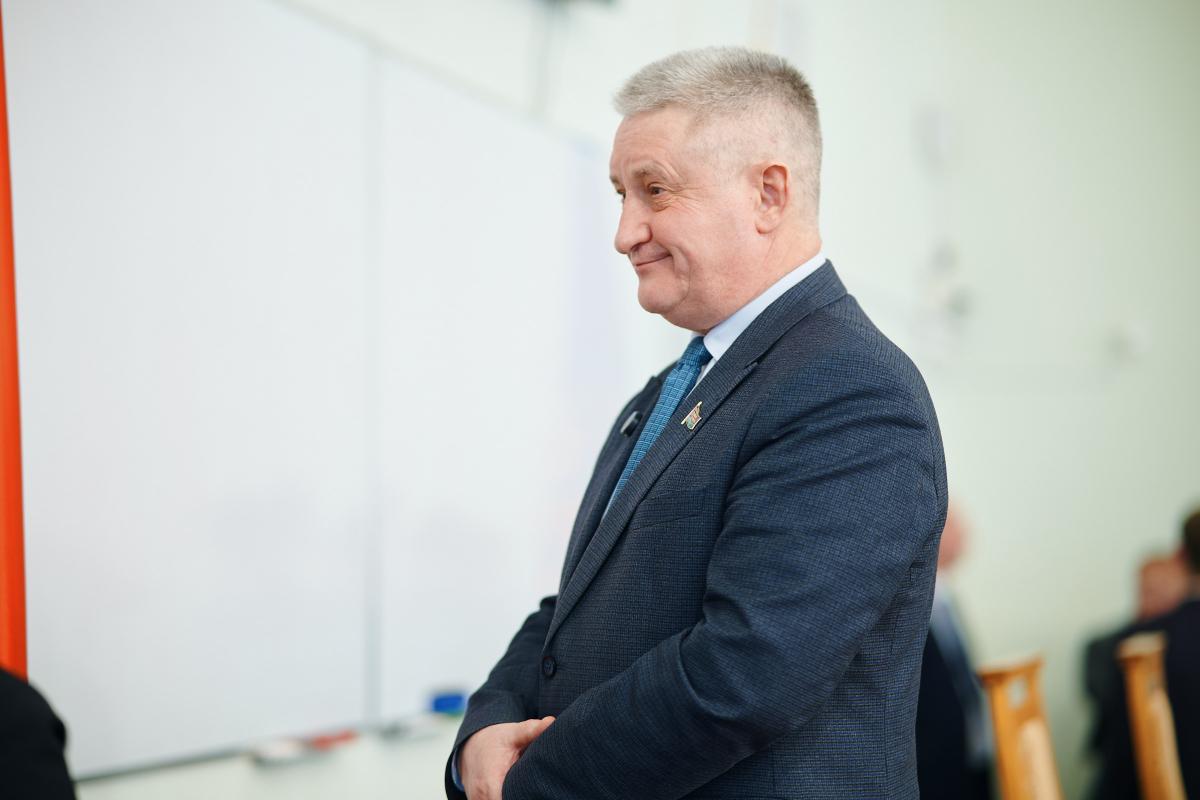
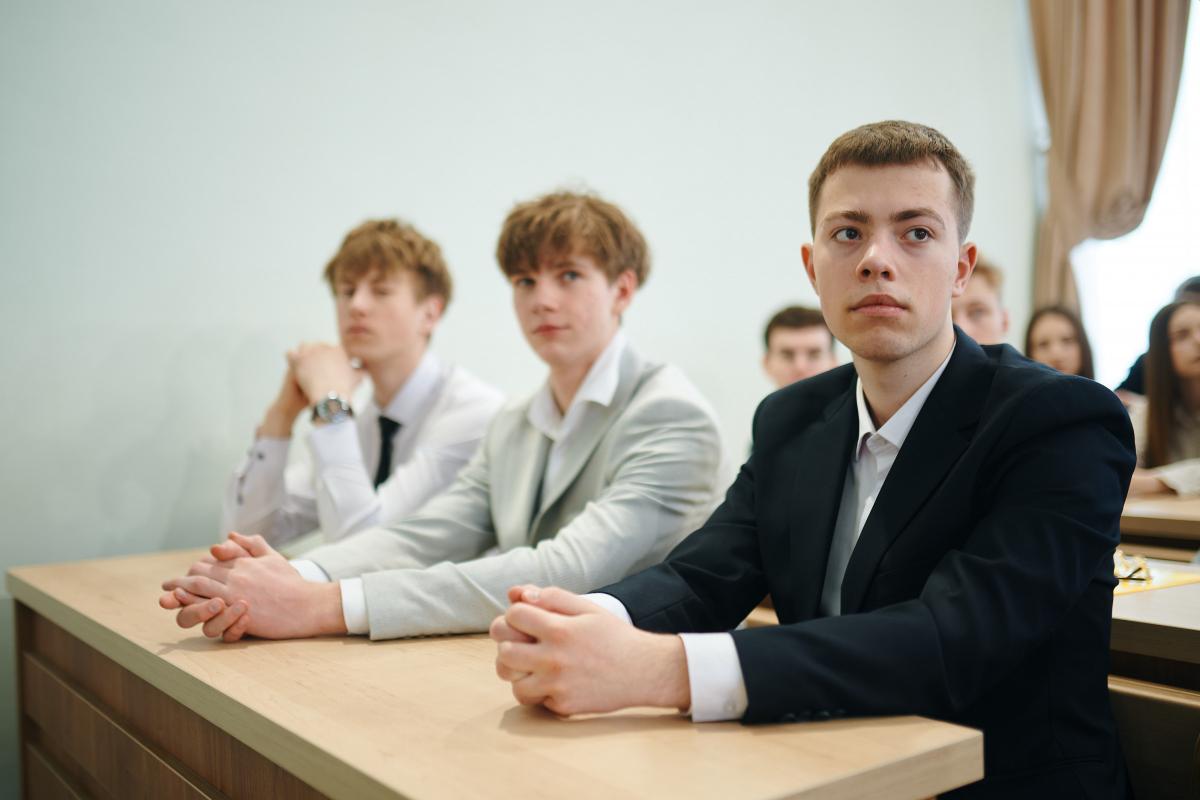
He added that young people are the environment that today absorbs what is happening, and in the future, it is these young people who will become leaders and enter the walls of parliament.
— And how can they not realize today the value of the existence of their state and subsequently do everything to preserve this state and pass it on to the next generation? This is exactly what we talked about today with the young people who are studying, first and foremost, engineering specialties, — summarized the Deputy Chairman of the House of Representatives.
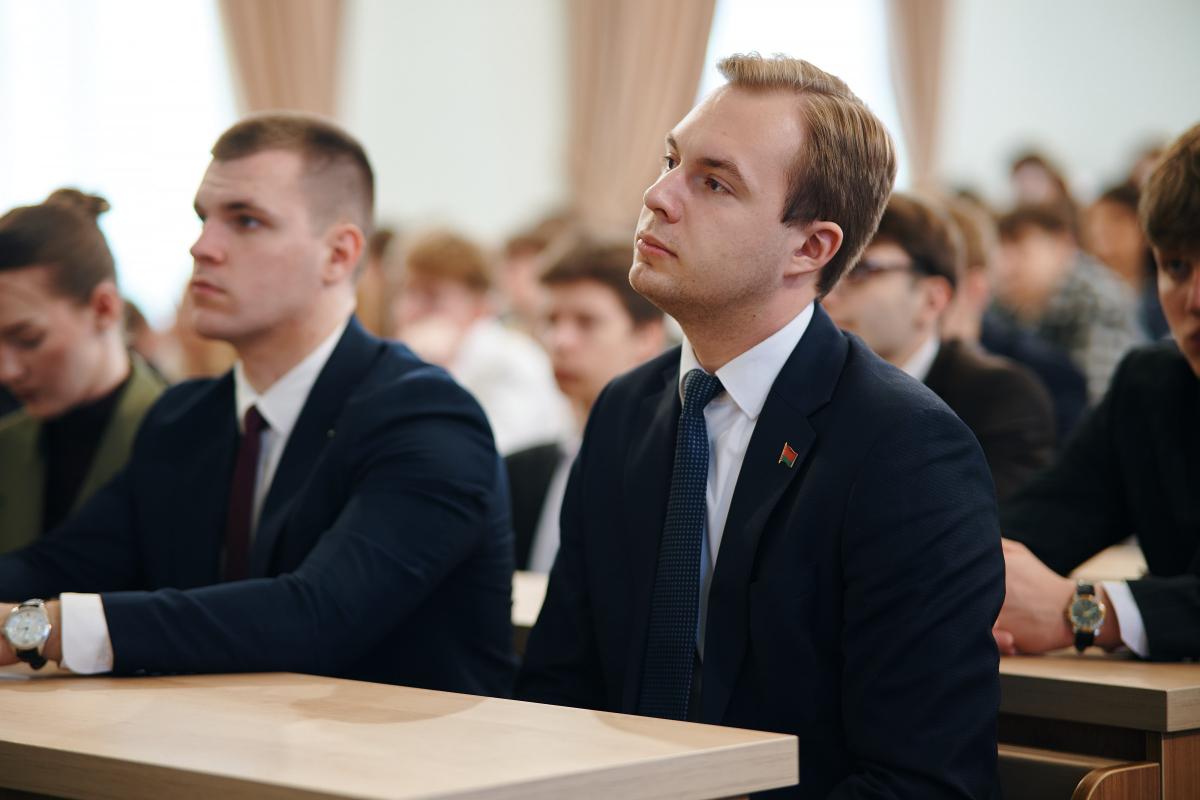
The dialogue platform "Youth for Belarus!" became a vivid example of how key issues of demographic security, scientific and technological development, and the preservation of historical memory were discussed in an open conversation format. Vadim Ipatov and Sergey Klishevich not only conveyed the essence of state policy to the future engineers but also engaged them in a lively dialogue, showing that responsibility for the sovereignty and future of the country begins with the personal choice of every young person. Such meetings allow us to talk about the main things in simple, trusting language, forming in young people a conscious attitude towards their place in the development of Belarus.
