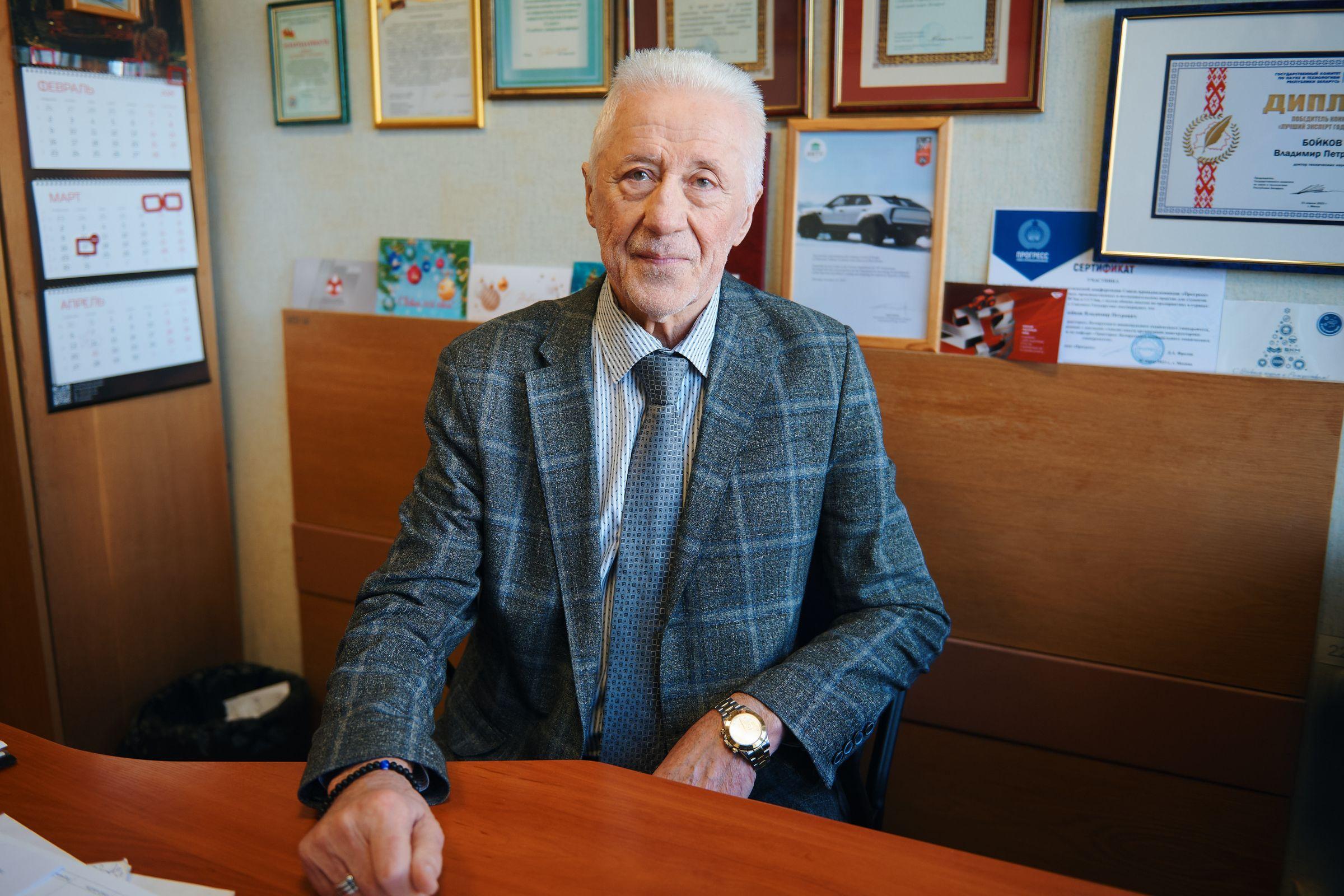
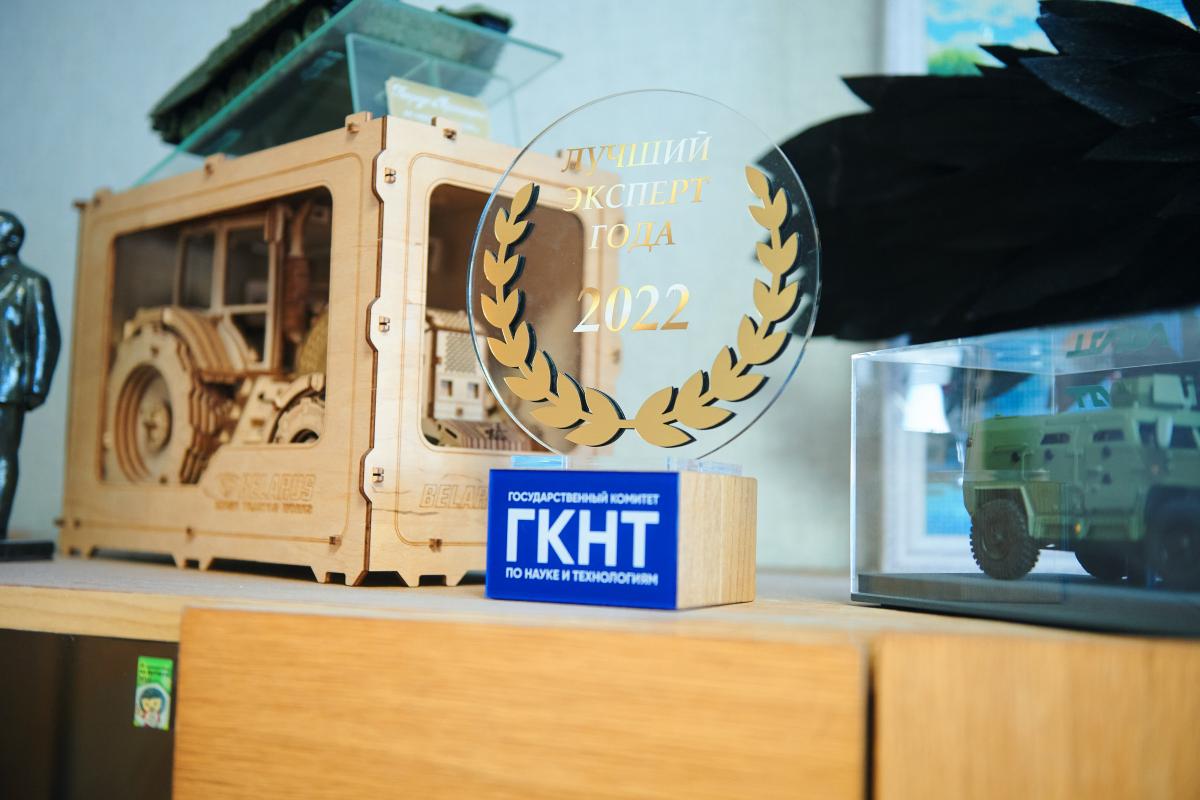
On Friday, March 13, the State Committee for Science and Technology summed up the results of the competition for the title of "Best Expert of the Year". Among the three winners is the head of the Department of Tractors at the Belarusian National Technical University, Doctor of Technical Sciences, Professor Vladimir Boikov. This is the second title for Vladimir Petrovich, who was previously recognized as the best expert in 2022. In turn, we met with the professor to find out how algorithms select the best experts, why electronics helps repair tractors in the field, and why students should "make themselves beautiful" not only in front of a mirror, but also in a test.
Speaking about his life, Vladimir Petrovich admits that during the 52 years he spent at his alma mater, he did not have a single reason for bad memories. His history at BNTU began in 1973, when he graduated from the department, which he heads today. Since then, the scientist has not left his native university, having passed all the stages of professional growth — from graduate school and assistant studies to associate professor and professor. The result of these reflections is a simple and sincere phrase: "All the best things in my life are inextricably linked with the Polytechnic."
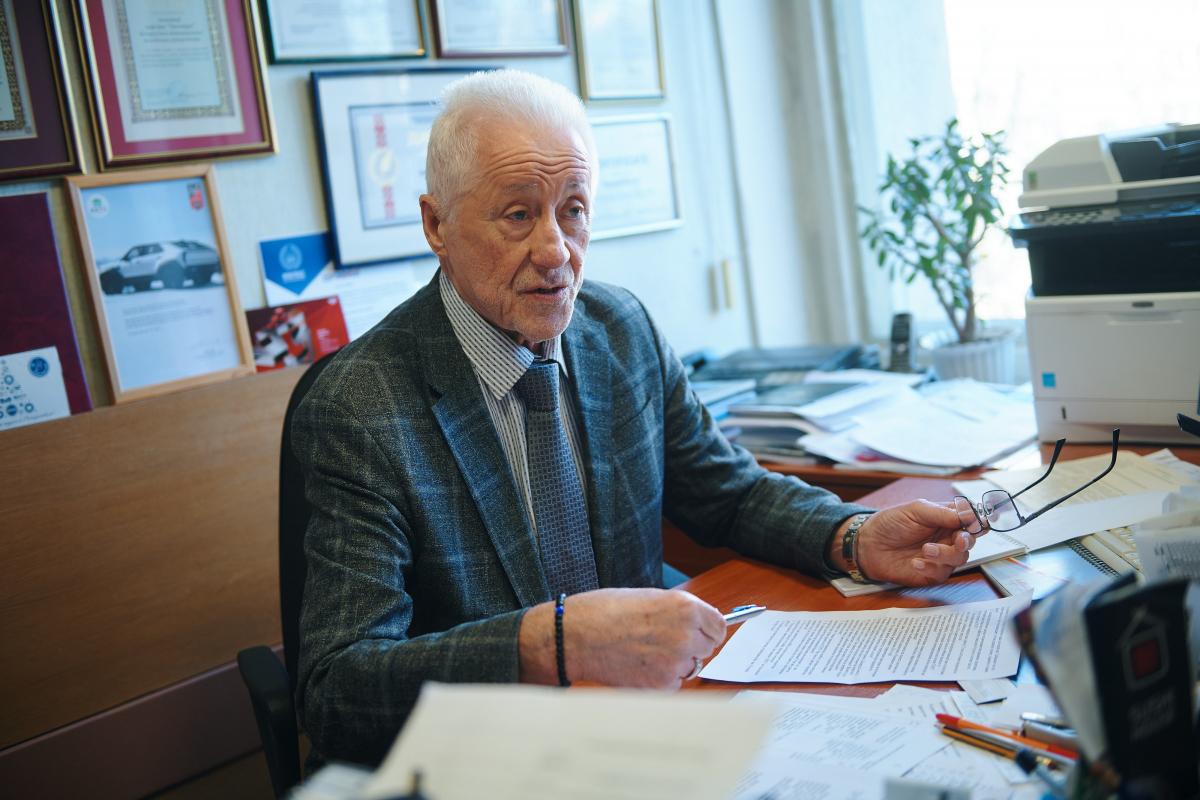
The professor admitted that becoming the "Best Expert of the Year" for the second time came as a complete surprise to him. Vladimir Petrovich was sure that the list of the best experts was updated every year.
— To be honest, I didn't expect it. This title is awarded to me for the second time, and I thought that the SCNT algorithm chooses a new candidate each time. But as it turned out, digitalization chose me. It is the computer program developed by the committee that takes into account a combination of factors: the number and quality of examinations conducted, the types of documents, and the number of negative conclusions.
According to the expert, this is an objective result not only of his work, but also of the work of the entire staff of the Council of Experts of the State Scientific and Technical Committee No. 2, which he heads.
— Here I am already deprived of the right to speak. My job is to thank you and take it not for granted, but as a result of work," he added, emphasizing that the high bar obliges you to work even harder.
Explaining the specifics of working at the SCST, Vladimir Petrovich emphasizes that expertise is a kind of filter for budget funds. According to him, the area of responsibility of the expert council includes documents of a very different nature, but they have one thing in common: the availability of government funding.
— Documents of any nature are submitted for examination if they contain budget financing. These include government research programs, applied developments, which will then turn into innovative projects, and business plans for enterprises to upgrade production. Our main task is to evaluate the effectiveness of using budget funds and the effectiveness of the project," explained the head of the department.
He also noted that digitalization has completely changed the expert's routine. Today, all the work is done in an automated system.
— Previously, there was a pile of papers and correspondence, now everyone has their own access code. We log into the system, see the project for which we have been selected by experts, study the documents and fill out electronic forms. He pressed the button and the conclusion was gone. This is a huge time saver and increased transparency," he says.
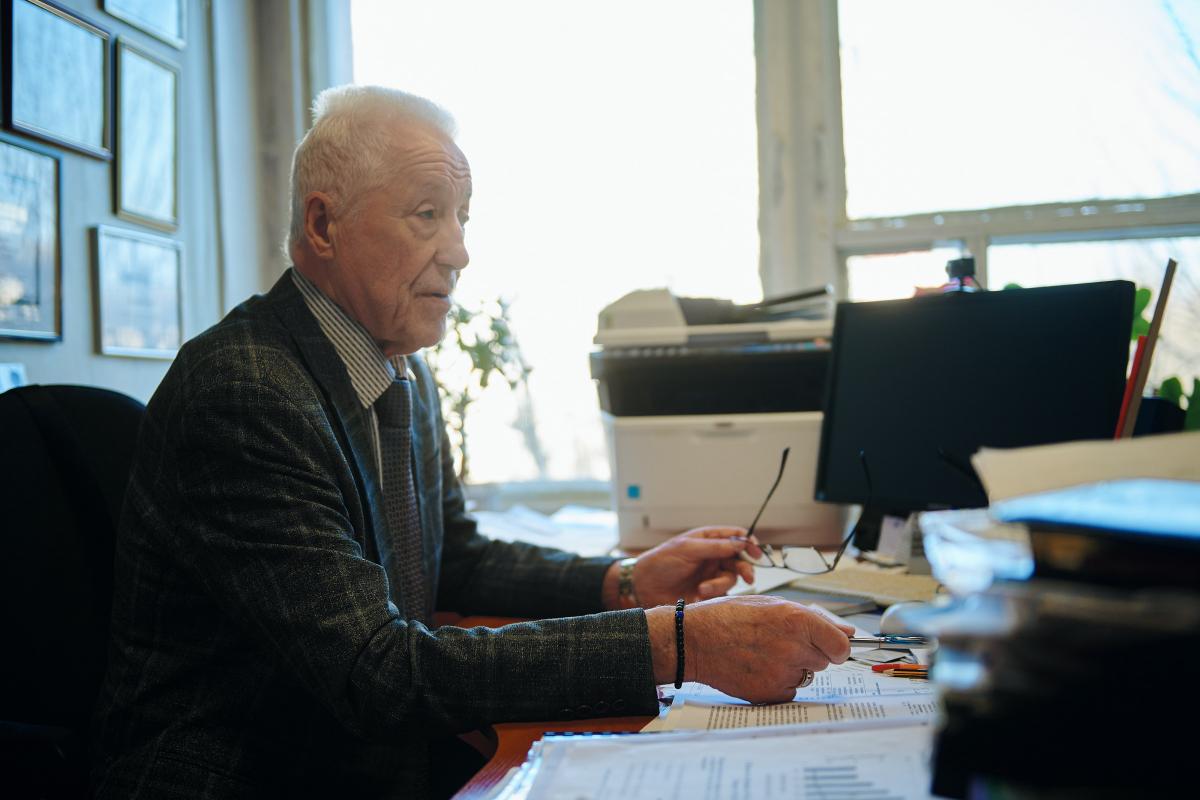
— Name the top 3 most common mistakes that applicants make when submitting projects to the SCST.
— The stupidest mistake is not following the standards of paperwork. Scattered papers arrive. The second is the discrepancy between the stated ambitions and the actual technological capabilities. They say they will do something, but they don't show what they will do. And the third is financial irregularities, when the financing structure (own and budgetary funds) is not balanced.
According to the source, the purpose of the examination is not to destroy the project, but to help bring it to mind. And in most cases, there is mutual understanding with the developers.
Being at the forefront of scientific and technical expertise and facing a wide variety of projects on a daily basis: from basic research to specific production solutions. Vladimir Petrovich has a unique opportunity to observe the direction in which Russian engineering is moving. And since a significant part of his scientific career and teaching activities are related to tractor construction, he shared the most promising trends in this field.
— The general concept is the transition to precision farming and unmanned mobile vehicles. Tractors must learn to "think." We are already working on electronic control systems, motion coordination, and using drones in agriculture. Environmental safety, advanced driving systems and electric transmissions are the priorities of the Minsk Tractor Plant today. But the main trend remains unchanged — reliability.
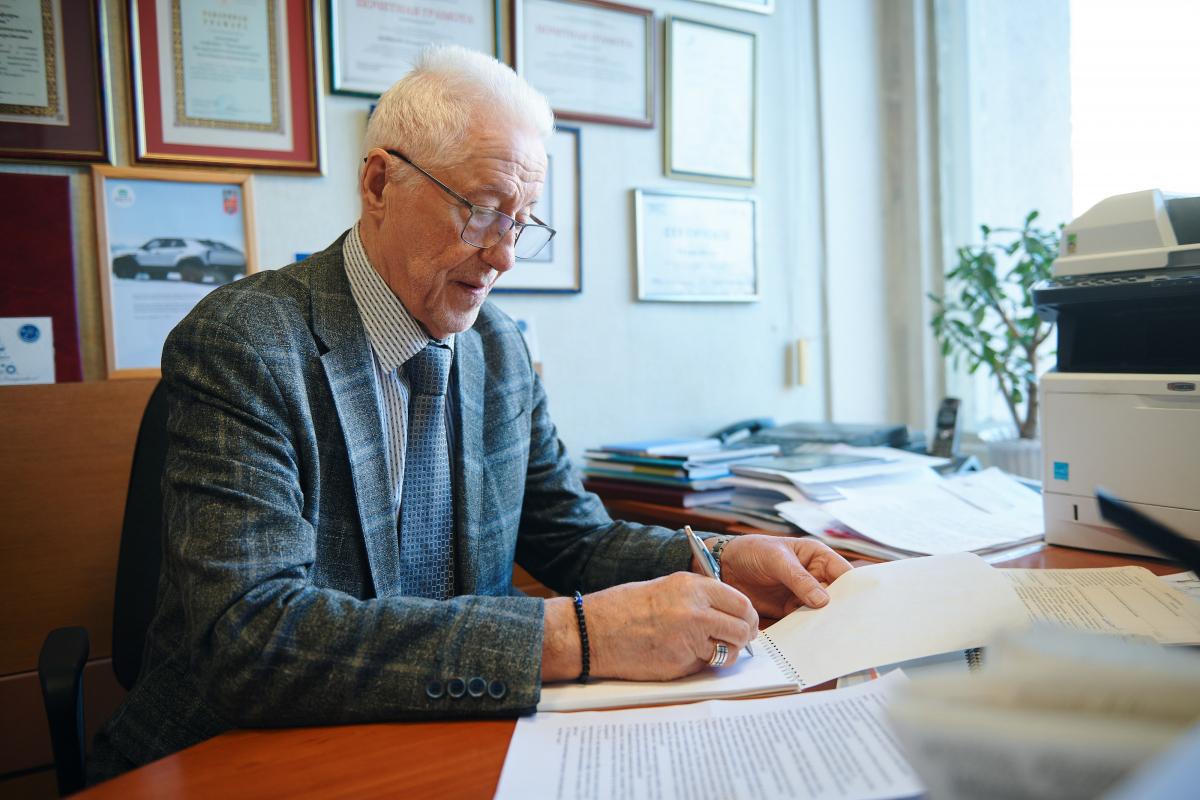
Speaking about the modern requirements for tractor technology, one cannot ignore the age-old dilemma.: how to combine high technology with the harsh realities of exploitation? After all, no matter how smart the machines are, their main work takes place in the field, where every minute is important, and a complex node should not cause downtime. The professor, on the other hand, looks at this issue more broadly, suggesting a change of perspective. In his opinion, electronics is turning from a potential problem into the main assistant of the mechanic. Sophisticated systems today are proactive, allowing you to diagnose problems long before the tractor gets up.
— All that I have mentioned (power, electronics, reliability) is a set of today's requirements. But electronics today is not an enemy, but an assistant. Remote monitoring systems are being created: sitting at the computer, we see which node has failed in the tractor in the field. The team is already leaving with specific spare parts, rather than driving the equipment back and forth. The more nodes we provide with such algorithms, the more efficient the work will be," Vladimir Boikov is confident.
No matter how perfect the machines are designed by engineers, the main link in this complex system is always a human being. That is why, when thinking about the future of tractor construction, the professor invariably returns to the topic of personnel training. Therefore, the parting words from the "Best Expert of the Year" are as follows::
— I have four specialties at the department, including "design". I advise the girls: in addition to looking in the mirror and putting things in order, look at the test more often. Put things in order there too. It's the same for the guys. There's a great line in the movie "Back to School.": "You can be anyone, but remember one thing — education is everything. Without him, you are nothing."
As Vladimir Petrovich noted, it is difficult to "ignite" modern students, but the material base and new projects are the best motivator. That is why the department today relies not only on lectures, but also on creating a real engineering environment: joint laboratories with manufacturers, student design bureaus and the opportunity to work on tasks at the university that will become the basis for mass-produced equipment tomorrow.
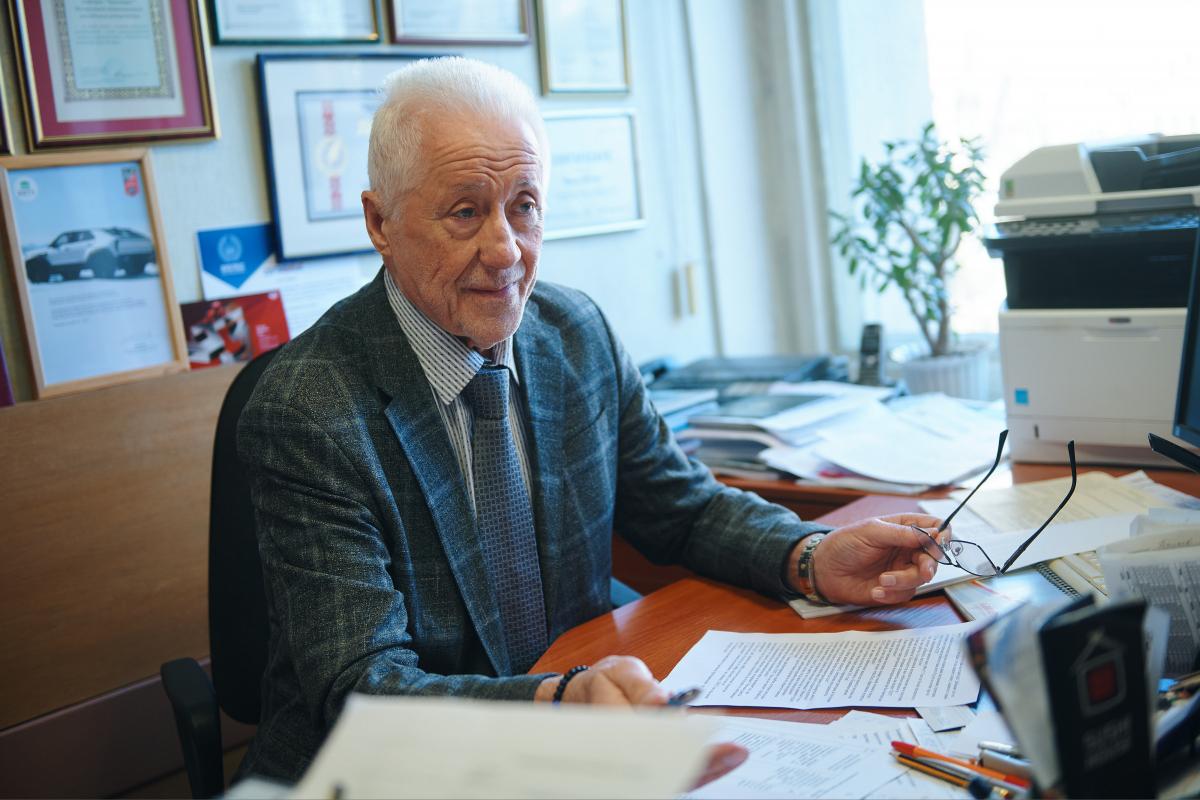
Being a top—level expert and head of the department at the same time means constantly balancing the rigor of the state assessment and caring for those who are just entering the profession. Vladimir Boikov proved that these roles do not contradict, but complement each other. In his understanding, a real expert is not a strict judge, but a mentor and assistant who sees the future for years to come. And while BNTU has professors who can interest students and involve them in real projects and research, the Belarusian engineering school has a solid foundation. And personal reboot recipes only confirm a simple truth: a real scientist is someone who can not only count, but also feel the rhythm of life.
We thank Vladimir Petrovich for the interview, congratulations on receiving the title and wish you further success in your work!
