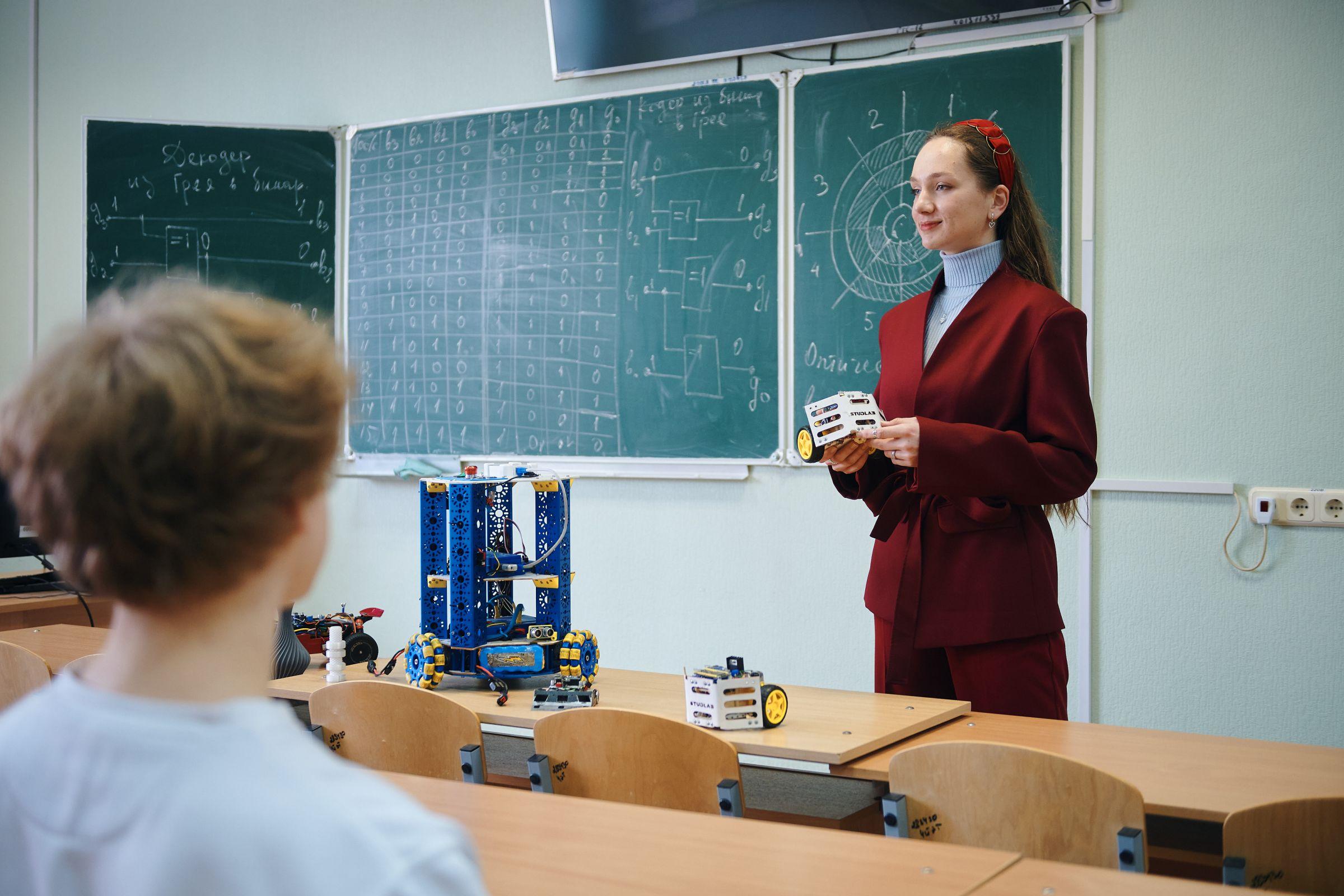
Alexandra Germanovich, a fourth-year student at FITR, a future roboticist and recipient of a scholarship from the President of the Republic of Belarus, proves that engineering at BNTU is successfully mastered not only by boys, but also by girls. In the Year of the Belarusian Woman and on the eve of Women's Day, Alexandra proves by her example that engineering today is a space of equal opportunities, where there is a place for both strict calculation and creative search.
Alexandra's choice of engineering direction and accurate calculations is not accidental. Her family dynasty has two wings: on the one hand, teachers, on the other, world—renowned scientists. And the most striking example for the girl was her own grandfather, whose developments once reached the cosmic level, in addition to this, the girl's grandmother also made her choice in favor of engineering.
— There are many good examples in the family, quite successful people. My grandfather, Boris Ivanovich Smirnov, was one of the main developers of the Energia-Buran project. This is one of the most ambitious space projects of the Soviet cosmonautics. In fact, a shuttle that was supposed to be reusable. There was a small team in Belarus that worked on mathematical calculations for this project. My grandfather received the Lenin Prize in the Kremlin for this work.
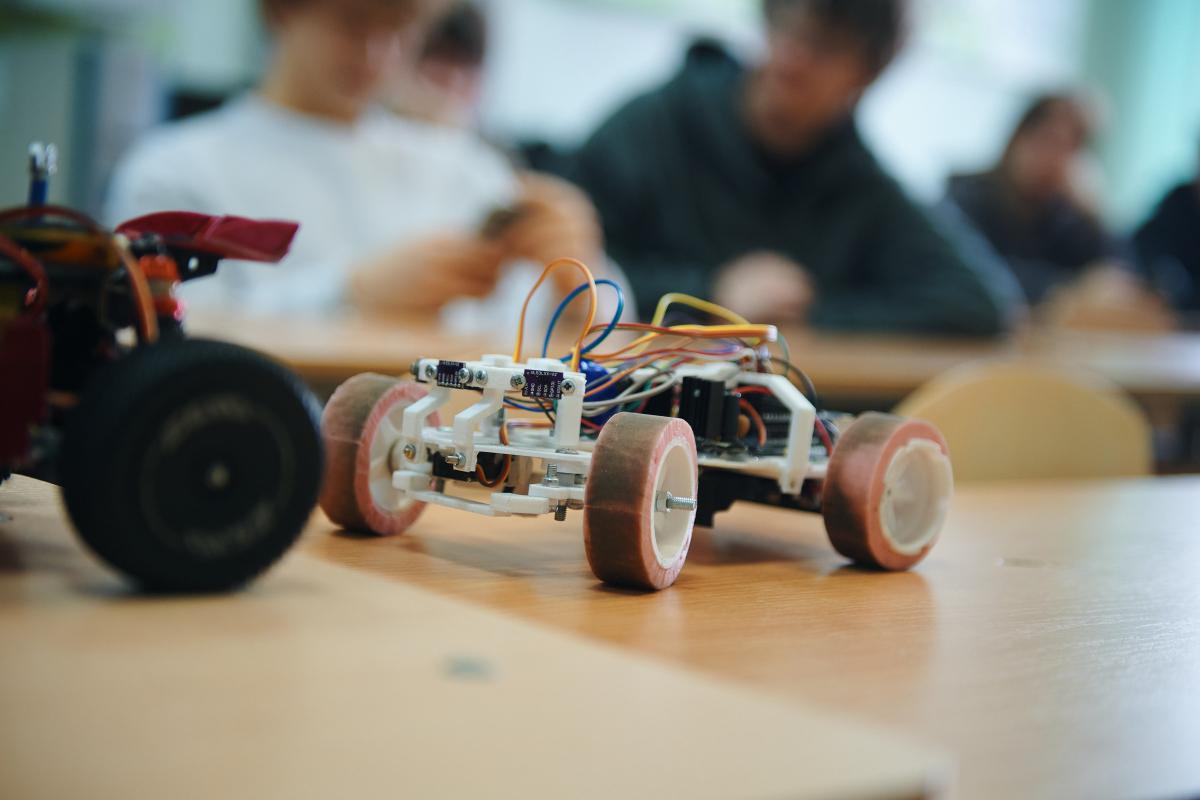
With such a genetic predisposition to the technical sciences, the girl's path might seem predetermined from birth, but her interest in the cause of life was awakened not by inheritance, but through a personal discovery.
— I have attended a large number of open days. And after visiting BNTU, after talking about robotics and how it is developed in our country, I began to actively delve into this topic. I realized that I want to immerse myself in it.
Immersion in the profession for the girl quickly turned into active scientific and social activities, which did not go unnoticed at the highest level.
— The presidential scholarship is awarded primarily on the basis of grades — this is the absence of grades below 9, as well as for active participation in scientific activities. I have many conferences and publications, plus participation in the social life of the university. I am present wherever I can be present.
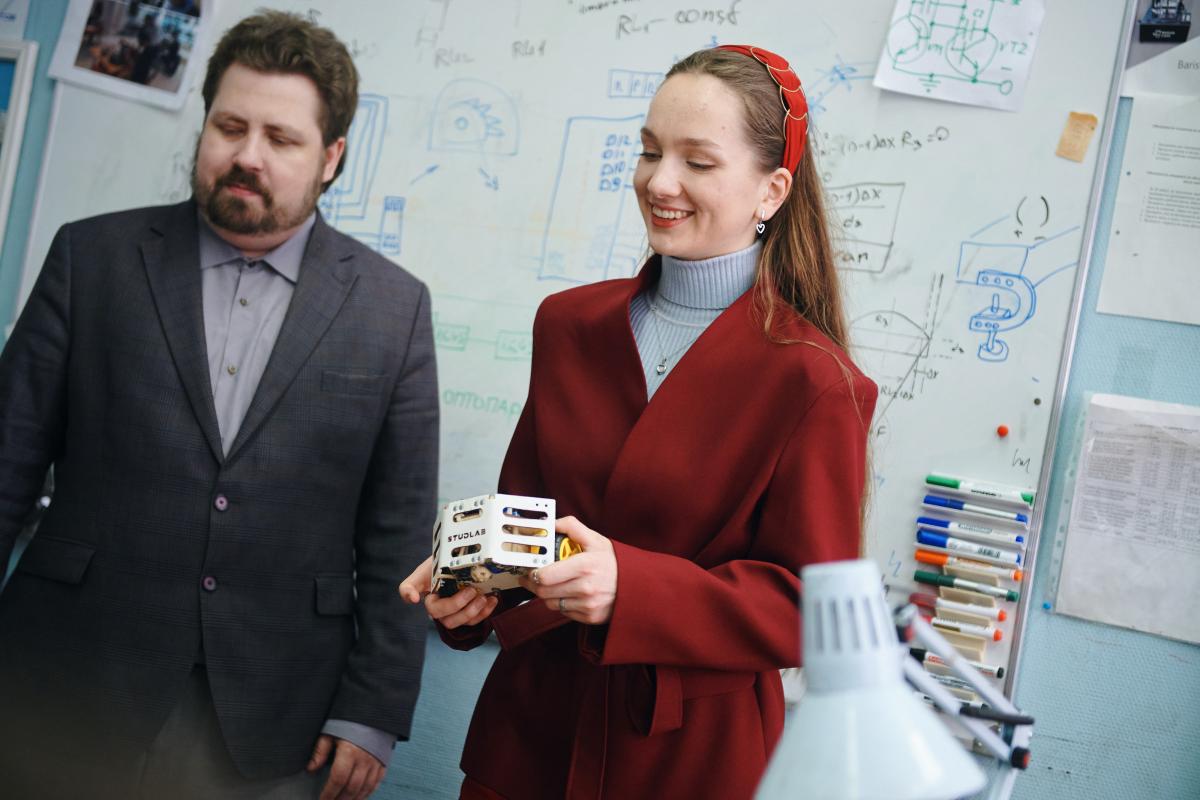
— What feelings does a person feel when receiving such a high reward?
— I think it's a moral satisfaction. Because a lot of effort has been invested. The gold medal at school, the sleepless nights, the nerves—it was all there. I try to follow the principle of my parents: if you take on something, do it well. So far, I think it could be better and I'm trying to refine it.
Despite her heavy academic workload and perfectionism, Alexandra is attracted to people and active recreation. The girl has an interesting group of like-minded people, besides studying, she likes to spend time with her classmates playing billiards, skiing, skating and cycling. The meeting place changes every time, and Alexandra herself most often becomes the initiator of adventures, it is she who knows how to infect an idea and bring everyone together. For her, creating a reason for joy is as natural as solving a complex engineering problem.
— I'm a natural organizer. I like to organize the leisure time of my friends and family for various outings, or do interesting activities at home, develop quests, quizzes, and presentations for family holidays. I like to create a festive atmosphere.
When it comes to unfulfilled desires or meetings with interesting people, most people think of politicians, actors and writers. Alexandra, even fantasizing, remains true to her profession. When asked who she would like to talk to from the past, the girl, without thinking about the characters of films or books, calls the name of the woman who stood at the origins of the digital age.:
— I would like to talk to Ada Lovelace, the first programmer. In the 19th century, she saw in calculating machines the prospect of being not just a tool for calculations, but something more, and came up with algorithms. It would be interesting to know her opinion about modern programming and artificial intelligence, because she became the starting point for the IT industry.
Alexandra is sure that the secret of her success lies not only in family traditions or innate perseverance, but also in the right attitude towards the profession itself. Answering a question about advice for future students, she emphasizes that a modern engineer is not just a person with a diploma, but an eternal student, ready for endless development.
— I think this is a willingness to constantly develop independently, because the Faculty of Information Technology and Robotics differs from others in that our field is constantly changing, something new is constantly emerging, and you need to be ready to study even after graduation. Learning never stops, not for a second, and you need to be ready to study the documentation yourself, be nervous that something is not working, and constantly improve.
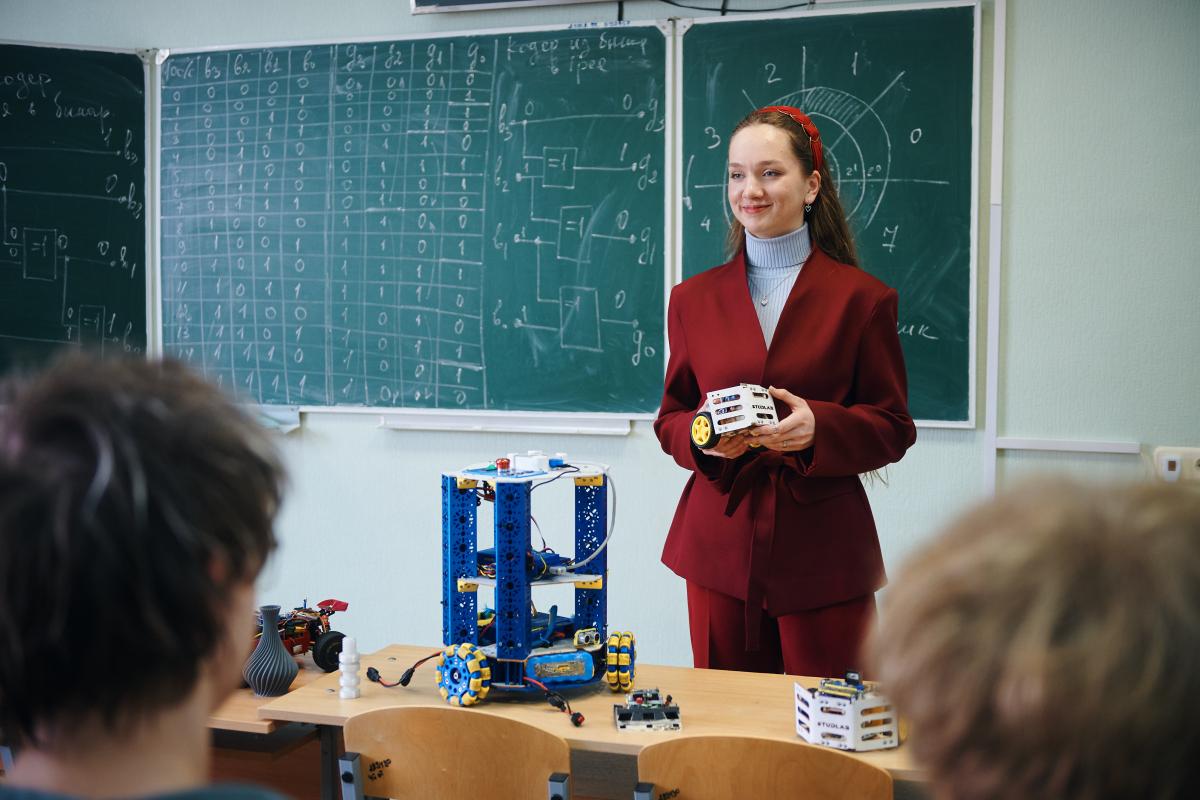
On the eve of March 8, I especially want to talk about those who change stereotypes. BNTU has always been famous for its engineering staff, but today it is becoming more and more obvious that the future of Belarusian science and technology is created not only by young men. Alexander surprisingly combines engineering precision and warmth, seriousness and a desire to create an atmosphere around himself. And there are more and more such girls in BNTU every year. This means that the Year of the Belarusian Woman at the Engineering University opens up truly inspiring names.
