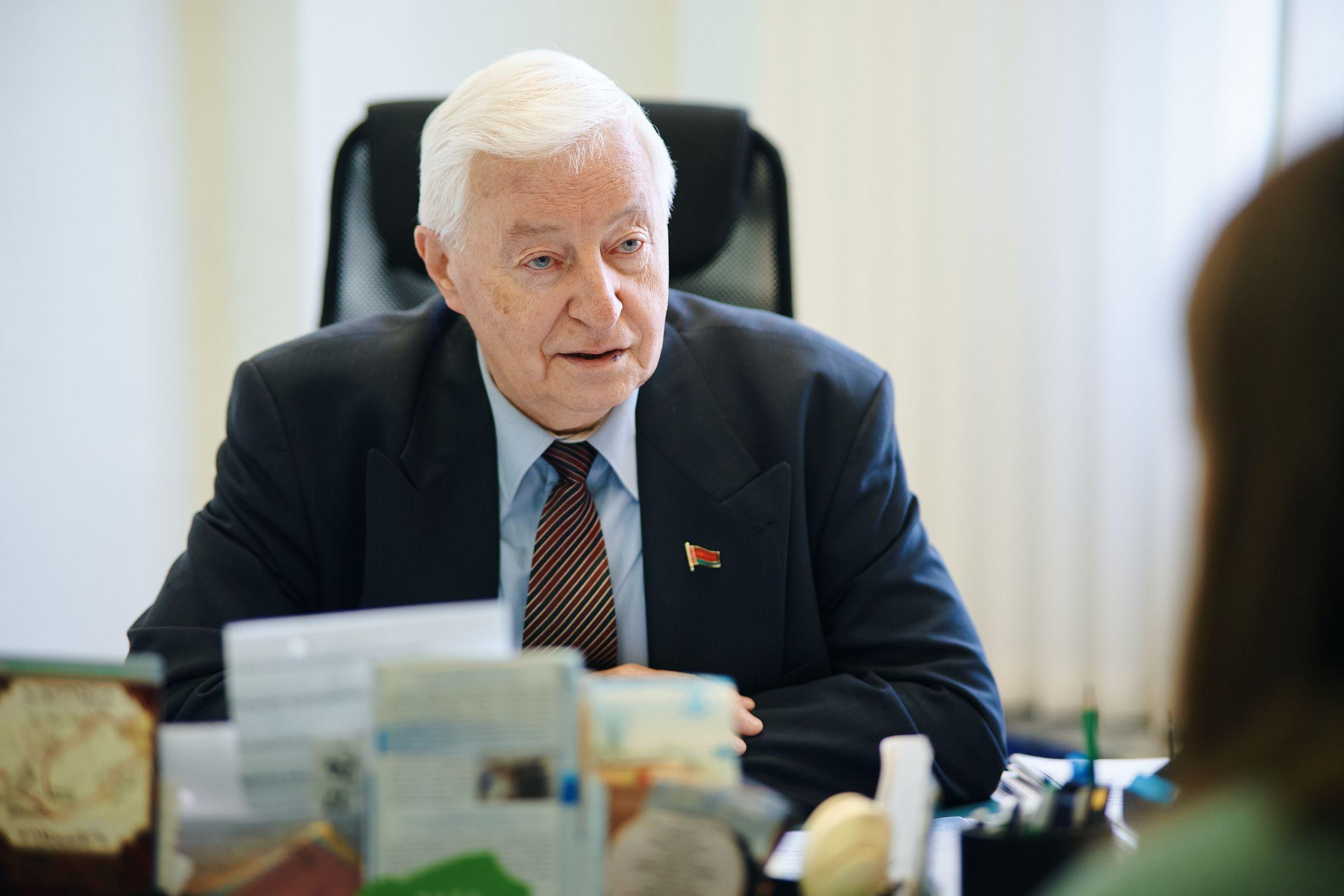
Today, on April 26, the head of the Department of Mechanical Engineering Technology, corresponding member of the National Academy of Sciences of Belarus, Doctor of Technical Sciences, Professor Valery Sheleg celebrates his anniversary. The outstanding scientist turns 80 years old, most of which are devoted to science and the Belarusian National Technical University. Valery Konstantinovich told how a gymnastics coach brought him to BPI, why Belarus became the world leader in the production of heat pipes and what accidents determined his fate.
The event that led Valery Sheleg to engineering took place in 1964. Then he was engaged in gymnastics, and one day the coach brought him to the territory of the BPI to meet with a friend, who advised him to go to the mashfak.
— In '64, I had no idea where to choose, what, or how, but I had a very good coach, as they say, like a father. It so happened that one day we entered the territory of the BPI with him. I remember now that we were walking along the asphalt near the sixth building to the main building. He meets his friend, who, as I understand it, coached the national gymnastics team of the BPI. My coach says, "Listen, I brought you a guy. Where should he go?", in response: "Yes, let him go to mashfak." There is nothing accidental that would not become natural. And this accident led to the fact that I had just graduated from the Department of Mechanical Engineering Technology. And then I didn't even think that I would return here as head of the department.
The first job turned out to be a serious school of life for Valery Konstantinovich. The future professor got into the special design bureau of the Minsk Plant of Automatic Lines, where they designed aggregate machines for the whole country.
— I was afraid of drawing, I didn't really understand it at school and university. Suddenly, I was assigned as a designer to the special design bureau of the Minsk Plant of Automatic Lines. It was a powerful design bureau, employing more than two thousand people. In this place, the first automatic lines for processing components and parts for the then-Lada car were made throughout the Soviet Union, so I went through a very good school. It helped me a lot in the future.
After working for three years, the designer decided to go into science. The director tried to persuade him to stay and head the Komsomol committee of the plant, but the young engineer had already chosen his path.
— In 1969, I joined the Minsk plant of automatic lines. He worked for three years and quit. Before I left, I headed the Board of Young Scientists at the plant, and it was a serious organization at that time. When I quit, the director called me and said, "Valery, I'm asking you to head the Komsomol committee of the Minsk Plant of automatic Lines on the rights of the district committee." I say: "You know, I've already decided to go into science." That's how I ended up at the Institute of Powder Metallurgy.
His older brother brought him to the Institute of Powder Metallurgy. At the entrance of the Udarnik plant, where the institute rented one floor, they met Peter Vityaz, corresponding member of the National Academy of Sciences of Belarus, Doctor of Technical Sciences, Professor, Honored Scientist of the BSSR, who at that time was deputy director of the Institute. He recognized Valery Sheleg's brother, asked why they were standing here and said: "Let him come with me." Since then, Valery Konstantinovich and Peter Alexandrovich have been colleagues for more than fifty years.
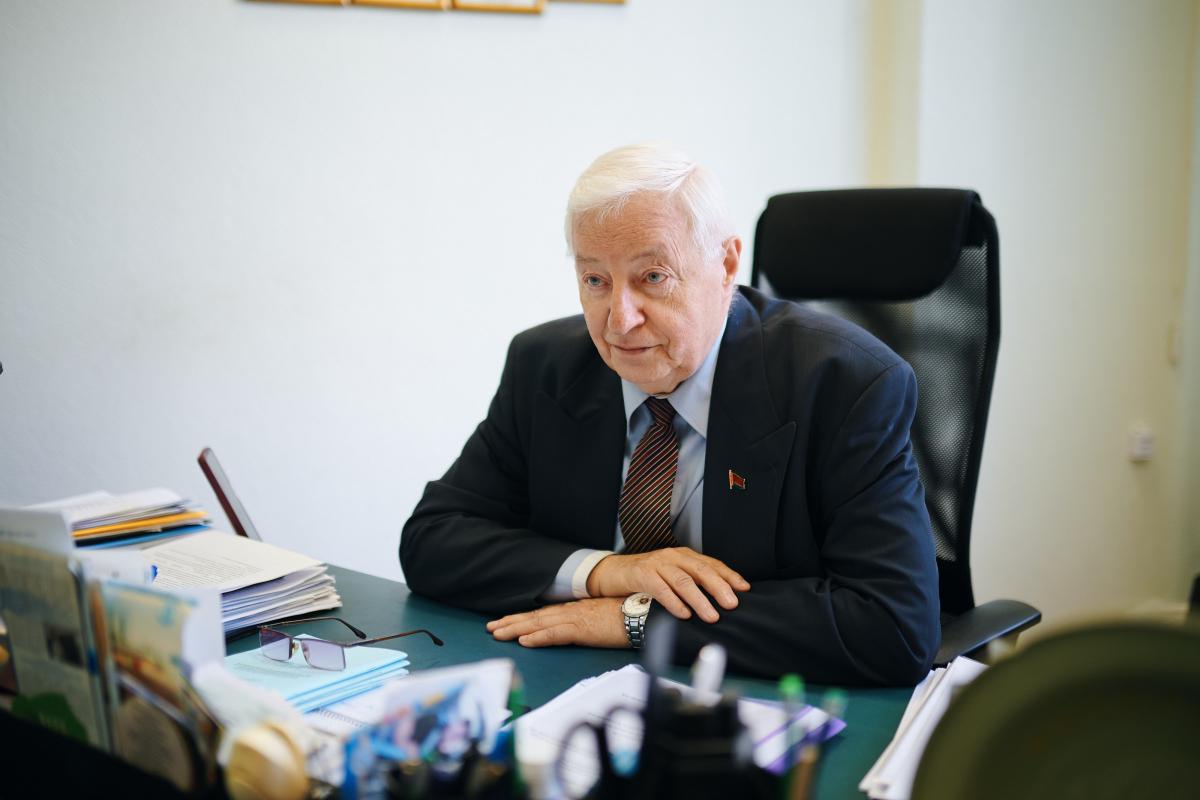
The professor names Peter Vityaz and Oleg Roman, director of the Institute of Powder Metallurgy, as his main teachers in science. Moreover, Peter Alexandrovich, according to Valery Shelega, has a rare gift for looking far ahead.
— In the life of everyone who wants to get involved with science, it is important to meet a good teacher. It is very important that you are not abandoned with the words: "Go study there yourself." Pyotr Alexandrovich looked far ahead. He said, "We will deal with porous powder material." It wasn't clear to me what it was or why. But my completed studies at the Faculty of Mechanics and this department gave me a very good outlook, the main thing was to use this data correctly. Thanks to this outlook, in two or three months I was, as they say, a specialist in this field.
Valery Konstantinovich considers the creation of mass production of heat pipes with a capillary-porous structure to be his greatest scientific success. As the professor noted, if it had not been for the collapse of the Soviet Union, this development would almost certainly have been awarded the Lenin Prize.
— For the first time in the Soviet Union, we organized mass production of heat pipes and heat sinks based on them with a capillary-porous powder structure made of copper powder for cooling power semiconductor devices with a current of 200 to 2000 amperes. These are very serious products. They are made only in Japan, the USA, Germany and Belarus. That's why I regret the collapse of the Soviet Union. Why? If it hadn't broken up, we would definitely have received the Lenin Prize for this development.
Valery Konstantinovich was appointed chief technologist for this product, and today the workshop at the Molodechno Powder Metallurgy Plant is operating automatically. The professor admits that he is proud of his doctoral thesis — after almost 40 years, she continues to work in real production.
Since 2005, Valery Konstantinovich has been working as the head of the department, during which time he has trained six doctors and ten candidates of sciences. All of his students have found practical applications for their developments, and he is not ashamed of any of them. For example, one of his doctoral students solved a problem that Belarus had been afraid to touch for more than thirty years: he created a production of his own carbide tools, and when China stopped supplying powder, he developed a unique technology for processing hard alloy back into powder.
— How do you see BNTU in 10-15 years? And what role will your department play in this future?
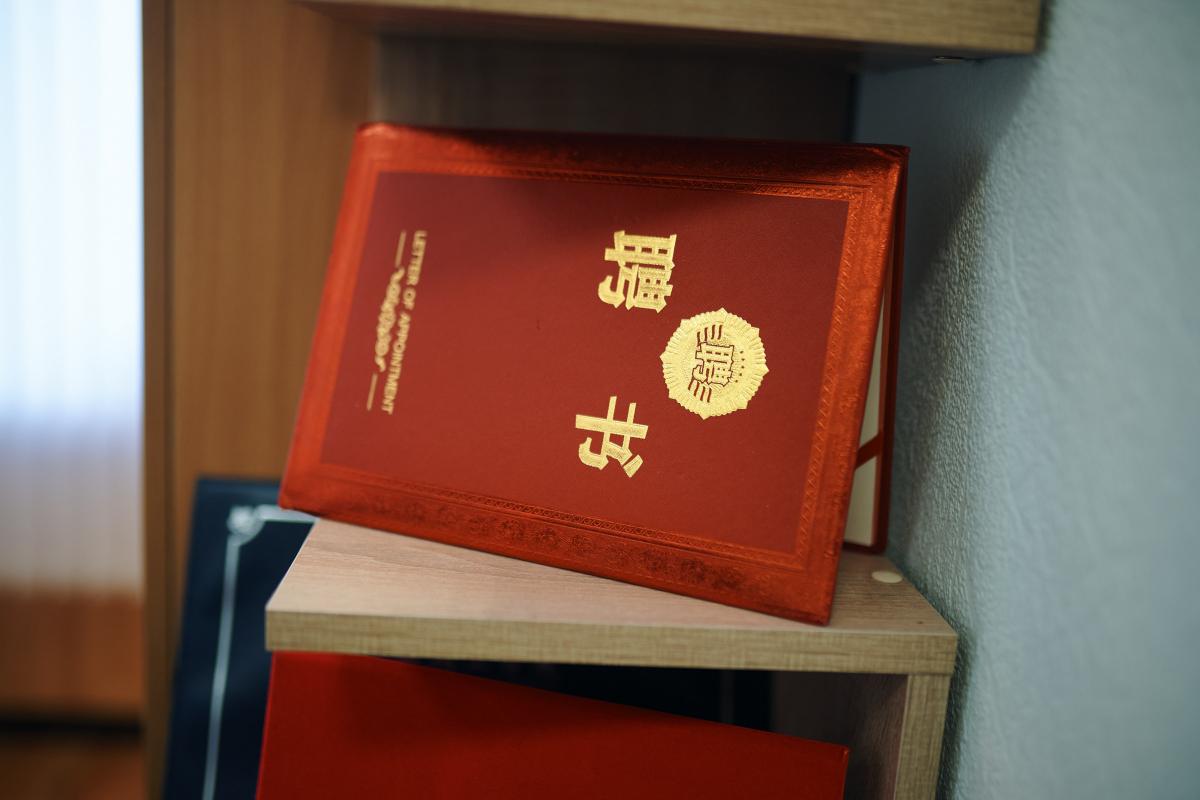
— Mechanical engineering technology is an eternal classic. As long as there is metalworking, man, it will always be. Numerically controlled machines are artificial intelligence, but the program is being developed by a manufacturing engineer. We have a specialty "automation of technological processes and productions". Chinese students choose it. We were the first to create an educational project called "4+0" with Zhejiang University, and the training is conducted in English. We have already released the first 62 people that year. Our teachers go there for a month, read the material, and then the Chinese teachers take tests and exams. I believe that such projects are the future.
According to Valery Shelega, the head of the department should have three qualities. The first and most important thing is to be a patriot of your country and love it. If this is not the case, the professor shared, then there is nothing to do in this position. The second is to respect and love students. He recalled that a student is constitutionally the same citizen as a teacher, and considers any rudeness or rudeness towards them unacceptable. He set a strict rule at his department: if someone allows himself to humiliate a student, he will no longer work here. The third quality is high professionalism in his specialty and scientific field.
Valery Konstantinovich also addressed those who are just starting their career in engineering.
— If you come to study, study. It is possible to gain knowledge, but by applying a desire to it. If you want to achieve something, you need to try, graduation does not guarantee anything.
Valery Konstantinovich admitted that of all the awards and titles he really values those that he got back in Soviet times — for his hard work in production.
— At the age of 55, I received the Honored Scientist of the Republic of Belarus. In 1978, he became a laureate of the Lenin Komsomol Prize of Belarus ‑ then it was also a fashionable trend. Then in 1987 — the State Prize of the BSSR. And in the same year – the prize of the Council of Ministers of the USSR. Then I was presented with a Certificate of Honor from the Council of Ministers of the Republic of Belarus. This is also a recognition of my achievements in the field of science and practice, and the training of highly qualified personnel. The government and the scientific community have recognized my achievements.
Valery Konstantinovich Sheleg is a scientist, teacher and mentor. He has hundreds of scientific papers, dozens of trained specialists and technologies that still work at factories. But the main thing that distinguishes the hero of the day is a combination of firmness, honesty and warmth. He is not afraid to tell the truth, worries about the youth and continues to come to the department every day to bring knowledge to the students. Congratulations to Valery Konstantinovich on his 80th birthday and wish him to reach more and more heights in his professional and scientific activities!
