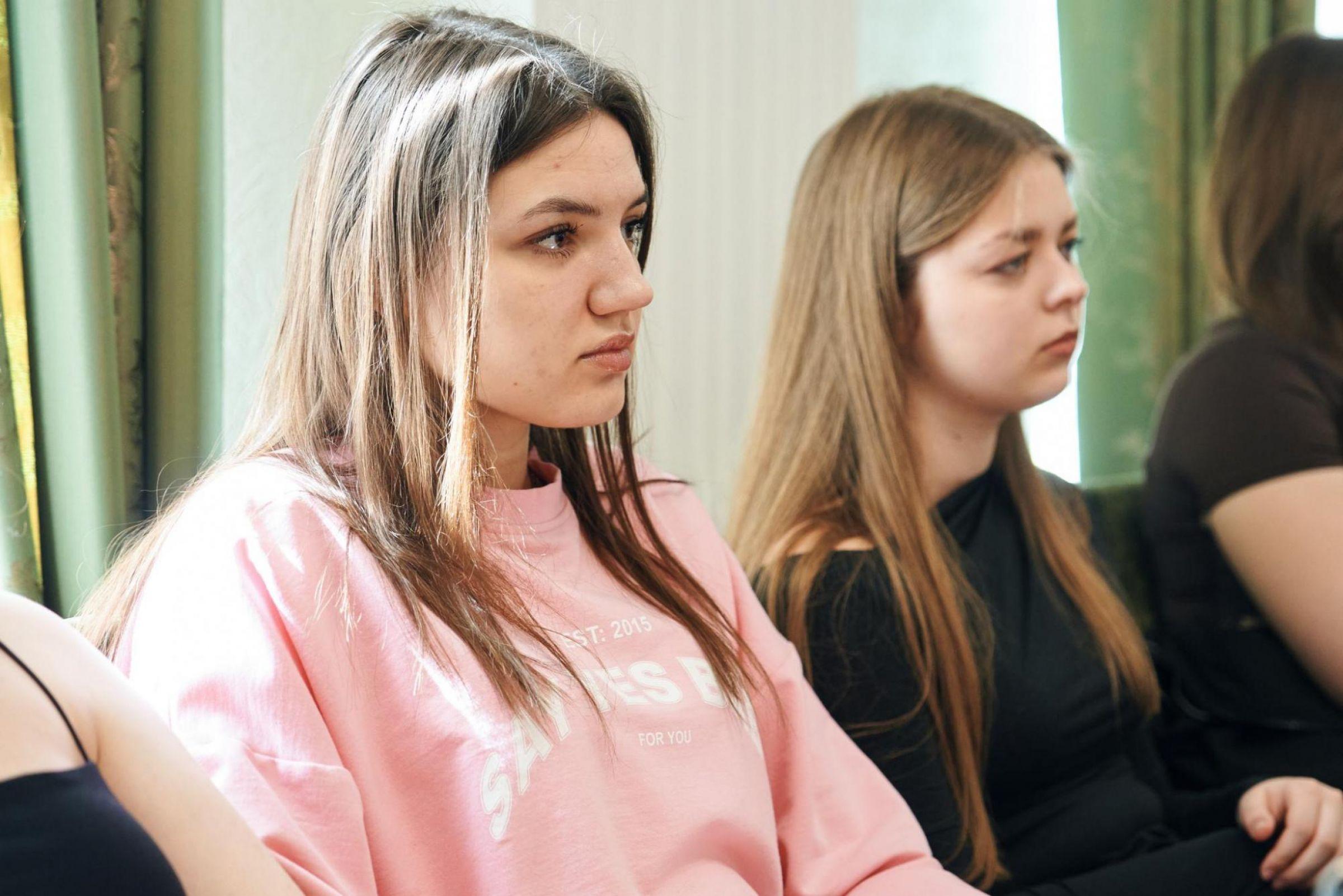
Today, April 3, a dialogue platform on girls' reproductive health was held at the Belarusian National Technical University, organized by the primary organization of the Belarusian Union of Women at BNTU.
Tamara Kapora, a research fellow at the Obstetric and Gynecological Pathology Laboratory and an obstetrician-gynecologist at the Mother and Child Scientific and Practical Center, addressed the audience as an invited expert. Irina Good, Head of the Center for Ideological Work and Youth Affairs, and Oksana Smolskaya, Head of the Department for Ideological and Educational Work at the Center for Ideological Work and Youth Affairs, also participated in the discussion.
During her lecture, Tamara Kapora explored in detail topics that are often overlooked but are critically important for every student. The discussion began with the prevention of sexually transmitted infections (STIs). The doctor emphasized that many diseases are completely asymptomatic, and the only way to detect a problem early is through regular screening.
– Health is not simply the absence of illness, but a complex resource that must be protected now, – Tamara Kapora emphasized.
The girls were particularly interested in the section on the impact of weight on the body. Using graphs, the speaker demonstrated the direct link between body mass index (BMI) and the chances of becoming a mother in the future. The figures speak for themselves: in overweight women, the risk of infertility almost doubles.
The participants also touched on the topic of family planning. Tamara Cheslavovna explained in detail how modern contraceptive methods work and the Pearl Index, which allows one to assess their reliability. She also reminded the participants that preparing for conscious parenting involves not only medical checkups but also giving up bad habits. The final section of discussion focused on the capabilities of Belarusian medicine. Today, married couples in the Republic of Belarus can count on two free IVF attempts, significantly expanding their options for starting a family.
At the end of the meeting, the young women received expert answers to their pressing questions. This format of interaction helps BNTU youth receive reliable, first-hand information and take a more responsible approach to their own future.
