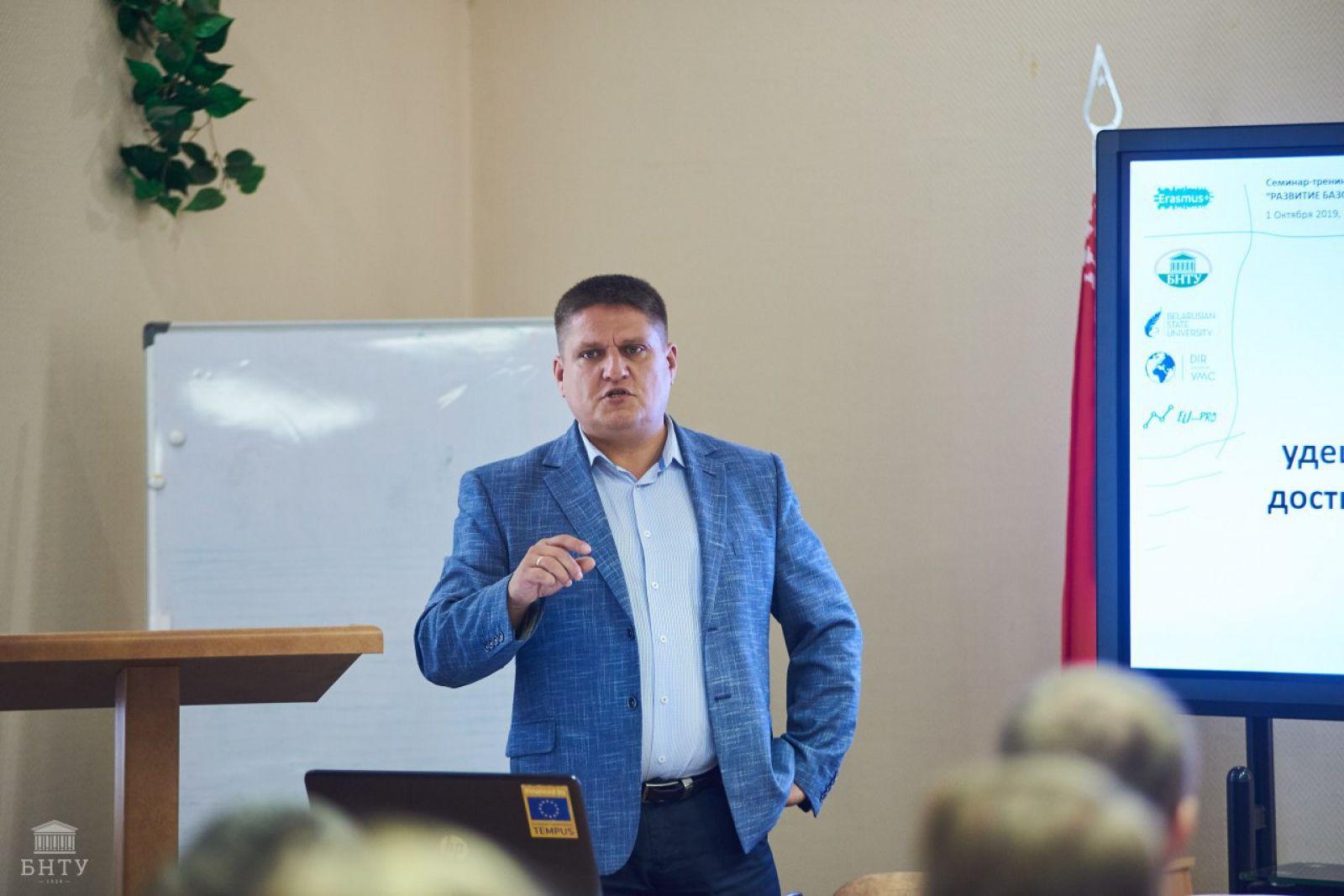
Following the rector’s request, our university moves towards an active strategy in the field of the implementation of international programmes and projects, which suggests an independent development and coordination of projects based on the priorities and goals of BNTU. The example of implementation of such policy is the project “FABLAB”. BNTU is responsible for the emergence of the idea, preparation of an application, budget’s development, formation of the project’s consortium from several foreign universities and the establishment of a fast prototyping laboratory in the university.
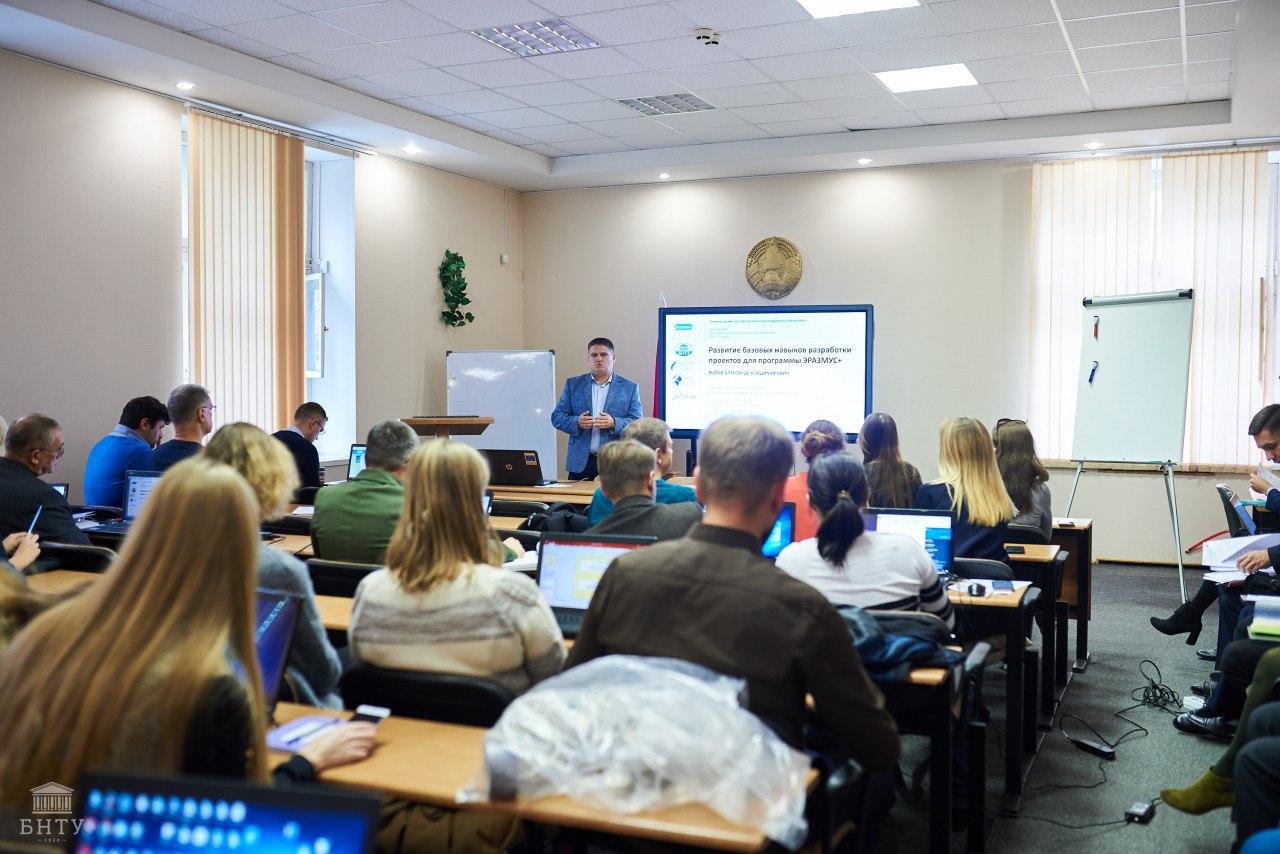
In the context of the above-mentioned strategy, a training seminar was held at our university on October 1st. The workshop was intended to foster BNTU involvement in various international projects and particularly in the Erasmus+ Programme thanks to which FabLab functions.
To date, the European Union is a key “donor” to the projects in all sorts of university live spheres, while Erasmus+ is one of the main international programmes towards which universities should be oriented. Exactly Erasmus+ maintains the modernization and capacity building in the sphere of higher education.
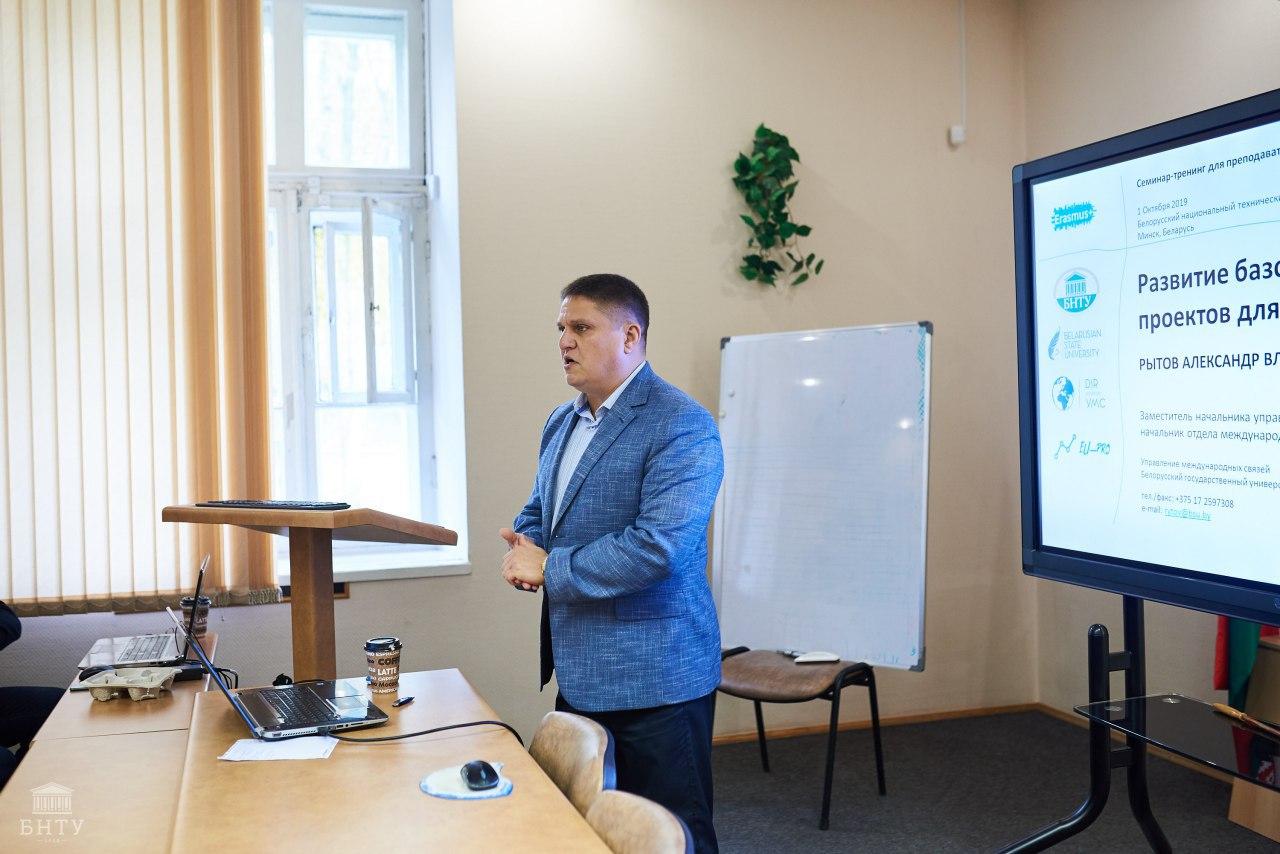
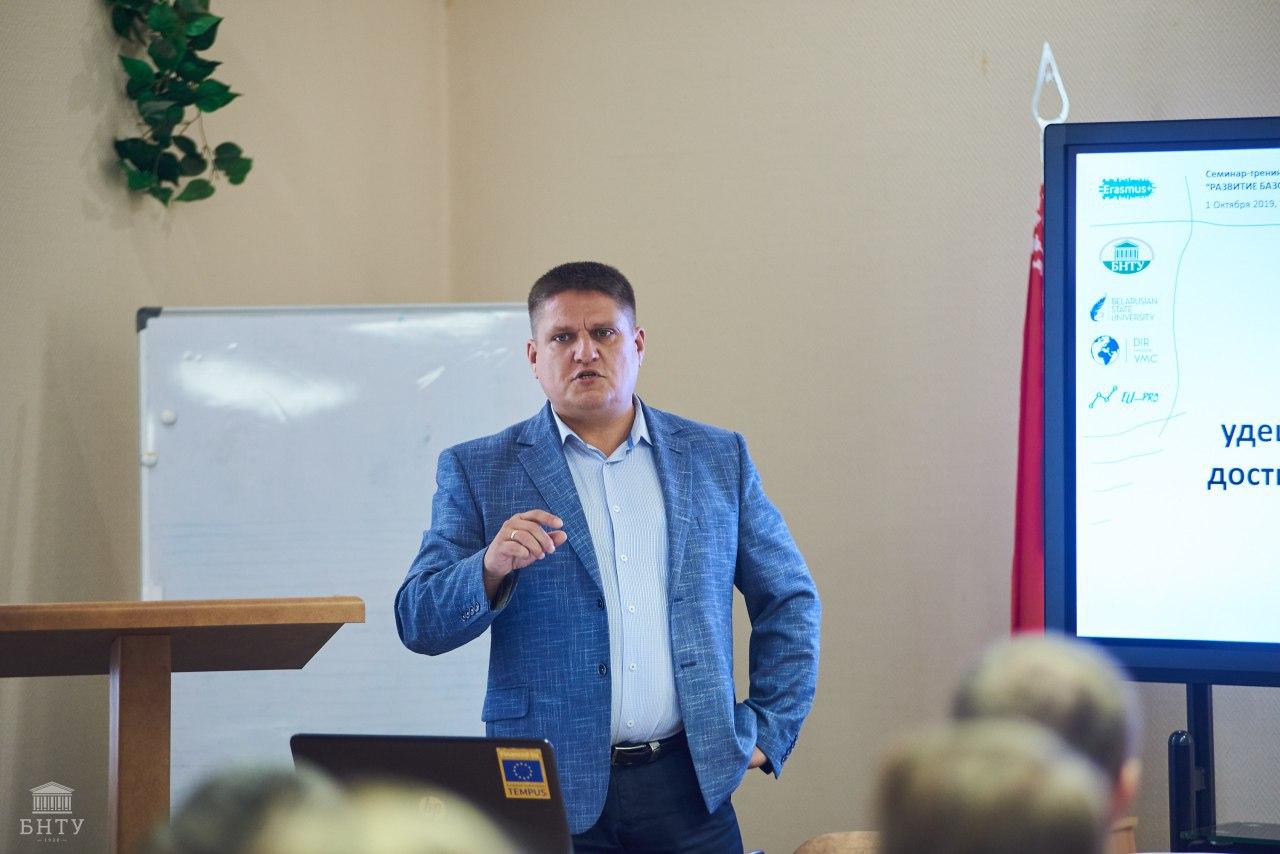
The training seminar was organized my BNTU Media Center, and Rytov Alexander Vladimirovich, deputy chief of BSU International Department, a chairman of International Programmes and Projects Department, served as it’s moderator.
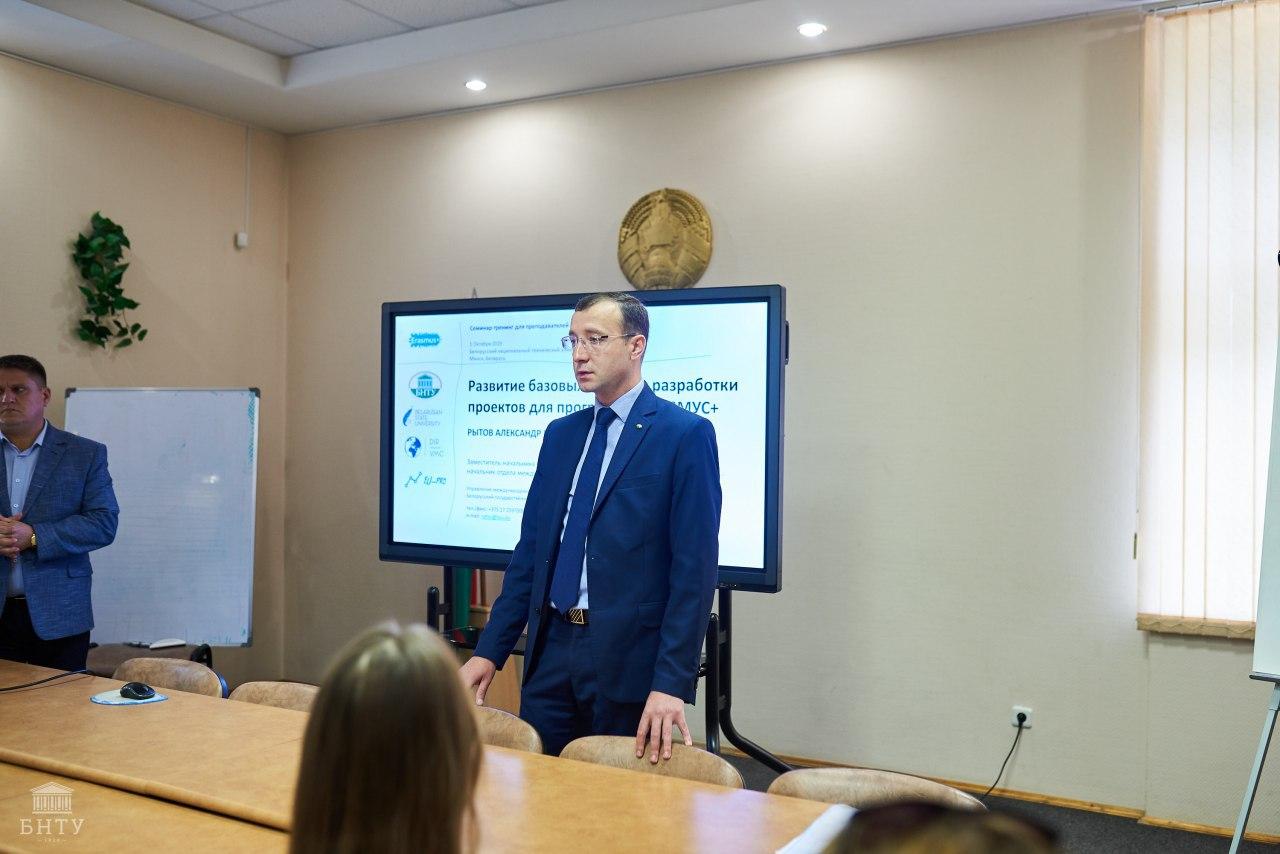
A welcome statement was made by Vice-Rector for Academic Activity in BNTU Yuri A. Nikalaichyk.
“Our crucial objective today is to comprehend the possibilities provided by the European Union so that to develop ideas for the project and implement it step by step. The development of at least one project from each of BNTU faculties is one of many tasks that the rector aims to fulfil. And now one of the best experts on international programmes in the Republic of Belarus will shed light on the right way to reach the goal. I’d like you not to be shy and ask questions if they occur, start a discussion in the form of a dialogue.”
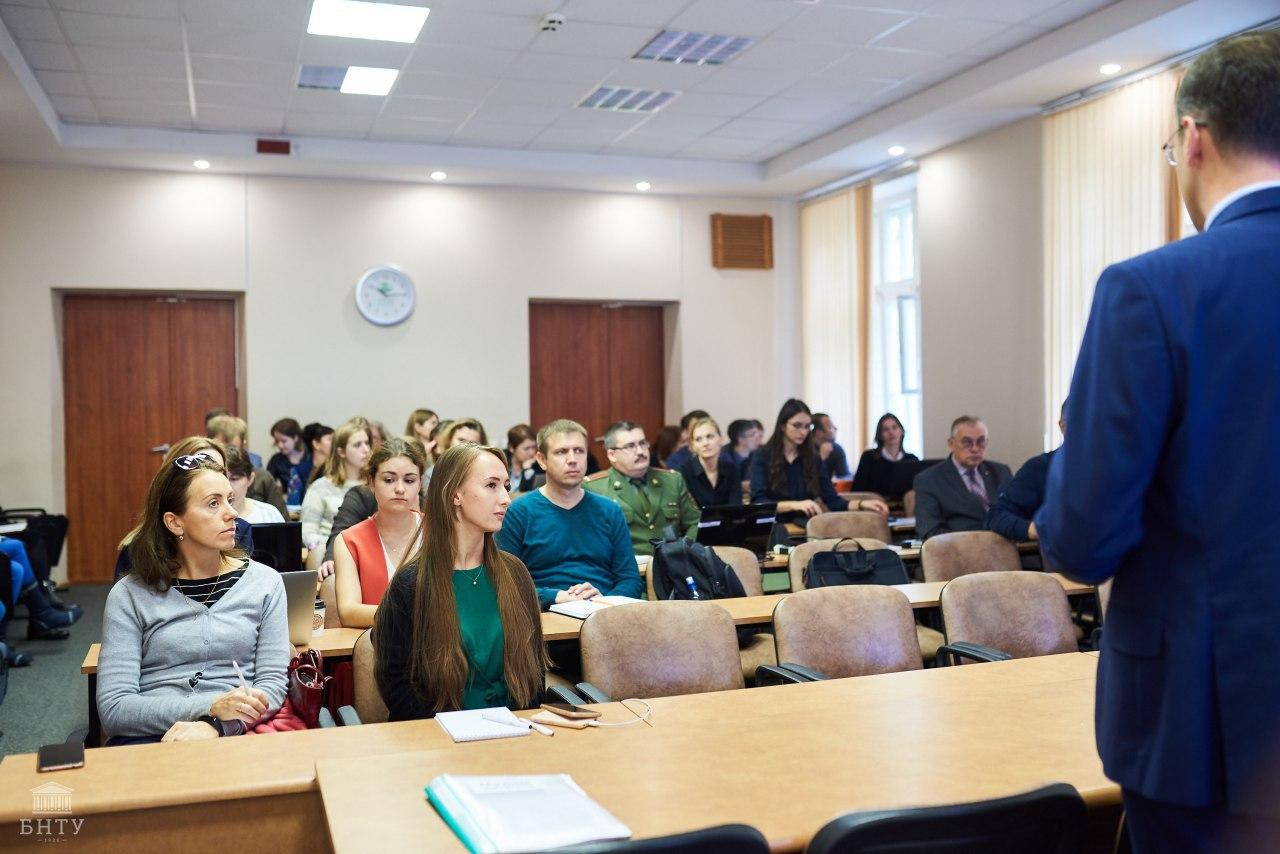
At the seminar a few details were noted: everything you need to develop a successful project is an explicit plan, a team and basic knowledge of project development. During the theoretical part of the seminar a few points were discussed:
The main information about the theoretical session of the seminar is shared specially for readers times.bntu.by readers.
_page-0002.jpg)
_page-0003.jpg)
_page-0004.jpg)
_page-0005.jpg)
_page-0007.jpg)
_page-0008.jpg)
_page-0010.jpg)
_page-0011.jpg)
_page-0012.jpg)
During the second practice session the participants of the training seminar divided into 6 groups and got round to determining the goals and tasks of their projects, having chosen one of the following fields: Business & administration, Physical Sciences, ICT, Engineering & engineering trade, Manufacturing and processing, Architecture & construction. The participants were doing that by drawing up a “problem tree” and a “solution tree” and budget calculation for their project using the Microsoft Excel program.
_page-0016.jpg)
_page-0020.jpg)
_page-0024.jpg)
Particular attention was paid to creating an effective system of interaction between BNTU faculties and the International Cooperation Department, to well-defined division of responsibilities, focusing on recognition and organization of project implementation.
"It is feasible to develop a project, although the task is undoubtedly complicated. It requires appropriate skills, incentive system, interaction between faculties and the international department. Obviously, professors have many responsibilities and little time to create their projects. The training is only the first step on their way", says Rytov Alexander Vladimirovich.
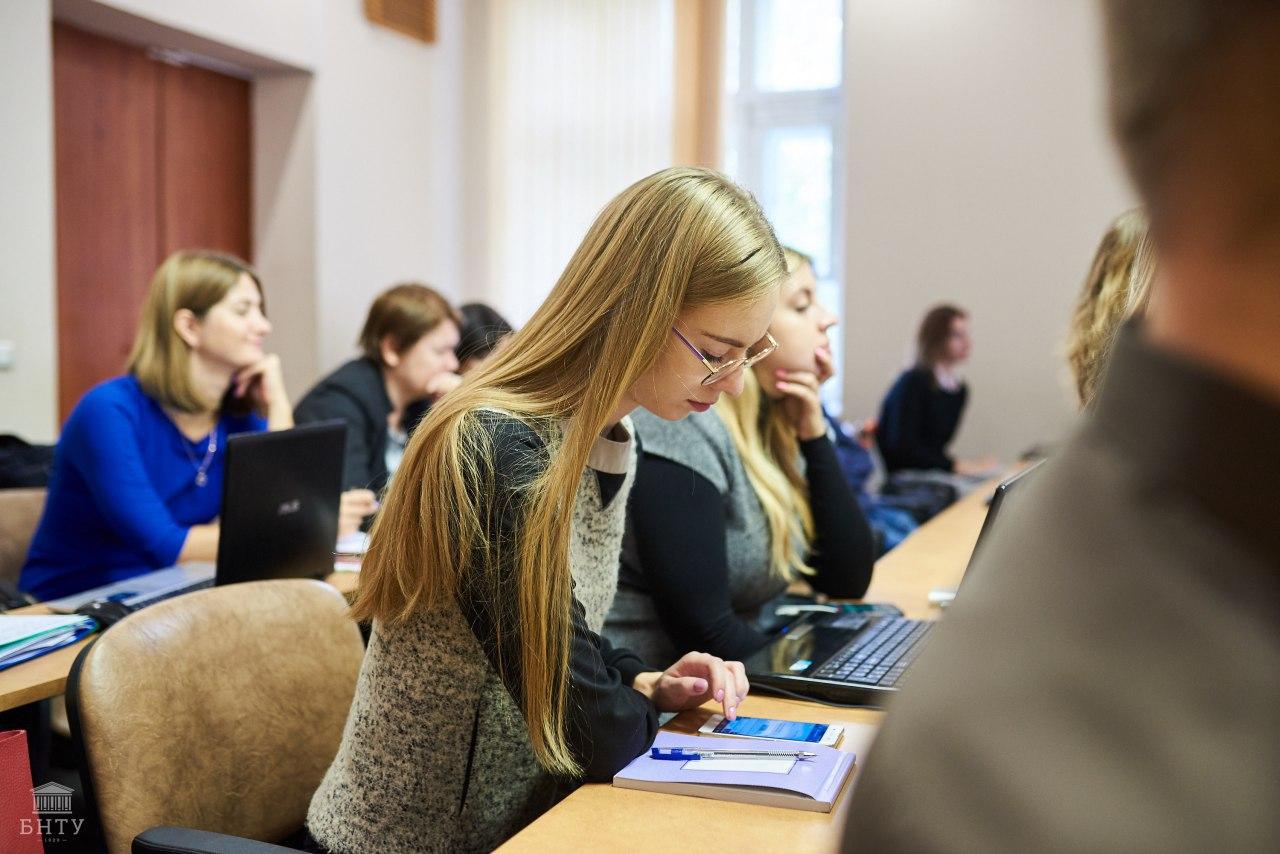
Nowadays students are highly efficient in advanced information technology, they have a good command of foreign languages. However, young people do not possess the necessary knowledge of regulatory documents, they are not proficient at the English “project language” and poor experience doesn’t allow students to conduct detailed budget calculations.
So where can students take the initiative? At some Belarusian universities travel agencies and legal centres were established. Students work there as managers and provide free of charge consulting. Thus, students acquire practical skills while studying at university.
At the end of the training, Media Center suggested applying to the 6th Erasmus+ programme competition with a project on the topic of “Digital University and Online Education”. If you have the necessary competencies and motivation to cooperate feel free to contact us.
Send all your questions and suggestions to gmyrak@bntu.by.
As an example, we offer you a video project made by the Media Center for the competition at the EXPO2020 exhibition. The event will be held in Dubai (UAE) next year.
Перевод: Мяделец Анастасия, студентка ФТУГ, 10806217
