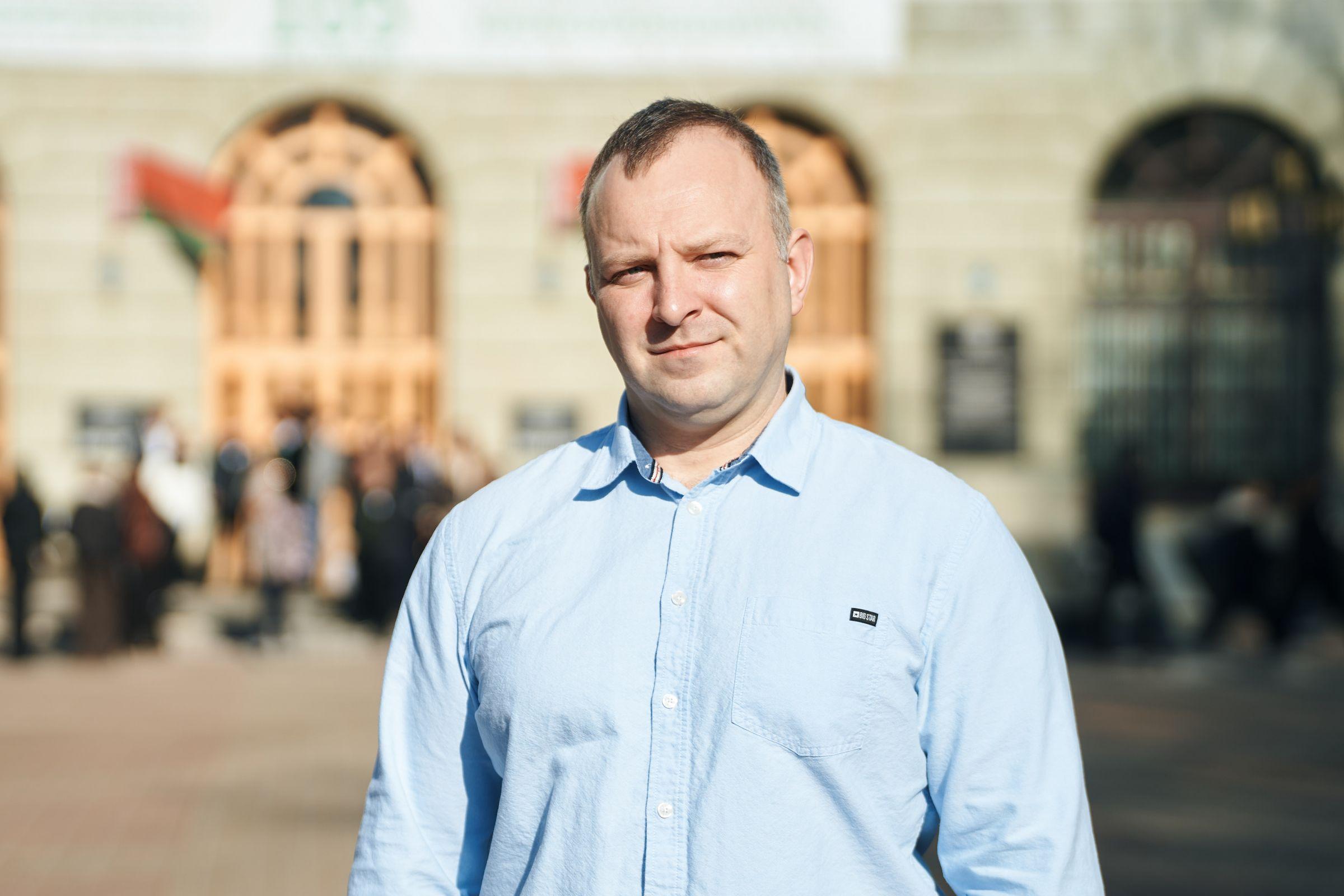
The staff of the Scientific Research Laboratory of Semiconductor Technology (NIL PT) of the BNTU branch "Scientific Research Polytechnic Institute" became the winner of the competition of the Belarusian Republican Foundation for Basic Research and the Russian Scientific Foundation "BRFFI–RNF — 2026". The project is dedicated to the creation of electroactive coatings for titanium implants. This can radically change the approach to treatment in traumatology, orthopedics and dentistry.
Modern medicine has a wide range of tools for replacing bone defects, but most of the existing solutions are based on passive prosthetics: the implant serves as a support, but nothing more. BNTU scientists, together with their colleagues from the Institute of Strength Physics and Materials Science of the Siberian Branch of the Russian Academy of Sciences (Tomsk), are tackling a different challenge: transforming the surface of the implant into a bioactive environment that can stimulate cellular activity and suppress the growth of pathogenic microflora.
As explained by Konstantin Panteleev, Head of the Research Laboratory of Semiconductor Technology and Associate Professor at the Department of Information and Measurement Technology and Technologies, the key to the solution lies in the electrical properties of materials.
— We propose to make the implant not just a mechanical support, but an active participant in the regeneration process. Our idea is to create "intelligent" coatings that generate weak electrical signals that mimic the natural bioelectric fields of bone tissue. This allows us to influence osteoblast cells at the molecular level, accelerating and improving the fusion of the implant with the bone, — said Konstantin Vladimirovich.
In addition to stimulating osteoinduction, the coating performs another important function — antibacterial protection. The electric field on the surface reduces the risk of postoperative infections without the use of antibiotics. Taken together, this increases the service life of the implant and reduces the likelihood of repeated surgeries.
Behind any large-scale scientific research, there is not only an idea, but also a team of professionals capable of implementing it. In the case of the project to create "intelligent" coatings for implants, we are talking about a team with unique competencies.
— This project is being implemented at the Research Laboratory of Semiconductor Technology at BNTU, and as the head of the laboratory, I am responsible for coordinating research and fulfilling our objectives. The scientific director of the project, Anatoly Zharin, is the chief researcher at the laboratory. His scientific work in the field of probe electrometry began over 50 years ago, and throughout this time, the laboratory team has consistently developed methods for non-contact monitoring of the electrophysical parameters of surfaces. Today, we have a team of highly skilled professionals, including electronic engineers, physicists, and programmers.
The main difference between the approach of researchers from BNTU and IFPM SB RAS from the work of foreign colleagues is the rejection of the "trial and error" method. World practice, as a rule, looks like this: a coating is synthesized, an implantation is performed, and the result is evaluated after a few months. This is a long and expensive path that does not provide an understanding of the fundamental mechanisms.
BNTU scientists offer a tool that allows you to look into the nature of processes even at the stage of material design. The method is based on measuring the electron output and electrostatic potential using a digital electrometric probe of our own design.
— We can not just measure the integral charge, but also build a map of its distribution over the surface with high resolution. The thickness of the analyzed layer is comparable to the interatomic distance, which allows us to refer to our methods as nanotechnology. Unlike the classic Kelvin probe, our digital electrometric probes allow us to work with dielectric materials, such as ceramics and polymers, which are also used for biocompatible coatings. No other scientific group in the world has such a systematic approach that combines precision electrometry with the directed synthesis of bio-coatings.
The project combines the competencies of two scientific schools: the Belarusian and the Russian. The Belarusian side is responsible for diagnostics and metrology: the development of physical and mathematical models for the formation of a measuring signal, the creation of digital probes and software for potential mapping. In this work, the BNTU scientists are assisted by colleagues from the State Scientific and Production Enterprise “Optics, Optoelectronics and Laser Engineering”, who produce model materials based on porous anodic aluminum oxide for the verification of the methods.
The Tomsk partners from the Institute of Physical and Mathematical Sciences of the Siberian Branch of the Russian Academy of Sciences and Tomsk Polytechnic University, in turn, have world-class competencies in the synthesis of biocompatible coatings. Using micro-arc oxidation, they form calcium phosphate and piezoelectric coatings on titanium scaffolds produced by laser 3D printing, and conduct a full biological assessment of the materials.
— Without their expertise, our devices would be just beautiful physical toys. Without our methods, their coatings would be empirically selected compositions. Only by working together can we create a product with global novelty, — emphasized Konstantin Vladimirovich.
The project is scheduled for three years. At the first stage (2026), mathematical models, measurement techniques, and software for the digital probe will be developed, and the first laboratory samples of coatings will be obtained. In 2027, it is planned to create a prototype of the measurement setup and conduct systematic studies on the distribution of the electron work function, as well as launch biological tests. The final stage (2028) involves establishing patterns between the electrophysical characteristics and biological properties of the coatings, as well as conducting laboratory tests.
The results of the joint research have already been taken into consideration by the National Medical Research Center for Traumatology and Orthopedics named after Academician G. A. Ilizarov. For the scientific team, this is an important signal of the demand for the development.
— Our role at BNTU is to develop methods and means of measurement, to interpret electrophysical data, and to explain how the electrical properties of a surface are related to its structure and composition. However, the direct implementation in medical practice, biological testing, and work with clinicians is the task of our Tomsk colleagues, and they are doing an excellent job, — concluded the head of the laboratory.
The victory in the BRFFI-RNF – 2026 competition allowed our scientists to move from pilot experiments to a systematic, planned study. The funding will make it possible to create a unique measuring setup for mapping the work function of the electron and the electrostatic potential — a full-fledged tool for solving specific problems of modern biomaterial science.
Congratulations to the representatives of the Research Laboratory of Semiconductor Technology on winning the competition and we wish you further professional achievements!
