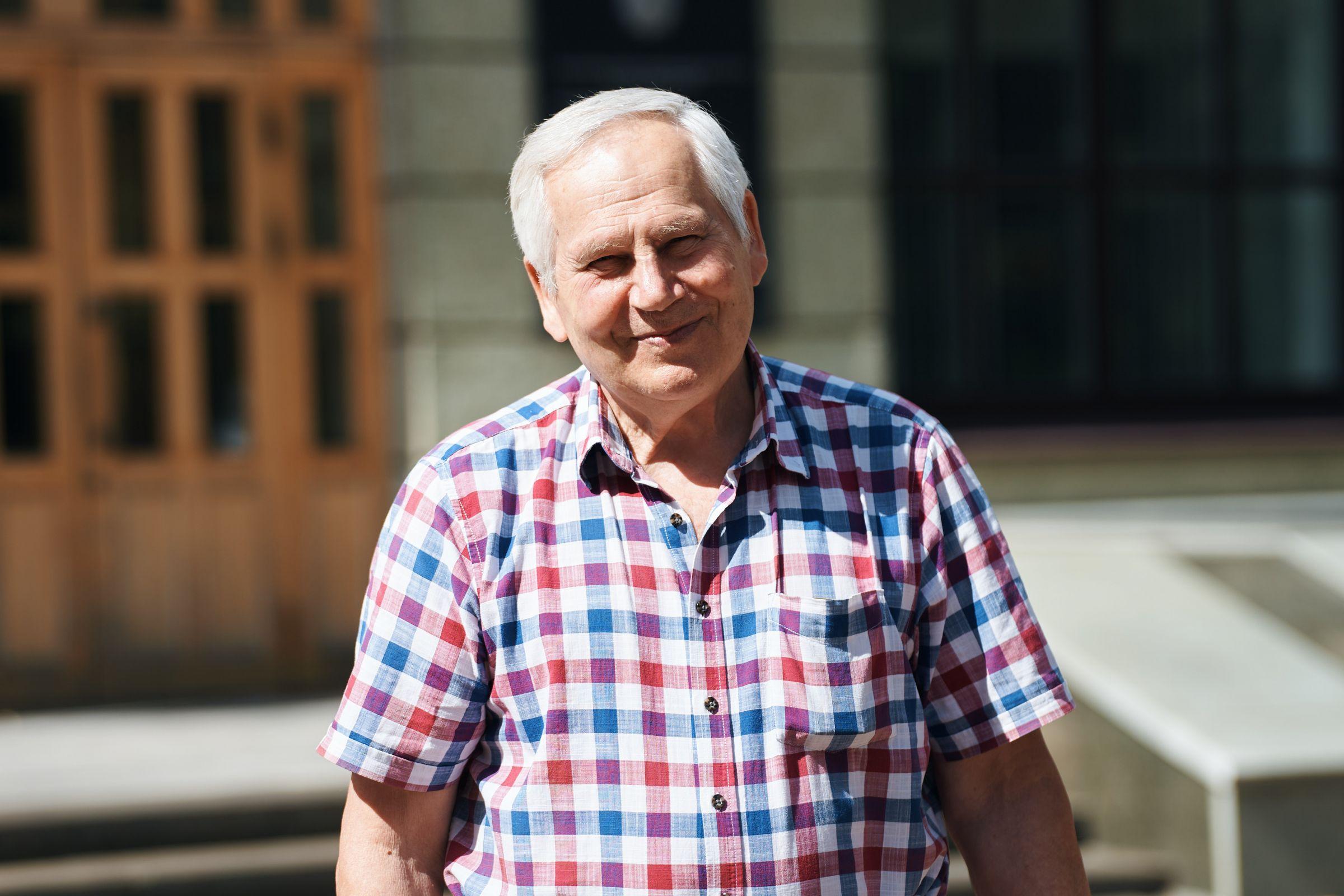
Eight decades is a significant milestone, backed by tremendous life experience, serious scientific discoveries and thousands of trained specialists. The name of Professor Igor Kachanov, Head of the Department of Hydraulic Engineering and Energy Construction, Water Transport and Hydraulics, is inextricably linked with the development of engineering and the formation of new unique directions in Russian education. His biography is a vivid example of how inexhaustible energy and sincere dedication to his work help achieve serious results.
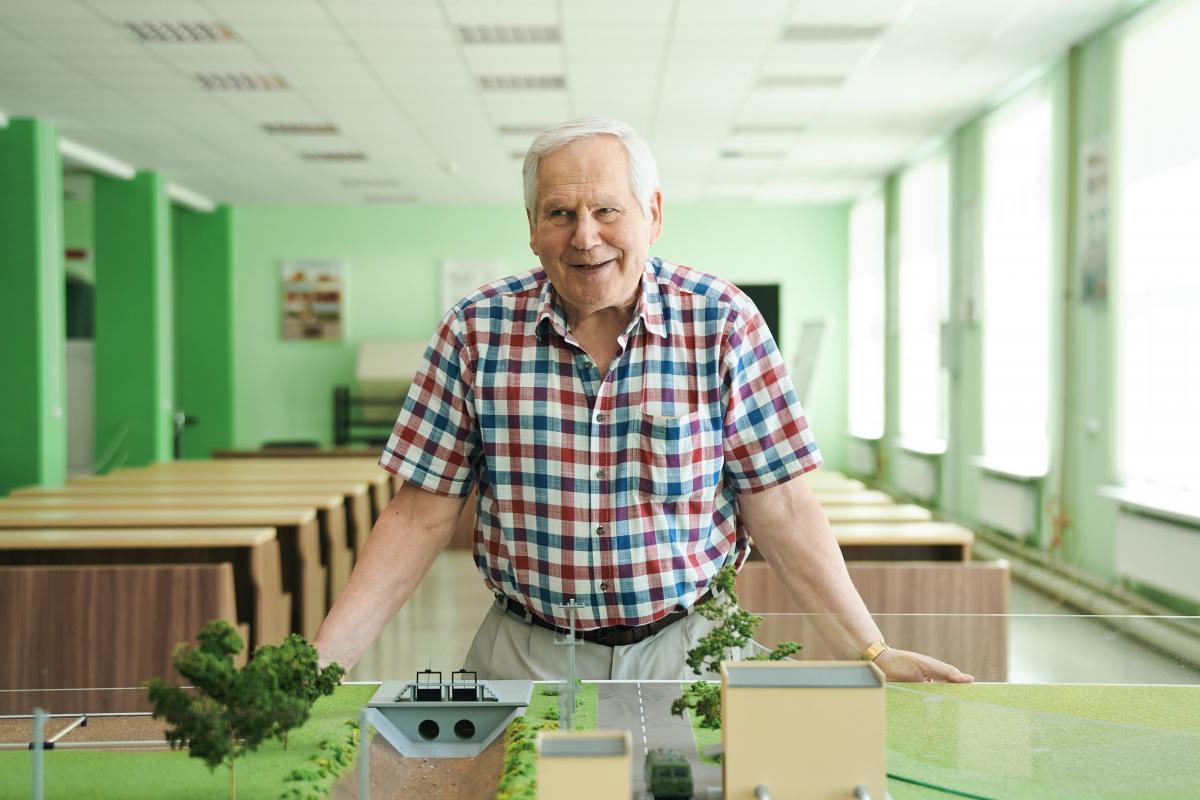
Surprisingly, there is only one organization listed in the famous scientist's workbook – the Belarusian National Technical University. However, as the professor himself admits, his fate could have been completely different if not for one strict commission.
– How did you end up at the Polytechnic and why did you decide to connect your life with this direction?
– My acquaintance with the university began back in 1964, when I enrolled here. Although there were many options at that time. I was seriously involved in sports, I was the champion of the BSSR athletics in javelin throwing. I was actively invited to enroll in the Grodno Medical Institute, but I myself dreamed of the Navy. On the recommendation of the Lida Military Enlistment Office, I prepared the documents for the A. S. Popov Higher Naval School of Radio Electronics (editor's note - now the A. S. Popov Naval Institute of Radio Electronics). I passed the medical examination in my native Lida without any problems, but I cut myself off at the regional hospital in Grodno by pure chance. There was a chair for checking the vestibular apparatus. I was spun up, stopped abruptly, and then, at the command of the chairman of the commission, I had to march up to him. However, I was swayed and pulled to the right on this leg of the journey. Then the chairman looked at my dossier – gold TRP badges, medals – and said: "It's clear. Are free. There's something wrong with your vestibular system. If I let you through, I'll have to answer later." It was my first fateful intersection: the red light came on where I was so eager to go. But I stepped over that setback. Soon I came to Minsk for the next republican competitions, won them, and the coaches offered me to enroll in the BPI. The competition in that 1964 year was serious – six people per place, as the graduations of the 10th and 11th grades coincided. However, I scored 22 out of a possible 25 points, and I was enrolled as a student at the Faculty of Mechanics and Technology of the BPI.
After graduating from the Faculty of Mechanics and Technology, the young specialist was assigned to the Department of Hydraulics (now the Department of Hydraulic Engineering and Energy Construction, Water Transport and Hydraulics), where he eventually worked his way up from assistant to professor. Despite this, in the early 2000s, the youthful dream of the navy still caught up with the scientist.
– How did it happen that after years you still returned to the marine theme?
– In the early 2000s, there was an acute shortage of personnel in the field of water transport in the republic. Belarus is rich in rivers: the Western Dvina, the Dnieper, the Sozh, the Pripyat, the Neman. There are 10 port cities in our republic, there were about a thousand ships on the balance sheet, and there were not enough specialized specialists. Then an appeal came from the relevant ministry to the BPI, and the first vice-rector Igor Filonov called me and said: "Let's start solving this state task." I was surprised.: "But which way am I? I am far from this sphere." To which he replied: "Do you know the Law of Archimedes? Of all the universities, you're the closest to this problem, so we need to get started." I immediately realized that I didn't want to be a figurehead. Therefore, as a professor and Doctor of Sciences, I sat down at my desk again and entered the St. Petersburg State Maritime Technical University at the Faculty of Shipbuilding. He graduated with honors, and the knowledge gained allowed us to open a whole new direction at BNTU. Today, our graduates successfully manage the country's specialized enterprises.
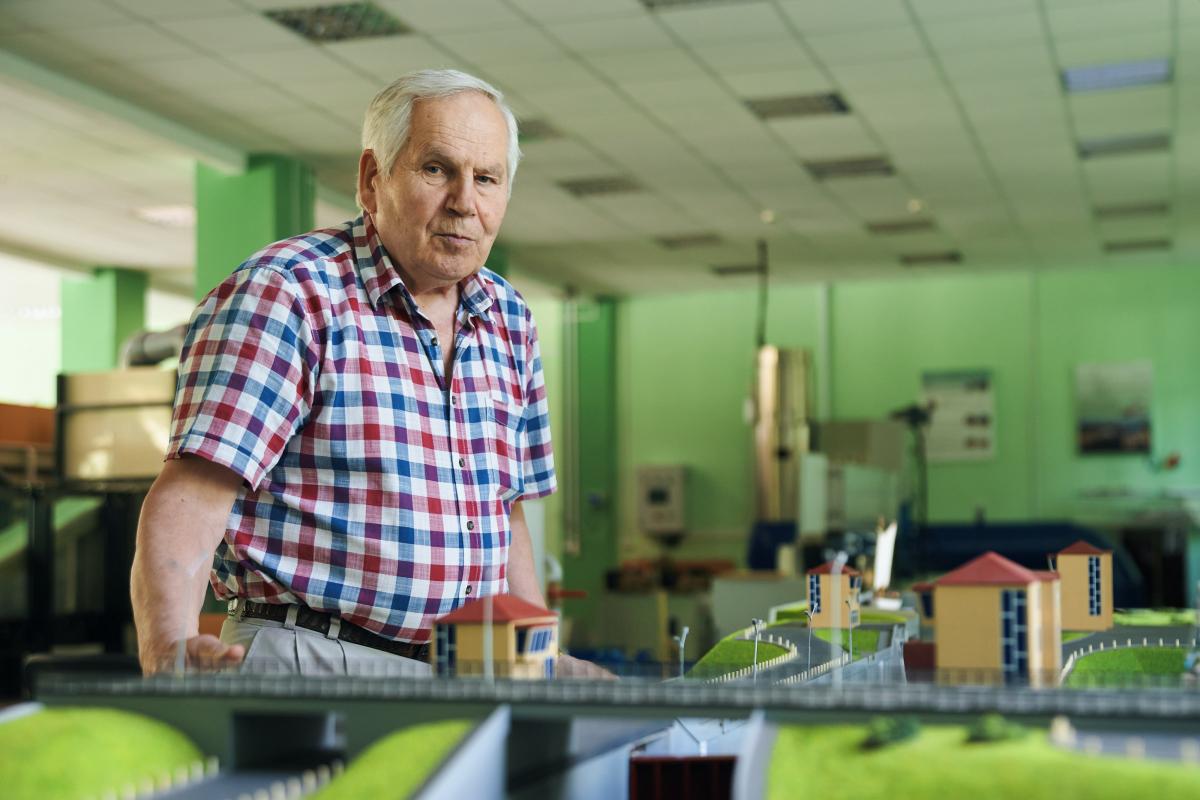
The professor's scientific interests have always been characterized by a purely practical orientation. The scientist is responsible for the management of 12 state scientific research programs, the results of which are being successfully implemented in industry.
– We have obtained very interesting results by studying the hydrodynamics of flows. It turns out that paired vortices form on all turning sections of pipes – from the kitchen faucet to rocket fuel systems. It's like two hedgehogs locked in a turn with a death grip and blocking the movement of the water. Understanding these mechanics, my graduate student is currently developing an upgraded water jet propulsion system that will increase the speed of ships on our shallow rivers. We have discovered another unique effect in the field of laser cutting. It turned out that if metal sheets are cleaned from corrosion with a jet of water with the addition of 5% bentonite clay, the speed of subsequent laser cutting increases by 10%. The secret is simple: after drying, the clay leaves a microfilm on the metal. Once in it, the laser's light stream does not dissipate, but passes through it "like a knife into butter," which greatly enhances its cutting ability, Igor Kachanov shared his successes.
Under the leadership of Igor Vladimirovich, 5 candidates of technical sciences, 30 masters defended their dissertations, and 35 students became laureates and winners of international and national scientific competitions. Admitting that it was the students who were his special pride, the professor revealed his main secret.:
– To stay afloat, you need to be on the same wavelength as the students. If a teacher gets stuck in his past and thinks he's cool just because of the shoulder straps, they won't listen to him. Young people split up shallow people instantly, and then you can't lure them with any gingerbread. I never read from yellowed notes in lectures. You give us a theory, and then you immediately tell us how it works in practice and what effects we discovered ourselves. And the guys' eyes light up! After that, they come to science on their own. You need to lead by example.: As they say, get up and attack first, and they'll see if they can follow you.
Based on his vast life and professional experience, Igor Vladimirovich gave honest and wise parting words to the first-year students who are just starting their engineering career at BNTU.:
– If I say that the carpets will be laid out in front of you right away, it will be disingenuous. BNTU is a good, serious institution. You should appreciate your chance here and save your time. But most importantly, never be afraid to ask questions! If something remains unclear at the lecture, put a question mark in the margins of your notes, and then approach the teacher and find out. Don't leave an untilled field of doubt behind. Otherwise, this virgin land will become overgrown so that you will simply give up and you will no longer be able to lift it. Clarify everything on time, boldly explore this space of knowledge, and then you will definitely reach the high level you are striving for!
Celebrating his anniversary with colleagues and grateful students, Igor Kachanov is still full of energy and ambitious plans. His experience has proven that even if a red light turns on on the way to a dream, this is just an excuse to find a new, even more ambitious road. And today, looking at the successes of his department and graduates, the path of the professor remains one of the main and most inspiring examples for new generations of polytechnic students!
