
Belarusian universities are interested in investments (primarily in the material and technical base), private business - in qualified specialists. According to businessmen and universities, mutual cooperation will work for both. But, unfortunately, things are not progressing as smoothly as we would like. Let's see what the problem is and how to solve it.
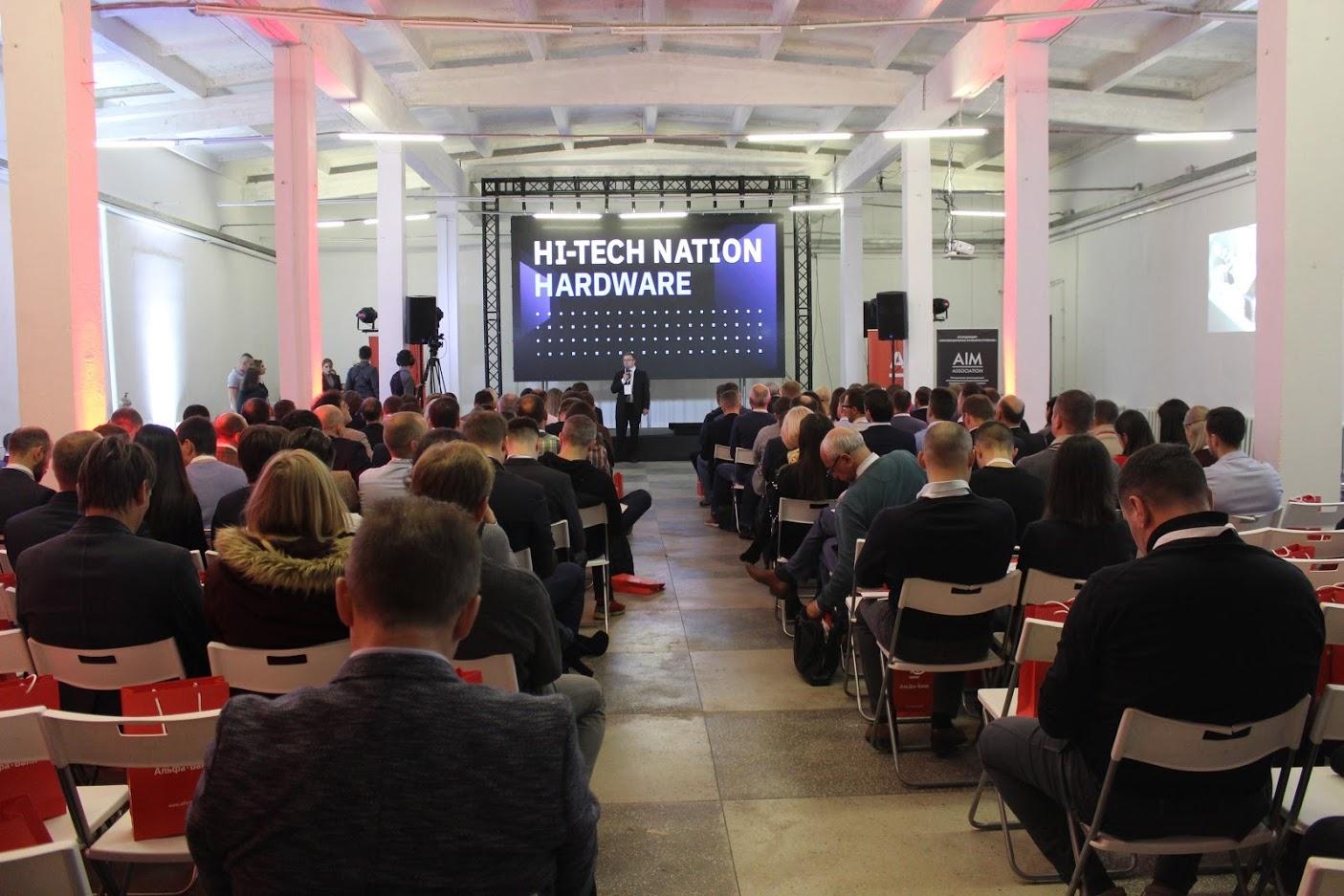
In summer, we shot several video interviews with successful BNTU alumni for our YouTube channel. One of the heroines of the interview was Lyudmila Antonovkaya, founder and managing director of the international holding Polimaster. It was she who invited us to visit the Hardware Congress, an annual event in the framework of the HI-TECH NATION orum for the interaction of founders, top managers and leading experts in the hardware field. The organizers of the event are “Pro Business” and the Association “Innovative Instrument Making”.
There we talked with representatives of large innovative production companies and found out what their plans for investment in education are and why the plans are not yet being implemented. Then we asked the vice-rector for academic activity of BNTU Yuri Alexandrovich Nikolaychik to comment on the statements of businessmen about cooperation.
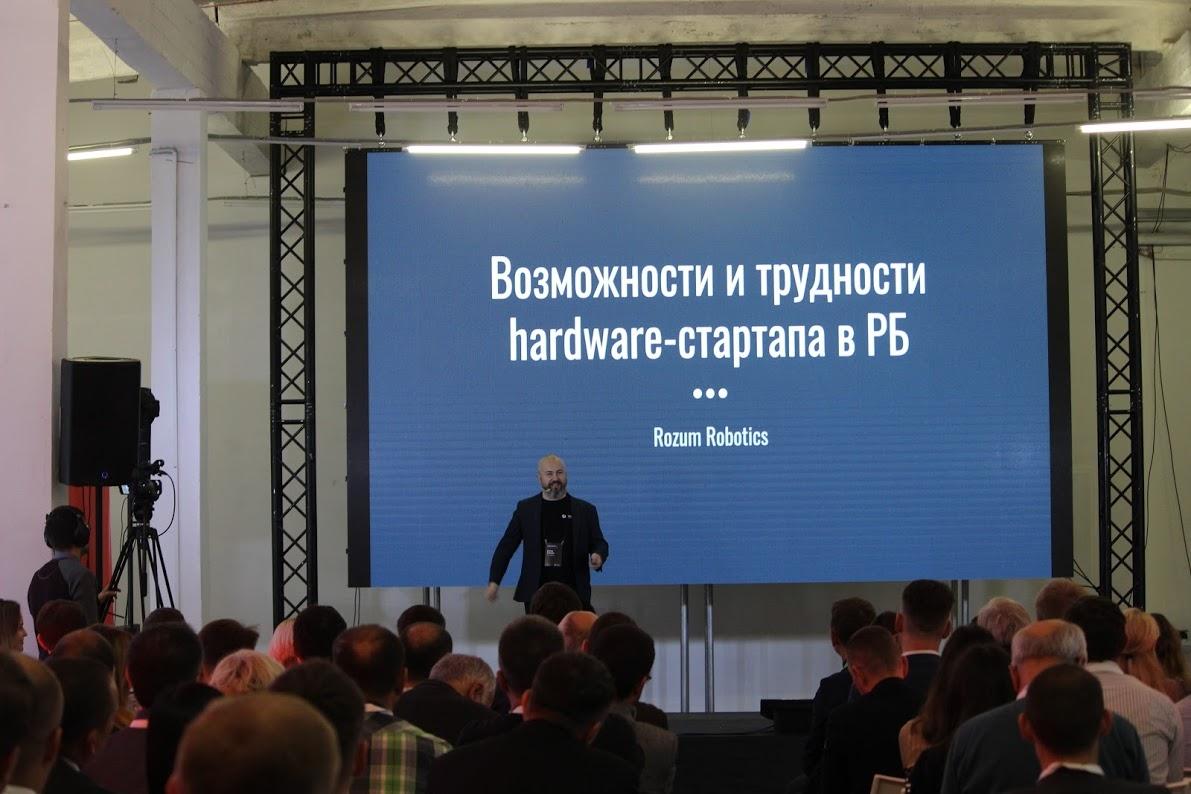
We talked with Victor Khamenok — CEO of Rozum Robotics since 2017. He led the BelPrime IT company for 10 years. Rozum Robotics is the only company in Belarus that develops and creates collaborative robots without attracting external investment. To open and develop a project in the field of robotics it is necessary to invest at least a million dollars.
— Do you cooperate with Information technologies and robotics faculty??
— Yes, we are already working. This year, university students have been practicing. Four people passed, three were offered to work in our company. They are working with robots.
— Does business need to influence education?
— The goal of the business is to make money. But I believe that the contribution of business to education is not a social mission or humanitarian aid, it is an investment. And these investments will certainly return to the business thanks to graduates who will later work in the company. Therefore, this is a must-have relationship.
— How does the hardware feel compared to software, and how to attract new people to the industry?
— The hardware isn't lagging behind, it is IT specialists have pulled forward a bit. But today the hardware is in a better situation than IT was at the beginning of this century, so the potential of the hardware is good. Engineers who are engaged in hardware are people with the same brains who go to IT. Therefore, I am sure that concepts such as hardware and software will align.
Regarding youth involvement: there is no need to do anything on purpose. I started programming in the fifth grade when my parents gave me a Spectrum computer for the New Year and they did not promise me that I would be a high-paying programmer because in the early 90s they were not there. I was not paid for every line of code I wrote with sweets or anything else. I did this because it is cool and interesting for me. I believe that students just need to show how cool it is - to create cool things with their own hands.
— Who should bring this to youth: business or university?
— I do not really believe that someone owes anything to anyone. I think that this should come from someone who benefits from it and who wants to do it. The desire should go from motivation. And the motivation should be both in education and in business. Only with a total effort, everything can work out.
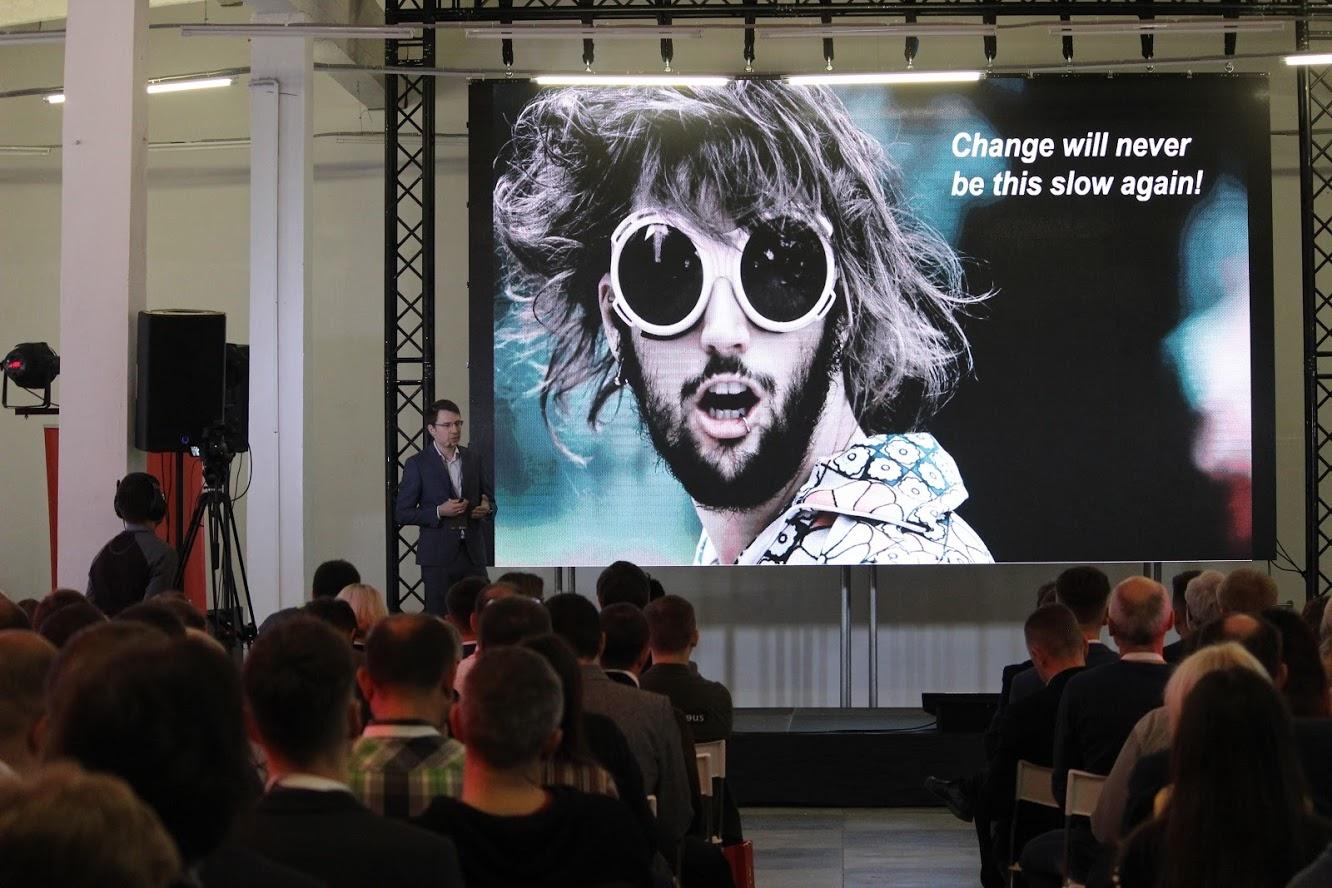
The next interlocutor was Vitaly Damasevich - a member of the board of directors of Arrow Electronics Poland. He graduated from the BNTU Instrumentation Engineering faculty in 2003.
Arrow Electronics is a global provider of products, services and solutions for electronics manufacturers, industrial consumers of electronic components and computer systems.
— You said that the main rule of business is to keep up with market changes. Why don't business and education pursue the market together?
— It seems to me that business and education communicate very poorly, the key point is communication. If education is open to working with large companies and can formulate requests from a technology point of view, we are ready to cooperate.
I had my own experience with BNTU when I came and said: “We provide you with everything, but the students must make a diploma with their own hands.” That is, a person must come to graduation from a university with a device, even the simplest one. Other students shouldn't get marks above four. The university answered that they cannot organize this process. Then this is the problem. It is easy to solve, and the business is ready.
— It turns out that university and business can not agree?
— It turns out so. I do not know the whole problem, but the lack of both sides' initiative is evident.
— What is the solution to this problem?
— Previously, we sponsored laboratories, now it has stopped for some reason, but business is ready to do this, the university just needs to apply.
— In addition to students' practice at the enterprises - do you have any communication networks with universities?
— At the moment there is no communication. But if Instrumentation engineering faculty tells us that they need a laboratory using some technology with the latest processors and debugging tools, we are eager to help.
— Is it a normal practice for a business to have an impact on the education system?
— I am not a supporter of control, but it's okay for me to cooperate. Business says: “We need such specialists,” and it would be good if education at least listens to business.
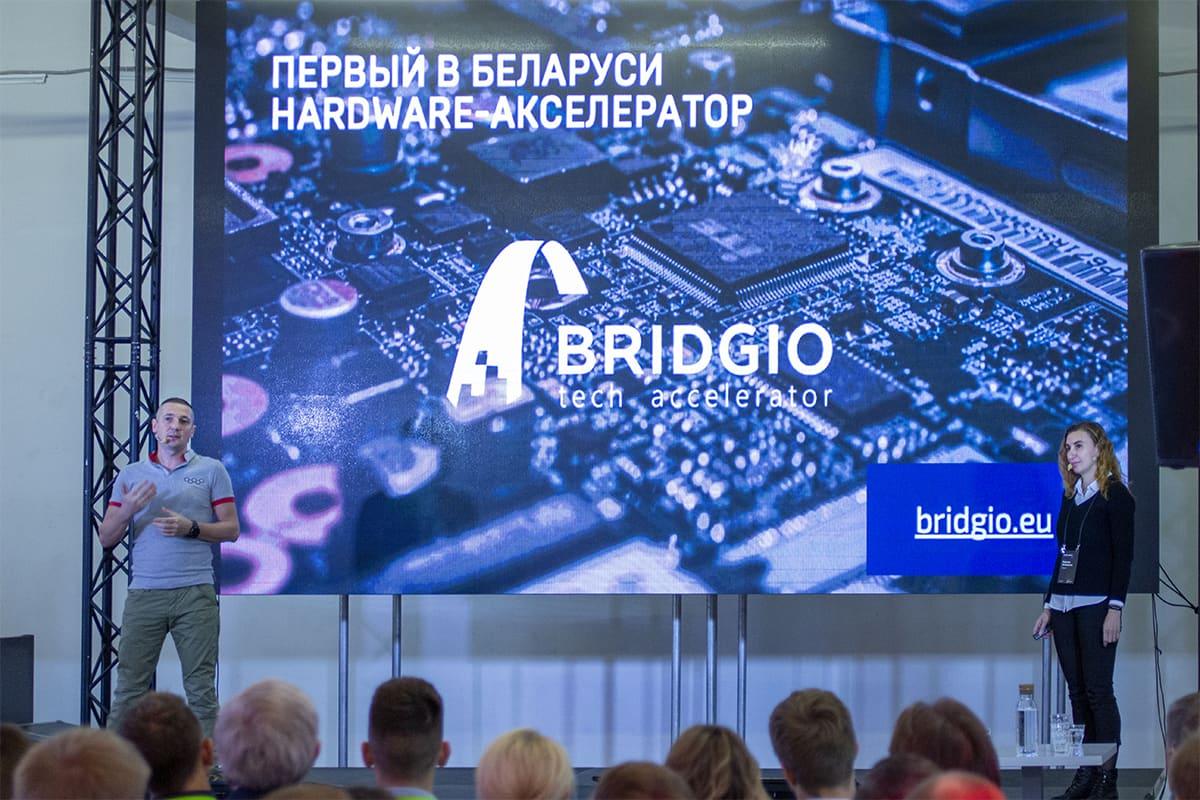
We talked with the person who organizes the entire Congress. Lyudmila Antonovskaya, founder and managing director of the international holding Polimaster, told us about the Congress, the prospects for the development of hardware in the country and the benefits of cooperation with universities. Polimaster Holding is one of the four world leaders in the field of research and development and production of dosimetric equipment.
— How much time does it take to prepare an event such as Hardware Congress?
— A quality organization takes about a year. We have been preparing this third congress for several months and not everything went as we wanted. It takes more time, effort and money.
— Tell us about the main goals and objectives of your congress.
— There are several tasks. Firstly, getting new ideas for business development. Those who come here with this purpose will be able to extract new ideas for promoting and developing their business. Secondly, congress helps to get out of the “shadow”. Modesty is that trait that harms us.
According to my calculations, the contribution to the GDP of Belarus from the hardware industry is no less than from IT. We just don’t talk about it and, as a result, people don’t know this. It is time to report this, since without interest in the labor market, without the support of other companies that work with us, without government support, we will lag behind. And thirdly, just get together and talk, because congress contributes to the emergence of new acquaintances and ideas, and sometimes new business projects.
— What is needed to step over modesty?
— “Nothing but courage.”
— You said about the competition of employers in the future. The demographic situation is such that there will be fewer specialists and the demand for them will increase. Is there a risk that not only the number of specialists will decrease, but also their quality?
— Definitely, these are the things that correlate with each other. Therefore, it is really important to increase the quantity, and competition will help to improve quality. It should also be noted that the level of training of specialists in the hardware industry should be higher than in many others. It really needs people who have received a serious education. And if a person became an expert in his field, then this contribution will never be in vain, and the works will be monetized.
— How to deal with a possible lack of personnel? Now the industry is on the rise, and after a while, there will be no one to work. How to avoid this?
— There are two solutions. We can create conditions in which it will be interesting for schoolchildren to develop in STEM-sciences, and then enter technical specialties at universities. Or the hardware industry in Belarus will look for personnel in other countries. And then there will already be an influx of specialists here or the formation of teams that will be located remotely at different points.
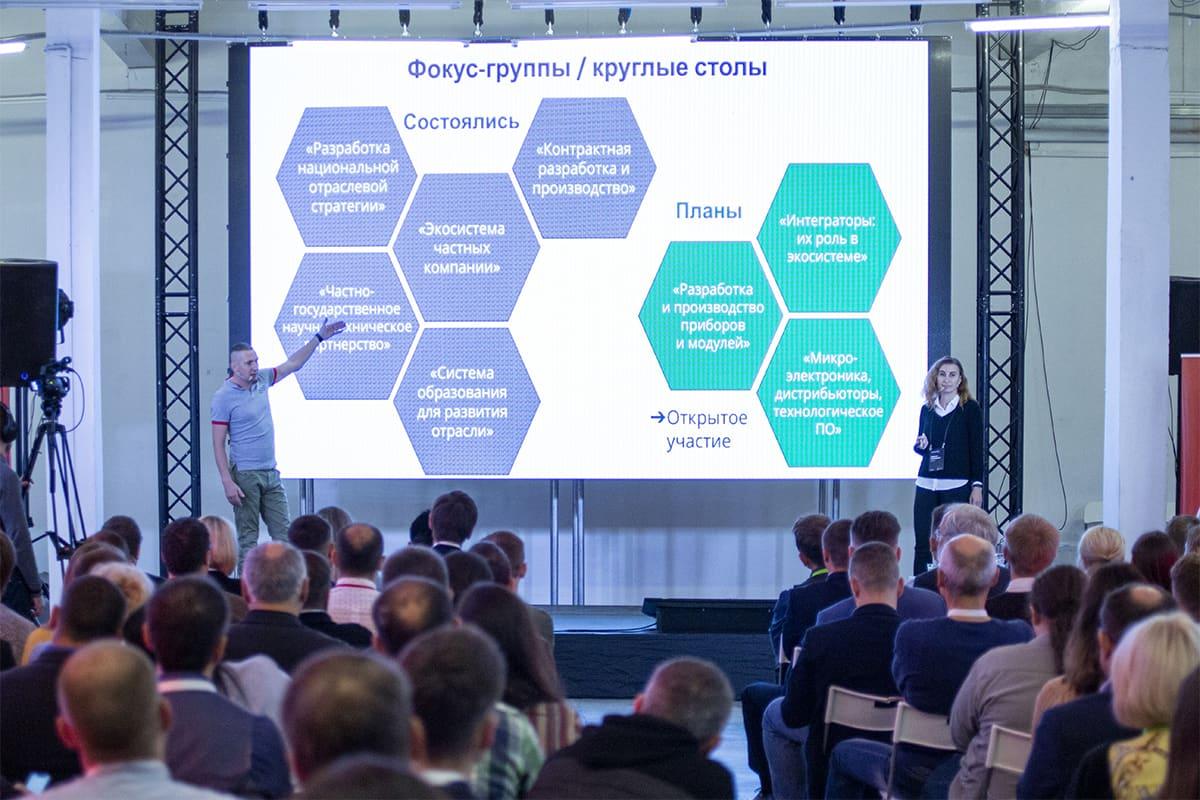
— Victor Khamenok noted that the hardware has many chances to catch up and overtake the IT-sphere in the near future. How to motivate young people to go to this industry?
— I think it should be shown that in the hardware industry you can earn no less than in IT. And secondly, it is necessary to demonstrate the full interest of projects to create a finished product, and not just part of the program. And also, I often came across that type of people for whom a tangible result is important, that is when you can create something that has physical value. And it will not be a small compound screw, but a whole product. There is also a problem in the field of education, which, unfortunately, we cannot influence. But I see the need to tell students about the prospects in this industry. Free attendance at events such as the Hardware Congress for students can be arranged.
— What, in your opinion, needs to be done so that business and education have a closer influence on each other?
— I think that within the framework of the existing system, a business can do nothing but submit applications for distribution. In my opinion, in education, you need to experiment and watch in the same way as in business, which gives the greatest efficiency. After all, there are experimental schools, there should be experimental universities and graduate schools. It is in these studies that business can invest. In fact, these are global changes for Belarus, and I really want to contribute to them. But for now, business can only give practice. Now in education, there is a terrible lack of practice, that is, lectures and term papers are very behind reality. In my opinion, if a student does not start working with the third course, then after graduation he loses competitiveness in the labor market as a specialist. From the university, you need to bring not only a “diploma” but also experience.
— What, in your opinion, should be the changes and experiments?
— Firstly, if there used to be a paradigm that education provides information, now information is available. The point is to teach how to look for information and use it. The teacher should become a kind of mentor on how a person develops. He should not give answers, but ask questions. Secondly, you can use the project education system: you do your coursework and a diploma, not alone, but as a team. In some American universities, such projects are ongoing for a year and two, that is, the topic is being worked through the prism of different disciplines. Also, you will learn not only to make decisions independently but also to build teamwork. Often, from such projects, businesses grow. Of course, one should remember the proximity of these diplomas and works to reality and the ability to work in laboratories. They are now in private companies, in government organizations. Less theory, more practice.
— Is money a good motivator for an entrepreneur?
— Money is generally a bad motivator. If you ask entrepreneurs why they began to do something, the vast majority will not tell you about money. Successful entrepreneurs, scientists, engineers have come to their fields to fulfill their potential. It is a matter of creating something new, it is freedom, the ability to change the world. You can invent something that no one invented. But, of course, people need to earn money and ensure peace of mind in the future. Success is rewarded.
Let's move to the office of Vice-Rector Yuri Nikolaychik to hear what the university thinks about this.
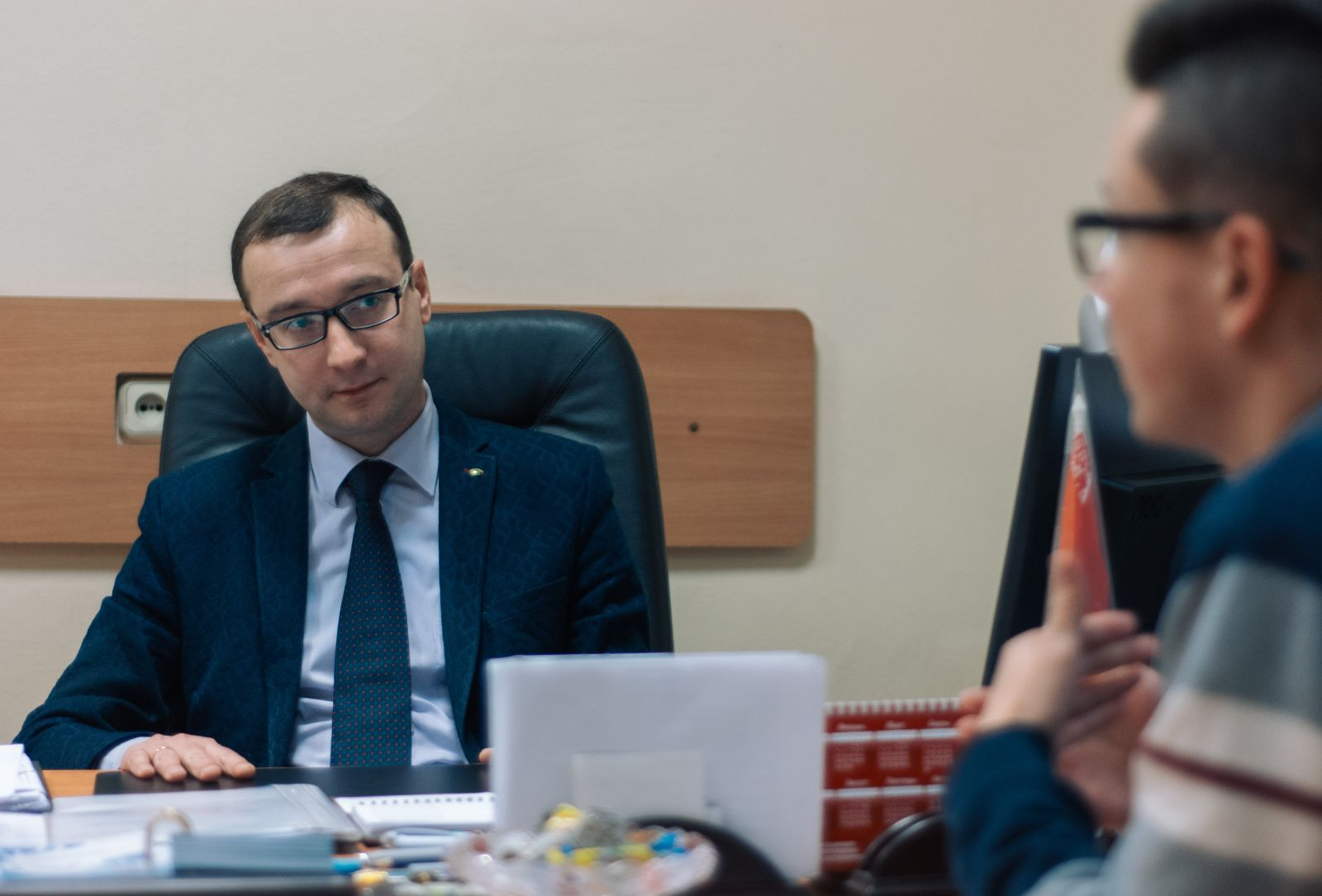
The problem of interaction between the university and business lies in the fact that the university solves large state problems - this is training and education of the new generation, new personnel. Companies usually solve their narrow tasks.
What Vitaly Damasevich suggested was possible to do and one should strive for it. Students can create some models, a prototype of this device virtually, design documentation, analyze the technological process, and so on. Different elements of real devices - they are included in the training program. Students design all these elements in their course projects and works.
To create a multifunctional device requires the efforts of several people with different profiles. The device must be designed, then programmed so that it can be controlled, and so on. It is difficult for one student to do this. In theory, he can design, take ready-made elements and assemble. But to make it live is a difficult task without the support of the employer. The university alone will not cope: we cannot buy the component parts of the device for each student, we have more than 30 thousand of them.
If the employer says that he will provide all the design elements for the student to assemble the device - no problem, this will be an interaction that is beneficial to both parties. Then the student will know for sure that this will be a line of devices with which he will work in the future. That is, at the stage of creating this device, it plunges into the scope of the enterprise. In the diploma, in addition to the engineering part, there is also an economic one in which he will analyze the market and understand what will be the demand for this device and where it can be applied.
Another point - the application of the state. 100% distribution is provided annually, and in a number of specialties, the number of applications significantly exceeds the number of graduates. All this suggests that the graduates of our university are in a 100% demand in the economy of our country. Take a look around, the modern Belarus that we see today: houses, bridges, roads, subways, cars and much more, is being built and manufactured by specialists trained specifically at BNTU.
If we talk about students studying on a paid basis, then sometimes, at the request of the student, we give distribution even to payers who are interested in a particular application. And if, for example, a private company wants to get a student and he wants to get there himself, he will receive a distribution to this company. There is no problem.
I can say more: we are interested in such projects and are currently deploying a whole program in this area. We strive to create at least one laboratory at each faculty, which will operate with the help of large enterprises. At Automotive and tractor faculty there is a project for a joint laboratory with the University of Dresden, at Power engineering faculty, there is a project for creating a Schneider Electric laboratory. We never refuse additional cooperation. This is interesting for students, they come and see what kind of work is being done here and what people are doing. This will greatly facilitate the choice of a specialty for a student, and at the same time, he will already understand what is required of him in order to work in this company.
University and business should work together on youth motivation, material and technical equipment, and we are happy for any cooperation. There should be a general agreement on cooperation, an agreement that sets out all the areas in which we work: how many and what kind of specialists we need to prepare, filling out training programs, creating a joint laboratory, what equipment, who, how and when will interact from the enterprise and much another. BNTU now has more than 150 agreements with basic organizations. These are companies such as BELAZ, EPAM SYSTEMS, Itransition, Belaruskali, MAZ, MTZ, AMKODOR and many others.

If we talk about this particular proposal, then we just need to meet and discuss everything. It is needed to understand the company profile. If Instrumentation engineering faculty (I suppose) already has some projects, then we can offer to create a laboratory at another faculty. I repeat that we ourselves are interested in this so that our graduates are relevant to today's market. This is one of the directions for updating our graduates - direct work with consumers of personnel.
The company itself can initiate negotiations. If the business believes that the university should take the first step, and the company is ready to help us and is waiting for only a request, we can take the first step ourselves, there should not be a problem.
I agree that only IT is now at the hearing. As for the contribution to GDP, all this is relative. The created device itself adds up the GDP, and both the hardware and the software are involved there. But the hardware is not popular undeservedly, I think. Take the same car - they still want to ride a real, tangible car, and not a virtual one. If this is an electric car or an unmanned car - it will largely depend on the software, but even more on the hardware. Engineers invented the wheel and in the near future, we will not be able to refuse the wheels (smiles).
The issue of the popularity of hardware needs to be addressed with the help of advertising; IT field is full of advertisements. They simply trumpeted the whole world, what their salaries were and that’s all, people went there. But in hardware, the salaries of specialists are not lower. IT specialist writes software for the device, but this device still needs to be invented and assembled. The software helps the device to function.
The initiators of the popularization of this direction should be both companies and technical universities, which we are trying to do. But there is one caveat: this is a long-term process. If you look at IT, then you just need to put five computers, put programmers for them, and they already write the code without leaving the room. Wrote the code, sold it to someone - that’s it, working on. In the hardware, to create the final product, you need more time, effort, people, investment. There is no such mobility as IT specialists. Hardware is a whole production.

It is needed to understand what the companies want and what the university is ready to provide. Together, we can bring the hardware to a new level in our country.
The first thing the university is ready to provide, and we are already doing this, is to reorient our curricula to “new tracks” to really show that we are training those specialists who are in demand now. We want to train specialists of the future who can possess wider competencies. For example, a civil engineer who designs all models in 3D programs can calculate cost-effectiveness and unexpected loads, and so on. If earlier for certain calculations a separate specialist was needed, then with the help of information technologies this can be done by one person. That is, this is an engineer with some kind of addition, in a new form. I want to note that today every student in BNTU is taught IT. Even an economist engineer studies programming and web design.
As I said, this does not go as fast as we would like, unfortunately. For each faculty, you need to choose a product on which they will work. For example, Instrumentation engineering faculty works in SolidWorks, and at the Department of Electrical Engineering and Electronics of the faculty say that this does not suit them, we need another application.
Hardware is a very relevant topic, it needs to be shown, promoted. This is the same brand as IT. It just needs to be properly advertised. Moreover, a balanced situation will also be useful for the market.
As an example, there is a marketing idea that some specialties need to be renamed simply because they carry serious training, but the “hard” name itself can scare away a knowledgeable student. Although having studied in this specialty, he receives chic baggage of knowledge, which allows him to further develop and improve.
It is important to distinguish between obtaining a vocational education, where the task of teaching a turner to sharpen at a machine tool, from getting an education at a university. BNTU is one of the most practice-oriented universities.
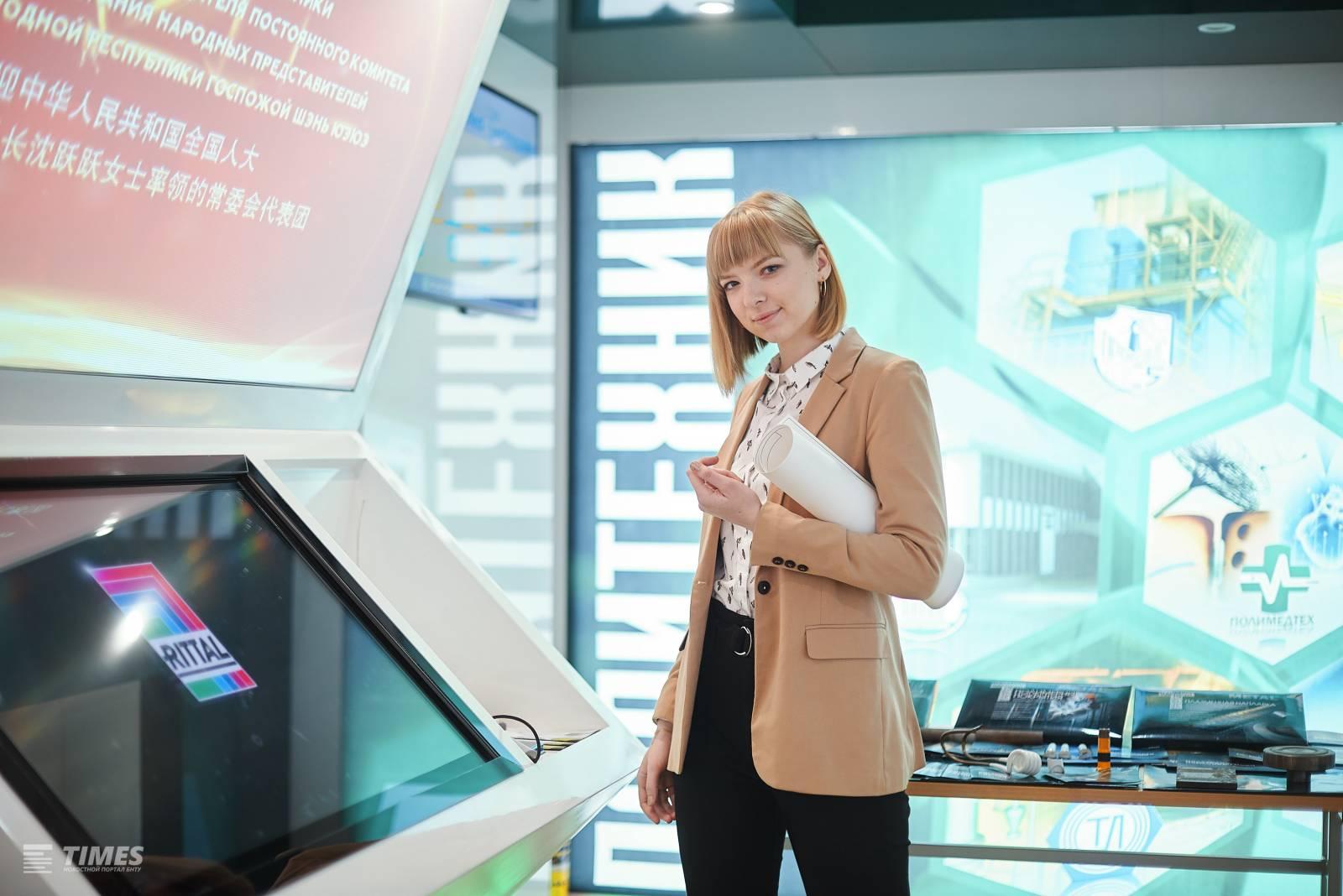
The educational process includes practices in the first or second (not all), third, fourth courses, as well as undergraduate practice. There are 89 branches of departments at enterprises and industries. Classes can be held there. There are classrooms, laboratories and workshops where students are explained and shown the material studied. Such an ideology is laid in the university.
A visit to Congress was very useful for students. We would like to know more about such events.
As a result, it turns out that everyone is 'for', it's just needed to start. We hope that business and universities will find a common language and take a big step in the development of the country's education. But it is still unknown how soon this will happen.
