Development of Research School.
Development of the Scientific and Pedagogical School of the Department of Materials Science in Mechanical Engineering
Since its establishment in 1953, the department has been actively involved in training engineering and scientific-educational personnel, alongside addressing the challenges of enhancing the durability of various metal products during different historical periods of domestic industry development.
During the formative years of Belarusian mechanical engineering (under the leadership of Prof. Magrorin N.F. and Prof. Lyakhovich L.S.), the department focused extensively on training critically needed engineering personnel and addressing topical issues of thermal and chemical-thermal treatment of various steels for young Belarusian enterprises. This period saw the introduction of the new specialty "Metallurgy, Equipment, and Technology of Thermal Treatment," and the department was renamed "Metallurgy and Thermal Treatment of Metals" in 1963. Prof. Lyakhovich L.S. spearheaded active scientific and pedagogical efforts in establishing a school of metallurgists. Significant attention was given to the metallurgy of special steels and promising directions in surface strengthening.
By the early 1970s, the department had become a reputable scientific and pedagogical center for metallurgy and thermal treatment in the Soviet Union. Detailed studies were conducted on certain intermediate transformation processes in steels (V.V. Surkov), brittleness of several structural steels (I.A. Rishchev), and the regularities of structure formation in various iron-carbon alloys (R.N. Khudokormova), among other pressing metallurgical issues.
The rapid development of the country's engineering complex necessitated efficient strengthening technologies. Therefore, the department's scientific and technical work for many years focused on chemical-thermal treatment processes. Research conducted by faculty, graduate students, and scientific staff of research laboratories at the department was coordinated by L.S. Lyakhovich and L.G. Voroshnin [Fig 1, 2]. Under their guidance, various chemical-thermal treatment processes were developed. These included boronizing, siliconizing, chromizing, and multi-component saturation processes. The scientific-technical results obtained facilitated the development of a wide range of chemical-thermal treatment processes to enhance the wear resistance, heat resistance, and corrosion resistance of structural and tool steels, heat-resistant steels and alloys, refractory metals, and metal-ceramic alloys (E.P. Puchkov, G.G. Panich, E.D. Shcherbakov, F.V. Dolmanov, G.F. Protasevich, G.V. Borisenok, Yu.V. Turov, M.G. Krukovych, B.S. Kukharev, N.G. Devoyno, E.A. Kulikovsky, N.I. Ivanitsky, M.N. Martyniuk, N.G. Kukhareva, and others). Later arrivals at the department, Prof. V.M. Sitkevich, Yu.V. Sokolov, Assoc. Prof. V.A. Stefanovich, and V.V. Melnichenko, introduced several new directions and bolstered the department's staff. Processes for producing boron-containing thermodynamic diffusion layers were of particular importance. In the early works of this direction, the department's scientific school established a trademark style - a deep physicochemical analysis of structure formation processes and efficient practical implementation of thermodynamic strengthening of a wide range of metal products.
Professor Voroshnin L.G. made a significant contribution to the development of the Belarusian scientific school of chemical-thermal treatment. Under his leadership in 1990, the department began training engineers in the emerging specialty "Materials Science in Mechanical Engineering" and adopted the new name "Materials Science in Mechanical Engineering." Voroshnin L.G.'s doctoral dissertation on electrolytic boronizing of steel laid the groundwork for a substantial body of work in creating protective diffusion coatings on metals and alloys for a wide range of functional purposes (wear-resistant, heat-resistant, corrosion-resistant, cavitation-resistant), gaining recognition for the department not only in the Soviet Union but also internationally. The first practical handbook on boronizing various steels and cast irons was published. A pioneering cycle of work was conducted on the theory and technology of chemical-thermal treatment of metals and alloys. A detailed methodology for studying chemical-thermal treatment processes was developed. Over 100 new diffusion coatings of both general and specialized purposes were developed. Significant attention was given to research on metal-thermic saturating agents and the development of chemical-thermal treatment technologies based on them (including non-furnace methods). The handbook "Chemical-Thermal Treatment of Metals and Alloys" (published in 1981 by the department under the editorship of L.S. Lyakhovich and reissued in Tokyo in 1985 in Japanese) gained wide recognition. The department's team developed GOST 28428-90 "Thermo-diffusion Strengthening of Metallic Products" (1990). It is worth noting the development during this period of advanced directions in chemical-thermal treatment: multi-component thermo-diffusion saturation, optimization planning of experiments, and mathematical modeling of mass transfer processes during chemical-thermal treatment. Professor Voroshnin L.G., possessing high qualifications in metallurgy from the Ural school, broad scientific erudition, and unconventional scientific thinking, attached great importance to the theory and mathematical modeling in materials science long before the Computational Materials Science discipline emerged as an independent field. The long experience of research and teaching at the department allowed the author's team under the guidance of Prof. Voroshnin L.G. to write the first textbook "Theory and Technology of Chemical-Thermal Treatment" in Belarus. The textbook was published after the death of Voroshnin L.G., thanks to the efforts of Assoc. Prof. Mendeleev O.L. The department's research interests during this period were broad, ranging from the development of armored and tool steels to the strengthening of hard alloys.
The socio-economic and political changes at the beginning of the 21st century could not but affect the department. New solutions were needed in training materials scientists for the New Belarus. The department's scientific and pedagogical team actively began developing a master's program. Modern trends in materials science strongly demanded that master's students deepen their understanding of the physicochemical nature of processes for obtaining new materials, especially diffusion processes. Interactive courses were developed for this purpose. Alongside training scientific and pedagogical personnel for higher education and research institutions, the department organized the training of scientific and technical personnel for the needs of Belarusian mechanical engineering. It is worth noting that in modern conditions, the role and importance of scientific and technical initiative and qualifications in solving production tasks, particularly metallurgical tasks, have significantly increased. Typically, the topic of master's dissertations was closely related to the professional activities of the student (engineer) and aimed at the individual preparation of a specialist in improving existing and developing new energy- and resource-saving metallurgical technologies. The main emphasis was placed on individual work by the supervisor with the master's student. In the years 2010-2017, no fewer than 10-12 people per year studied in the department's master's program. In recent years, more than 40 specialists have successfully defended their master's theses at the department. Several of them already hold managerial positions at metallurgical and mechanical engineering enterprises in Belarus. A few recent graduates are successfully working abroad. The further development of the department's master's program led to the opening in 2019 of the prospective specialty of the master's degree program 1-36 80 09 "Expertise of Materials of Mechanical Engineering, Coatings, and Products" in collaboration with the Scientific and Practical Center of the State Committee for Forensic Examinations of the Republic of Belarus.
The urgency of the issue of scientific and pedagogical personnel prompted intensified efforts in this direction. In recent years, a specific system has been created for selecting and training talented, professionally suitable young people for work at the department and its research laboratory. Most young staff members of the department are its graduates.
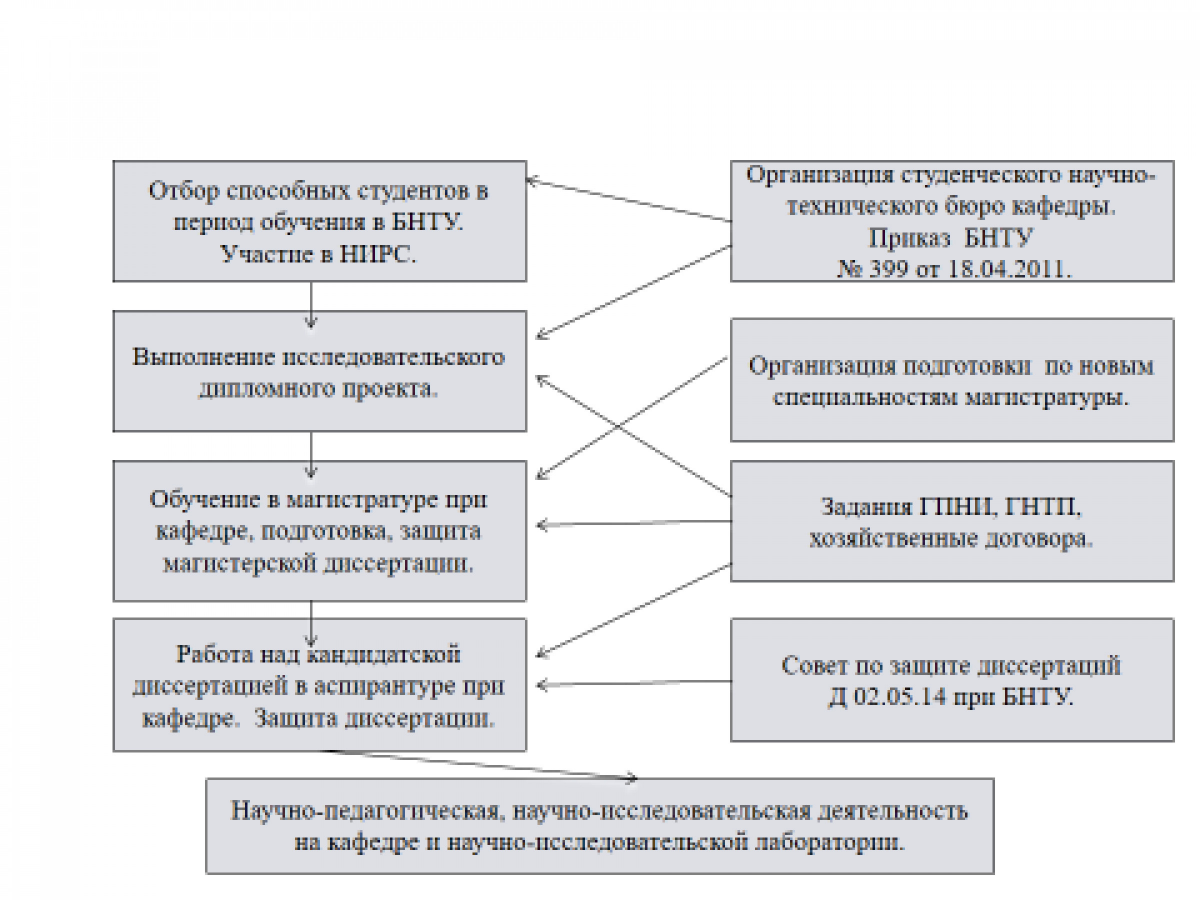
Fig. 3 - Structure of the training of scientific and pedagogical personnel at the Department and Research Laboratory for Strengthening Steel Products, 2006-2020.
In scientific terms, the department team has been actively working on the main direction of developing the theory and technologies of diffusion alloying to enhance the durability of metallic products. The following doctoral dissertation (2008) and candidate dissertations of department staff and graduates were defended: L.A. Astreko (2006), V.G. Dashkevich (2009), G.A. Tkachenko (2011), A.N. Hryhorchik (2016), A.V. Kovalchuk (2020).
At the beginning of the 21st century, a comprehensive study was conducted, allowing for the first time the creation of a new methodological and technological approach to obtaining special alloys for protective coatings and their production by diffusion alloying. This approach is based on scientifically substantiated design and manufacturing of highly efficient alloys for specific production conditions using domestically available raw materials, including metalworking waste. The complex of studies performed became the basis for the wide industrial implementation of a range of new, domestic surfacing alloys and resource-saving technologies for strengthening rapidly wearing parts of machinery, agricultural, reclamation, and construction equipment, meeting modern global standards. The results of the complex of works performed are protected by 30 patents of the Republic of Belarus and the Russian Federation. As a result of industrial implementation of scientific research, 5 technical specifications for scientific and technical products, 4 technological regulations for obtaining alloys for protective coatings, and more than 20 technological processes for strengthening and restoring machine parts have been developed.
In recent years, the department has actively improved and developed promising directions for surface and bulk strengthening of machine parts and mechanisms. Effective spark-safe thermodynamic diffusion layers have been created on structural and tool steels. Improvement of traditional boride layers towards reducing brittleness and increasing wear resistance through changes in layer morphology and additional alloying is ongoing. Pioneering work has been carried out on thermodynamic diffusion alloying of copper alloys. An original technology for forming thermodynamic heat-resistant layers on fiberglass production copper refrigerators has been developed.
The intensification of diffusion alloying of macro- and micro-objects during chemical-thermal treatment has always been relevant. Similar research was conducted at the dawn of the department's development [3]. To date, new scientific data have been obtained on the effect of pseudo-melting and rapid thermal cycling on the progress of diffusion processes in steels. The peculiarities of structure formation of nitrocarburized diffusion layers and cores of parts made of pre-eutectoid structural steels under local induction cyclic heating have been established and implemented in production technology. As a result of multiple structural transformations, phase precipitation, and recrystallization processes, intensification of solid-phase diffusion occurs, accompanied by a significant increase in layer thickness with the formation of a high-dispersion structure. A technology has been developed and patented to increase the structural strength of soil cultivation elements by complex surface and core strengthening with a macroheterogeneous distribution of structures across the product cross-section.
An additive technology has been developed for forming thermodynamic layers with additional application of vacuum nitride coatings. The efficiency of using thermodynamic boronizing for developing additive technologies of surface hardening of precision steel parts with the application of solid vacuum ion-plasma coatings, for example, PVD coating TiAlN, has been established. It has been experimentally shown that the application of boronizing of steel substrates for the application of TiAlN coatings allows additionally increasing microhardness and wear resistance. It has been experimentally shown and theoretically substantiated that a new microcomposite material is formed on the steel surface as a result of successive operations of thermodynamic boronizing and vacuum phase deposition, which possesses properties that are not achievable by substrate materials and vacuum coatings separately. Thus, it has been established that for samples with TiAlN coating on U8A and 9KhS steels with a compact two-phase boride layer, the values of the actually measured surface microhardness can reach 34…35 GPa with its own microhardness of TiAlN coating at the level of 28…30 GPa. The obtained results allow effectively using boronizing together with the application of solid ion-plasma coatings for strengthening a wide class of parts and making it scientifically substantiated to reduce the thickness of TiAlN type coatings and similar hard coatings on steel substrates with a boride layer without losing the properties of the hardened surface and can be used in the development of new methods of complex surface strengthening.
The corrosion-resistant thermodynamic zinc plating of steel products has been the subject of close attention of the department staff for a long time. In recent years, a complex of new research has been carried out, as a result of which an energy-saving technology of heat treatment and thermodynamic zinc plating of elastic steel elements has been developed. The energy-saving combination of thermodynamic zinc plating processes with tempering of processed steel products after quenching has been theoretically substantiated and practically implemented. The peculiarities of structure formation during martensite decomposition of structural spring steels in the process of zinc diffusion saturation and medium tempering have been established [20].
In the present challenging times, the department remains a recognized and dynamically developing scientific and educational center for metallurgy and chemical-thermal processing in Belarus and neighboring countries.
Publications
- Ivanitsky, N.I., Konstantinov, V.M., Puchkov, E.P. Department of "Materials Science in Mechanical Engineering" BNTU - traditions and modernity / V.M. Konstantinov // Casting and Metallurgy. - 2016. - No. 4. - P. 156-161.
- Lyakhovich, L.S., Gonchar, V.N. High-strength cemented steel 20KhGNR / L.S. Lyakhovich. - M., 1959. - 12 p.
- Lyakhovich, L.S., Belyaev, V.I. Nitriding of steel by high-frequency current heating / L.S. Lyakhovich. - Minsk: Publishing house of higher, secondary specialized professional education of the BSSR, 1961. - 45 p.
- Lyakhovich, L.S., Voroshnin, L.G. Boronizing of steel / L.S. Lyakhovich. - Minsk: Metallurgy, 1967. - 119 p.
- Ivanitsky, N.I. Voroshnin, L.G. - founder of the Belarusian scientific school of chemical-thermal treatment / N.I. Ivanitsky, V.M. Konstantinov // Strengthening technologies and coatings. - 2008. - No. 1. - P. 3-4.
- Voroshnin, L.G. Boronizing of industrial steels and cast irons / L.G. Voroshnin // Reference book. - Minsk: Belarus, 1981. - 205 p.
- Borisenok, G.V., Vasiliev, L.A., Voroshnin, L.G. Chemical-thermal treatment of metals and alloys / G.V. Borisenok, L.A. Vasiliev, L.G. Voroshnin [et al.] // Handbook; ed. L.S. Lyakhovich. - M.: Metallurgy, 1981. - 421 p.
- Voroshnin, L.G., Khusid, B.M., Khina, B.B., Borisov, Yu.G. Mathematical modeling of processes of forming a multiphase diffusion layer / L.G. Voroshnin, B.M. Khusid, B.B. Khina, Yu.G. Borisov // Protective coatings on metals. - 1989. - Iss. 23. - P. 8-11.
- Voroshnin L.G., Mendeleeva, O.L., Smetkin, V.A. Theory and technology of chemical-thermal treatment: textbook / L.G. Voroshnin, O.L. Mendeleeva, V.A. Smetkin. - M .: New knowledge; Minsk, 2010. - 304 p.
- Khina B.B., Konstantinov V.M. Experience in improving the scientific qualifications of graduate students and postgraduates in diffusion processes and dislocation interactions in metals and alloys // Metallurgy: republican interdepartmental collection of scientific papers. - Minsk: BNTU, 2015. - Iss. 36. - P. 300–310.
- Konstantinov, V.M. Experience and prospects of master's training of engineering personnel in metallurgy / V.M. Konstantinov // Casting and Metallurgy. - 2016. - No. 2. - P. 119-124.
- Konstantinov, V.M. Theoretical and technological aspects of creating economically alloyed protective layers from diffusion-alloyed alloys / V.M. Konstantinov // Bulletin of BNTU. - 2007. - No. 2. - P. 29-37.
- Kaptsevich, V.M., Lisai, N.K., Konstantinov, V.M. Spark extinguishers for agricultural machinery / V.M. Kaptsevich, N.K. Lisai, V.M. Konstantinov [et al.]. - Minsk: BGATU, 2017. - 156 p.
- Dashkevich, V.G. Use of semi-permeable layers for thermodynamic boronizing / V.G. Dashkevich // Metallurgy: republican interdepartmental collection of scientific papers. - Minsk: BNTU, 2017
- Dashkevich, V. G., & Shcherbakov, V. G. (2016). Enhancement of operational properties of heat-dissipating elements of glass production refrigerators. Metallurgy: Republican Interdepartmental Collection of Scientific Papers, 37, 141–145. Minsk: BNTU.
- Konstantinov, V. M., & Tkachenko, G. A. (2011). Strengthening of rapidly-wearing parts of soil-tilling plows by nitrocementation with local cyclic induction heating. Strengthening Technologies and Coatings, (2), 44–50.
- Konstantinov, V. M., Kovalchuk, A. V., & Dashkevich, V. G. (2016). Properties of two-layer wear-resistant coatings "Diffusion Layer – TiAlN" on steels. Journal of Surface Physics and Engineering, 1(2), 213-224.
- Komarov, F. F., & others. (2016). The effect of steel substrate pre-hardening on structural, mechanical, and tribological properties of magnetron sputtered TiN and TiAlN coatings. Wear, 352-353, 92-101.
- Konstantinov, V. M., Ivanitsky, N. I., & Astreiko, L. A. (2013). Zinc anti-corrosion coatings on steel products: Prospects of diffusion coatings. Foundry and Metallurgy, (4), 107-110.
- Buloychik, I. A. (2013). Thermodynamic zinc plating of improved and spring steels. Foundry and Metallurgy, (4), 121-124.
