Choosing a future profession: A beautiful name or a successful engineering career?
A hot time is coming for many Belarusian families. One of the members of their family - a son, daughter, grandson - wants to continue his education and he is faced with the task of choosing a future profession and entering a higher educational institution. The correctness of this choice is extremely important, as it sometimes determines the rest of your life. Some young people aspire to enroll in economic and legal specialties that have been fashionable in recent years. Promising job titles seem to guarantee financial wealth and a successful career. Somehow, at a meeting with applicants, the authors jokingly proposed two “new” specialties: “Management of financial flows in Switzerland” and “Management of financial flows in Nigeria”. There were many who wanted to “go” to Switzerland, but for some reason no one wanted to go to Nigeria to “manage finances” ...
Unfortunately, many of these resonant specialties do not give the graduate the main thing - a profession. They do nothing but waste time and money! How many of them walk around the country, deceived graduates with diplomas that no one needs. But a lot of people got education for free! Why do we need such a higher education, which gives only a beautiful diploma, but does not give a profession and prosperity? So certified economists and lawyers of international law work as sellers, loaders for private entrepreneurs or auxiliary workers at numerous public and private construction sites.
In our opinion, young people who have chosen technical specialties as their future field of activity find themselves in much more favorable conditions. "Techies" have always been and will be needed in large numbers. These specialists were valued always and everywhere. By the way, BNTU "techies" are known and in demand abroad
Materials and the technology of their processing in the 21st century are one of the defining directions of the progress of modern civilization. Developed Western countries are leaders in the production of not only computer equipment, but also various alloys and other materials.
Materials specialists determine the optimal choice of metallic and non-metallic materials, the technology for manufacturing parts, reliability and durability in the operation of equipment and building structures. They study the nature of the origin of materials, processing methods, chemical and physical properties, as well as methods and instruments for monitoring and testing their properties. This knowledge is also necessary when finding out and eliminating the causes of failure of mechanisms and devices and increasing their reliability and durability.
Specialists in the field of materials science and heat treatment find worthy application of their knowledge in almost many modern industrial, educational and scientific organizations and are in high demand. The statistics of the distribution of young specialists of BNTU in recent years shows that the need for materials and metallurgists in recent years is satisfied by educational institutions only by two thirds. Even this year, the number of applications traditionally exceeds the number of graduates. In recent years, foreign enterprises with their representative offices in Belarus have shown particular interest in materials engineers.
Future materials scientists study a wide range of modern materials, methods and equipment for thermal and chemical-thermal treatment of tools and machine parts, chemical, physical, atomic emission, X-ray spectral, metallographic, ultrasonic, magnetic and other methods for determining the composition, structure and properties of metals, alloys. The nature of the work of materials scientists and thermists is diverse. For people who are inclined to a thoughtful scientific approach, the specialties "Materials Science in Mechanical Engineering" and "Metal Science, Technology and Equipment for Heat Treatment of Metals" provide unlimited opportunities in scientific activity. It should be noted that in the developed countries of the world, materials scientists annually develop and patent new materials, methods and processing equipment,
Important advice . When choosing a future specialty and university, we advise you to realistically assess the level of your knowledge and experience of entering the chosen specialty in recent years. For example, in the specialty "Materials Science in Mechanical Engineering" and "Metal Science and Heat Treatment" for 2011-2019, the passing score was 140-190. For many "fashionable" specialties, applicants who had less than 240-250 points of the competition did not survive.
We offer a promising engineering education!!!!!
Our department prepares materials engineers and specialists for work in all areas of modern industrial society. In addition to the traditional basic set of knowledge, you will receive in-depth knowledge in the field of computer materials science, as well as the basics of nanotechnology.
Historically, the role of the university has changed depending on economic and social conditions, they have new functions, which is reflected in the characteristics of the models:
University 1.0 - educational institutions that train specialists for professional activities in certain sectors of the economy and the social sphere. The main mission is education.
University 2.0 - educational institutions in which research and research work play an important role. The main mission - education, is joined by a new function - conducting scientific research for the industrial sector. The current stage of development requires universities to contribute more actively to the development of the knowledge-based economy through the commercialization of research results and the creation of new knowledge-intensive enterprises. The entrepreneurial university model University 3.0 fully meets these tasks .
We now live in a post-industrial society. So far, our civilization on Earth has lived through three industrial revolutions. 1784 - steam engines; 1870 - mass production and electricity; 1969 - computers, electronics; now - the Internet, automation, robotization.
University 4.0 - will correspond exactly to the level of Industry 4.0. We will not only train specialists for modern society, but also create the latest technologies at special sites and introduce them into production.
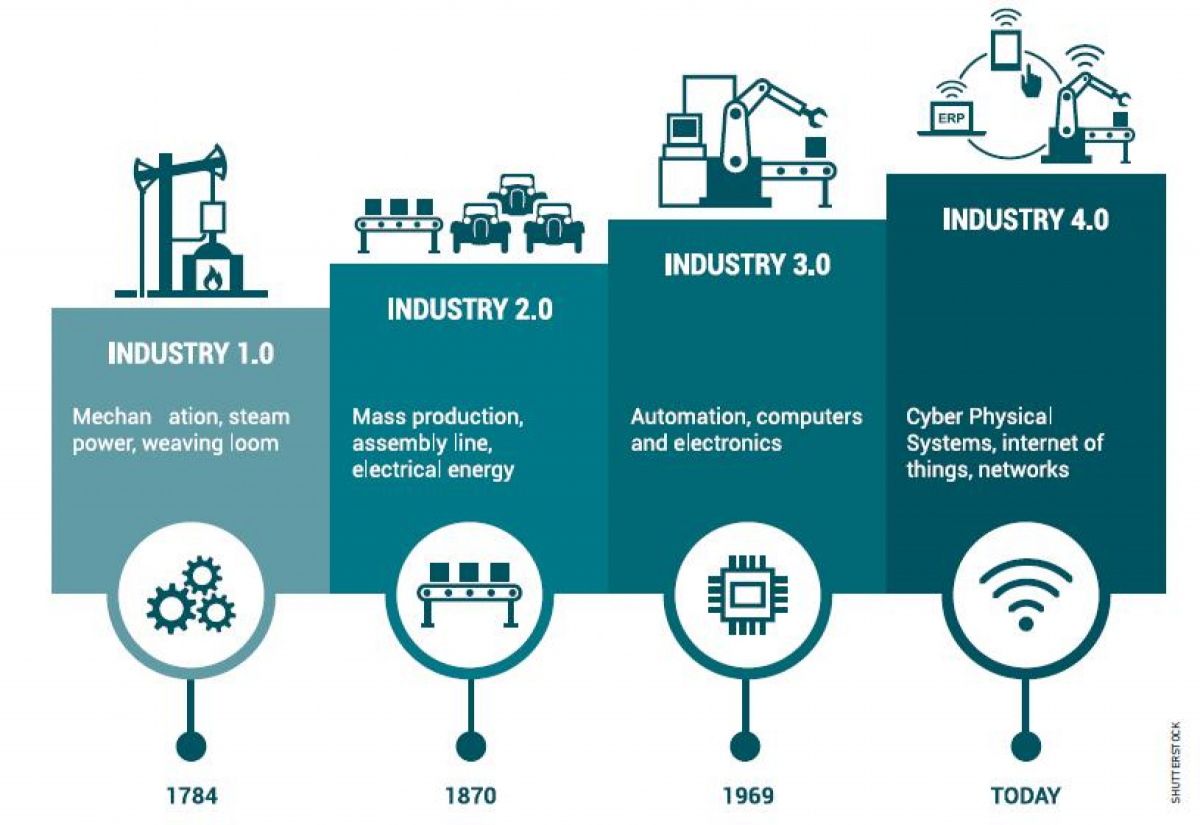
At the heart of all these breakthroughs is one discipline - MATERIALS SCIENCE.
Our specialists are highly sought after. Each year, we receive more job applications than graduates. We provide comprehensive knowledge in specialized disciplines, specialized programming, and proficiency in one foreign language.
What is classical materials science?
It is hardly necessary to explain that every product is made from natural or artificial materials. Since ancient times, materials have been divided into two groups - metals and non-metals.
Copper, iron, aluminum, titanium - this is the way in which man tamed metals. Now metal alloys are already being used and in this case special properties of machine parts and structures are obtained. Metal scientists (materials scientists) control the properties of materials at the casting stage. Then, a special thermal or other treatment is additionally carried out, and protective coatings are created on the surface. For control, thin sections are made and looked through microscopes, and the experiments are repeated again to improve the quality. This method is mandatory and reliable.
The invention of the computer greatly advanced human civilization and accelerated the process of improving the qualities of metal and non-metal products. Now, having some relatively minimal set of information about the properties of the material, you can control the desired final properties of the product. At the same time, experiments can be carried out on a computer and any quality of products can be predicted. This takes much less time and can be easily verified in practice. Computer modeling can be carried out for any type of detail, both huge and miniature, almost invisible to the human eye. Our department will give you knowledge not only in classical and computer science of materials, but also in the ultra-modern direction of materials science - nanotechnology.
The term "nanotechnology" was first used by the Japanese scientist K. Taniguchi in 1974 when discussing the problems of processing brittle materials. The fundamental importance of small-sized objects was emphasized by the Nobel laureate R. Feynman in 1959. His lecture with the allegorical title “There is plenty of room below: an invitation to the new world of physics” focused on the importance of work in the field of information compression, the creation of miniature computers, the design of materials and devices methods of molecular architecture, taking into account the characteristics of biological objects. Great hopes were placed on chemical synthesis, and it was noted that the laws of physics do not prohibit the design of materials at the atomic-molecular level.
Some ideas of R. Feynman were developed by E. Drexler (Massachusetts Institute of Technology, USA). In 1986, his book Machines of Creation: The Coming of the Era of Nanotechnology is published. Based on biological models, the author introduced ideas about molecular robotic machines. As opposed to the traditional “top-down” technological approach (a typical example is grinding), in relation to the miniaturization of integrated circuits, attention was paid to the “bottom-up” strategy (meaning atomic and molecular assembly, which was previously mentioned by R. Feynman ).
So nanotechnology is already in your hands - it's phones and tablets. Now it depends on you what other gadgets we will use in the near future.
A nanometer (abbreviated nm) is one billionth of a meter. The prefix "nano" came to us from ancient Greece, translated into Russian it means "dwarf" or "dwarf". In Latin, "nano" means "small", "tiny". Indeed, one nanometer is a very small value; it is impossible to see objects of this size with the naked eye. For comparison, we note that human hair grows at a speed of 10 nm per second, and the thickness of one hair is a huge value - almost 100 thousand nanometers or 100 microns. The nanoscale is used to characterize the smallest objects, such as atoms and molecules. The size of a silicon atom is 0.24 nm, and the size of C60 “fullerene” (“soccer ball” consisting of sixty carbon atoms) is 0.75 nm.
The development of new methods for obtaining nanomaterials is a modern priority in the development of chemistry, physics, and even biology. The relevance of research in this area is primarily due to the fact that the formation of nanoobjects occurs, as a rule, within the framework of specific patterns that have not been previously studied in the classical sections of science. In particular, one of the main principles for obtaining nanostructured materials is self-organization in complex open systems with hierarchical interactions at various structural levels or the implementation of controlled self-assembly from elements existing in the system - building blocks. For example, to achieve a super-dense magnetic recording of information up to 10 Terabits per 1 square centimeter.
In addition, the tiny size makes almost any nooks and crannies of the human body or parts of macromachines accessible to nanodevices that nothing else can penetrate. Secondly, nanomaterials have a large surface area, which accelerates the interaction between them and the environment in which they are placed. For example, catalytically active materials make it possible to accelerate chemical or biochemical reactions by tens of thousands and even millions of times. An interesting application is the decomposition of water for hydrogen energy into hydrogen and oxygen in the presence of titanium dioxide nanoparticles, which we all know as a component of titanium white. Nanofilters can weed out bacteria or effectively absorb impurities or toxins. Nanoparticles can also "drag" the necessary drugs or enzymes, programmatically delivering them to a pre-selected target, for example,
Thirdly, nanomaterials are unique in that such a substance is in a special, "nanoscale" state. Changes in the main characteristics are due not only to the smallness of the dimensions, but also to the manifestation of quantum mechanical effects with the dominant role of interfaces. These effects occur at a critical size that is commensurate with the so-called correlation radius of one or another physical phenomenon (for example, with the free path of electrons, phonons, the coherence length in a superconductor, the size of a magnetic domain or a solid phase nucleus, etc.).
A characteristic feature of nanoparticles is also the absence of point defects. This makes, in particular, semiconductor nanoparticles ("quantum dots" ideal elements of perfect energy-saving laser and light-emitting elements.
And individual carbon nanotubes have strength ten times greater than strength
the best steel, while they outperform steel many times over in terms of their specific gravity. All these signs fully explain the fact that even a gram of nanomaterial can be more effective than a ton of ordinary substance, and that their production is not a matter of quantity, not tons or kilometers, but the quality of human thought, "know-how" (from the English knowhow - "know how").
