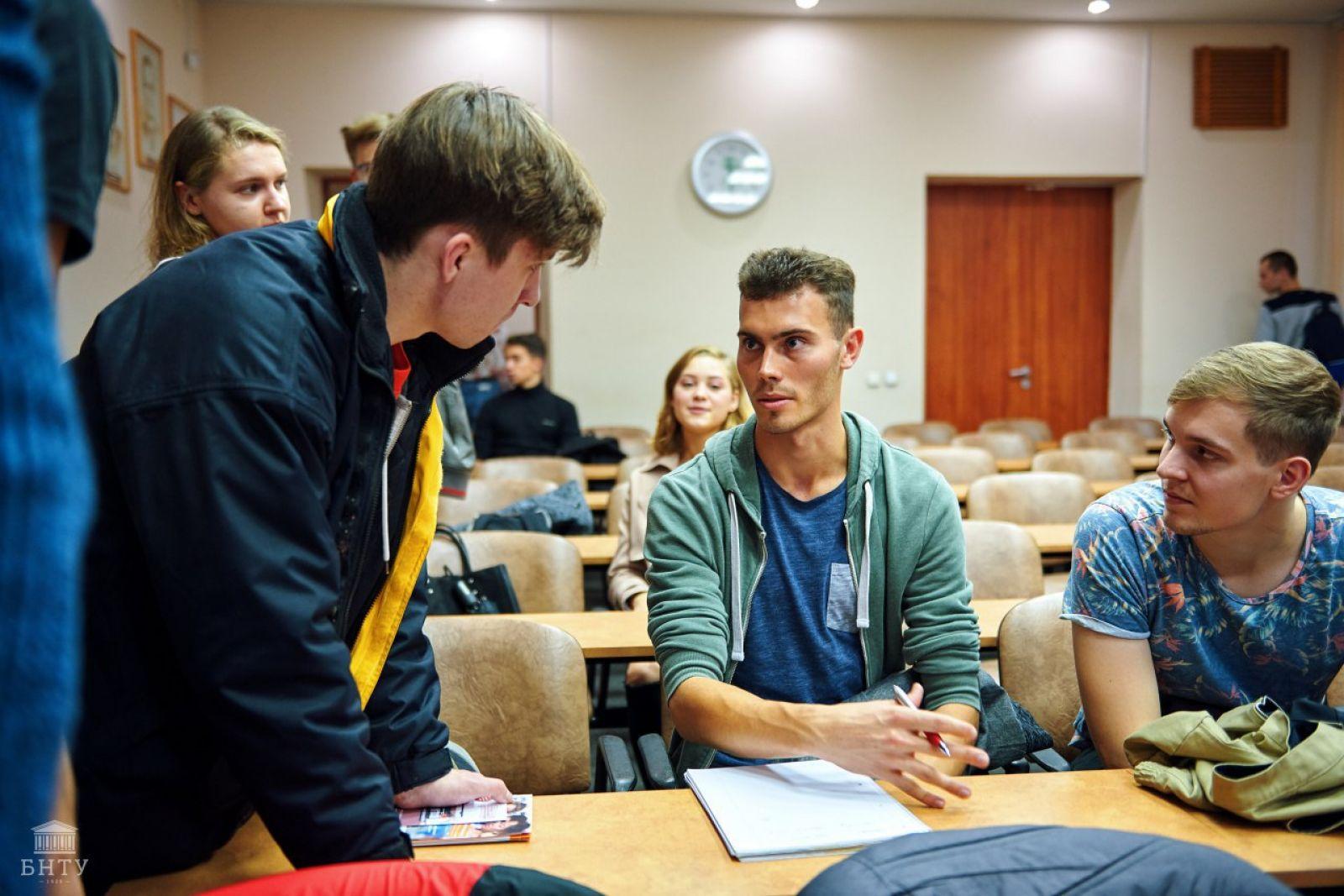
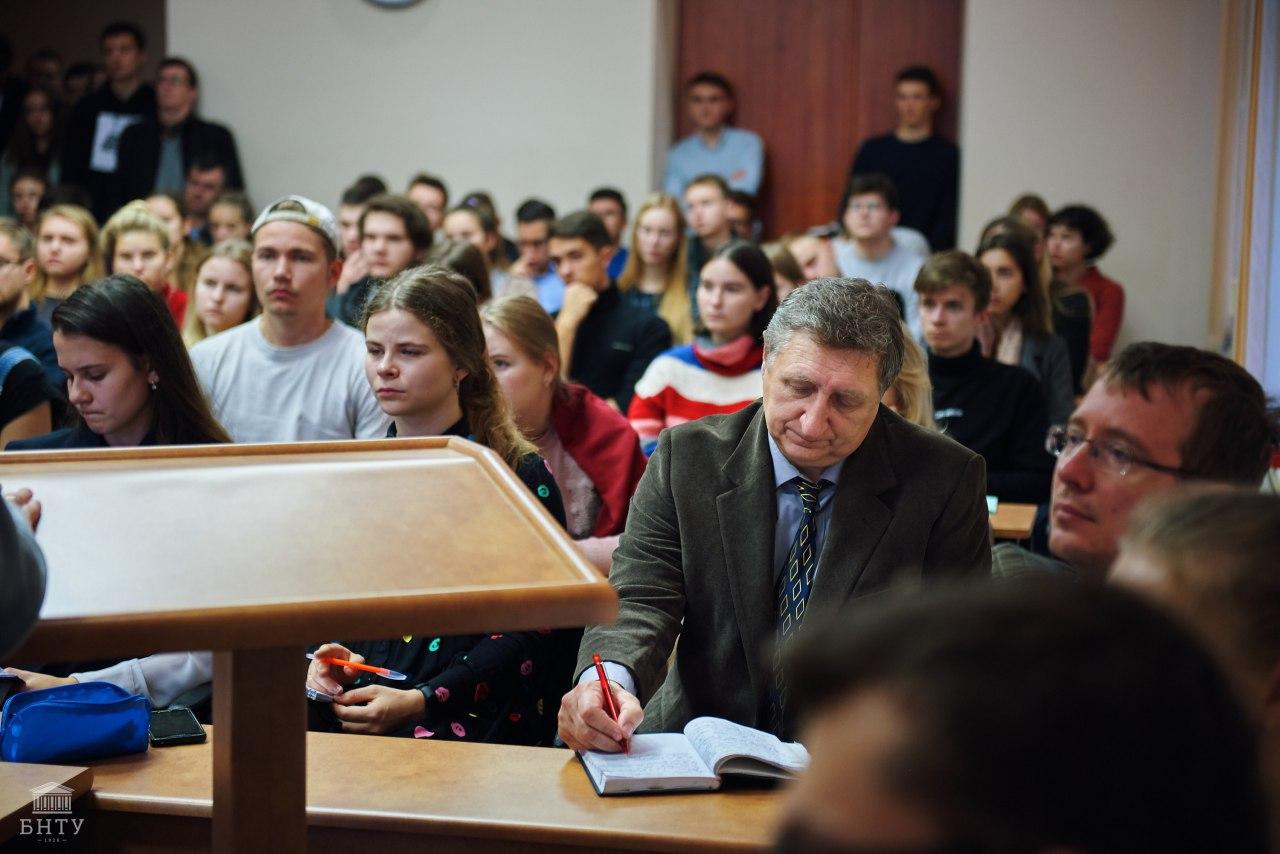
An important meeting took place in the main building of BNTU on October 3. It was intended for the students and lecturers of BNTU, who were especially interested in academic exchange. The meeting had been organized by the Information Centre of the German Academic Exchange Service (DAAD).
“DAAD is a self-directed organization, which unifies 238 universities and 107 student communities. There are 15 representatives, more than 50 information centres and around 440 rectorates of German studies and other disciplines, creating DAAD web throughout the world”, – a piece of information, provided by Dmitri Kolyshkin, a staff member of Information Centre in Belarus. The figures are striking, and some questions arise: how to become a part of this great web and what is the course of action for obtaining a scholarship? All of this was revealed to the audience during the meeting.
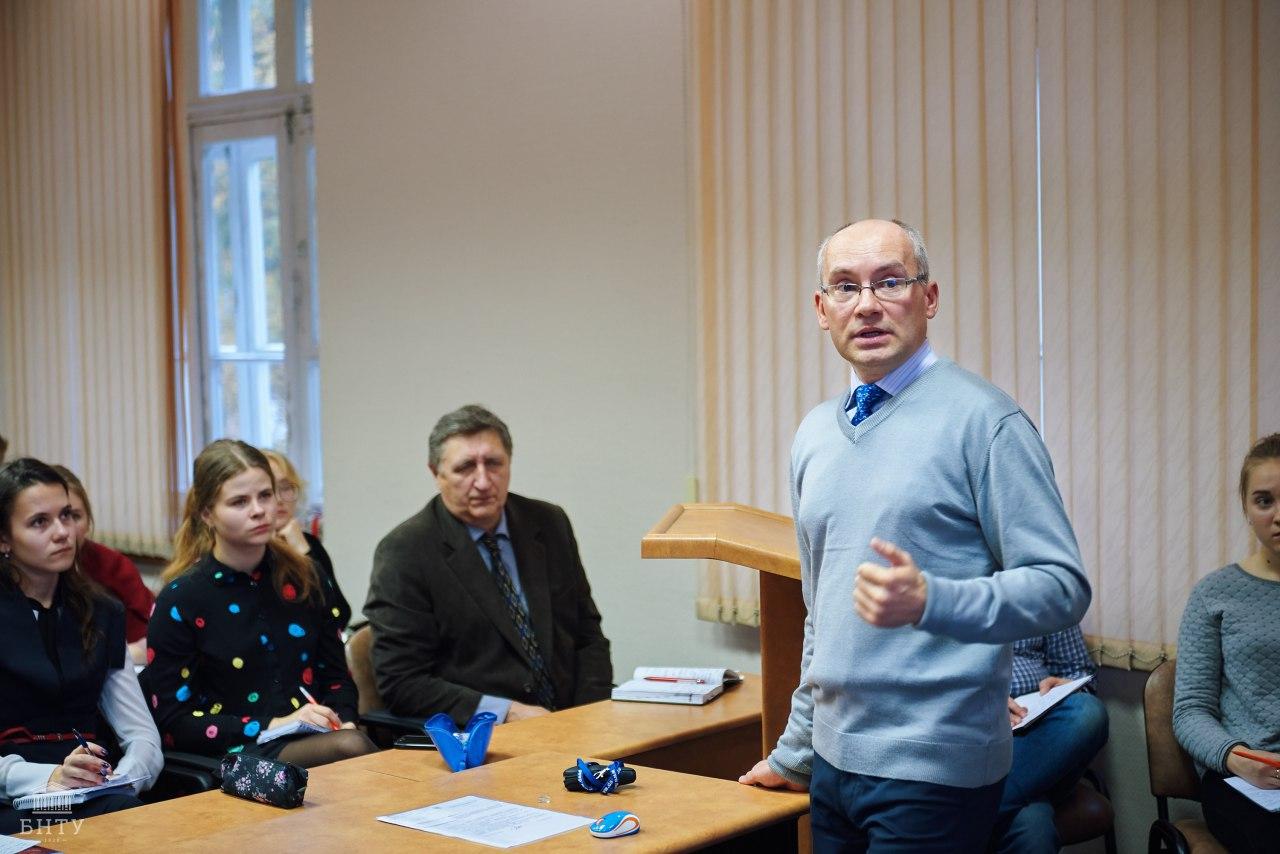
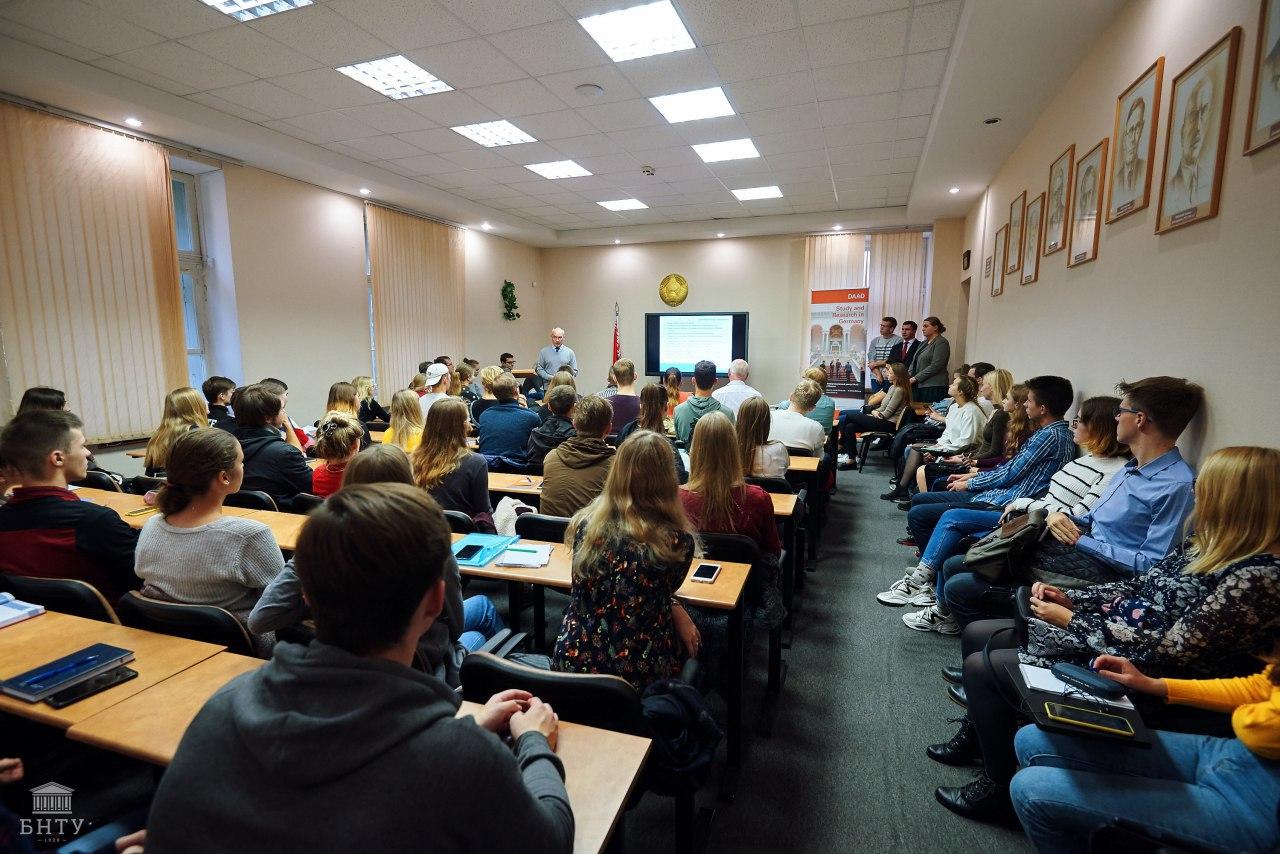
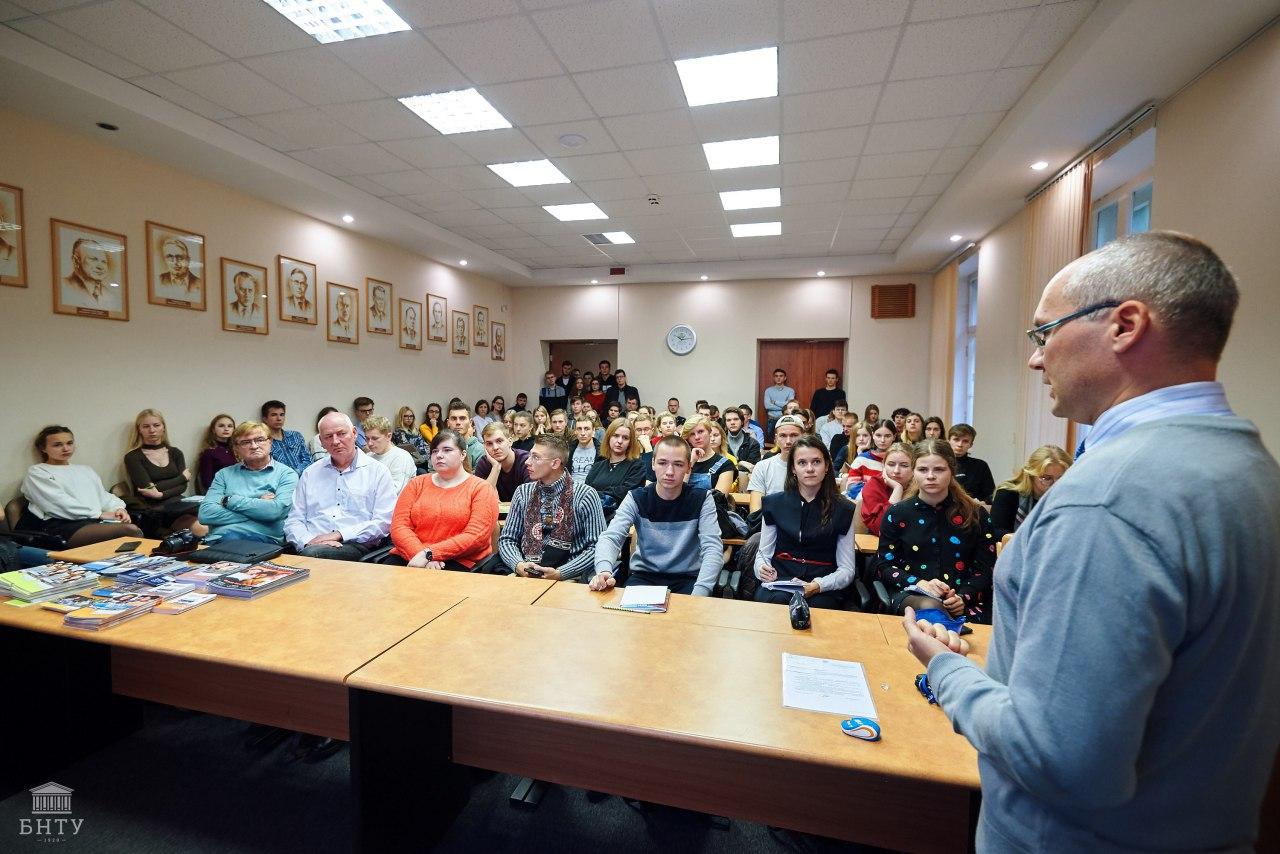
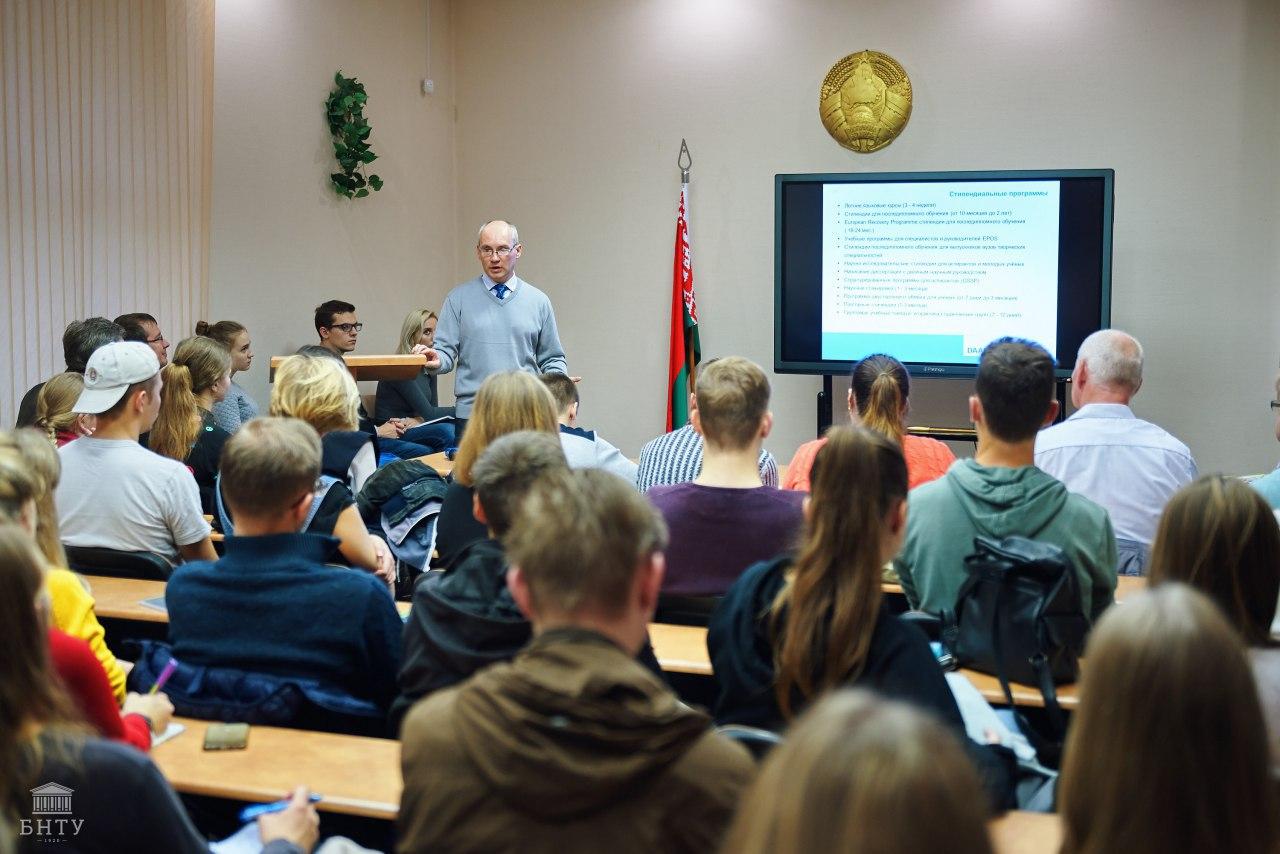
“Change by exchange” – a watchword followed by DAAD. It implies a bilateral exchange of knowledge and cultural heritage between the program’s participants. There were special guests at the meeting – the students from the University of Applied Sciences for Engineering and Economics. The youngsters, headed by a leading German specialist in the area of bioenergy – professor Mirko Barz, had arrived in Belarus for one week under one of DAAD programs.
Mirko Barz told the audience about the history of Berlin High School, it’s structure and its main educational programs. Particular attention was paid to research in the area of renewable energy. By the way, this is a specialty of the above-mentioned foreign students. Furthermore, Mirko Barz explained the difference between German universities with a research-oriented approach ("Universität") and the universities of applied sciences ("Hochschule für angewandten Wissenschaften"), where educational process is intended to develop practical skills by providing students the opportunity to work in laboratories and industry. The communication was held in English.
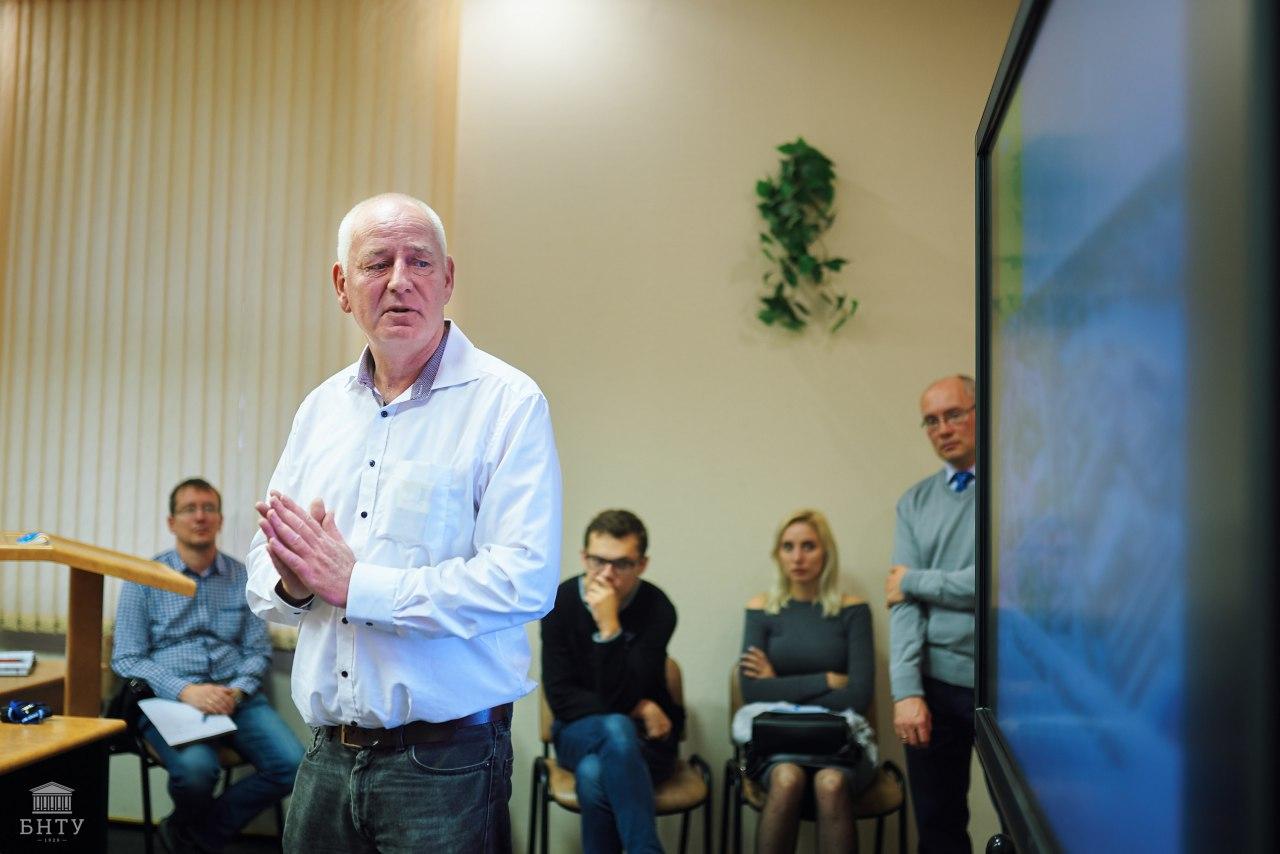
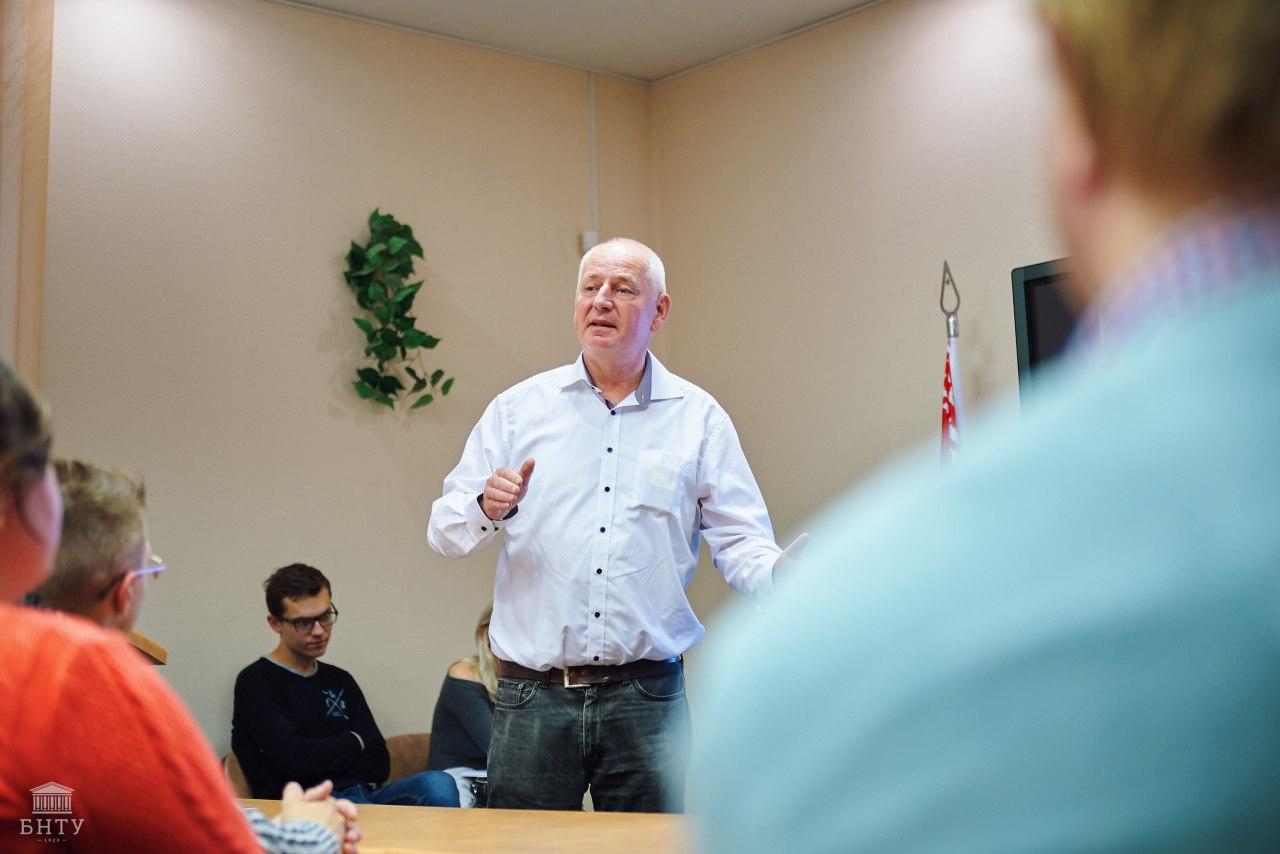
Jenny Ettrich, Head of the DAAD Information Centre in Minsk, is a person, who invited the foreign students and the professor in our country. She was very impressed by their visit, because, as a rule, it’s Belarusian students, who travel to study in Germany, not vice versa. “There is a wide choice of programs in which Belarusians can participate. An application is submitted by the German side, which demonstrates the importance of having a reliable partner in Germany. The professor Mirko Barz is the only person, who has taken this responsibility not once”, – says Jenny Ettrich.
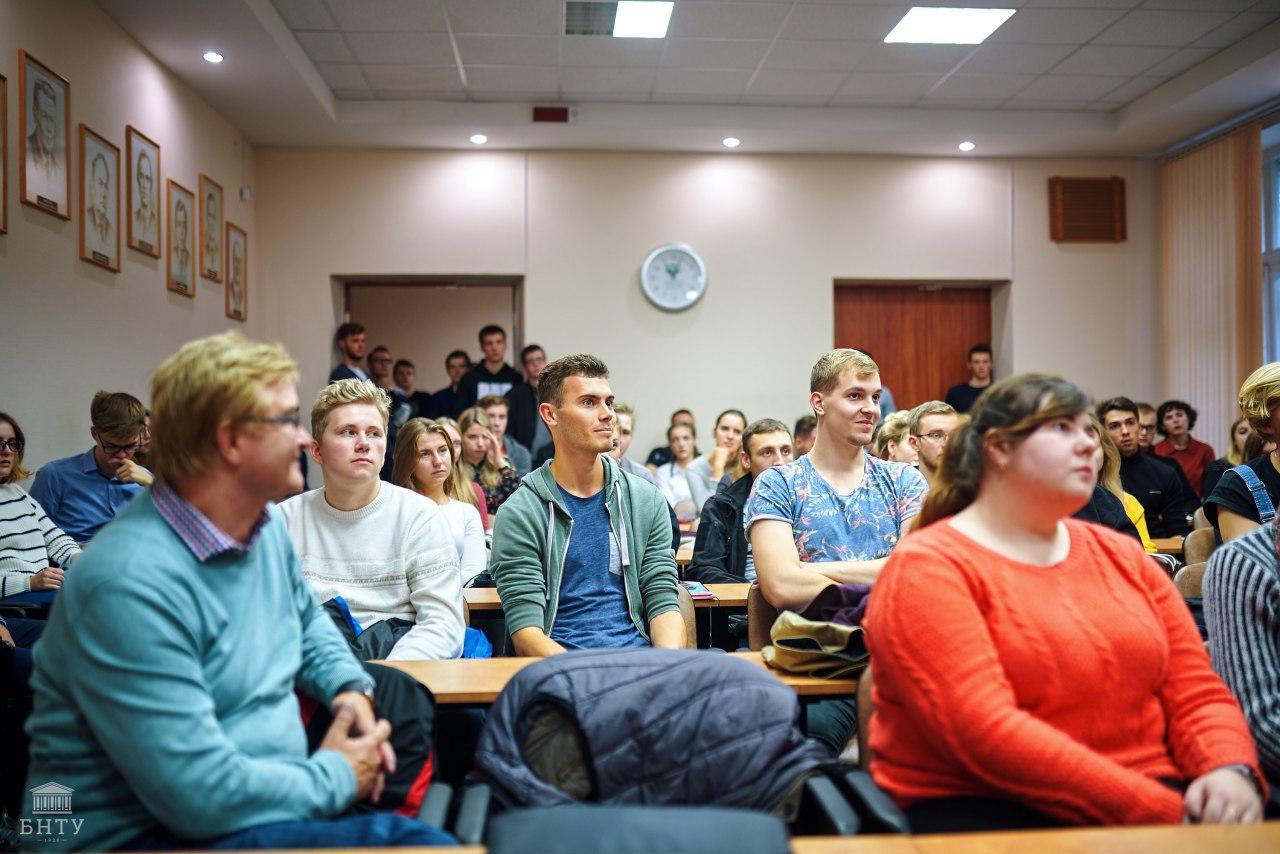
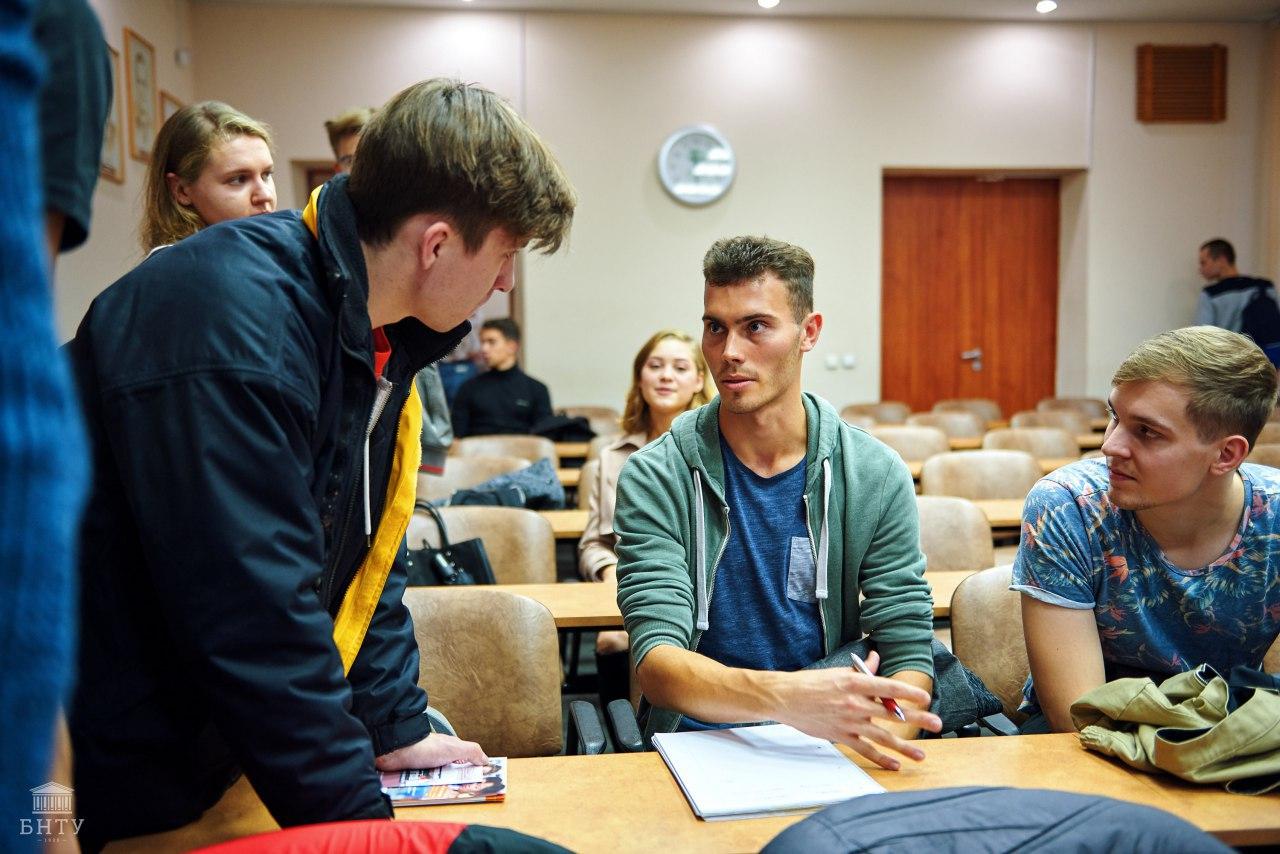
Coming to the end of the event, Belarusian students had an opportunity to ask the guests any questions. They were particularly interested in Berlin High School’s educational process, the purpose of their visit to Belarus, and, of course, the opinion about our country.
One of the German students noted the difference between the amounts of people, attending lectures in both countries. While we have a maximum number of 90, the other country’s universities can have 200 persons at a lecture. Also, the guests were satisfied with the Belarusian transport system and the cleanliness of the city and metro.
Thus, the meeting was ended on a high note. It left food for thought to many students and inspired them to act.
Any questions left? More detailed information on each program and deadlines for the application can be found on www.daad.by in section “Scholarship programs for the Republic of Belarus”.
How to choose a program correctly, cope with difficulties in documents’ submission and find differences in the educational systems of Belarus and Germany, – read in the interview with Jenny Ettrich, Head of the DAAD Information Centre in Minsk.
You can also consult with the stuff of the Information Centre personally. Here is the address: Independence Avenue (Praspiekt Niezaliežnasci), 65, building 11a, a. 101. Or call +375 (17) 2925-055 and send e-mail to daad-ic-minsk@bntu.by.
