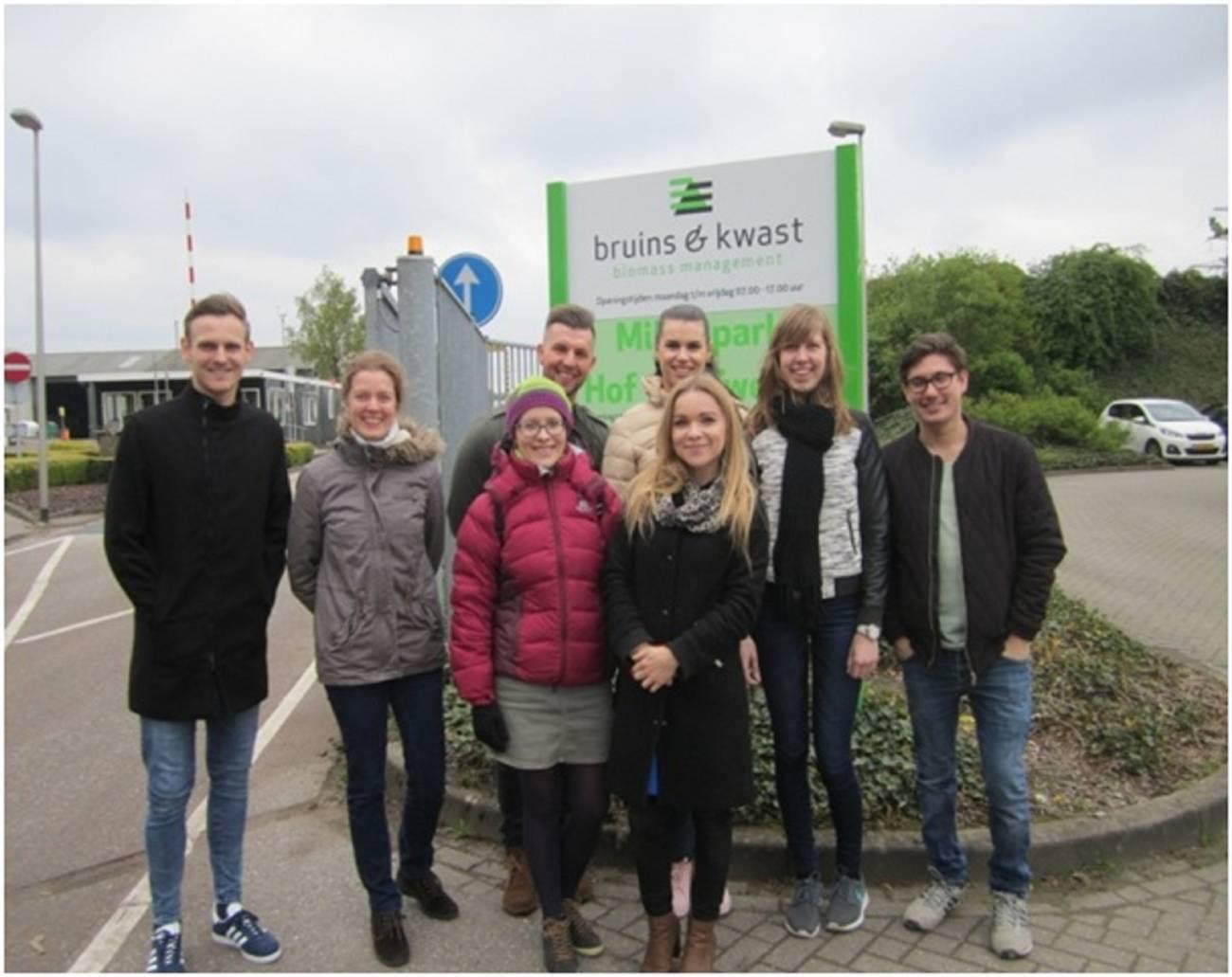
During the period of 10th April – 12th May assistant lecturers from UNESCO department «Energy Conservation and Renewable Energy Sources» Victoryia Moroz and Olga Liubchik carried out a research together with Twente University, the Netherlands in frames of PHOENIX project (Horizon 2020-MSCA-RISE-2015 690925).
The staff of Twente University consists of about 3300 researches and professionals and more than 9000 students study here.
The research at the University largely takes place within the research institutes that focus on nanotechnology (MESA+), ICT (CTIT), biomedical technology and technical medicine (MIRA), governance (IGS) and geo-information sciences and earth observation (ITC). Education and a part of the applied research takes place at our faculties: Behavioural, Management and Social Sciences (BMS), Engineering Technology (CTW), Electrical Engineering, Mathematics and Computer Science (EEMCS), Geo-Information Science and Earth Observation (ITC) and Science and Technology (TNW).
|
During the period of the secondment research on effective business systems in bio-resource value chains for industries based on bio-energy in the Republic of Belarus and on implementation of bio-technologies into regional energy production: economic, legislative and political issues was made. |
|
Visits to the next places were organised:
In January 2014 «Empyro» started building process of the facility for oil production with help of fast pyrolisys in the city of Hengelo, the Netherlands. The launch of the facility was conducted at the beginning of 2015. Biomass delivery is organized locally from special partners.
The visit was organized together with a group of pre-master students from Twente University. This company is specialized on production of fertilizers and wood pellets from biomass residued.
The renewable energy generates from residual streams and biomass is a source for regional energy-intensive activity involving smart cooling and heating. The company provides renewable heat and electricity to thousands of households. Converted into households, this involves the electricity for a good 125,000 households, heat for more than 50,000 households, and annual avoidance of CO2 emissions of 330,000 tonnes due to the reduced use of fossil fuels. The heat power of Twence is almost equal to the consumption of all households in the city of Enschede. The residues are delivered not only from the Netherlands, but also from Great Britain and Germany.
In the technological process the company is guided by sustainable development principles. Glass bottles are used about 40 times for a period of lifecycle. The production process includes, for example, using sewage waters as an energy source.
Sustainable development of bio-energy is an integral part of common society sustainable development process. European Commissionpays great attention to this question with an accent to sustainable raw material producing for biofuel and energy production. Some of the requirements are obligatory for EU countries (bio-oil and bio-liquids production), others are voluntary (production of electricity, heat and cool from solid and gas biomass). Incommonthereisatrendtostep-by-step toughening of the requirements according the criteria of sustainability.
On the base of analyzed literature and visits to real examples of circular economy principles implementation into bio-energy the joint article «Bio-energy and bio-economy in Belarus» together with representatives from Twente University is being prepared.
In Belarus biomass usage usually means its direct burning for heat production. There is a question: is it possible to get more economic value from biomass and in which way? About 40% of the territory of the Republic of Belarus is covered with forests. So the potential of biomass is really great. In the article current situation of biomass using in Belarus is analyzed and the variants of biomass economic value increasing are described.
The question of the article is next: can Belarus increase the economic value of the bio-resources if to compare it with the current situation?
Exchange between research institutes and innovation implementation to bio-resource value chains has a great value for the development of bio-energy sector in Belarus. Thereby joint research gives possibility to make contacts with academic and industrial partners.
During the time of the secondment contacts with the Host Organization were made for further collaboration between Belarusian National Technical University and University of Twente.
