Geopolitical aspect of the civilizational challenge
V.V. Valeytenok,
PhD in Philosophy
The presented fragment of applied political analysis was made by the author in 2020.
The current state of affairs in the international arena is characterized by growing global instability associated with deep shifts in the geopolitical landscape, a powerful catalyst for which was the financial and economic crisis. Starting from the end of 2013-beginning of 2014, the Ukrainian crisis, which most directly affects the national interests of the Republic of Belarus, has been the determining factor determining the nature of relations between Russia and the West.
From the events in Kiev, and then the war in eastern Ukraine, provoked the largest geopolitical confrontation between the modern West represented by the US, the EU and Russia since the Cold War. The complexity of the current Ukrainian crisis is due to a number of factors. Firstly, any intrastate confrontation based on an ethno-confessional or civilizational component is, in principle, extremely difficult to resolve quickly. Secondly, the conflict in the south-east of Ukraine is taking place against the backdrop of unprecedented external pressure exerted on Russia by the EU and the US, on the one hand, and with the active assistance of these players to the Kyiv regime, on the other.
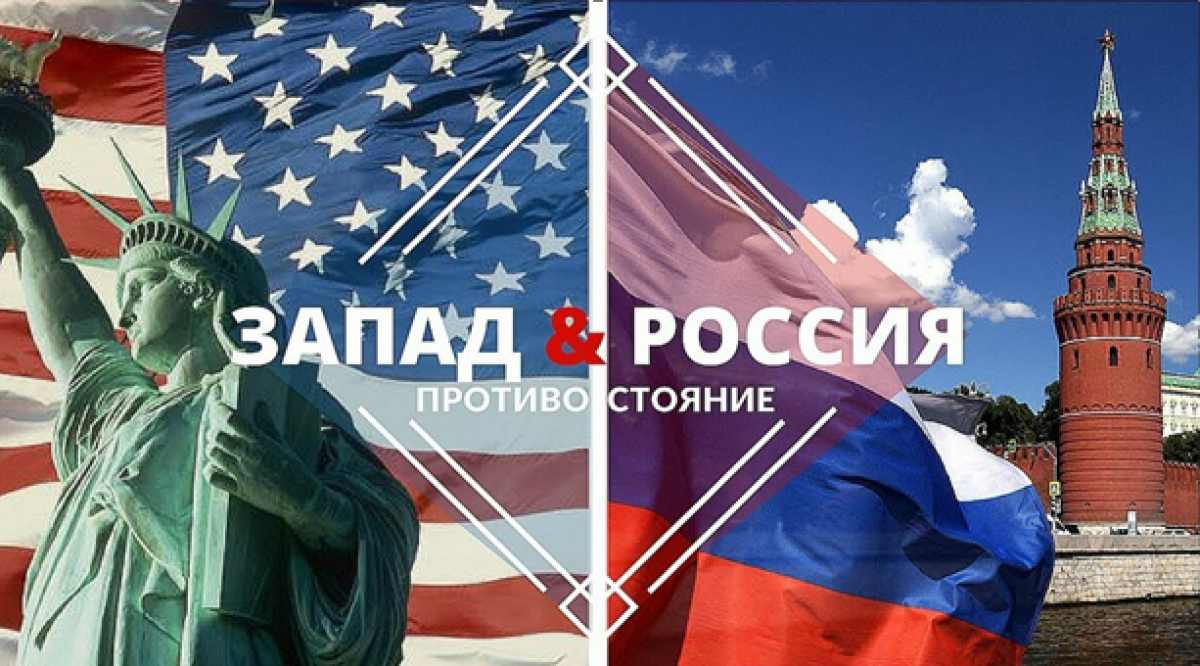
An important aspect of this crisis in relation to the foreign policy of the Russian Federation is the fact that the coup that took place in Ukraine drew a red line under the policy envisaged by Russia throughout the post-Soviet period, associated with attempts to integrate into Western economic, political and security structures. The Ukrainian crisis has clearly demonstrated that, despite the different opinions within the EU and the sympathy of individual politicians and top officials of states towards the Russian Federation, the European Union as a whole adheres to the policy of Atlantic solidarity with the United States in matters of Ukraine and Crimea.
Western sanctions pressure on the Russian Federation, primarily cutting off the Russian economy from sources of financing in Europe and the United States, ending cooperation with Western companies in such matters as geological exploration and oil production, especially on the shelf, creates serious difficulties for the Russian economy and forces the Russian Federation to on the one hand, to look for an effective replacement for the West in economic terms, and on the other hand, to continue active attempts to resolve the Ukrainian crisis and lift sanctions,
In addition, the Ukrainian crisis has become a catalyst for the aggravation of the "gas issue" both in the format of the Russian Federation - Ukraine, and between the Russian Federation and the West. It is obvious that the EU intends to use the instability in Ukraine in order to put pressure on the Russian Federation in two ways.
The problem of integration of the republics of the former USSR, especially the East Slavic ones, Russia, Belarus and Ukraine, arose almost immediately after the demise of the Soviet Union. The rupture of a single economic, political, socio-cultural field has led to a disruption in the system of ties between enterprises within the historically established inter-regional and international division of labor, increased production costs immeasurably and limited the economic potential of each of the economic entities. The economic crisis that erupted in the 1990s in the CIS states, to a large extent, owes its depth and duration to the collapse of the USSR.
Similar processes are also observed in the social sphere, where the formation of independent states exacerbated the problem of pensions, tourism and recreation, created the problem of family separation, with significant territorial mobility of citizens of the USSR, millions of Russians, Ukrainians and Belarusians found themselves separated from their relatives, finding themselves in other countries. . The unified cultural space was broken, which led to a crisis not only of general cultural values, but also to a decrease in the cultural level in each of the individual republics.
In the political field, the consequences of the collapse of the USSR are no less pernicious, although their impact is not as rapid as in other areas. The emerging states turned out to be unable to respond alone to the geo-economic and geopolitical challenges that arose before them. At the same time, the period that has passed since the formation of independent states has shown that the economic and especially political elite of these states has neither sufficient political will nor a concept and program for reintegration. Within the elites of Russia, Ukraine and Belarus, there are significant differences on integration issues. The problems that stand in the way of this process inside and outside the states are not being solved in full or not being solved at all.
Of course, reintegration as a project is fundamentally possible due to the identity of the Russian, Ukrainian, Belarusian peoples. The commonality and peculiarities of culture, language, historical fate, national and political formation allows us to speak about the Eurasian identity of the countries and peoples under consideration. About their belonging to the Eurasian "big space", that is, to a special historical and geographical world that has developed in Eastern Europe and a significant part of North and Central Asia, a special "place of development" in which the peoples inhabiting it are connected with each other by a sufficient number of features of the internal spiritual relationship.
The main driving forces of integration are economic relations (trade, investment, industrial relations) and the entities that carry them out (firms, corporations, industries), which are more affected by political disintegration; and especially the human factor.
A significant factor hindering the process of integration is the economic, political and information impact of the outside world. Most Western actors, represented by established elites, oppose any form of integration. Methods of economic and financial pressure are being applied, and the negative consequences of the unification are being intensively promoted. At the same time, political influence takes various forms, from the conclusion of agreements that impede the process of integration and destabilization of the internal political life of these countries, to bribing representatives of national elites and supporting extremely nationalist movements.
ATIn this regard, the main political imperative of the main beneficiary of power in Russia is a long-term strategy for recreating Historical Russia within the borders of the early 19th century, which the first person of the Russian state, far from latently, stated on May 9, 2019 in a speech addressed to the participants of the parade on Red Square. This strategy is the strategy of irredentism, the desire to reunite the torn ethnic group within the framework of a single political whole, based on the premise that in December 1991 the largest geopolitical catastrophe occurred. As a result of which the Russian people turned out to be the largest divided people in the world. The implementation of this strategy is the quintessence in Russia's offer of deep integration within the framework of the construction of the Union State with the maximum unification of the economic, cultural and political areas.
