The UNESCO Chair "Energy Saving and Renewable Energy Sources" represents the interests of the engineering and technical profile.
The department is a structural subdivision of BNTU and, participating in the UNESCO UNITWIN / UNESCO Chairs program, enjoys the support of UNESCO in accordance with the Agreement signed on August 26, 1996 by the rector of the Belarusian State Polytechnic Academy M. I. Demchuk and the Director General of UNESCO F. Mayor.
According to this agreement, the main goal of the department is to form and implement an integrated system of educational, scientific, informational and organizational activities for the training of engineering personnel for the Republic of Belarus, aimed at solving energy saving problems, including with the widespread use of renewable energy sources, and capable of solving these problems using the world's best practices.
Sharing the values of UNESCO and supporting the goals of sustainable development in Belarus in accordance with the 2030 Agenda adopted at the 70th session of the UN General Assembly on September 25, 2015 , the UNESCO Chair has identified the following goals, to the implementation of which it can make the most significant contribution :
Goal 4: Ensure inclusive and equitable quality education and promote lifelong learning opportunities for all,
Goal 7. Ensure universal access to affordable, reliable, sustainable and modern energy for all,
Goal 12. Ensuring the transition to sustainable patterns of consumption and production,
Goal 13. Take urgent action to combat climate change and its impacts.
|
|
|
|
|
The activities of the UNESCO Chair are carried out under the motto:
The basis of sustainable energy development is the unity of the 3E :
ENERGY - ECONOMY - ECOLOGY
The department trains engineers in the following specialties of the 1st stage of higher education with a training period of 4 years:
and in the specialty "Heat power engineering and heat engineering" of the 2nd stage of higher education (master's degree) with a training period of 1 year for full-time education and 1.5 years for part-time education.
Key dates in the life of the UNESCO Chair
Становление и последующая деятельность кафедры ЮНЕСКО в БНТУ осуществлялись при активной поддержке Департамента техники и технологий ЮНЕСКО, Постоянного представительства Республики Беларусь в ЮНЕСКО, Национальной Комиссии Республики Беларусь по делам ЮНЕСКО, Государственного комитета по энергосбережению и энергонадзору (в настоящее время Департамент по энергоэффективности Государственного комитета по стандартизации) Республики Беларусь.
|
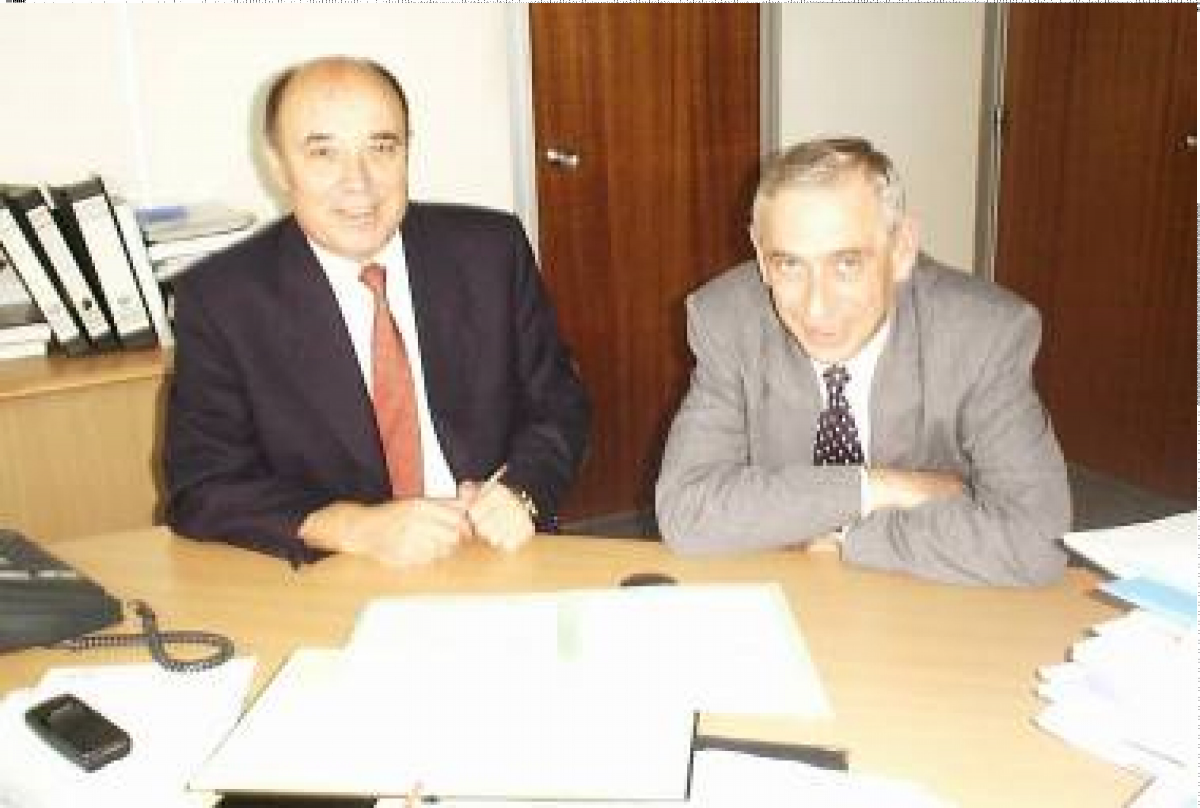
Director of the Department of Engineering and Technology of UNESCO, Mr. B. Berkovsky and prof. V. Bashtovoy discuss the work plan of the UNESCO Chair. (UNESCO Headquarters, Paris, 1999) |
|
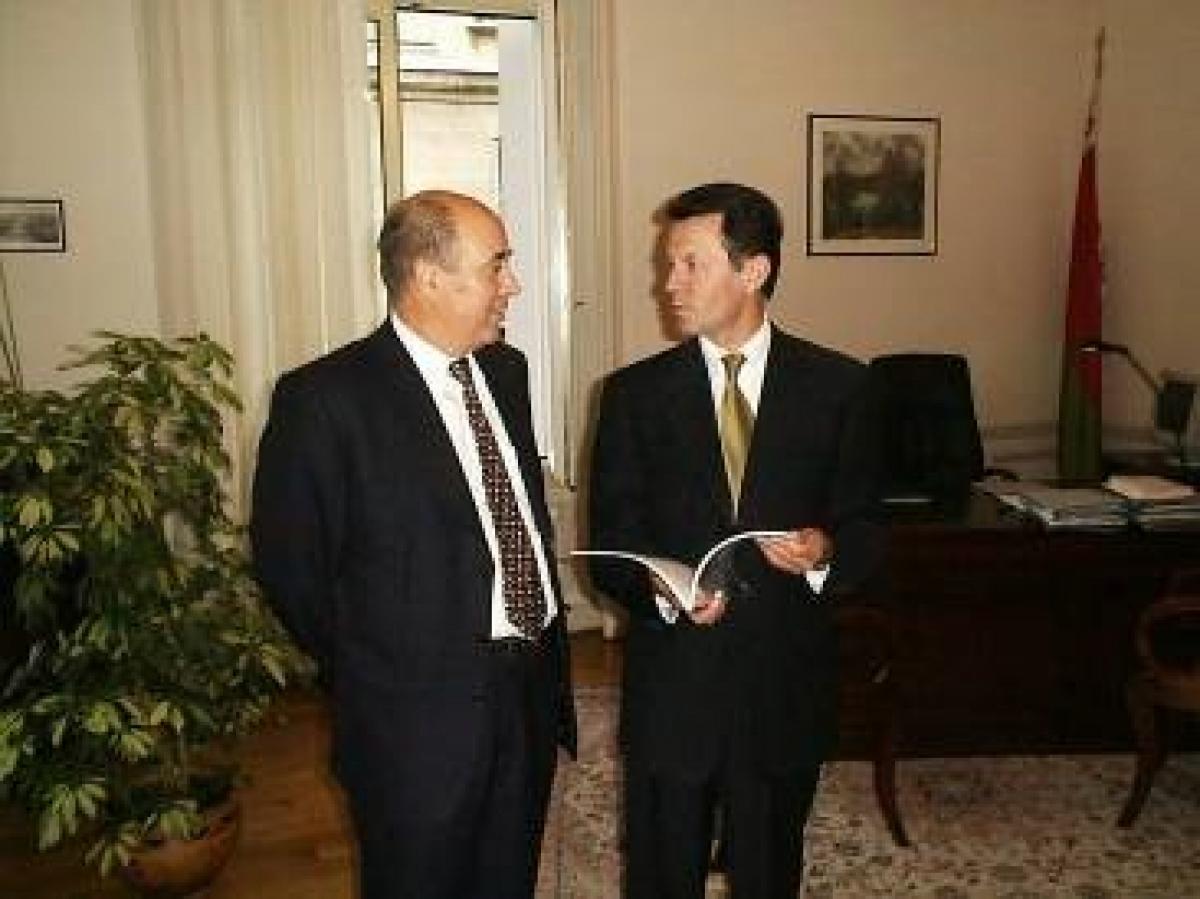
Director of the UNESCO Department of Engineering and Technology Mr. Berkovsky Boris Mikhailovich (left) and Ambassador Extraordinary and Plenipotentiary of Belarus to France Mr. Senko Vladimir Leonovich get acquainted with the report of the UNESCO Chair . (Embassy of the Republic of Belarus in France, Paris, 1999) |
|
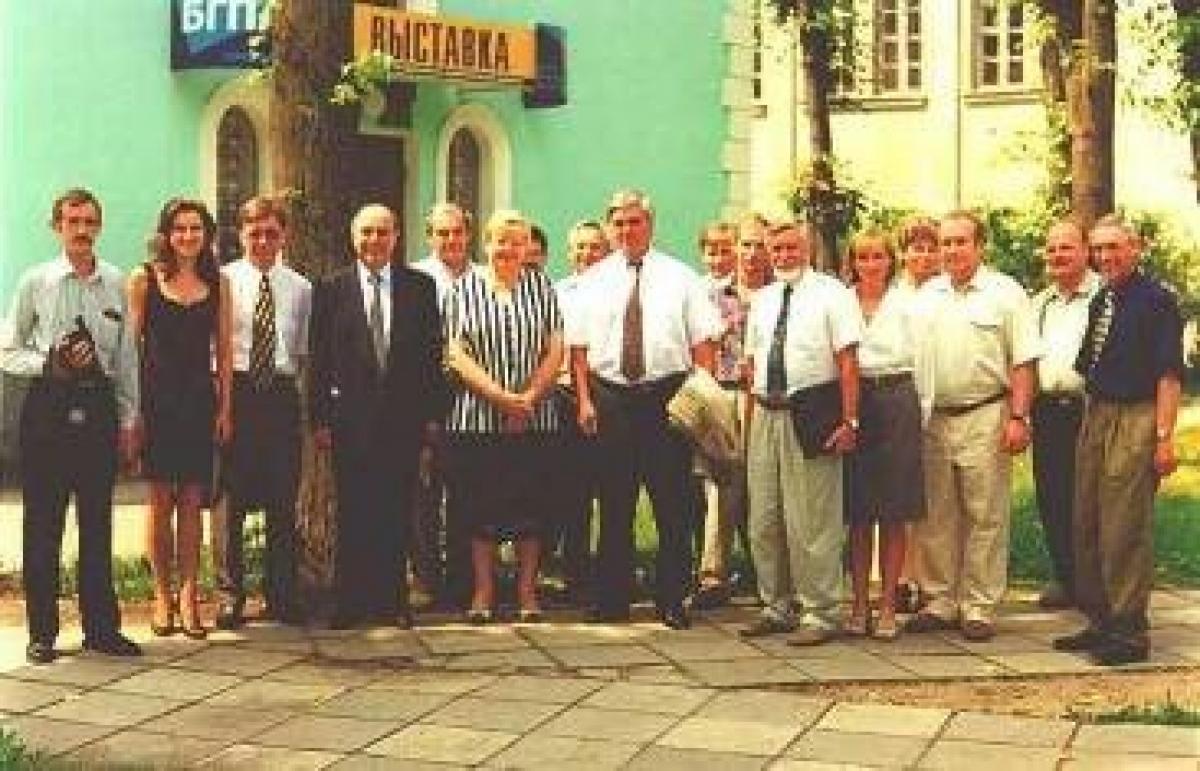
Participants of the meeting on the implementation of the projects "National Program for Education in the Field of Energy Saving and Renewable Energy" of the World Solar Program 1996-2005 and "UNESCO Chair "Energy Saving and Renewable Energy Sources"" In the center: B.M. Berkovsky - Director of the Department of Engineering and Technology of UNESCO, N.N.Mazay - Chairman of the National Commission of the Republic of Belarus for UNESCO, M.I. Demchuk - Rector of the Belarusian State Polytechnic Academy, AAMikhalevich - Director of the Institute of Energy Problems of the National Academy of Sciences of Belarus. (Belarusian State Polytechnic Academy, Minsk, June 18, 1999 ) |
| On November 13-15, 2002, the World Forum of UNESCO Chairs took place in Paris at the headquarters of UNESCO. The Forum was dedicated to the tenth anniversary of the UNESCO UNITWIN/UNESCO Chair Programme. During the Forum, a number of UNESCO Chairs that achieved the greatest success in realizing the overall goals of the Program received UNESCO awards (UNTWIN Award). Among those awarded for a high academic level and as the most successful in the field of education and research was the UNESCO Chair "Energy Saving and Renewable Energy Sources" of the Belarusian National Technical University. | 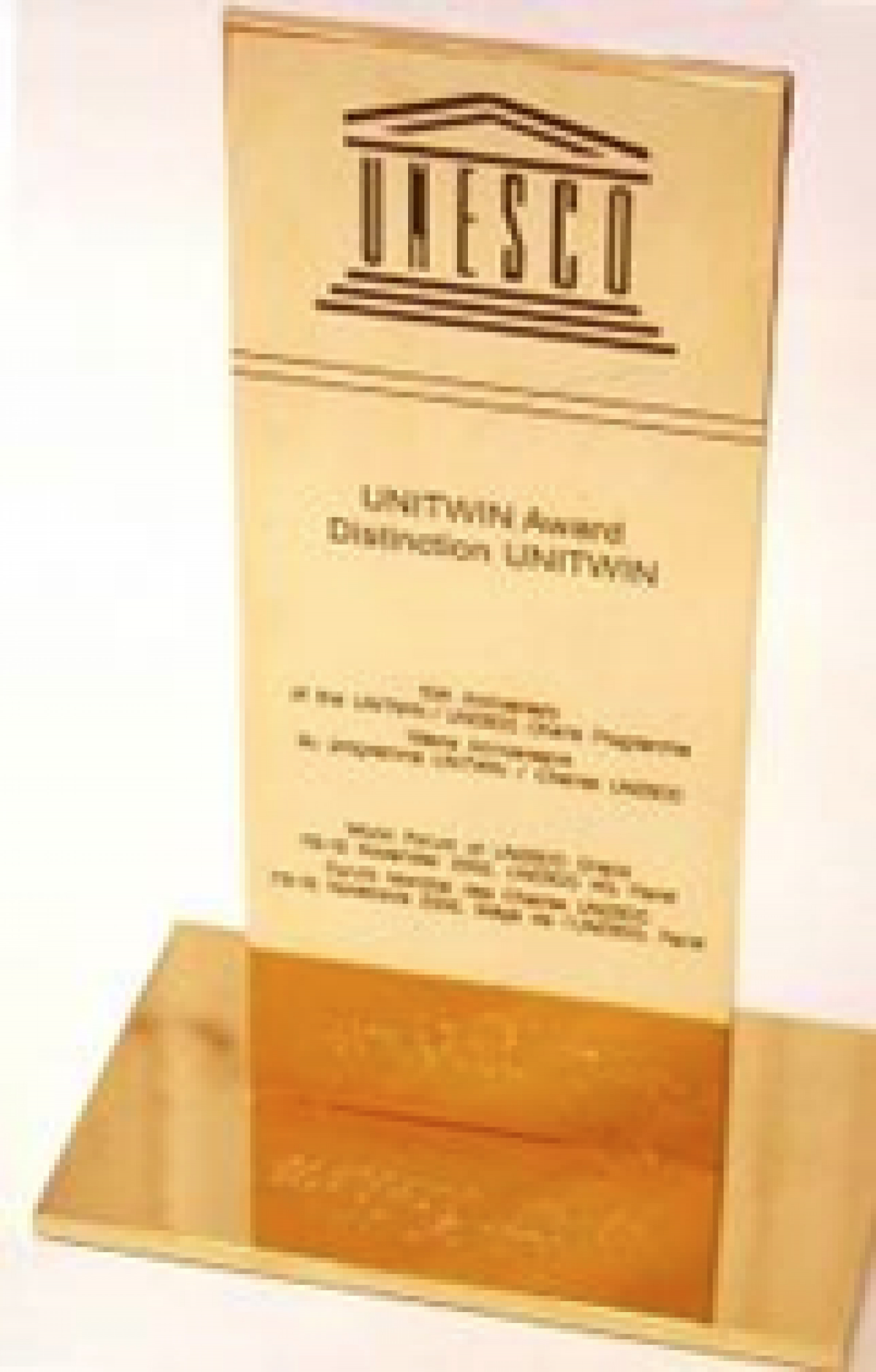
|
World Forum of UNESCO Chairs,
UNESCO Headquarters, Paris, 13-15 November 2002
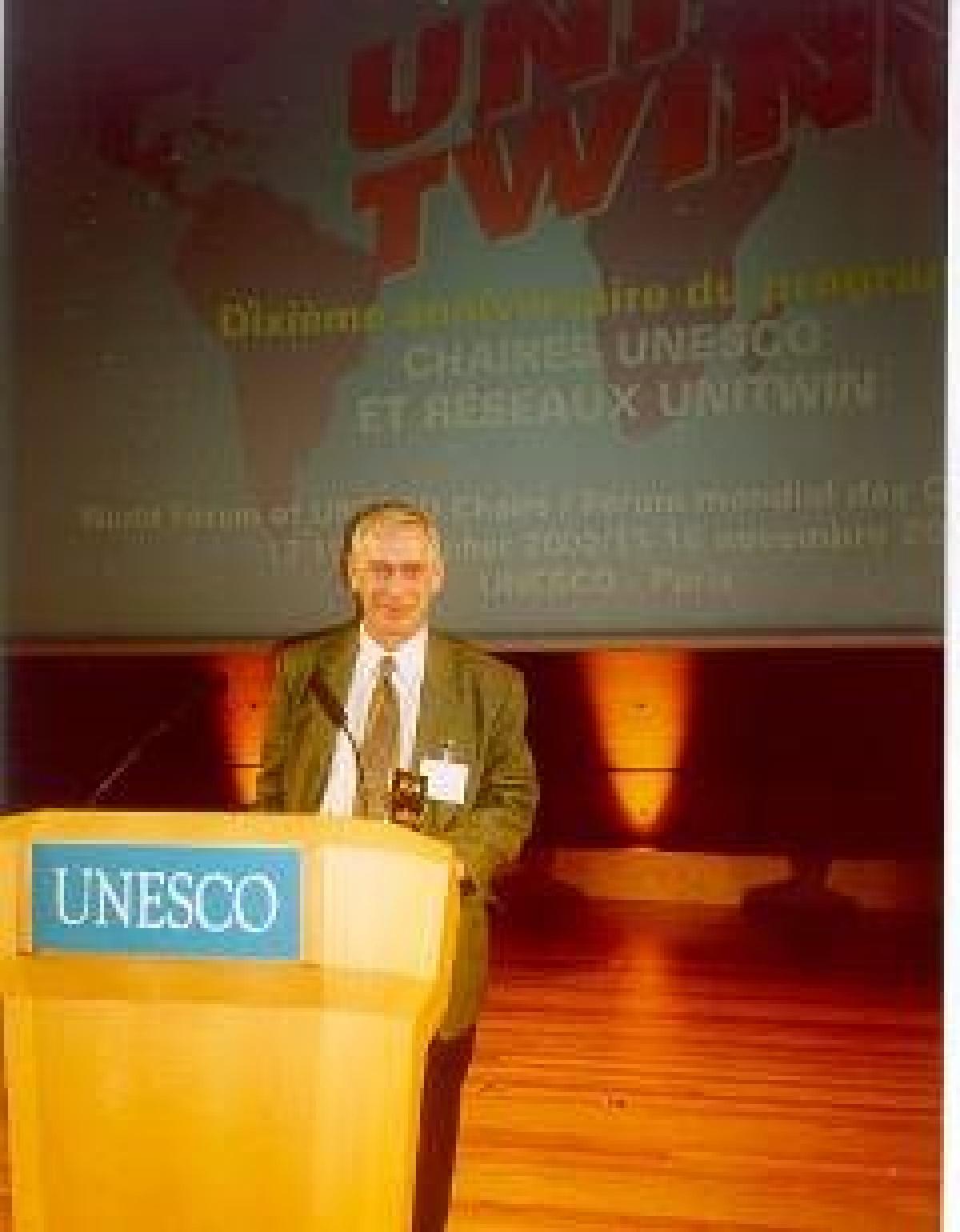 Prof. V. G. Bashtova with the UNESCO award
 |
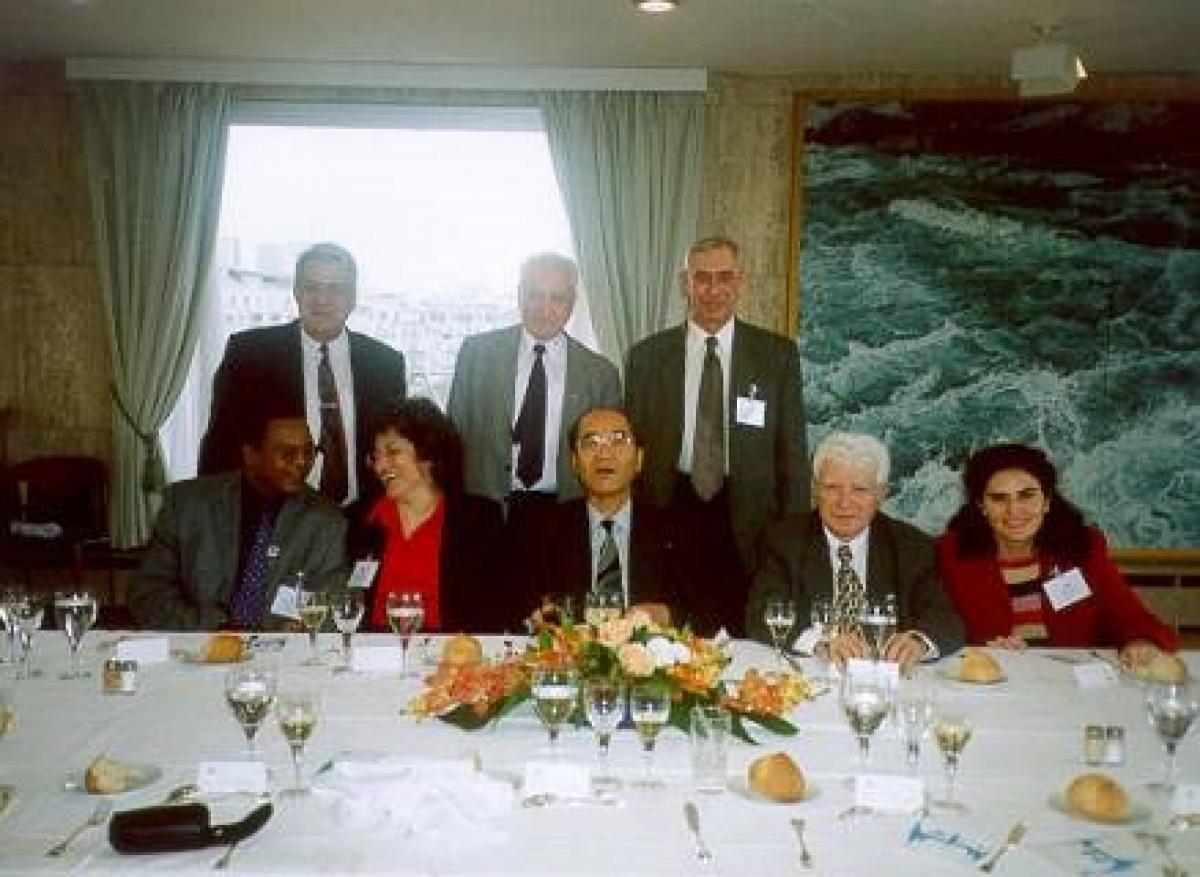 Прием у Генерального директора ЮНЕСКО Коитиро Мацуура (в центре) по случаю вручения наград ЮНЕСКО
 |
Международная деятельность кафедры ЮНЕСКО
Уникальный статус кафедры позволяет ей пользоваться всесторонней поддержкой и возможностями такой влиятельной международной организации, как ЮНЕСКО. Под эгидой ЮНЕСКО кафедра имеет широкие возможности участия в различного рода программах и проектах, направленных на совершенствование учебного процесса, развитие материально-технической базы, проведения международных конференций и семинаров за счет средств разных международных организаций.
В 1997 году по инициативе кафедры проект “Национальная программа образования в области энергосбережения и возобновляемой энергетики” был включен в качестве приоритетного в "Мировую Солнечную программу 1996-2005".
Состоявшаяся в декабре 1997 года 29-я Сессия Генеральной конференции ЮНЕСКО по инициативе белорусской делегации приняла специальную резолюцию 29 C/DR.131 в поддержку деятельности кафедры ЮНЕСКО и создания в БГПА регионального центра по подготовке и переподготовке специалистов в области энергосбережения и возобновляемой энергетики.
В 1999 году при поддержке Комиссии по делам ЮНЕСКО в рамках Программы участия ЮНЕСКО кафедрой был реализован проект BYE 302 "Создание компьютерной базы данных и образовательных технологий в области энергосбережения и возобновляемых источников энергии", в результате чего за счет средств ЮНЕСКО была создана первая компьютерная сеть кафедры.
9-10 июня 1998 года Белорусской государственной политехнической академией на базе кафедры ЮНЕСКО был проведен республиканский учебно-методический семинар «Актуальные вопросы подготовки специалистов с высшим и средним специальным образованием в области энергосбережения» с участием представителей Министерства образования Беларуси, Государственного комитета по энергосбережению и энергонадзору, руководителей профильных кафедр ведущих вузов республики, научных работников Национальной академии наук.
On June 18, 1999 , a meeting was held on the basis of the UNESCO Chair on the implementation of the projects "National Program for Education in the Field of Energy Saving and Renewable Energy Sources" and "UNESCO Chair "Energy Saving and Renewable Energy Sources" at the Belarusian State Polytechnic Academy" with the participation of the responsible leaders of the World Solar Commission, Representative offices of the United Nations in the Republic of Belarus, the National Commission for UNESCO, the State Committee for Energy Saving and Energy Supervision.
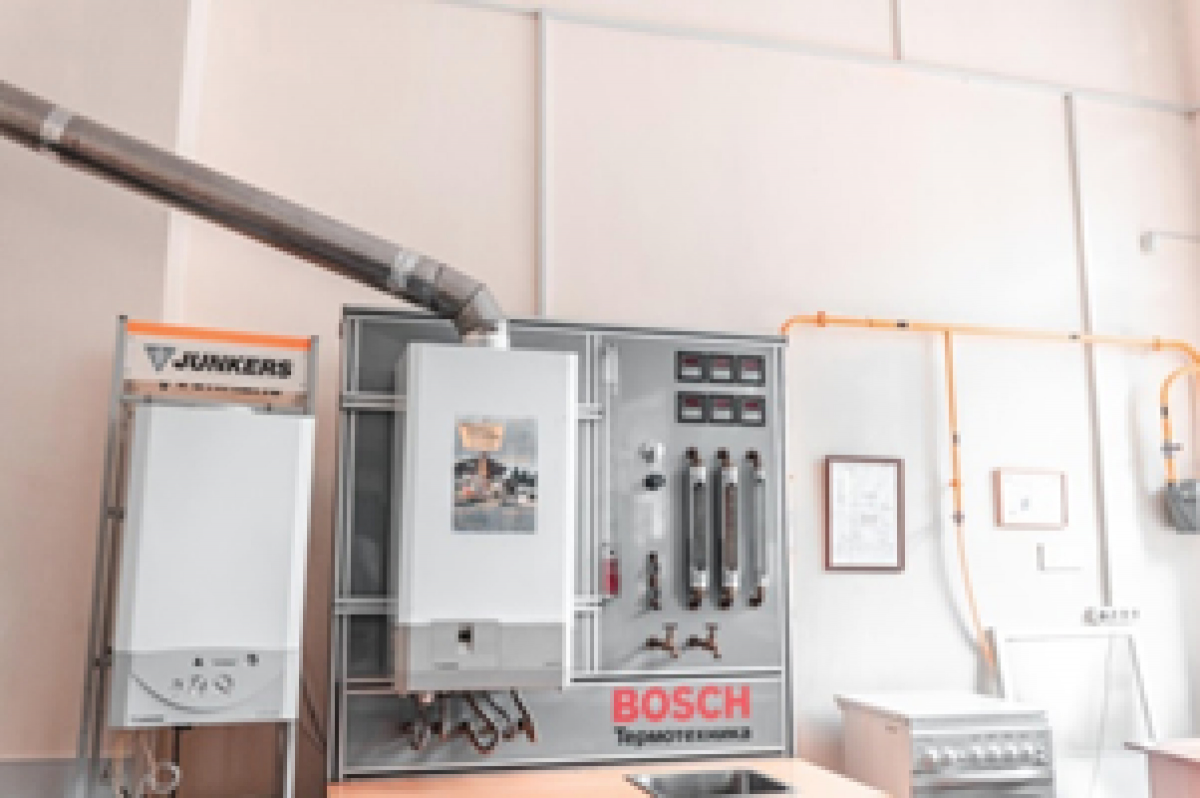
In 2001 , within the framework of cooperation between the UNESCO Chair and foreign industrial companies, a training laboratory for modern gas water heating equipment was established together with the well-known German company "Robert BOSCH".
The Robert BOSCH company has equipped the laboratory in room 228 of building 2 with gas-fired water-heating boilers and a unique stand for testing them, which are used in the training of engineers in the specialty "Energy Efficient Technologies and Energy Management".
On September 11-13, 2001, the UNESCO Chair held the International Conference and School-Seminar "New "intelligent" materials - electro- and magnetically sensitive liquids and their application for energy-efficient technologies".
In 2001-2002 , the department takes an active part in the activities of the UNESCO working group of experts on the development of models of European cooperation in the field of renewable energy and the creation of the European network for education and training in the field of renewable energy EURONETRES.
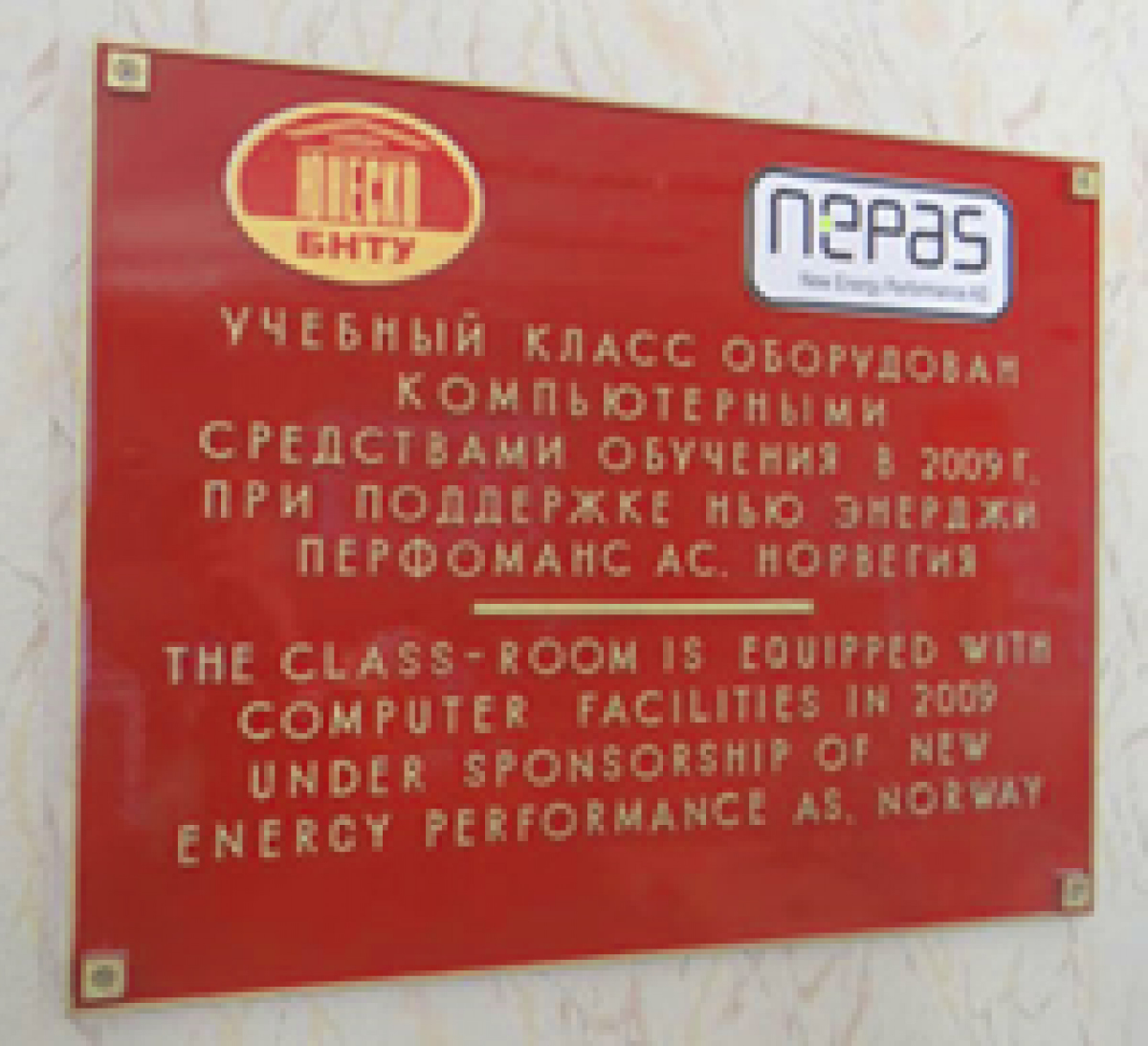
In 2009-2012 , the UNESCO Chair implemented a joint project with New Energy Performance AC, NEPAS, Norway, “Education of experts in the field of energy and environmental protection - a program for industry and the public sector in Belarus ".
Financial support for the project by NEPAS amounted to 71,000 Euros.
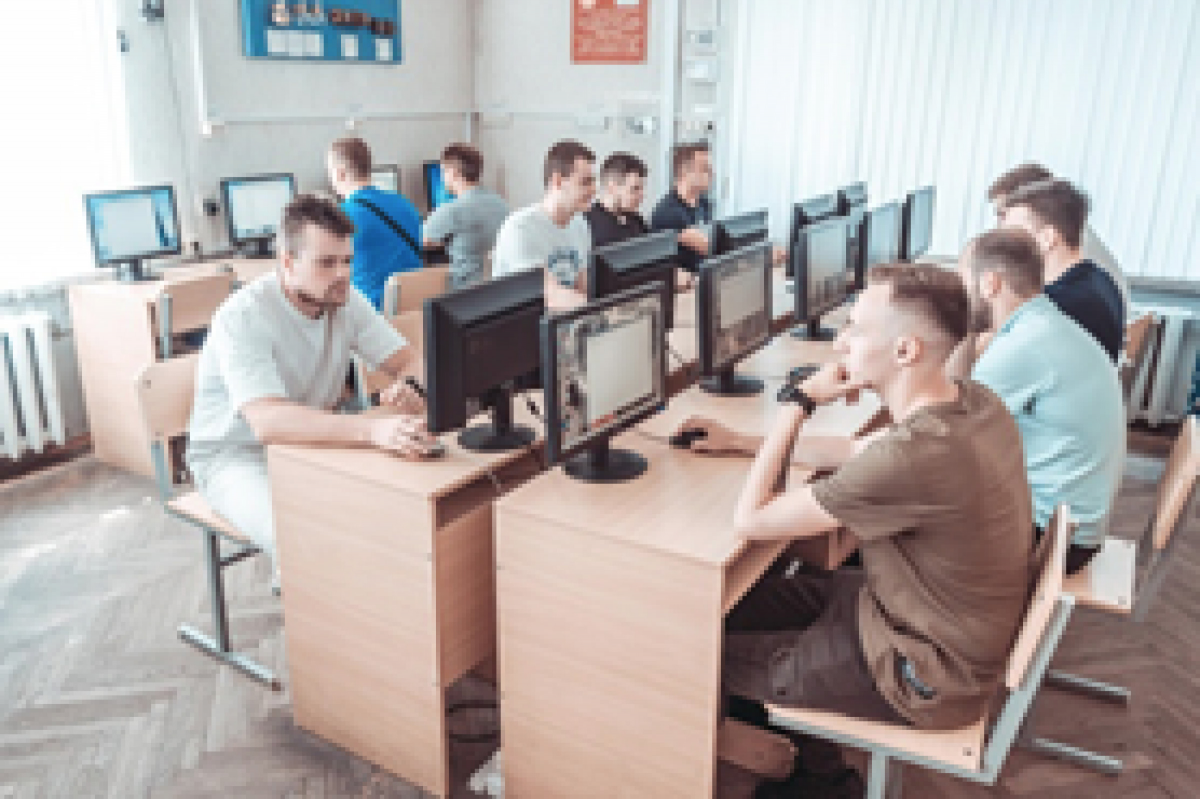
Of these, in the amount of 34,000 Euros, equipment was purchased for the development of the material and technical base of the UNESCO Chair, including a computer class (room 305 of educational building 9) and digital teaching aids.
For the amount of 14,000 Euros, educational materials (teaching aids, laboratory workshops, etc.) were prepared and published for BNTU students.
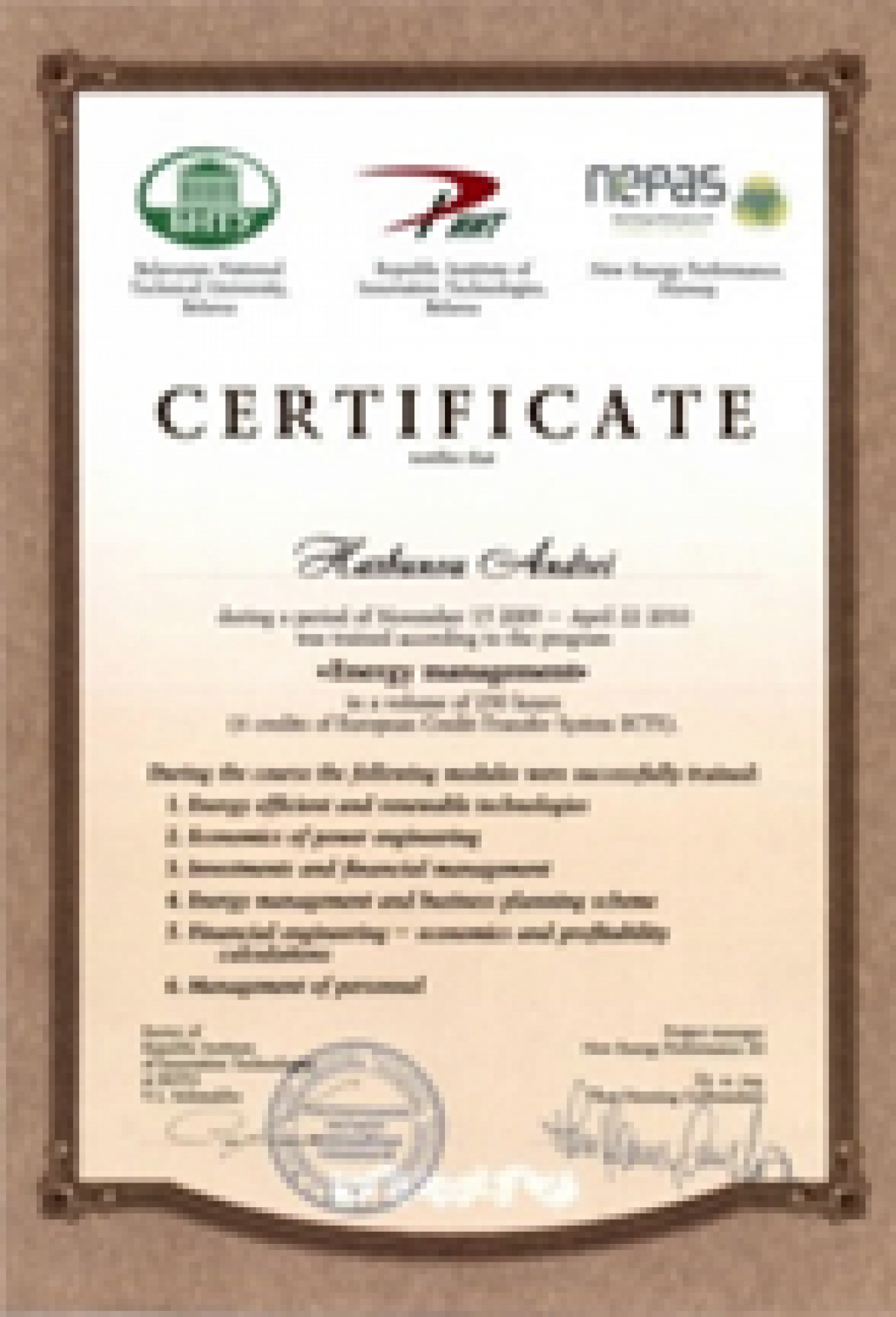
As part of the project, more than 40 representatives of the Belarusian industry were trained and received a certificate of retraining and advanced training in the specialty "Energy Management".
|
|
|
|
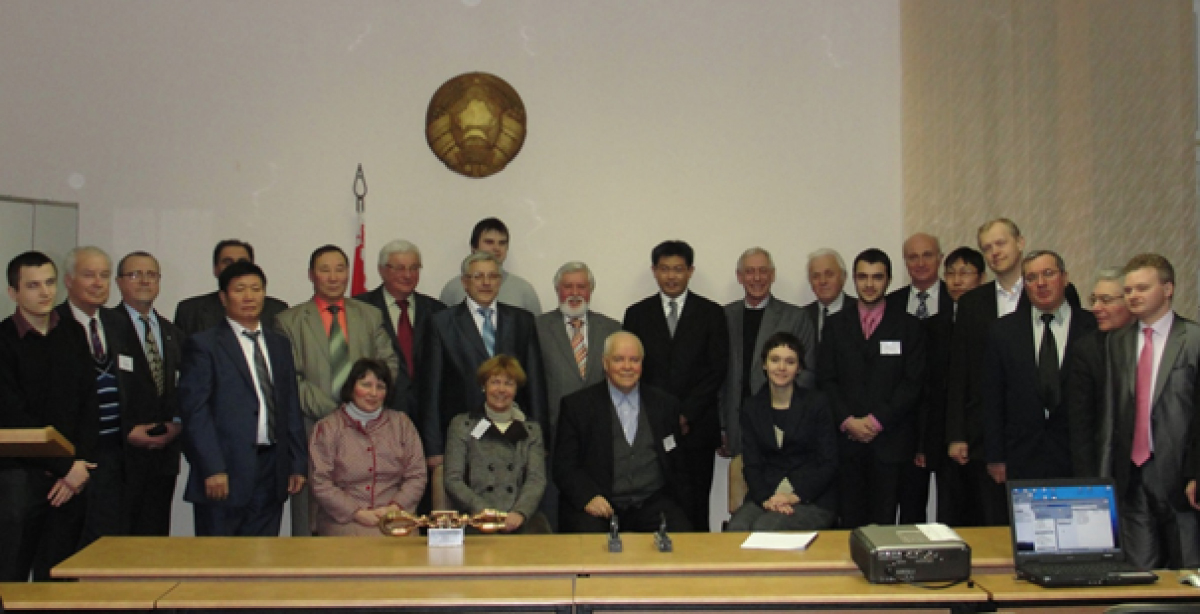
February 22-24, 2011 at BNTU, with the support of UNESCO and with the participation of the Energy Efficiency Department of the State Committee for Standardization of the Republic of Belarus and the Institute of Energy of the National Academy of Sciences of Belarus, the UNESCO Chair held an International Seminar of Experts on Renewable Energy Sources “Development of proposals for the implementation of the national policy on Renewable Energy Sources (RES) in Belarus and sharing inter-regional knowledge and good practices to improve energy efficiency”.
The main goal of the seminar was to develop proposals for the implementation of the national program for the development of renewable energy sources (RES) in Belarus, as well as to establish cooperation between the institutions of the UNESCO member countries.
UNESCO's contribution to the organization of the seminar amounted to 16,000 US dollars and was used to financially support the participants, as well as to publish the proceedings of the seminar.
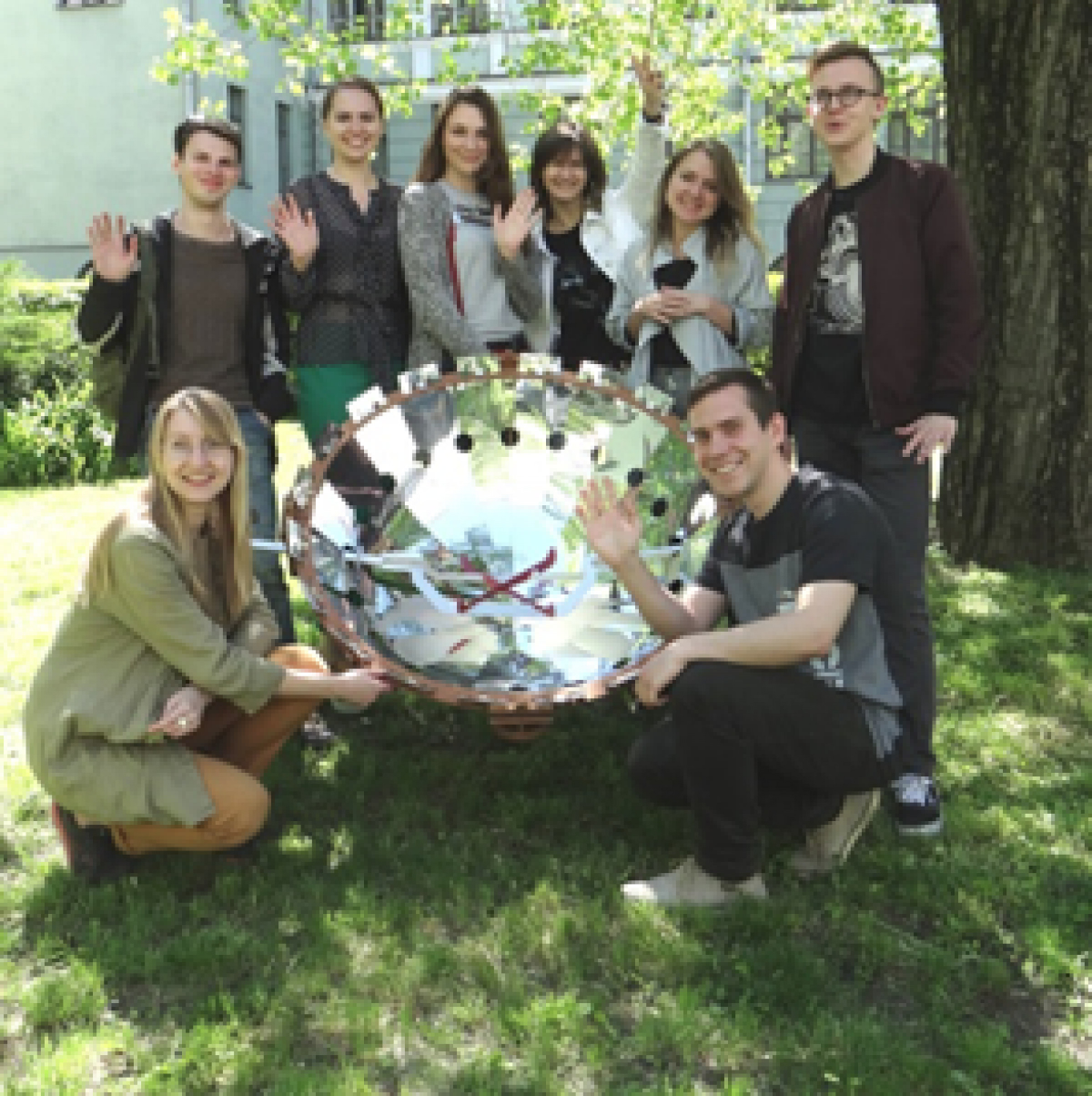
In 2012-2015 , the UNESCO Chair took part in the implementation of the TEMPUS project "Development of a training network to improve education in the field of energy efficiency."
|
|
|
The aim of the project was to exchange experience and information among higher education institutions of the partner countries and EU Member States to improve and harmonize education in the field of energy efficiency and the use of renewable energy sources.
The implementation of the project made it possible to introduce innovative methods of training specialists in the field of energy saving and the use of renewable energy sources in partner universities and to disseminate the experience gained among other universities of the Republic of Belarus.
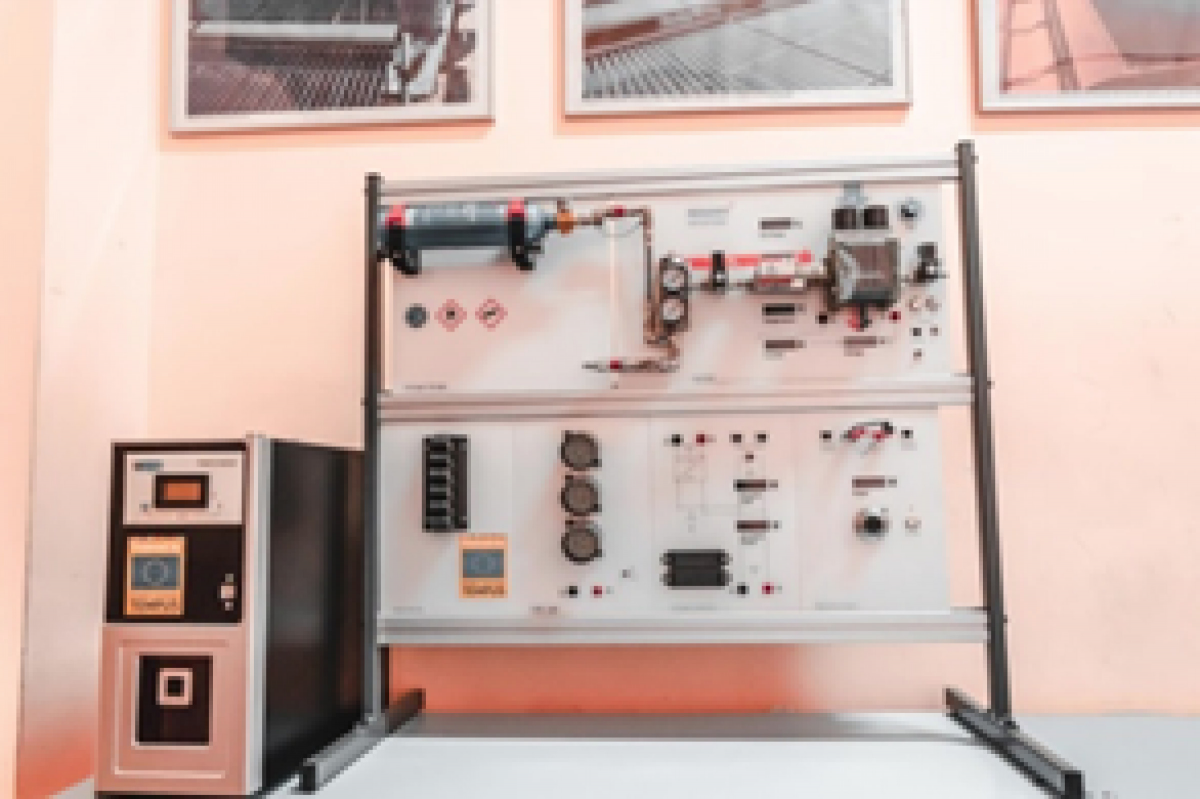
The total funding of the project from the European Commission amounted to 76,000 Euros, of which 25,000 Euros were purchased for equipment for the development of the material and technical base of the department (rooms 227, 228 of the educational building 2).
In the amount of 2,300 Euros, educational and methodological materials (educational and methodological manuals, laboratory workshops, etc.) were published for teaching students of the specialty "Energy Efficient Technologies and Energy Management".
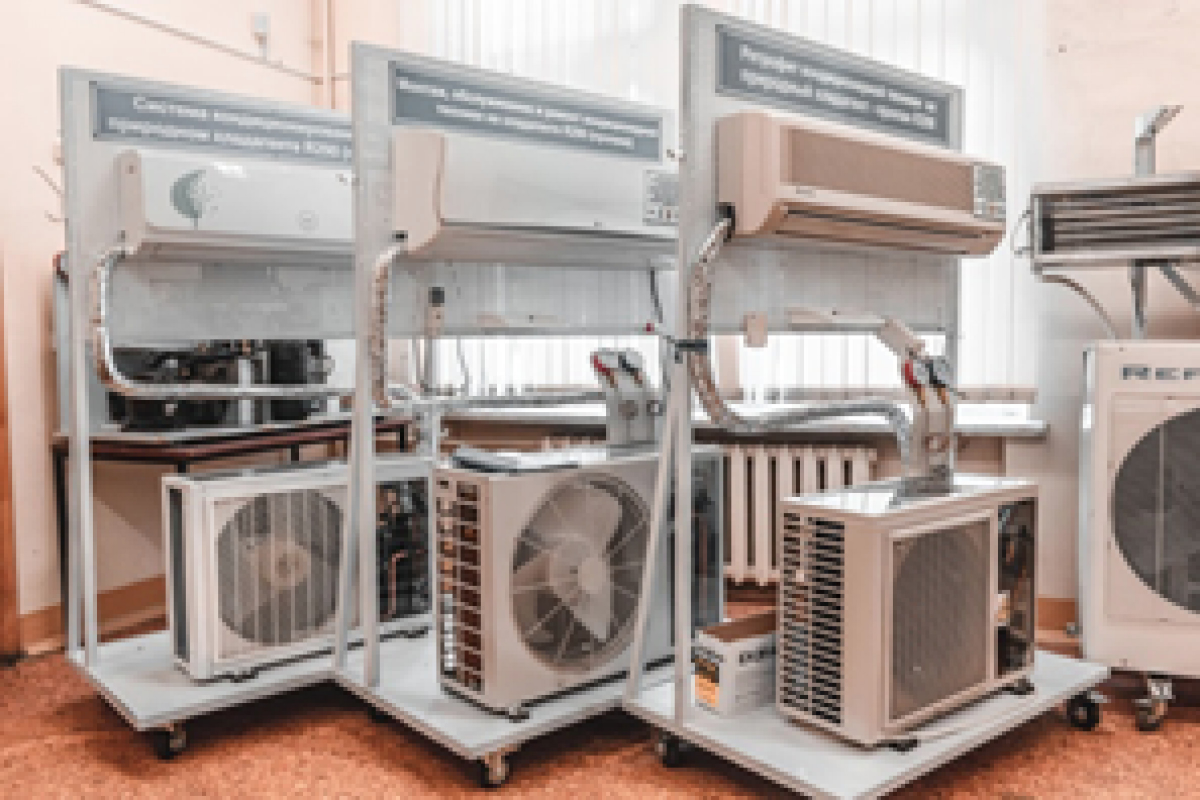
In 2013-2015 , the department, under the auspices of the Association of Microclimate and Refrigeration Industry Enterprises (APIMH), took part in the implementation of the UNDP project "Assistance in the implementation of the accelerated phase-out of HCFCs in countries with economies in transition", aimed at reducing emissions of ozone-depleting substances into the atmosphere.
|
|
|
|
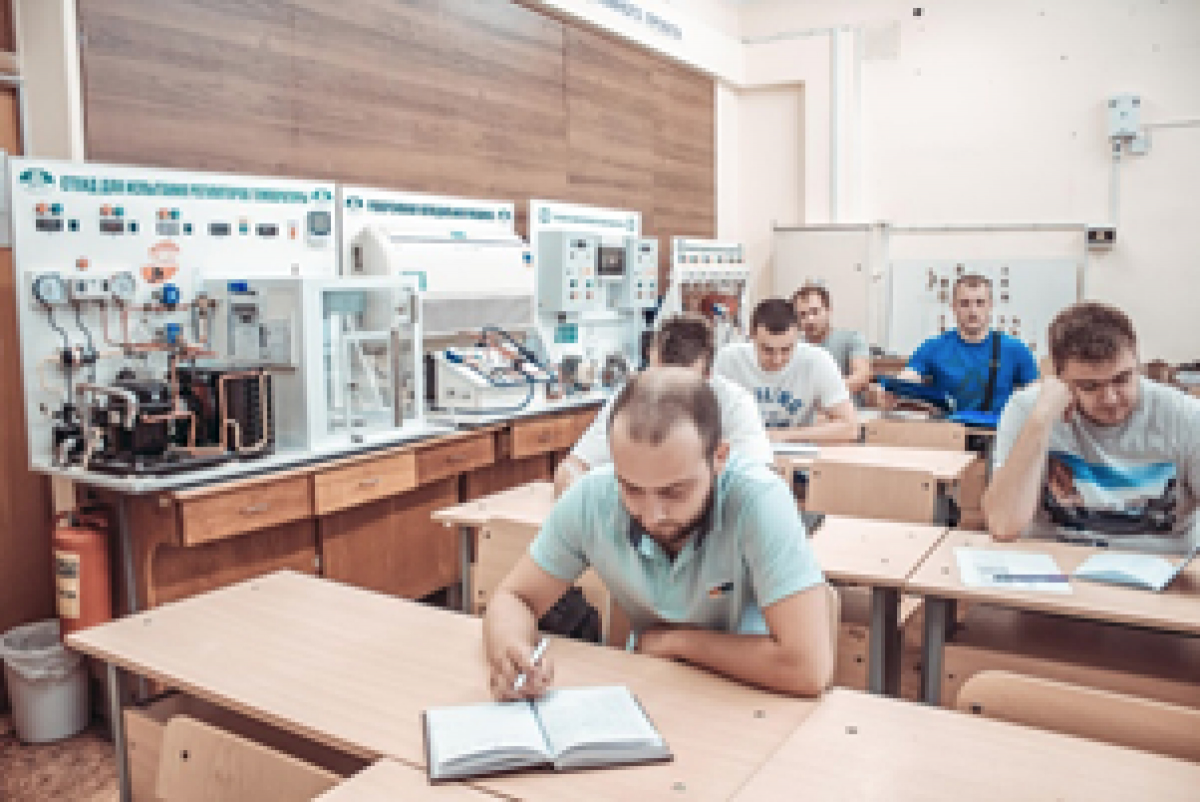
Within the framework of this project, thanks to the support of AIMH, a training laboratory on refrigeration production systems operating on ozone-friendly natural hydrocarbon refrigerants was established at the UNESCO Chair. These are the first such installations assembled in the Republic of Belarus and created for educational purposes. The main task of the laboratory is to train and improve the skills of specialists in the refrigeration industry to work with hydrocarbon refrigerants.
In order to improve the material and technical base for training specialists in the specialty "Low-Temperature Engineering", within the framework of this project, more than 12,000 US dollars were transferred to the UNESCO Chair of BNTU (rooms 104, 208 of the educational building 9).
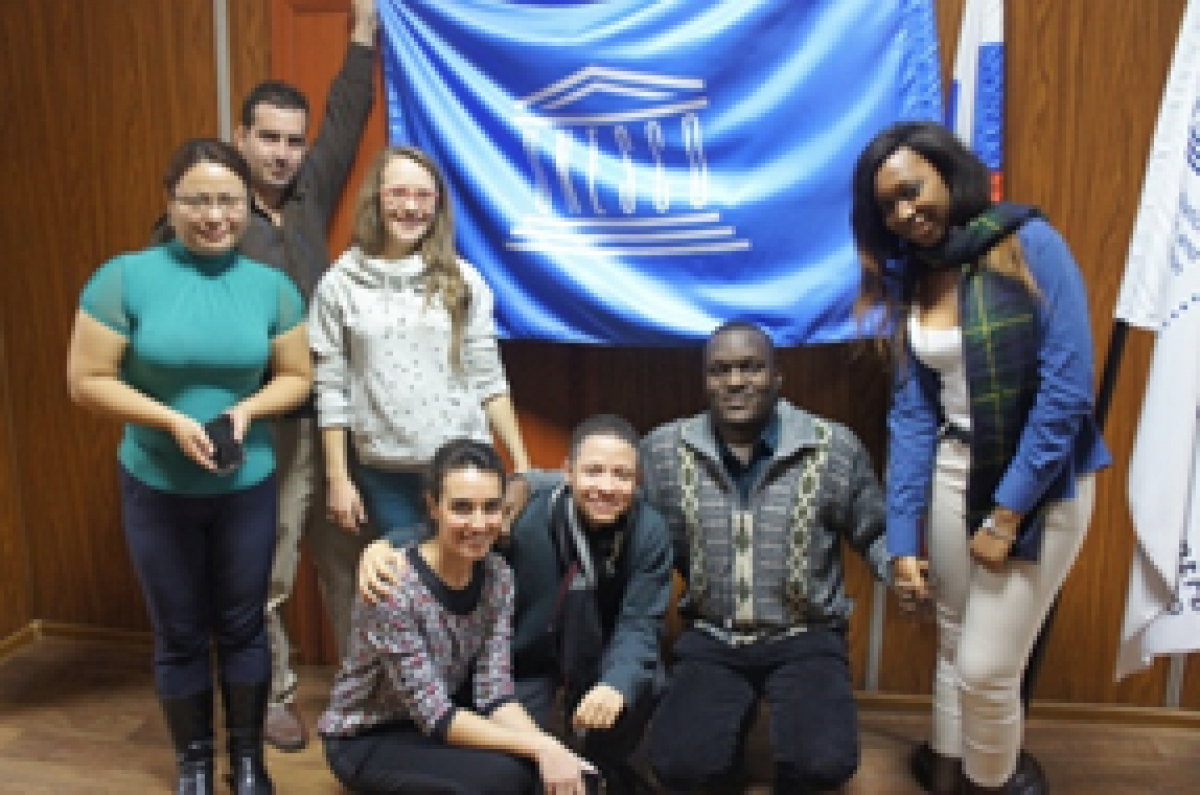
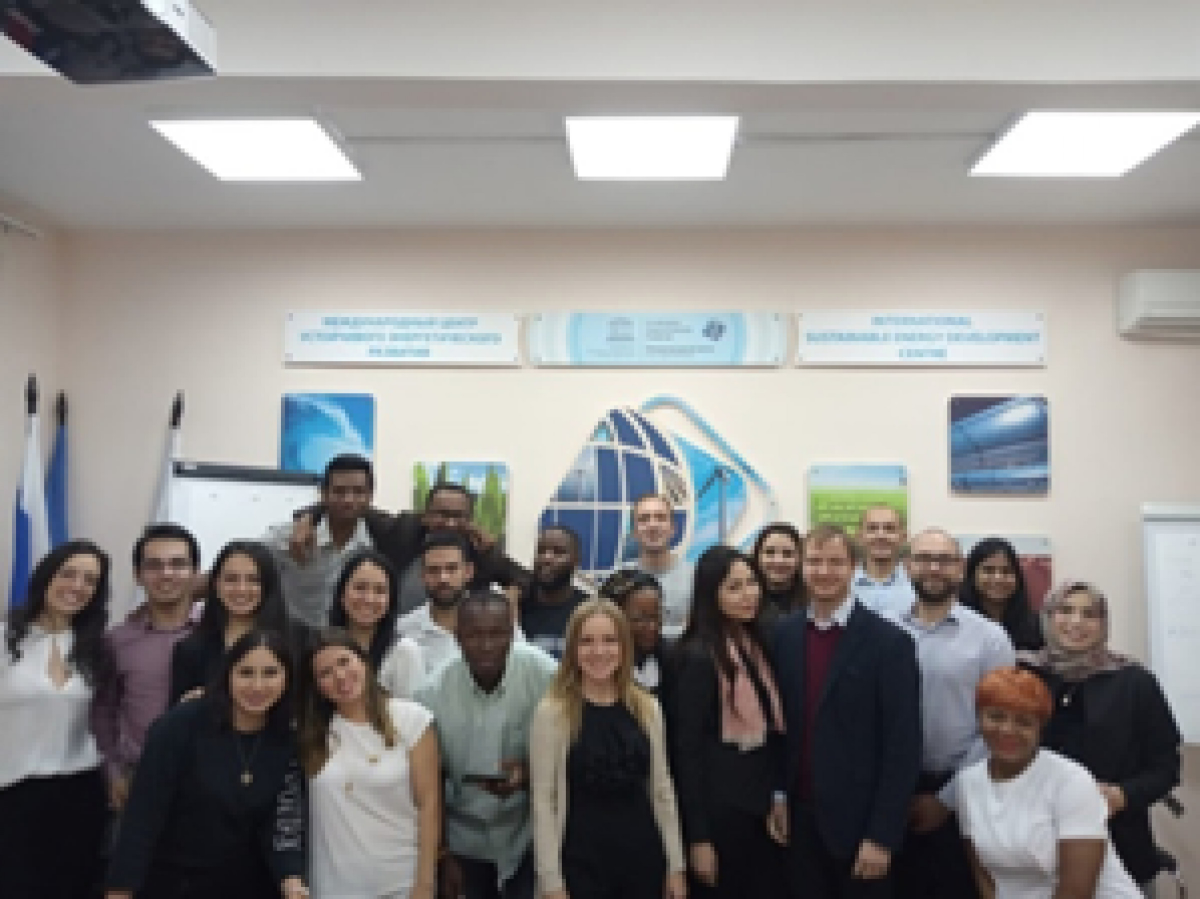
Over the past years, including in 2019 , undergraduates and young teachers of the department receive grants from UNESCO for a 4-week internship and take part in the international scholarship program of UNESCO and the International Center for Sustainable Energy Development under the auspices of UNESCO (ICSED), the purpose of which is the training of qualified personnel in the field of renewable energy sources. The amount of the annual grant is about 2000 US dollars per participant.
In June 2019, teachers and students of the department received a grant to participate in the educational project "Renewable energy sources as a measure to combat climate change" as part of a partnership between sister cities Minsk and Bonn with the support of the DAAD information bureau in Minsk. For their participation in this project, the German side allocated 4,000 Euros.
The department cooperates with the universities of Russia, France, Germany, Sweden, Slovakia, Romania, Japan, China, Latvia and participates in the implementation of international projects under the programs of UNESCO, INTAS, TEMPUS, the Belarusian Republican Foundation for Basic Research.
