Documents
Schedule of debt liquidation for the 2nd semester of the 2025/2026 academic year at the Department of Mechatronics and Artificial Intelligence of the MSF. >>>Download>>>
_________________________
Methodological recommendations for students and undergraduates of the department "Intelligent and mechatronic Systems" for the preparation of term papers and projects, diploma projects and master's theses >>>
 |
Koleshko V. M. et al. Intellectual system of full mind with intuition / Intelligent systems. Theory and practice. M., Moscow State University, v.18, issue 4, 2015, p. 45-68. |
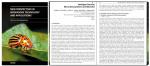 |
Koleshko V.M., Varabei Y.A., Khmurovich N.A. Intelligent Sensory Micro-Nanosystems and Networks // New Perspectives in Biosensors Technology and Applications. – InTech, July, 2011. – ISBN: 978-953-307-448-1. – Hard cover, P. 33-62 (Electronic resource). – Mode of access: http://www.intechopen.com/books/new-perspectives-in-biosensors-technology-and-applications/intelligent-sensory-micro-nanosystems-and-networks |
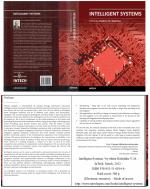 |
Intelligent systems / by editor Prof. Koleshko V.M. – InTech, March, 2012. – ISBN: 978-953-51-0054-6. – Hard cover, 366 p. (Electronic resource). - Mode of access: http://www.intechopen.com/books/intelligent-systems |
|
Koleshko V.M., Gulay A.V., Polynkova E.V., Gulay V.A., Varabei Y.A. Intelligent Systems in Technology of Precision Agriculture and Biosafety // Intelligent Systems. – InTech, March, 2012. – ISBN: 978-953-51-0054-6. – Hard cover, 1-36 p. (Electronic resource). – Mode of access: http://www.intechopen.com/books/intelligent-systems/intelligent-systems-in-technology-of-precision-agriculture-and-biosafety |
|
|
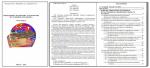
Koleshko V.M. Mobile phones, smartphones and body aging / V.M. Koleshko, E.A. Sparrow, N.A. Khmurovich; under total ed. V.M. Koleshko. - Minsk: publishing house "Technical Literature" BNTU, 2011. - 326 p. - Format 60x84 1/16, conv.-print. l. 18.31, textbook-ed. l. 14.32 |
Terms and Concepts
Intelligent System: An automatic or automated system that operates based on the use of artificial intelligence.
Characteristics of an Intelligent System (Subsystems):
- Self-learning: The ability not only to execute predefined functions and programs but also to modify them according to the task at hand.
- Self-organization: The capability to change its structure and architecture to solve tasks or improve itself (through self-learning) and ensure self-preservation.
- Problem-solving: Addressing challenges for which standard methods or algorithms may not exist or are unknown.
- Intelligence: The mind, reasoning, and understanding; cognitive abilities of humans, some of which can be automated through the creation of artificial intelligence systems.
- Artificial Intelligence: The property of automatic and automated systems to perform certain functions of human intelligence.
- Intelligent Information{ (In artificial intelligence systems) Information possessing semantic and pragmatic properties, conveying specific meaning and intended for specific actions; stored in knowledge bases.
- Intelligent Information System: An automated information system equipped with an intelligent interface that allows users to interact with data in natural or professionally oriented languages.
- System: An object or phenomenon in the real world that constitutes a coherent collection of interconnected and interacting parts (elements and subsystems), isolated from the external environment but interacting with it through the exchange of matter, energy, and information.
- Self-learning System: A system capable of improving its functioning based on accumulated information from previous operations.
- Self-organizing System: A computational system capable of expanding its knowledge base and refining its structure based on real-time data presented to it.
- Expert System: An artificial intelligence system comprising a knowledge base with a set of rules and an inference mechanism, enabling it to recognize situations, diagnose issues, formulate solutions, or provide recommendations for action based on rules and user-provided facts.
- Sensors: Sensitive artificial devices or organs of living organisms.
- Micro- and Nanosensors: Sensors manufactured using integrated circuit technology or micro- and nanoelectromechanical systems, with electrical output signals.
- Sensor System: A collection of sensors characterized by interaction and a common organization of their output signals subjected to joint processor processing.
- Integrated Sensor System: A system whose sensor elements are structurally, constructively, and functionally integrated with processor elements that perform information processing.
- Microelectromechanical, Nanoelectromechanical Systems (MEMS, NEMS): Miniature electromechanical executive devices belonging to the broad family of micro- and nanomechanical sensors, executive mechanisms, and microprocessor systems, whose operation is based on the combined action of electrical, mechanical, thermal, magnetic, chemical, optical, and other effects.
- Nanotechnology: The study and processing of objects ranging in size from 1 to 100 nanometers – atoms, ions, molecules; nanotechnology processes follow the laws of quantum mechanics and include atomic assembly of molecules, methods of recording and reading information, stimulation of chemical reactions at the molecular level, and others.
Engineer in Intelligent Systems: An Engineer with professional qualifications in the creation and operation of intelligent (including sensor) systems and higher education.
