The solution to the challenges of developing Belarusian mineral deposits requires the training of national engineering personnel in a range of mining specialties, including mining operations, underground mining, drilling operations, mineral processing, mining machinery, modern geotechnologies, ecology, and others.
Many well-known individuals studied and worked at the faculty, which at different times was called the peat faculty, mining-mechanical faculty, and for a while was part of the energy construction faculty. It is enough to recall the dean of the peat faculty, the rector of the Belarusian Polytechnic Institute, and the Minister of Secondary and Higher Education of the BSSR, Associate Professor M.V. Doroshevich, after whom one of the streets of Minsk is named. Among the graduates of the university was also the academician of the Academy of Sciences of the Republic of Belarus I.I. Lishtvan. Among the graduates of the faculty were the Minister of Fuel Industry Philippov, the heads of large enterprises and research institutes, and the laureates of the State Prize of the Republic of Belarus Gorbachev A.S., who works fruitfully at Belaruskali OJSC, as well as a member of the delegation of the BSSR to the UN Paremsky B.D.
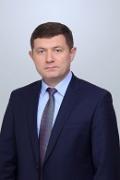
A new stage in the development and history of the faculty began in April 2002, when, as part of the reorganization of the Belarusian National Technical University, it was formed as a separate structural unit: the Faculty of Natural Resources and Ecology (FNRE), which was headed by Doctor of Technical Sciences, Professor, Academician of the Russian Academy Bogatov B.A. The creation of such a faculty was dictated by the need to train specialists in the development of mineral deposits for the Republic of Belarus (Potassium Salts, Coal, Marl, Dolomite, Oil, Granite, Drinking and Mineral waters, Sands, and Sand-Gravel mixtures). Since February 15, 2007, FNRE has been transformed into the Faculty of Mining and Engineering Ecology (FMEE), which was headed until April 2019 by Candidate of Technical Sciences, Associate Professor Tsybulenko P.V., a graduate of the Mining-Mechanical Faculty of 1977. Since 2019, the Faculty of Mining and Environmental Engineering has been headed by Candidate of Technical Sciences, Associate Professor Kologrivko A.A. The deputy deans are: V.I. Stasevich, G.A. Basalay, A.N. Khripovich, V.A. Kuzmich, E.A. Tishkovskaya.
|
The main Specializations of the Faculty trace back to the establishment of the Belarusian State Polytechnic Institute on December 10, 1920. Due to the exploration of peat reserves in Belarus, the initial specialties were closely related to the subject of development and were accordingly named: "peat extraction", "peat industry", "deep drilling". One of the first lecturers was P.Z. Grabovsky.
The necessity to establish an indigenous fuel and energy infrastructure for the country's industrialization led to the development of a national engineering training system in Belarus. By 1926, research had commenced on the republic's peat reserves, resulting in the decision to construct peat-fired power stations. In 1929, a report to the Council of People's Economy of Belarus, presented to the commission chaired by V.P. Zatonsky, highlighted that 'while the BSSR is not notably mountainous, it boasts abundant minerals vital to the national economy, which, with intensified research efforts, could be effectively harnessed for industrial processing.The lack of financial resources and a shortage of specialists for teaching positions led to the closure of the university. On July 1, 1922, the Central Executive Committee of the BSSR decided to reorganize the Polytechnic into the Belarusian State Institute of Agriculture. In this regard, in 1931, a peat institute was opened in Minsk on the basis of a bog station, but its work was complicated due to the lack of premises. Expensive equipment gathered dust in warehouses. An acute question arose about the need to create a material base for a university of national scale, which would combine a number of small institutions. In his autobiography, the future associate professor of BPI, Deputy Minister of the Local Fuel Industry of the BSSR (1952-53), Deputy Chairman of the State Planning Committee of the BSSR (1954-61) B. D. Paremsky wrote that “in 1928 he entered the Gorki Agricultural Academy to the peat department, which in 1932 was transferred to the BPI ”[Paremsky Boris Dmitrievich // NARB. - Fund 210. - Op. 4. - D. 1108. - L. 4]. In 1935, he graduated from the BPI with the title of "mining engineer for the exploitation of peat deposits."
On July 1, 1933, the Council of People's Economy of the BSSR issued a decree 'On the Organization of the Polytechnic Institute.' The Minsk Peat Institute, together with the Goretzki Water and Land Reclamation Institute, became part of the newly established Polytechnic Institute as the Peat Reclamation Faculty, tasked with training engineers for peat deposit development. The Peat Reclamation Department comprised the chairs of 'Fuel Peat Production Technology' (N.I. Aksyuchits from July 16, 1945), 'Peat Machinery' (I.G. Blokh, restored from August 1, 1945), and 'Hydrotechnics.' The Hydromelioration Department included the chairs of 'Hydromelioration' (S.P. Mikhailov), 'Engineering and Hydrotechnical Structures' (S.V. Grodzovsky), 'Hydraulics' (I.M. Lifshitz, and from 1946, Y.T. Kovalev), and 'Geodesy' (M.V. Doroshevich). In 1944-1945, the Peat Reclamation Faculty operated, consisting of the Hydrotechnical and Peat Mechanical Departments. However, by the fall of 1945, these departments were designated as separate faculties in documents, each led by a single dean. In 1947, at the initiative of the director of the Polytechnic Institute, M.V. Doroshevich, the Hydrotechnical Faculty was established as an independent entity, incorporating the Peat Mechanical Department.
|
|
From 1933 to 1938, the inaugural dean of the Peat Faculty was Mikhail Vasilievich Doroshevich, born in 1900 in Orsha. He pursued his education at the Orsha Real School from 1909 to 1916 before briefly attending the Petrograd Institute of Civil Engineers until 1917. Subsequently, from 1922 to 1926, he studied at the Goretsky Institute of Land Management's Engineering Department, followed by enrollment in the Hydromeliorative Department from 1926 to 1927, culminating in a degree as a surveying engineer. Joining the Minsk State Polytechnic Institute in 1929, he assumed leadership of the Peat Department and served as a lecturer in surveying. Following the Polytechnic Institute's restructuring in 1930, he assumed responsibility for the educational department of the Minsk Peat Technical School, teaching surveying and peat surveys. In 1931, Doroshevich became the deputy director of the Belarusian Peat Institute and head of the Department of Surveying and Peat Meliorative Surveys. His pivotal role continued in 1933, upon the consolidation of Minsk's institutes into a unified Polytechnic Institute, where he was appointed dean of the Peat Faculty and head of the Department of Surveying and Peat Meliorative Surveys. However, he relinquished the deanship in 1938 by personal choice. His contributions extended beyond academia, as he served as the director of the Belarusian Polytechnic Institute from 1947 to 1959. Later, from 1959 to 1968, he assumed the role of Minister of Higher, Secondary Special, and Vocational Education of the BSSR. |
|
Yakov Timofeevich Kovalev was born on October 21, 1901, in the village of Borki, Dobryansky Volost, Krasnyansky District, Smolensk Province. He attended a rural school until 1913 and then continued his education at the Krasnyansk Higher Elementary School from 1913 to 1918. From 1920 to 1925, he served in the Red Army. In 1921, he graduated from the Kazan Higher Military School, followed by the 2nd Moscow Military Engineering School in 1924. In 1926, he enrolled in the Belarusian Agricultural Academy (Gorki). In 1932, he graduated from the Water Management Institute, which was organized on the basis of the Hydraulic Engineering Faculty of the Gorki Academy, with a qualification as a "Hydraulic Engineer." From 1932 to 1936, he was a graduate student at the All-Union Scientific Research Institute of Hydraulic Engineering and Land Reclamation (Moscow). After completing his graduate studies, he defended his dissertation for the degree of Candidate of Agricultural Sciences. From June 1936, he was an associate professor at the Hydraulics Department, deputy dean, and from 1938, the dean of the peat land reclamation faculty at the Belarusian Polytechnic Institute (BPI). In May 1939, he was appointed associate professor at the Department of Hydraulic Structures. From June 24, 1941, to October 18, 1945, he served in the army (as a captain). On October 30, 1945, he was appointed head of the Hydraulic Engineering Department and dean of the Hydraulic Engineering and Peat Mechanical Engineering Faculties. He began his work on December 1, 1945. From August 27, 1946, he was the head of the Hydraulic Engineering Department. On September 22, 1948, after repeated requests, he was relieved of his duties as dean. On July 3, 1967, he was relieved of his duties as head of the Department of Hydraulics. On July 4, 1969, he was relieved of his duties as associate professor upon retirement.
The peat land reclamation faculty was associated with the institute-wide departments: military physical education (Colonel I.V. Zhiganov, from October 16, 1945 - head of the military department Major I.T. Makhnev) and descriptive geometry and graphics (acting head of the department K.I. Shinkarev). From November 1945, the peat mechanical and hydraulic engineering faculties were attached to the departments of military training, electrical engineering, and Marxism-Leninism (acting head L.M. Kugelman). |
|
Savva Pavlovich Mikhaylov, born on January 14, 1898, in the village of Timoshki, Samokhvalovichsky Rural Council, Minsk District. In 1920, he completed a workers' faculty at the Belarusian State Polytechnic Institute and entered the same institute. In 1922, he transferred to the engineering faculty of the Timiryazev Agricultural Academy (Moscow), which he graduated from in 1924. From 1920 to 1925, he worked as a hydraulic engineer at the Minsk Experimental Peat Station. He received the academic title of associate professor in 1932 and the degree of Candidate of Technical Sciences in 1935. From 1930 to 1933, he was the head of the Department of Reclamation and Hydraulic Engineering at the Belarusian Agricultural Academy and the Water Management Institute (Gorki). From 1930, he was the head of the educational department at the Minsk Hydrotechnical College, later becoming the Polytechnic College. From 1933 to 1937, he was the head of the hydrotechnical department, and from 1938 to 1940, the head of the research sector and postgraduate studies at BPI. From December 15, 1944, he was the head of the Department of Hydrotechnical Reclamation of the Peat Reclamation Faculty at BPI. From April 28, 1945, he served as the dean of the Peat Reclamation Faculty at BPI. From 1949 to 1950, he completed the University of Marxism-Leninism (Minsk). From February 1955 to July 1959, he served as the deputy dean, and from July 1959 to January 1963, he was the dean of the Hydrotechnical Faculty. He retired on September 1, 1965, but until 1970, he supervised the industrial practice of students at the Peat Faculty. On March 12, 1949, the Ministry of Higher and Secondary Special Education of the USSR decided to separate the peat faculty from the hydrotechnical faculty, consisting of the following specialties: "1. development of peat deposits; 2. peat machines". Based on this decision, A.F. Anishchenko was appointed dean of the hydrotechnical faculty (established on August 28, 1947), and P.P. Petukhov was appointed dean of the peat faculty. |
|
Dean 2019 - present Kologrivko Andrey Andreevich |
Scientific publication "History of the Faculty of Mining and Environmental Engineering: People, Events, and Facts"